
My Afro-Caribbean Hair is Too Expensive
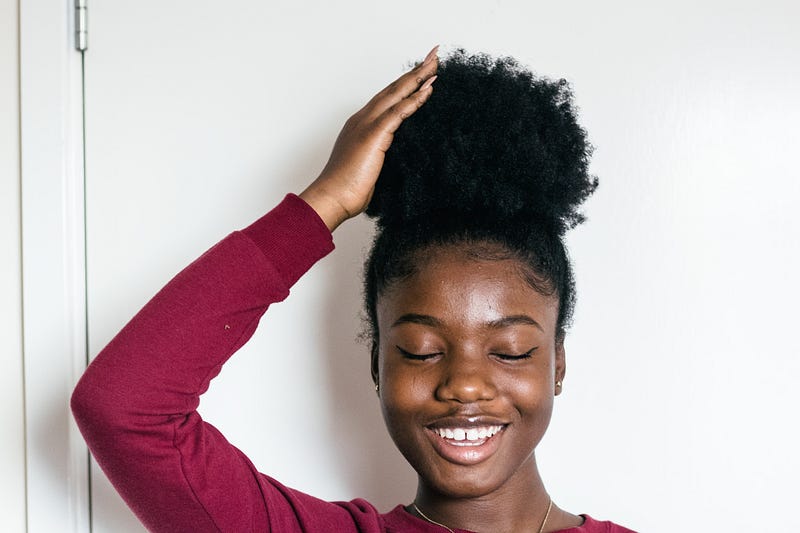
I am mixed White, African and Caribbean with Afro-Caribbean hair.
I used to have a huge afro. In school they called me “football head”. Once at a sleepover, my friend forgot her pillow so I gave mine to hers and slept on my hair. In class, I would always have to be seated at the back because my hair would get in the way of the projector (this had its major perks).
No one else had an afro like mine. My best friend had an but it was nowhere near as long or as thick as mine. There were boys with Afro-Caribbean hair, but it’s not the same.
I had the same hairstyle the vast majority of my childhood. Two big pigtails. Why? Because my mum couldn’t style it. I felt so isolated. All the girls with long, Caucasian hair could style it however they wanted. They could dye it whenever they wanted. They could get it wet and wash it every day if they wanted. My jealousy was sky high.
What didn’t help the situation is that there was really only very few products that those with Afro-Caribbean hair could use. One was called Cantu. Luckily, this brand has never been that expensive. When I was a kid, it was just very hard to obtain. Today it’s sold in Boots, Superdrug, all the beauty stores. It’s just not a very good product…
Keracare is another product that I used. And actually, I still use the defining custard at £14 a tub. Redken is also another product. Both of these products are expensive.
When I turned 14, I relaxed my hair. Finally, I can fit in a little bit more. Do I regret this? No. My afro was not manageable in the slightest. It was too much to handle.
My question is; why do Caucasian people get to pay so little to maintain their hair and those with Afro-Caribbean hair have to pay a fortune?
My Redken shampoo and conditioner used to cost £20 a bottle EACH for a 250ml bottle. Head and Shoulders costs around £4. Pantene costs around £4.
Let me tell you why I cannot use Head and Shoulders shampoo and conditioner. I’m not being fussy, it’s simply genetics. Afro-Caribbean hair is a completely different texture to Caucasian hair, therefore it needs different treatment. Those with Afro-Caribbean hair have different oils in their scalp, which causes their entire scalp to differ from those of a Caucasian. Head and Shoulders, Pantene and all similar brands at the time didn’t bare this in mind.
I previously mentioned I got my hair relaxed. This isn’t cheap and needs to be maintained. It also cannot be done at any salon. Relaxing hair is not as simple as dying hair, it is a Afro-Caribbean speciality and can only be performed by those who have been trained. You can test this yourself. Walk into your nearest salon and ask if they do relaxed hair. 95% chance the answer is no.
The entire fact that you need certain training to even touch my hair, should paint a vivid picture for you.
It costs me £120 every four months to get my hair relaxed. It is also recommended to get a maintaining treatment before your next relaxer (not mandatory) which is £65.
I also like to get my hair in box braids once in a while to protect my hair from the cold and rain as this can cause it major damage. Of course, this is a hairstyle so hairdressers will charge. My local hairdresser charges me £150 for this styling, not including the price of the hair extensions which is £30 (I could cut this out to make it cheaper).
Many women with Afro-Caribbean hair may choose to wear a weave, especially if they do not have much hair on their head. This can be as expensive as £180 if you want the best type of human hair. That’s for the weave alone. Not including the service of the hairdresser.
Why is it only £40 for blow dry and a new hair style in a salon that doesn’t specialise in Caribbean hair? Why is it only £40 to have your hair dyed? Why is it only £60 for a rebond and gloss (no idea what that is)? You get my drift.
All hairdressers differ in their price ranges. It’s always a lot cheaper in London. But that’s not the point.
Why am I paying £100+ to have my hair relaxed and styled? Because I have to maintain the goodness in my hair. I have no choice.
That’s not all I pay for. I have to put oil in my hair to protect it from the sun (£20 a 150ml bottle), leave-in conditioner for my scalp to not get dry. The amount of products I could list to you that Afro-Caribbean women use to make sure their hair is kept well and healthy is a joke.
Admittedly, women in general, regardless of race, do put a lot of products in their hair IF they want it to look good and not damaged.
It was all doom and gloom when I was a kid. Thankfully, it’s not so much now. There are so many more affordable products out there. There are even hair shops dedicated entirely to black hair products, braiding extensions, weaves and wigs, but they’re mainly in London.
I do feel as if a lot more hair companies take into consideration the diversity in people’s hair. In general, Afro-Caribbean hair is celebrated a lot more. I see it on television, magazines and even when I see kids walking to school, I see so many different hairstyles ranging from straight to curly and even AFROS.
Bottom line: Afro-Caribbean hair is not and should not be a profit making market. Unfortunately, the good stuff is still expensive. But I guess that’s the same with anything.
I cannot complain too much. I have seen major changes in society in regards to Afro-Caribbean hair. Although, mine is still way too expensive.


