
My 2-Year Self-Taught UI/UX Journey to Big Tech
A reflection: how I went from writing news scripts at a radio station to designing the subscriptions experience in foodpanda
In a Nutshell…
My entire design journey was a lot of self-discovery. This is a quick snippet of my journey separated by years, starting from 2015:
- 2015: I began my journey as a media professional-in-training, studying a Diploma in Mass Communications at Temasek Polytechnic.
- 2016: I took up the role of a campus newspaper sports editor for the English version, and then the chief editor for the Mandarin version.
- 2017: I quit that role and started doing photography instead. I got my first taste of UI/UX design when designing mobile apps for two core modules in my diploma..
- 2018: Graduation 🎉 and then I got a role at SpaceSense (defunct) as a UI/UX Design Intern. I was the sole designer, but I couldn’t be picky. Prior to enlisting, I also started Collab Partnerships, a HR-tech startup.
- 2020: I completed my National Service 🎉 I got a role at Anywhr (defunct) as a UI/UX Design Intern. I negotiated for a raise and conducted workshops as an intern there. I also started by Bachelor’s degree in Computer Science at Goldsmiths. Collab Partnerships sunset around the same time.
- Early-2021: I joined GCL Asia as a UI/UX Designer on contract, and designed the entirety of OhMai, their flagship influencer-driven game e-commerce platform
- Late-2021: I joined Polymerize as a Product Designer. This was my first-ever full-time role as a Product Designer. During this time, I transitioned into being a Product Manager.
- June 2022: I’ve joined foodpanda Singapore (Delivery Hero SE) as a product designer for Subscriptions!
Throughout this journey, I’ve also done quite a fair bit of different things, such as my own startup in 2018 (and then winding it down in 2020), matriculated as a computer science undergraduate at Goldsmiths, started a UI/UX student organisation in 2020 (and then winding it down 2021).
I was fortunate to have career clarity in 2018 — but I also doubted that when I tried to transition into a PM role in 2021. One thing is for sure, I still have no idea where this journey will take me, and I’m choosing to remain career agnostic at this point!
After much reflection, I also laid out a theory of why my short 2-year self-taught experience was actually enough to get me into big tech.
If you would like to read more about this journey in a storytelling way, you can continue scrolling.
Am I really a media professional?
While I was in the midst of learning about marketing and how to edit videos using Adobe Premiere Pro in 2015, I was convinced that I would eventually find myself doing public relations or marketing in boutique agencies or somewhere like Publicis.
In 2016, I got my hands on a second-hand Canon EOS300D and ventured into photography as a hobby, which then convinced me that I would eventually open a photography studio and do photoshoots.
The photography hobby came along with me till 2017. At this point, I had quit my role as a campus newspaper editor. The closest I came to design at all was using InDesign to place marks and bleeds for a magazine project. I have never heard of “UI/UX design”, let alone touch anything related to it.
During my second semester of my diploma, I made an unexpected discovery. In an entrepreneurship module, I worked with a bunch of other classmates and designed a mobile application for travelers to get custom travel itineraries from freelance trip planners. I then had my first UI/UX-related experience and worked on Sketch.
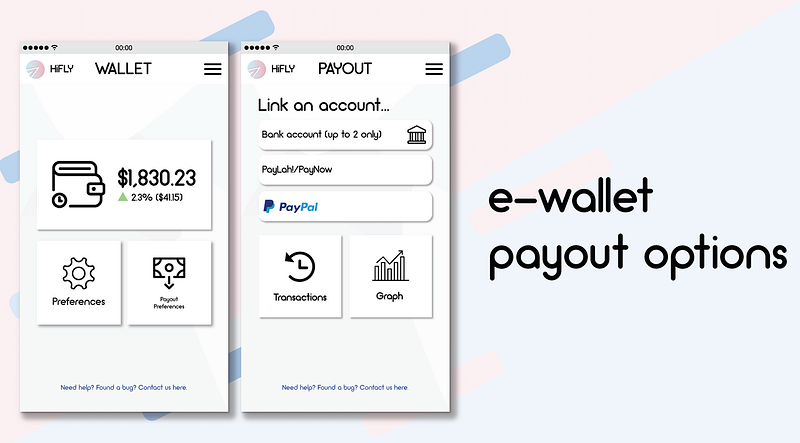
In 2018, for my final year project, I designed some screens on the mobile phone for an application that shows you beneficiaries of a certain association, so you can donate points to them that can be exchanged for items.
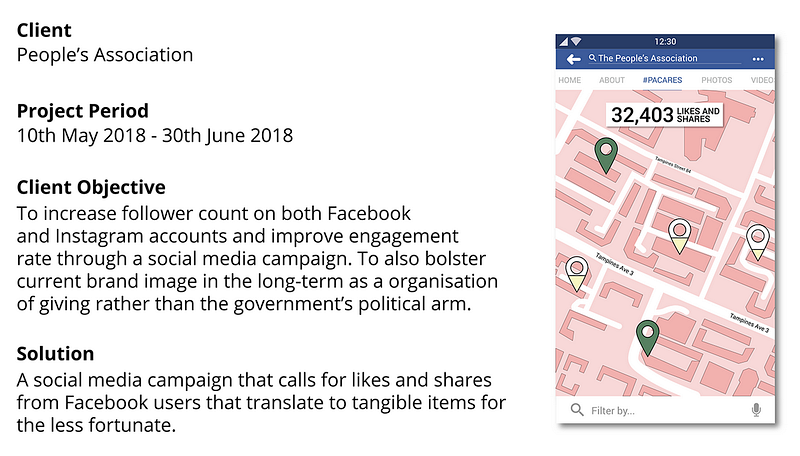
By the end of my diploma journey in early-2018, I had a portfolio of film projects, graphic design works, and even content writing.
Yet, I was only happy that I attempted to scratch the surface of designing user interfaces. As I had a 4-month break before my conscription, I wanted to see if I was able to get into a place with real-world impact.
The First Internship
My first ever internship was at Spacesense where I pretty much did everything from user research to design iterations, as well as designing out the MVP of the platform. I was fortunate for this opportunity: after a long search for startups that were willing to take me in, I was lucky to have Eunice Ooi (who’s currently at DSTA) take me in despite that I only had a questionable portfolio at best.
The best part is, I started immediately after the interview was over!
In this 4-month internship stint, I had the opportunity to learn everything by myself. This internship was definitely a lot more difficult than others for several reasons:
- Both the founder and I had much to learn about UI/UX design, and I was relied on as the go-to advisor on how to make the UX better for the platform
- I had to learn how to do user research, create a plan, then execute that research within the same day for multiple customer profiles
- Almost 90% of all my supposed UX fundamentals were missing, and I had to learn on the job while providing value to ensure that I could continue doing my internship
- Communications with developers were tough: I had no coding knowledge, and they were PHP developers
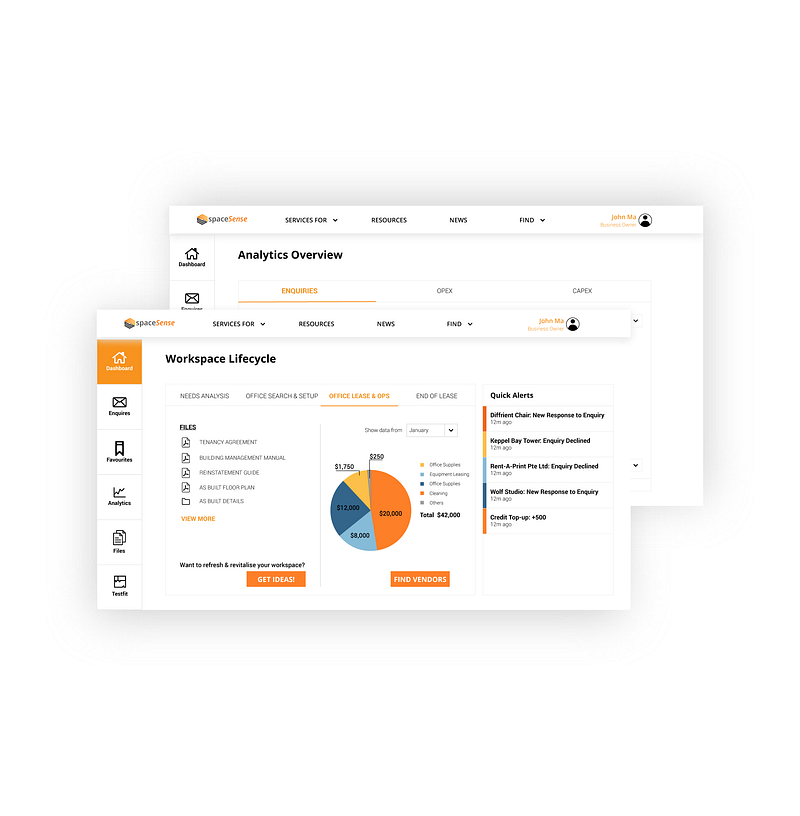
Being an enthusiastic and hungry UI/UX designer, I quickly learnt what burnout meant. I had high standards for my design abilities and I only wanted quality work. Yet, I was not equipped with the right knowledge and skills in time. My desire to be better coupled with my impatience led me down a path of anxiety and self-loathe.
Since I ventured into UI/UX design independently, I was also afraid to reach out to other UI/UX designers on LinkedIn. A fresh polytechnic graduate doesn’t have much of a network, and none of my coursemates ventured out of marketing/media/communications.
I was alone.
I left the internship for my mandatory enlistment after four months feeling drained, but I was nonetheless grateful that I had made my very first dip into the waters of UI/UX design.
Starting a Startup for 2 Years
Before my enlistment, I recalled my problematic project group mate moments: we didn’t know if we could fit well. With my minimal knowledge of machine learning, I thought “why not use machine learning to figure out if a team of people can fit with one another or not?”
Turns out, it’s not exactly impossible.
I set out to work with my buddy Zolven and successfully convinced developer Joseph to join me on my startup journey. Armed with just a pitch deck, we clinched a government grant in 2018 and set out to get our prototypes in place. Soon, I realised how difficult this startup execution would be.
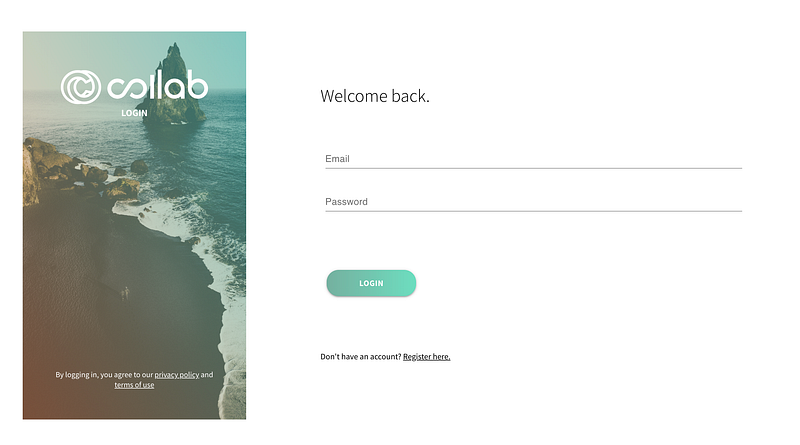
I was fortunate enough to meet great people along the way who tried their best to give me advice on business operations and development, but it was impossible to crack a market with our lack of experience:
- The product was immature for a market that needs mature products
- A lack of credibility led me to lose pilot projects with brand names and huge firms
During this period, I learnt a lot of things outside of design, such as product management, project management, and even some level of React development.
Eventually, the startup closed down when I came out of National Service. I was feeling more dejected and drained than ever and needed a boost.
I started my internship again and landed on Anywhr.
Heading Somewhere in Anywhr
Anywhr was a blast. They went viral in Singapore for creating “surprise trips” and they were looking for UI/UX design interns to help bolster the design efforts. This was where I met Qian Joo (presently at Saltmine), and got to work with Audrina (presently at Handshakes).
At Anywhr, I didn’t have much opportunity to work on UI design. Instead, I dived very deep into UX research, and conceptualised many interesting user research plans that I executed with Audrina.
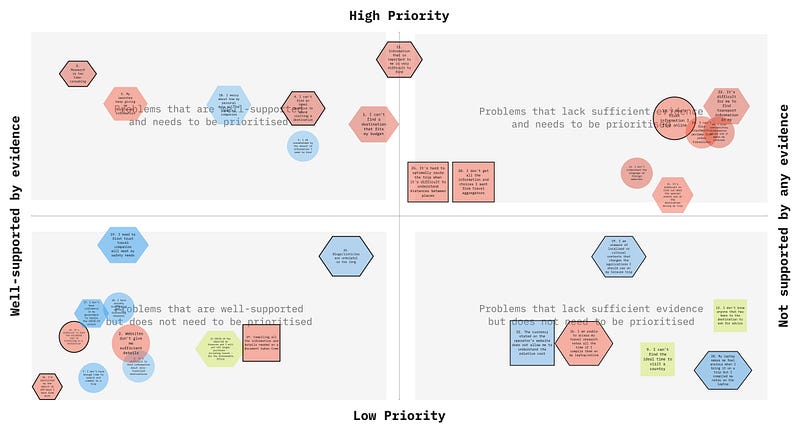
Anywhr posed a lot of challenges in a different manner, compared to Spacesense:
- The organisation was in a “turnaround” state. That means that we had to prove we are able to help design a product that is able to pivot the company out of the pandemic era. Processes were out of the window: we needed something that works, and fast.
- I was not familiar with working with consumers directly and had to learn the nuances in doing user research for consumers
- There were a myriad of tools that I had to learn to be effective with, including using Figma, Trello, Slack, Dovetail, and Miro
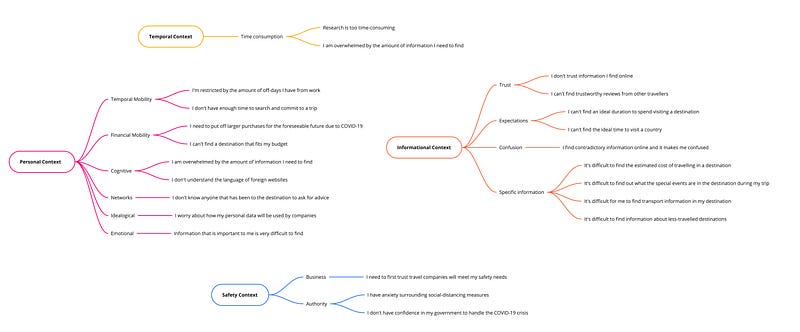
In the end, Anywhr pivoted to an employee benefits platform today, which is doing comparatively well. I left Anywhr after 6 months to figure out my next step.
At this point, I had matriculated into Goldsmiths as a Computer Science student and I had two internships under my belt. I still felt like I haven’t “entered” the UI/UX field without a full-time role. Without a junior or associate-level position, I felt like a complete imposter (though I realised, a year later, that the imposter’s syndrome still follows me).
I went on a hunt for a few weeks before stumbling on games distribution multi-national corporation GCL Asia.
Full-time “full-time” UI/UX design
I was full-time… in a contract role. At least, I was halfway there! It was an interesting organisation structure to work with and I worked on an influencer-driven games e-commerce platform. This role proved to be a huge jump for me in terms of roles and responsibilities:
- I was in-charge of designing the B2C platform where consumers buy games recommended by social media influencers and Twitch streamers
- I was in-charge of designing the B2B platform where these streamers can build their own store
- I was the sole designer
- I didn’t have the opportunity to validate prototypes, and had to rely on proxy users and internal stakeholders for approval rather than doing user-centered design
It’s essentially Shopify with a twist.
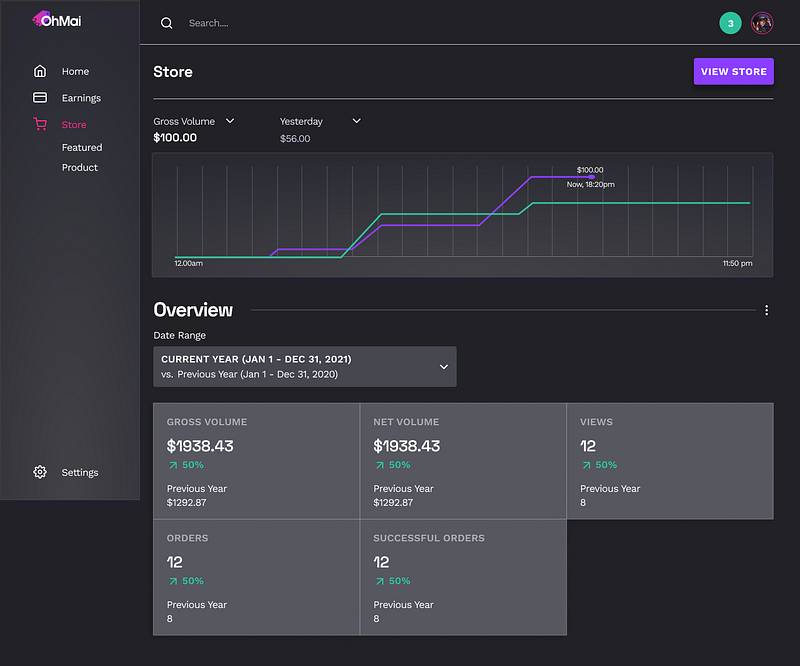
With only a few months to design, I worked closely with four developers, a product manager, and some other colleagues from the business units to get this platform up and running.
I had the opportunity to mentor a UI/UX design intern, Hannah (presently at Evonik) midway through the project. It was also a test of my skills to manage design operations and leadership, and without much experience to rely on, most things soon became a mess.
After half a year at GCL Asia, I sought for a new opportunity. This time, it must be a full-time role. No excuses and nothing short of that.
From Failing Chemistry to Designing a Platform for Chemists…
Life is always so interesting: I used to be a very terrible science student during my secondary school days. Each subject was a constant C or D. Yet, I was given the opportunity to join a seed-stage startup Polymerize (which is Series A today!) as a product designer.
This was my first-ever full-time role.
In all honesty, I had gotten offers from other agencies. I rejected those roles as I wanted to dive deeper into a product, rather than working on different products simultaneously for a shorter period of time.
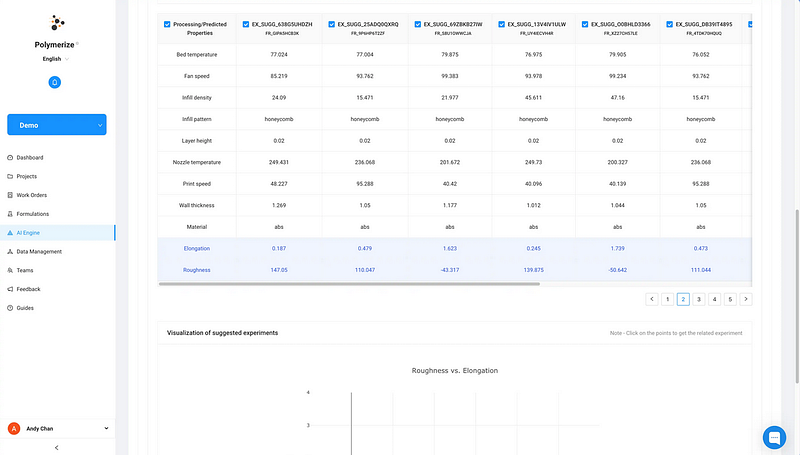
I was only a product designer for three months. During those three months:
- I rebranded the company and set out new branding guidelines, creating a totally new colour palette, typography, and other assets
- I created 100+ illustrations for the company website, marketing collaterals, advertisements
- I grew the product design team from one to three, and set out some ground rules for design operations, Figma organisation, conducting research. This then set the wave of creating team-specific wikis in the company.
- I started a rebranding and UX refresh plan for the flagship product
…to Managing a Platform for Chemists
Late-2021, I decided that I wanted more ownership of product decisions. I was also keen to have more influence: as a designer, I could only provide some input to the team but I lacked the credibility.
It also seemed like a perfect position for me. I could work with people, develop a product, all while being distant from the business. Compared to being a founder, being a product manager looked like a great idea.
I was wrong. I suffered greatly.
My lack of understanding for the role and the situation of the company led me to being an ineffective and inefficient product manager. The type of product manager needed by the company depends greatly on the time period of the company. I was also doing a dual-role as a product designer to build out a separate product whilst trying to get product operations together.
It was a great experience, but I was admittedly a poor product manager, and still a stronger product designer.
Throughout my product manager journey, I had the opportunity to:
- Do a partial UX refresh of the flagship product
- Design a brand new product from the ground up, collaborating with another product designer
- Experiment with Agile in the company and refreshed the product operations
- Set out people management guidelines
And more other non-product management work.
I soon left the company after 11 months, which led me to my next job hunt.
Pink is the New Black
The whole foodpanda journey was an unexpected ride. Starting my journey in Mar, I ended my four-round interview journey by the end of Apr:
- I had an initial round with the HR
- A portfolio review with a Sr. Product Designer
- A whiteboard challenge with 3 Sr. Product Designers
- A bar raiser round with the Head of Product Designer
I was fortunate to have supportive colleagues during the process. Even though it was my first time going through a process like this, I managed to clear it relatively seamlessly due to a relentless search for resources. During this period, I also had the opportunity to be interviewed by other big tech firms like Ninjavan, Evooq, Crypto.com and late-stage startups like Oddle, Bitcoin.com.
My Theory on Breaking into Big Tech
After much objective analysis, I figured that there are several reasons as to how a product designer with barely a year of full-time experience could make it into big tech.
- I had a unique selling point: I was a product designer with some level of experience as a product manager. This meant that I not just have real-world experience of using product sense and thinking, but also some level of experience collaborating with other team members outside of a capacity of a designer
- I designed for different business models and verticals: I never stuck to one vertical or business model. I exposed myself to various markets and customer profiles, each with their own set of challenges. The diversity of experience helped in showing my value as a designer
- I had some level of leadership experience: though I never successfully scaled anyone up from an intern to a product designer (or a junior to a senior), I still had the opportunity to set design and product operations. I scaled the design team from 1 to 4 within 3 months of my inception as a product manager, and empowered my product designer to lead the team on her own
- The company probably needed a generalist: I applied for a role where entry-level designers were also welcome to apply for. For a role like that, a generalist would’ve been more suited than a specialist (which can go for a senior role)
I strongly believe that a budding entry-level or junior designer could benefit from:
- Learning about design operations, managing a design team, and then getting real-world experience in doing those
- Either becoming a specialist in one or two markets/verticals, or spreading out wide and diversifying experience in that area
- Designing for more than one platform, such as a web-application and a mobile application. Bonus points for less common platforms like hardware-specific user interfaces and smart-watches
- Designing more than one product concurrently, or be responsible for at least two products during the stint
- Beefing up product knowledge by trying to learn how product managers work, what they do, what skills and knowledge they require, and ultimately hone product sense
In any case, my journey as a UI/UX designer has barely begun. Breaking into “big tech” should also not be an achievement that designers should be fixated on, but rather, it should be on the scale of impact of their work. For example, my work at Polymerize led to a company developing better boxes to transport the Covid-19 vaccines during shipment.
Focus on the impact and not the company. That way, you will always be able to 10x your work quality.
Thanks for reading 🎉 Before you go,
👩🏻💻 Connect with me on LinkedIn. 🙋🏻♀️ Leave your comments, thoughts, and opinions! ✏️ I also write From a Junior, a free newsletter that discusses pertinent and salient topics like these. Feel free to check it out!


