
Run Long, Run Healthy — October 26, 2023
Must-Know Data — How Long Do Super Shoes Stay “Super?” Eliud Kipchoge’s Marathon Breakfast
PLUS: What you can learn from ultra runners. This workout “predicts” your half-marathon. Nutty news about peanut butter. Stride secrets
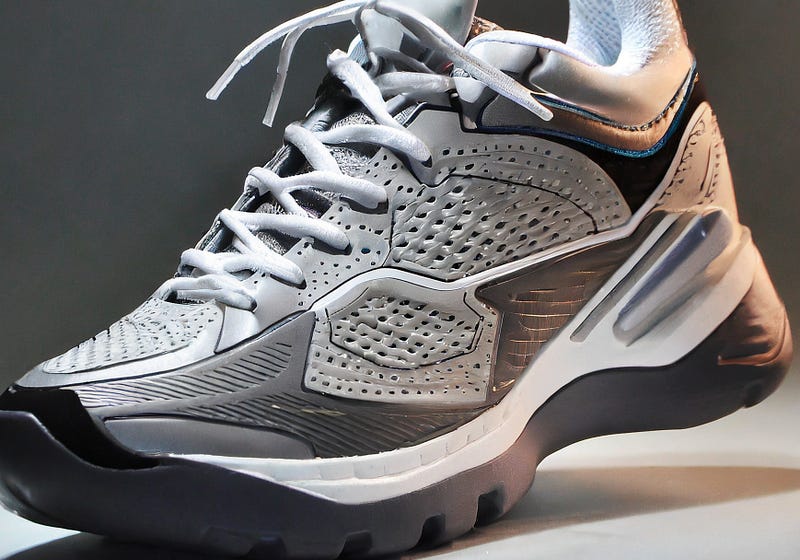
From fresh to frayed: How long do super shoes stay “super?”
Now that we’ve all accepted that super shoes can improve performance, the big questions have shifted to things like: Should you train in super shoes, or just race in them? And how long do super shoes retain their advantage? And are super shoes likely to cause more injuries, or perhaps reduce injuries?
The answers will come, perhaps slowly, and with the important reminder that all runners are different, as are all shoes and foams. This week we received an important new insight.
The bottom line: Super shoes lose their performance advantage rather quickly, at least in terms of the running economy of subjects wearing the shoes. Indeed, after about 450 kilometers of use (270 miles), a pair of super foam (PEBA) super shoes delivered a 2.2% lower boost than a new pair. Surprisingly, an EVA shoe with a carbon plate suffered no similar loss after 270 miles.
The PEBA shoes were, however, superior when both shoes were new. At that point, they delivered a running economy 1.88% better than equivalent EVA shoes.
Conclusion: “There is a clear running economy advantage of incorporating PEBA versus EVA when the models are new. However, after 450km of use, the PEBA and EVA shoes had similar RE.”
The research was conducted by an experienced Spanish team and well-known U.S.-based super-shoe expert, Wouter Hoogkamer. The ON shoe company produced the shoes worn in the testing, but didn’t fund the project.
The selection of shoes was interesting and unusual. Two pairs were what many would now consider typical super shoes: They included carbon fiber plates with PEBA super foam. The other two pairs included traditional (older) EVA foams, but with carbon fiber plates. In other words, all the shoes included carbon fiber plates.
All shoes weighed about the same. All subjects ran in 4 versions of the shoes: 1) new PEBA shoes; 2) new EVA shoes; 3) worn (270 miles) PEBA shoes; and 4) worn (270 miles) EVA shoes.
In their subjective evaluations, runners could not tell the difference between the four conditions. In the worn EVA condition, they increased their step frequency. This did not happen with the worn PEBA shoes, a finding the researchers termed “surprising.”
They speculated: “It could be that an embedded plate is more effective in PEBA than in EVA foam.” They also believe their “results generate important new knowledge for the footwear industry.”
They suggest that shoe companies should consider manufacturing a carbon plate PEBA shoe for optimal race results while the shoe is new, and a plated EVA shoe for lower cost and longer “shelf life.” The paper did not attempt to explore the injury question. More at Scandinavian J of Medicine & Science In Sports with free full text.
Eliud Kipchoge’s surprising “Breakfast of Champions”
Sports nutritionist Meghann Featherstone has been running marathons for 15 years, and is still getting faster. Sounds like she’s training smart and eating smart — a powerful combination.
In her first marathon at Twin Cities in 2007, she clocked a 3:58. Recently, at Berlin, having just turned 40, she set a marathon PR of 2:49:55.
Not only that, but the morning after Berlin, she had a short breakfast meeting with Eliud Kipchoge. He had just won his 5th Berlin title the day before in 2:02:42. Naturally, she asked him what he ate for breakfast on marathon mornings.
I expected the normal Kenyan response: ugali. Ugali is basically a thick porridge made from corn flour. But that wasn’t how Kipchoge answered Featherstone’s question. Instead, he said, “Oatmeal.”
Next, he was asked to name his overall favorite food. The answer, accompanied by that famous Kipchoge smile, was the same: oatmeal. Not ice cream, not peanut butter, not lasagna, not pizza, not name-your-own-favorite-food, but I bet it’s not oatmeal.
I suspect something got lost in translation here. Or maybe Kipchoge was wanting to keep things simple and pleasing. Plenty of other runners swear by oatmeal as a morning fuel. I worry about the fiber, as does Featherstone. Her own favorites on marathon morning? Bagels (plain) and graham crackers. More at Featherstone Nutrition.
Crack the code: This simple workout predicts your half-marathon time
If you’re getting ready for a half-marathon and want a workout like Yasso 800s (which are marathon-oriented) to gauge your half-marathon fitness, I’ve got one for you.
I’m going to call the workout Fultzy 400s after 1976 Boston Marathon winner Jack Fultz, a longtime coach to thousands of runners in the Dana Farber charity running program.
Like Yasso 800s, Fultzy 400s aren’t easy. Not when you have to do 20 of them, as he recommends. Still, that’s only 5 miles, and you get a recovery break between them. Also, the pace isn’t a killer pace. If it were, the workout would trash you more than it would prepare you. The pace of Fultzy 400s is hard but doable.
Here’s the basic plan. Do a modest warmup, then run 20 x 400 meters on a nice local track or parkland. Between the 400-meter repeats, take a 60 to 90-second recovery.
If you’re planning on a 1:40 half marathon, you should aim to finish your 400s in 1 minute and 40 seconds each. If you’re planning on a 2:15, aim for 2 minutes and 15 seconds for each 400. And so on.
This workout resulted from recent conversations I had with Yasso and Fultz. I don’t think it’s posted anywhere on the internet, so I put a link here on my personal website.
What is “hyperhydration,” and why should you care?
The topic of sodium use for long runs and races continues to be one of the most discussed subjects I see and hear among serious marathon and ultra runners. Recently I posted this link to a systematic review by respected experts in the field. It concluded that “pre exercise hyperhydration may improve exercise capacity due to a reduced heart rate and core temperature, stemming from an acute increase in plasma volume.” It also suggested that “different osmotic aids (e.g. glycerol and sodium)” could prove helpful.
So that’s the science. But there’s also another important perspective — that of real runners in the field actually trying different approaches and products in their own races.
Here’s a good discussion with plenty of opinions, outcomes, and favorite hyperhydration approaches. This particular question — and the use of sodium and glycerol — seems a near-perfect example of the famous “experiment of one” principle.
The only way you can know for sure is to give it a try yourself. In training. On a run that simulates what you’ll be doing on race day. More at Reddit/Advanced Running.
A revealing look at Des Linden’s marathon success
Des Linden has been a big favorite among marathon fans for a decade-plus, partially because she’s understated but carries a big stick when she races 26.2 or beyond. She doesn’t boast about herself. She just gets herself quietly to the start line, and then delivers.
Or, as she famously said several years ago, “Some days it just flows and I feel like I’m born to do this, other days it feels like I’m trudging through hell. My advice: Keep showing up.” This has become an inspirational mantra to many.
Two years ago, seeking a new challenge, Linden set a World record for 50K in her first attempt at the distance. This fall, in the Chicago Marathon, she ran 2:27:35 to break the American 40–45 record previously held by the legendary Deena Kastor.
In this fun and insightful article, Linden and one of her sponsors, Coros (the sports watch and tracking company), pull back the curtains to reveal how she trained for Chicago, and also how she tackled the distance on race day. We learn, for example, that she and her coach decided on a full 16-week buildup. That’s 6 weeks more than they had used for some recent marathons.
Linden says the plan worked well. “I think I hit peak fitness at the right time and never felt burnt out during the build.”
Okay, I’m not going to argue. But when I look at the Coros graphic, I see a runner who appeared to reach peak fitness in more or less exactly 10 weeks. Doing more training past that point would seem to mainly add additional risks. But you take a look and decide for yourself.
Linden also liked the heart rate variability (HRV) info she received from her watch. It helped her plan her recovery days. “The data confirmed exactly what I was feeling, and I knew that I needed to make some adjustments or would find myself in trouble.”
I was most intrigued by her in-marathon stride rate and stride length reports. First, she’s definitely a quick-stepper, perhaps related to her shortish height. She managed to keep her stride rate around 190–192/minute for most of the marathon. Since she was also running even-pace for 21 miles (in the 5:30 to 5:40/mile range), that meant her stride length stayed about the same at 4.95 feet/stride.
But, oops, even veteran elites like Linden can have problems over the last 4–5 miles. Her stride length dropped quite dramatically in the 23rd mile and beyond, hitting a low of 4.46 feet in the 26th mile, which she covered in 6:05.
A fancy watch can’t do anything for you when the going gets really tough, but Linden herself did something important. Even as she tightened up, and lost stride length, she forced herself to maintain that 192/minute stride rate. Result: Her pace didn’t suffer as much as it might have. This was important, as she squeaked under Deena Kastor’s previous record by just 12 seconds.
Linden admits: “The last four miles were a real struggle, and I honestly wasn’t confident I was going to surpass the 2:27:47 mark until about the last 200 meters!” But she got the job done, which has been a hallmark of her lengthy career. She’ll be a long shot to make the U.S. Olympic team next February 3 in Orlando, but many will be rooting for her. More at Marathon Handbook
What you can learn from those crazy ultra runners. (More than you imagine.)
Who can say why we’re so entranced by stories of ultra runners — how they prepare for their stupendous efforts, and how they deal with the obvious obstacles? I suppose it’s the same thing that draws us to stories about those who challenge Mount Everest. We wonder what it’s like to be out there on the … far edge.
As I write this, there are still a handful of competitors looping around Big’s Backyard Ultra. That’s the race where you have to begin a new 4.167-mile loop every hour on the hour until you’re the last person standing. By the time you read this, the race should be over. Results here.
I’m always drawn to scientific articles analyzing how the human body functions during ultras. They’re always fascinating and informative. The best of these go deep. So I read them with an intense curiosity. I also believe they can help us perform better at less overwhelming distances.
The one linked here is among the best ever, because the co-authors are all experts in the field. And it includes one of the best concluding statements: “While homo sapiens evolved to tolerate running long distances, humans are not optimally designed for such efforts.” Translation: You weren’t necessarily designed to go, say, 100 miles at a continuous, steady clip.
Or, as the researchers put it: “Modern ultra-endurance runners engage in exercise that exceeds the levels of physical activity that formed the evolutionary pressures of our ancestors, which exposes relative weaknesses and limitations.” Don’t you just hate it when your weaknesses are exposed?
Some of “the factors that impact and predict performance when preparing for a race” include: 1) Physiological, biomechanical and psychological demands of the event; 2) Prioritised and targeted individual athlete interventions to enhance training; 3) Optimised interventions, such as carbohydrate intake rates, sweat rates and gastro-intestinal impact; 4) Previous training loads — over the last years and especially over the last months; 5) Using the appropriate terrain to mimic target race profile (e.g., hilly vs fat; net uphill vs downhill etc.) to train biomechanical/neuromuscular adjustments; 6) Having an appreciation for environmental challenges (e.g., altitude, terrain, temperature (hot vs cold vs wet), remoteness); 7) Using appropriate evidence-based environmental adaptation prior to event (e.g., altitude acclimation, heat adaptations).
You can find the full text to read and/or download here at Research Gate. I recommend it. You might feel at times like you’re scrabbling up an icy ledge on Mt. Everest. But you’ll also learn things — nutrition, psychology, heat adaptation, biomechanics — that can benefit your efforts at any race distance.
Alex Hutchinson was also drawn to writing about the ultra paper. For him, it recalled an all-time great quote from ultra legend Ann Trason. She once referred to the ultramarathon as an “eating and drinking competition.” Hutchinson also enjoyed this line from the paper: “Enhancements in ultra-endurance running performance will likely come from advancements in managing the deterioration of the systems outlined in this review.”
Ah, there’s the rub again: The deterioration of our weaknesses. And yet we continue running these things. At least, the intrepid do. More at Outside Online.
Amazing veggie fuels: How beets and betalains can boost your endurance
The last decade has produced lots of research on the possible benefits of beet consumption for improved endurance performance and recovery. The mechanism behind the magical beets has generally been assumed to be nitrates that are converted to nitric oxide, which could increase oxygen supply.
Now the beet research is expanding a bit to include a class of antioxidant pigments called “betalains.” These are often found in red and yellow fruits and vegetables.
A 2017 paper on betalain supplements “containing no sugars or nitrates” found that they improved the 10K running times of triathletes who had already completed 40 minutes of cycling. The subjects were also faster the next day in a 5K trial, suggesting better recovery. The experiment used a double-blind, randomized, cross-over design.
A brand new review paper has concluded that “Betalains have the potential to become a natural ergogenic aid or nutraceutical compound for sports people during exercise and competitive performance.” More at Current Nutrition Reports.
Nutty news: Peanut butter won’t cause weight gain
Nancy Clark has been producing great nutrition content for runners and other endurance athletes for 50 years, and she’s still going strong. That’s real endurance. I guess she must follow her own advice about healthy fueling.
Her latest blog includes great news for peanut butter lovers, derived from the recent International Sport & Exercise Conference in the U.K. For some reason, the yummy goop (and bigtime runner favorite) doesn’t add as much weight as a range of quick carb snacks like pretzels. Why? “Peanut butter is satiating,” Clark writes. “It keeps you feeling fed for longer than fat-free foods, so you end up eating fewer calories overall for the day.”
Also, good advice about how low-carb, low-cal diets can lead to a 50% increase in injuries; how global warming could mean you’d better improve your staying-cool-on-the-run strategies; and how under-eating causes males to lose muscle and sex drive just as it causes females to lose their menstrual periods. More at Nancy Clark RD.
SHORT STUFF you don’t want to miss
>>> “Any job worth doing is worth… :” This very short track video is guaranteed to bring a smile to your face. Enjoy.
>>> Let’s get real: A strength coach exposes 7 recovery myths
>>> Happy 100th birthday: The history and significance of vo2 max
GREAT QUOTES make great training partners
“Tomorrow can be the first day of the rest of your life. All you have to do is to follow Thoreau. Inhabit your body with delight, with inexpressible satisfaction; both its weariness and its refreshments.”
— Dr. George A. Sheehan
That’s all for now. Thanks for reading. See you again next week. Amby


