
MUSIC & TRAVEL
Music’s Holy City
A pilgrimage to the birthplace of The Beatles
I had wanted to go to New Jersey to explore Bruce Springsteen’s home town.
My wife was less keen and said I’d lived in England for about 123 years (give or take a decade) and never visited the home city of The Beatles, my favourite band of all times. This wasn’t true, I’d been to Liverpool many times —but only to the two football stadiums.
I also countered with the fact The Beatles had relocated from Liverpool to London in 1963 so I was already in their home city. London, where we lived at that time.
But London was their adopted home and Liverpool is a lot closer than New Jersey. It was Liverpool that had formed the Beatles. So, off to Liverpool, we went. The pilgrimage. And no football stadiums this time. Damn it.
Paul McCartney’s childhood home
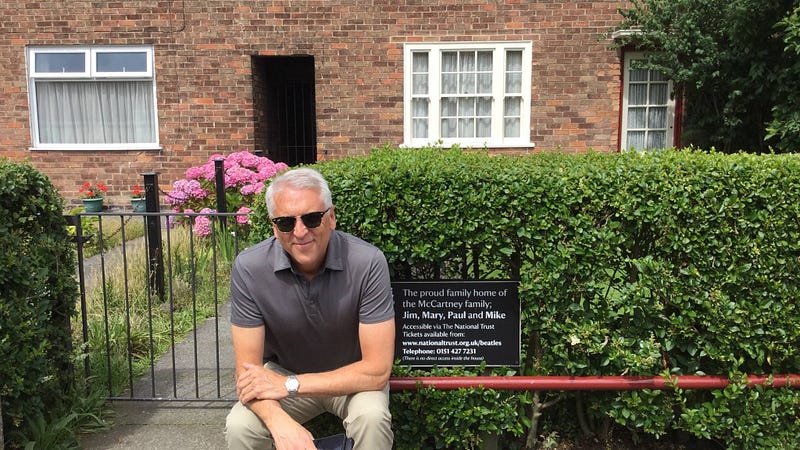
Paul McCartney’s childhood home is at 20 Forthlin Road in South Liverpool and the first port of call. It’s now owned by the National Trust, a UK charity that manages historic places across the country. It’s also listed by Historic England meaning it’s legally protected.
20 Forthlin Road has been restored to its internal decoration from the time McCartney and Lennon wrote their songs there.
The Beatles wrote several of their early hits in this house and She Loves You was completed here. Paul’s dad famously suggested they change the yeah, yeah, yeahs to yes yes yeses. The boys knew better.
Here’s She Loves You from 20 Forthlin Road Liverpool.
We chose a weekend to travel to Liverpool when McCartney’s home was closed to the public but I did get to pose outside.
John Lennon’s childhood home
Unlike Paul McCartney’s childhood home, The National Trust initially had no interest in buying Lennon’s former home. They claimed no Beatles songs were ever composed there.
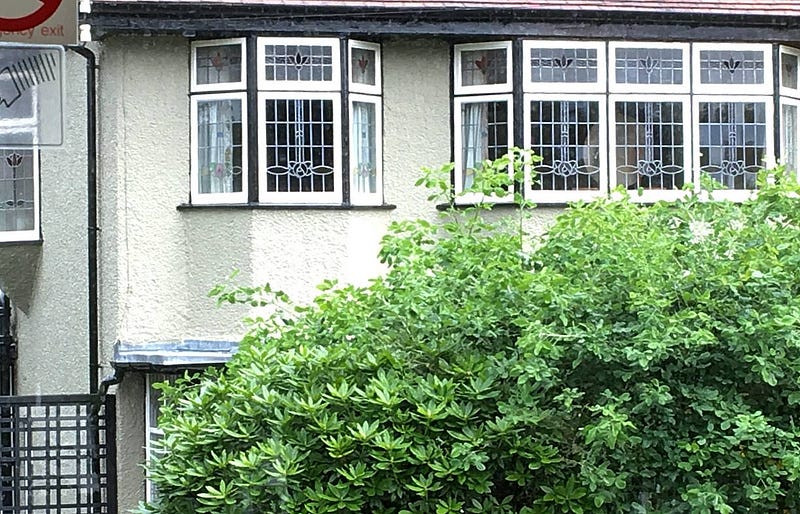
The National Trust had neglected to check that with the other Beatles. McCartney says they composed Please Please Me at Menlove Avenue among others.
Yoko Ono bought the home in 2002 and donated it to the National Trust, poignantly replicating Lennon’s lyric from Happiness Is A Warm Gun:
“A soap impression of his wife which he ate and donated to the National Trust.”
The home has now been restored to the original 1950s style and is also listed by English Heritage. And it was also closed to the public that weekend. We weren’t having much luck.
Lennon and McCartney’s first meeting
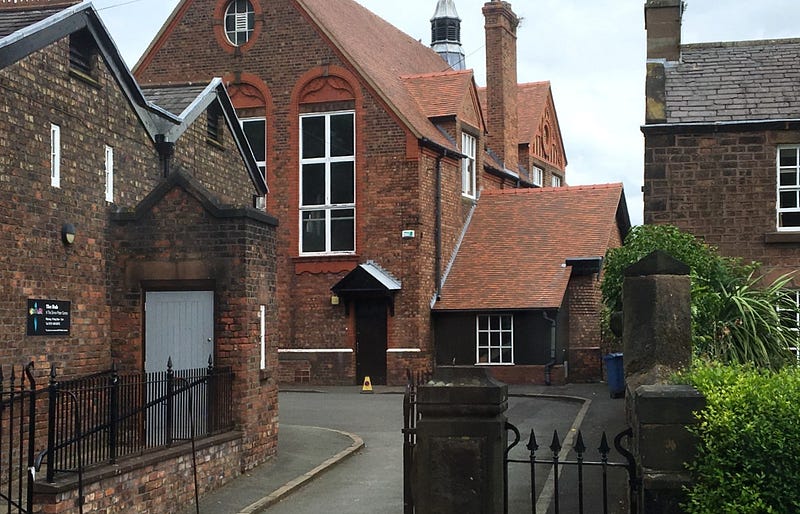
John and Paul first met on the field behind St Peter’s Church in the Woolton area of Liverpool. John was playing with his band the Quarrymen.
And you guessed it, the place was closed to the public that weekend so the photo is from the street.
George Harrison and Ringo’s family homes
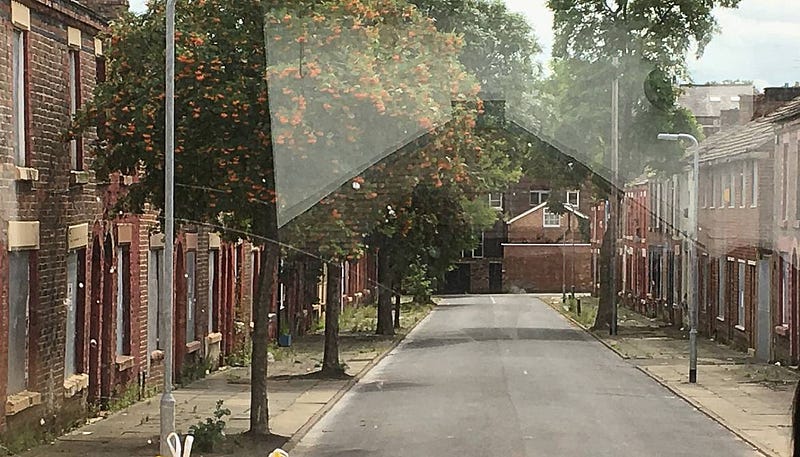
We chose a bad weekend to visit Liverpool. The area around Harrison’s family home was closed off due to roadworks and the coach couldn’t get down Ringo’s old street.
In 2010, the local government published plans to demolish the entire street where Ringo lived. The national government intervened and stopped the plans after an outcry from Beatles fans.
Ringo’s old house is now owned by a Beatles fan although most homes in the street are still boarded up while Liverpool council decides what to do with them. Don’t get me started on politicians.
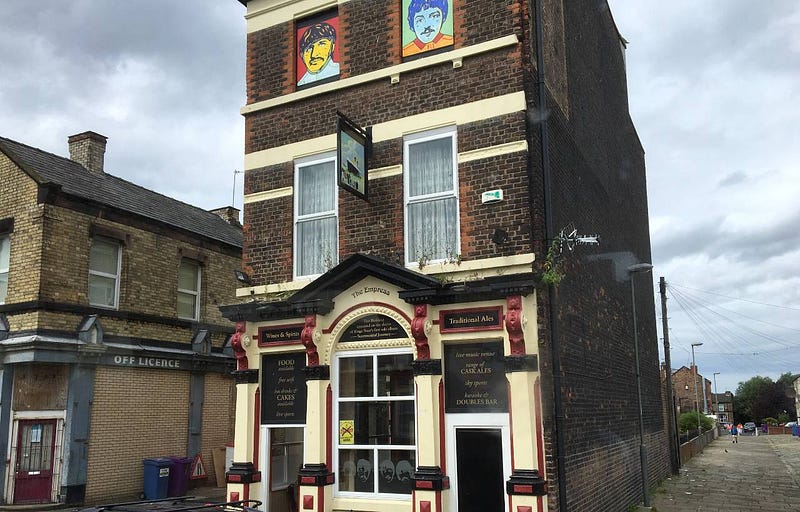
We did get to see the Empress pub at the end of Ringo’s street. It’s featured on the cover of Sentimental Journey, Ringo’s first solo album.
The homes to the left of the album cover have long been demolished and since visiting, the right-hand side of the pub has been painted with a giant mural of Ringo surrounded by Beatles images.
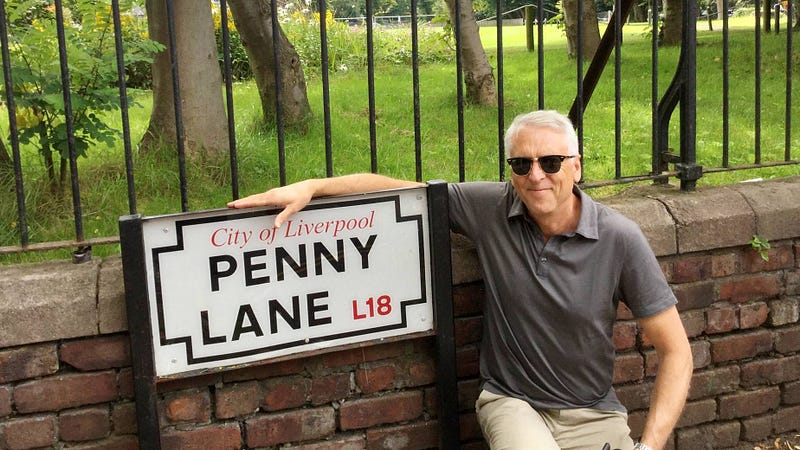
Penny Lane
Primarily written by Paul McCartney, Penny Lane is musically far more complex than it first appears from the catchy tune.
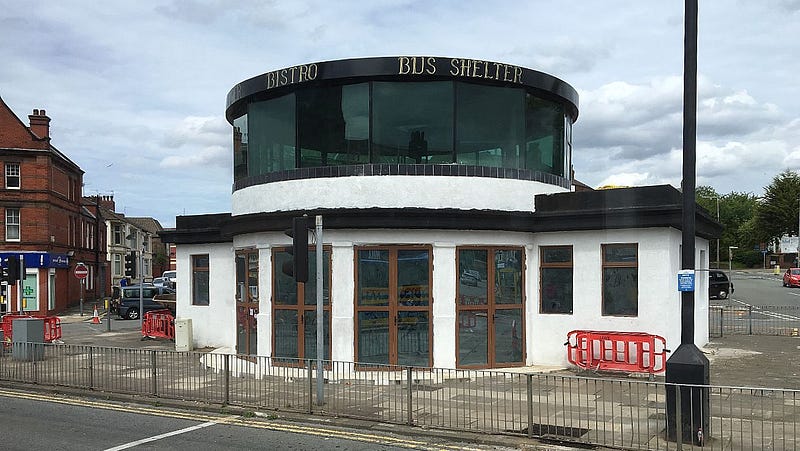
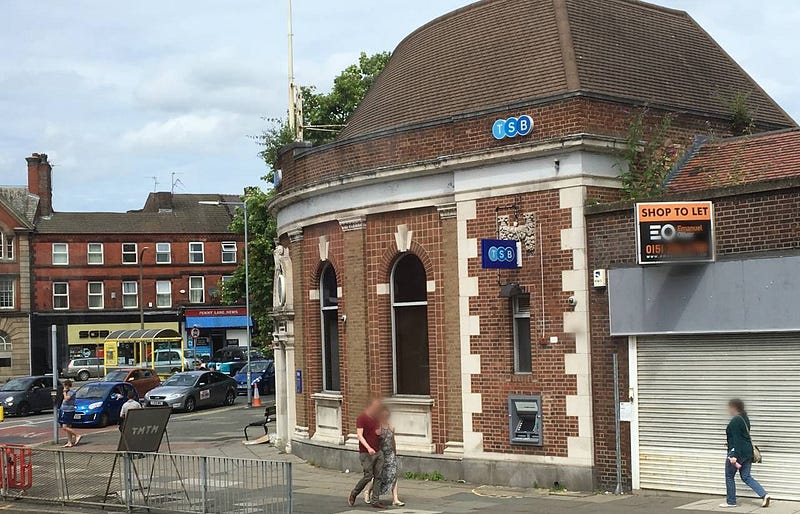
Penny Lane has a bus terminal where Lennon, McCartney and Harrison frequently met. The song also mentions the barber shop where they had their hair cut, the bank opposite the bus terminal and the bus shelter where a pretty nurse is selling poppies from a tray.
The song has surreal drug and sexual references missed by the censors at the time so is not as innocent as it first sounds either.
Behind the shelter in the middle of a roundabout:
On the corner is a banker with a motorcar
The video for Penny Lane shows images of the area although much of it was shot in East London. A giveaway at the beginning is the sign behind the boys at 00.26 for The Theatre Royal which is in Stratford East London.
The horse scenes were also shot in East London and, at 1.17 and 1.35, we see a red London bus behind Lennon as he walks along the street. Liverpool buses were green.
At 0.59 and 1.48, we get a glimpse of the original bus shelter as seen in my photo above as well as the bank looking very similar to how it looks today. The country scenes were filmed at Knole Park, about 40 miles southeast of London.
I tried to edit out the major roadworks in Penny Lane at the time of our visit. Parking was suspended so the coach couldn’t stop and the photos from the coach of the barber shop and fire station mentioned in the song were not usable.
The trip was great but events were conspiring against us.
Strawberry Fields Forever
Strawberry Fields was of course called Strawberry Field. Lennon added the ‘s’ to make it flow better lyrically. The song is also complex in The Beatles' use of a host of innovative recording techniques and sophisticated musical structures, light years ahead of any other band of the time.
John Lennon used to play in Strawberry Field as a child; it’s on the same road as St Peter’s Church and a short walk from his home on Menlove Avenue.
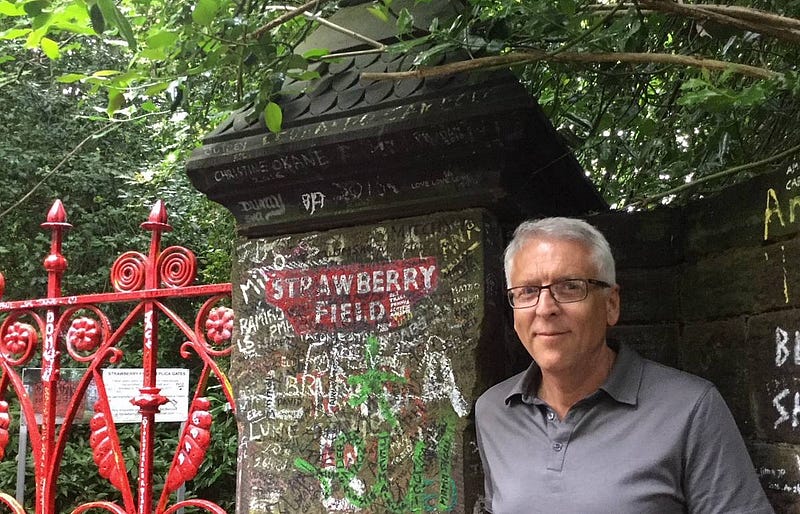
We visited Strawberry Field shortly before it was renovated, cleared and opened to the public. So, like most of the visit, I stood outside.
The Strawberry Fields video was also shot at Knole Park in Kent. During the day of filming, John went shopping in the nearby town of Sevenoaks. He bought an antique circus poster that would be the starting point for the lyrics of Being For The Benefit Of Mr Kite¹.
The Cavern Club
By 1973, the Cavern Club had closed because the UK’s then state-run train company decided to build an underground railway in Liverpool. They wanted the Cavern Club for a ventilation shaft.
I’m sure there were alternatives to destroying a historic location but that’s bureaucrats and politicians. A ventilation shaft. Are you kidding?
Then you want to scream some more at the bureaucrats because the railway was never built but they left the Cavern badly damaged by the initial work.
The Club was eventually rebuilt using as many of the original bricks as possible and more or less where the old Cavern Club had been.
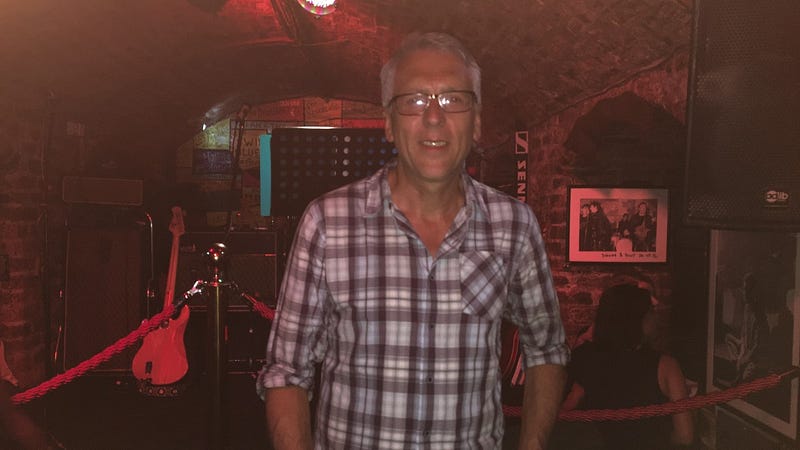
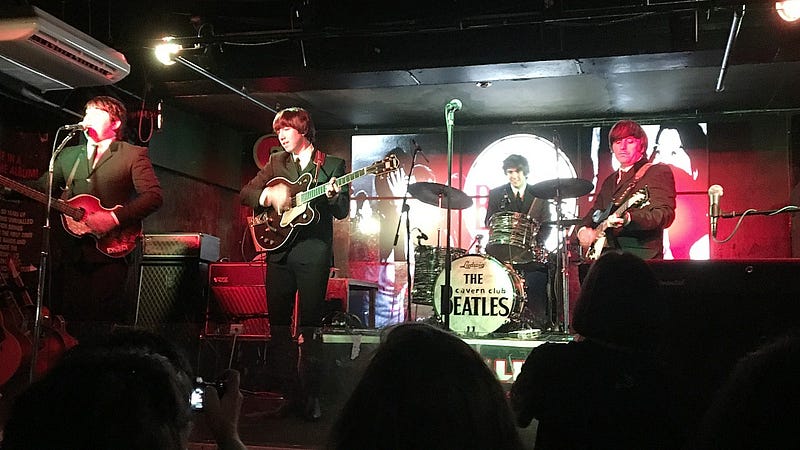
Unbelievably, the Cavern Club was not closed to the public when we were there. In residence was a very good cover band — The Cavern Club Beatles.
Return to Liverpool
Next time I’ll arrange the trip to Liverpool when things are open and there are no road works. And when West Ham are playing in the city. Two birds one stone and all that.
You can access thousands of articles from me and hundreds of other writers by taking out Medium membership for just $5 a month.
By signing up with this link, you’ll support me directly with a portion of your fee and it won’t cost you any more than going direct.
Did you enjoy this article? Get my posts direct to your inbox. You can do that here.
SOURCES
https://www.the-paulmccartney-project.com/concert/1957-07-06/
Beatlesbible.com


