
The Reflective Eclectic
Multiple Views of Dissociative Identity Disorder
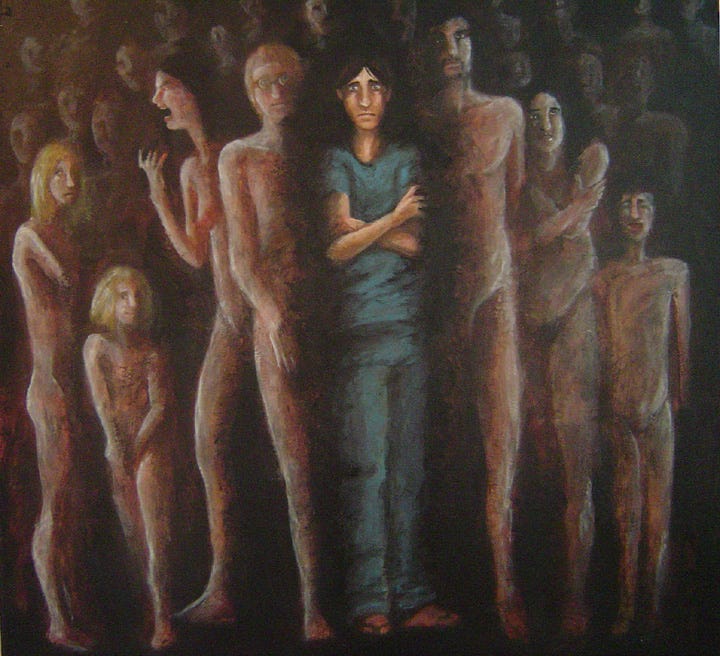
There aren’t many mental illnesses that therapists are accused of creating, but dissociative identity disorder (DID), or multiple personality disorder, as it officially used to be known, is one of them.
It may be the only one. Blaming people for creating mental illness has mostly gone out of style since we made too many enemies blaming parents, mostly mothers, for their screwed up kids. These days we prefer to blame genetics, which I suppose is another way of blaming parents, albeit for something they don’t have any control over. Mostly we prefer not to dwell on issues of etiology and get right down to the business of patching people up.
DID is the significant exception to this rule. In case you don’t read a selection of the DSM 5 (the Diagnostic Statistical Manual, the mental health practitioner’s Bible) every night before going to bed, DID is when the person behaves as though he or she is several distinct persons all inhabiting one body. In classic cases, the individual alters have no knowledge of each other or memory of what the others do.
One actor appears on stage at a time and all the others go to a kind of sleep. In the natural world, however, we frequently see alters who have consciousness of each other, as the patients drop in and out of therapy, gaining insight along the way.
Cheryl/Marcy was one such patient, although Marcy only gave me a general sense of how many of them there were. “Oh, a half dozen or so.” She was certain that Cheryl knew about none of them. Marcy had great contempt for Cheryl, whom she considered an incompetent, befuddled nincompoop, cloyingly dependent on others for reassurance. Well, if you had a half dozen or so people inhabiting your body and doing things with it without your knowledge; you might be befuddled, too.
“There’s Sarah, who’s three and doesn’t do anything but cry; Monique, who’s six and likes to play; Joe, who likes cars and computers; Bubbles, who picks up guys; and Chloe, well, you don’t want to meet Chloe. She’s a violent bitch.”
Then I asked what I always ask, “Is there a stage manager? Someone who decides who’s going to take over?”
But nobody ever knows. “We just do whatever needs to be done.”
The theory is that patients develop DID early in life as a way of coping with early childhood trauma. Alters, in some cases, originate in the invisible friends many children create to hold the disavowed aspects of themselves. Are you tired of hurting? Well, it’s not you who are hurting, it’s Sarah. Are you violent and promiscuous, but can’t face yourself afterwards?
Bubbles and Chloe will take the fall for you. Are you all grown up, but want to feel as carefree as a child? Ever secretly want to change your gender? There’s always Monique and Joe. Are you concerned that if you act independently and assertively no one will take care of you anymore? Marcy to the rescue.
Do you want to write freely without an inner censor crossing everything out with his blue pencil? Write fiction, as I have, and create a whole town full of fictional characters.
The difference between a patient with DID and an author of fiction is that the patient is better at creating characters. Cheryl’s alters are as real as a person can be without actually having a body to call their own. Unlike any other person with an inner conflict, they all possess a separate compartment of memory. Unlike any other divided, ambivalent person, they can act decisively, without remorse.
The fact that Cheryl must share her body with this whole crew is an inconvenient flaw in the design. Other people are unlikely to recognize when alters take over. Men who go to bed with Bubbles wake up with Joe. Chloe commits a crime and they all serve the time.
The other flaw is that, if Cheryl were to go to a therapist for help with this, or if Marcy were to on her behalf, there’s a good chance she’d encounter a clinician who does not believe that the condition exists. Here’s the problem: the host personality, Cheryl, in this case, is often one who is hysterically dramatic and needy, the very kind of person you’d expect would make all this up.
If you were to go to a clinician who believed in the condition, it would really make his day. This is this very kind of juicy case we shrinks live for. Your therapist would be the star of case conferences, he could really rack up the billable hours, he might even start writing a book and imagine who’ll play him in the movie. He might be more invested in your condition than you are.
The people who don’t believe the condition is real will contend that it’s created when a sticky, dramatic, suggestible patient meets an absorbed, energized, naive therapist. It is not produced out of the traumas of childhood, they say, it’s fashioned when client and therapist collude and need a cover story to do so.
Here’s where I stand on the subject: I have met people who presented with DID whose condition was convincing and those in whom it wasn’t. I have tried to meet them all on their terms, as tolerant and respectful as I could.
I’ve come to believe that any ideas we have about the self, whether we say it’s singular or plural, are teetering constructs at best, and delusions, at worst. A person is real, but what he says about his personality, or personalities, is always very much a fiction; a fiction that is forever fashioned in collaboration with the people around him.
Read more of The Reflective Eclectic and other stuff by Keith R Wilson


