
Writing Tips
Multimedia Hacks to Keep your Writing on Track
Fresh ways to engage with the process of writing
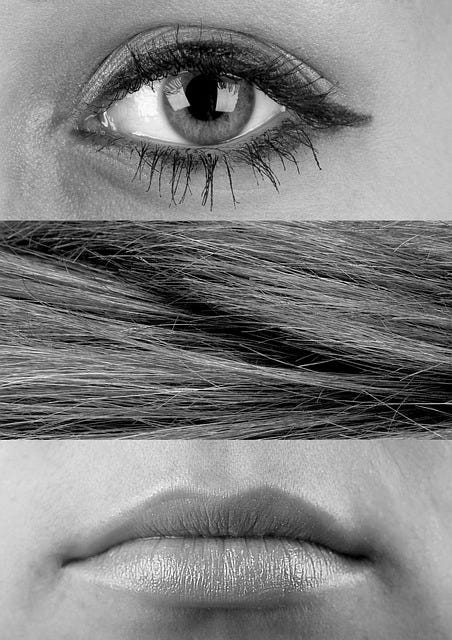
Have you been staring at your blank screen and the reproachful blinking cursor? Despite having an idea bursting to become a short story or a book, you may be struggling to translate your teeming ideas into words. Let me suggest some visual tools to nurture your inspiration.
Writer’s Mood Board
Maybe you’re more familiar with mood boards as a tool when putting together an interior design scheme or you’re all clued up because you regularly use Pinterest. For a writer, they’re a fun and effective way to spark ideas and keep you on track with your descriptions of characters and locations.
What do characters look like?
Find a picture that captures the essence of your central character. Perhaps he looks like Johnny Depp, but his eyes are icy blue like Piers Brosnan: Place some lovely blue eyes next to an image of J.D. This will assist you whenever you’re describing the character. Consider how he moves, does his lip quirk, or do his eyes crinkle when he smiles? Having an image(s) on which to focus will help you with consistency. You’ll avoid giving a character green eyes at the outset and later referring to their dark brown orbs. Repeat this process for other ‘players’ in your story.
Where does your story take place?
Again collect images — at a restaurant, a cottage by the sea, a beaten-up old truck, or a desolate, rocky region. Gathering pictures that depict these places will take you ‘there’ when you look at them and write. Authenticity will shine through your descriptions, allowing the reader to visualise the setting, but beware of getting more detailed than is necessary to move the story along.
An added benefit occurs if you take a break from crafting your story. When you return, a review of your mood board effectively snaps you back in the zone.
If you’re writing a novel rather than a short story, you may want to make more mood boards or more elaborate versions. Your characters may have family, friends, pets, and work colleagues to be considered, so you feel inclined to create ‘sub-boards’. How deep you dive into this is entirely your call. Working through these questions compiled by Marie A. Rebelle will help complete the task.
Creating a Mood
Build a collage of images that help to evoke the mood and emotions flavouring your piece of writing. Seek out pictures that portray terror, tranquility, passion, or mischief; it only has to work for you, nobody else sees this mood board. Whatever note you want running through your piece of fiction — find an image(s) that conveys that to you. Select it for your mood board.
Add 2–3 colours, because science says colour conveys emotion. For example, the appearance of a book cover is not a random thing, it is designed to imply the genre of the story within. An example: most vampire books have a background of black with accents of red and white.
It’s not just fun, you’re working
While creating this/these mood board(s), you are constantly thinking about composing elements of your story, without pressuring yourself to write. The muse is a fickle creature and doesn’t usually perform well under pressure. By setting aside time to create a mood board you give your muse space to join up the dots before you challenge yourself to write words.
Any time you get stuck with your plot, gaze at your mood board — it’s likely to help you move forward with your writing.

Injecting Authenticity into Characters
Use Friends and Family
All but the most narcissistic person would be horrified to find themselves portrayed word for word in your fiction, but there‘s no harm in stealing elements from family and friends to imbue your characters with real traits. Is your brother-in-law always quick with a witty response? Does your boss trail off in mid-sentence, assaulted with a new idea? Do you know a girl who pouts and preens, always putting herself first? I come from a rowdy, leg-pulling family, so a lot of that is likely to emerge in my ‘close relationship’ dialogue.
Use the attributes of a beloved pet’s personality to create a character — a boyfriend with a dog’s loyalty or a woman with the feline grace and craftiness of a siamese cat
Steal from Pop Culture
Equally effective for building a player in your story who feels real to you is ‘channelling’ a pop star, a character from a film/ show you’ve watched,I recently needed to write about college-age kids at a party, but my party days were decades ago. Instead, I took inspiration from actors in a YA show I’d watched. I could ‘see’ how they interacted together and ‘hear’ how they talked, bouncing insults off each other and flirting, which helped write three similar players in my scene. The feedback has been that my readers could ‘see/hear’ them too, proof that the authenticity of my visualisation transferred into my words.
Be like Miss Marple
Miss Marple [a fictional sleuth created by Agatha Christie] is famous for her ability to cross-reference the personality and motivations of characters involved in murders with the inhabitants of her village, who she knows like the back of her hand. So ape her by shaping the cheating fictional wife using the pattern of a boss who made your working life hell, or base a romantic hero on all the best bits of a smouldering love interest from your youth. Perhaps you have a friend who doesn’t realise she’s beautiful both inside and out — why not immortalise her as the protagonist who kicks ass in your tale.
When you can visualise characters as you write, they will jump off the page for your readers.
Create their Voice
A character’s voice is very important. How it sounds: deep, resonant, squeaky, breathy, with a stutter, sonorous, quiet, is something you ought to consider. But, even more importantly, decide how they say things. Do they have a catchphrase? Maybe they call everyone ‘love’ or ‘buster’. Perhaps they overuse people’s names or start every sentence the same way, e.g. “In my humble opinion, “ or “Here’s the thing.”
These verbal tags are really useful when you write a scene that is strongly dialogue. The speech can bounce between your characters like a ball in a tennis match but, because Character A has a distinctive tag, it eliminates the need for attribution (he said, she asked, etc.) Voice is another trait where shaping your character to the template of a real person helps to make it vivid.
Actor Bruce Willis, who reportedly had a stutter as a child, made great use of pauses in his delivery to centre him so that his words came out right. Fans of the first novel made into the Netflix show Bridgerton may recall the Duke of Hastings employing the same trick, which concealed his stutter and gave him the appearance of being deep, smouldering, and intelligent.
A word of warning, take care when using accents in your writing. If you are trying to convey a sexy Scottish burr, the confused syntax of a non-English speaker, or the dropped letters of a Cockney sparrow, remember less is more. Writing it how it sounds (phoenetically) can be rather taxing for a reader to process, if they are not familiar enough with the reality of the accent to hear it in their head.
Having considered how mood boards and visualising character attributes such as appearance and speech, can help with writing inspiration, you may be interested to learn how music and an Achilles heel can also help with writer’s block. [part 2 to follow]
Posy Churchgate is based in the UK & writes |Fiction : Romantic, Erotic, Fantasy, YA |Non fiction : sexuality, relationships |Editor for Tantalizing Tales, she supports new talent. More stories can be found on FrolicMe.com & Tickle.life | Using this link for Medium membership will support her directly, plus giving you access to all Medium’s great content. Use this link to subscribe: an email of Posy’s latest story comes directly to your inbox.