
Multi-faceted Toxic Culture in America’s Police Agencies is the Real Culprit
And it always has been. Will it always be, or can America change it?
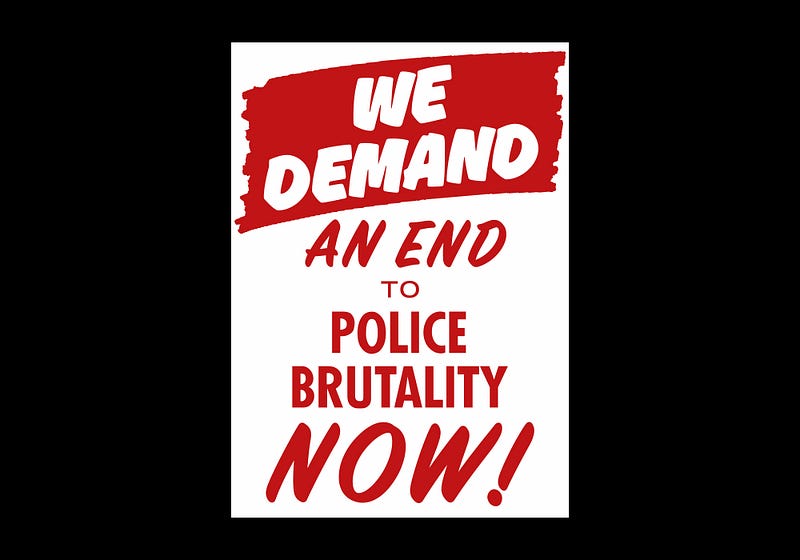
Police apologists and defenders like to advance the “couple of bad apples” theory, to excuse and explain police misconduct. While it is valid up to a point, as it is regarding any other profession, it neither actually excuses nor explains.
Other professions
The concept of a “bad apple,” meaning a bad police officer (or doctor or lawyer or judge, building contractor, et cetera) certainly exists. But the difference is that a formal complaint against a doctor, lawyer or judge or contractor results in real action with consequences. This is a function, at least for the doctor and lawyer, of a robust set of professional rules as well as statutory laws governing them. Also, they are required to carry professional malpractice insurance — and that requirement also means they can be denied coverage if they’re a “bad apple.”
Even judges, though not required to carry malpractice insurance, can be (and often are) removed from the bench for misconduct. That usually ensures there will be no other judgeship position for them — and in many jurisdictions it would also preclude a return to law practice, depending on several factors.
Consequences, and a pretty exhaustive rule framework, can be effective both in the present, and as a persuasive deterrent. Simply mention “state bar” to an attorney, and you have his or her attention. Same with the doctor, and a lesser extent to a judge — there are too many serious consequences to simply ignore it.
Law enforcement
But things are different, in many ways, for police officers (and police agencies), and these arise in part from the nature of the work performed. Police officers do a difficult, dangerous and often unpleasant job; and are given sweeping powers and immunity (and weapons) to do it. We should all recognize and respect law enforcement’s difficult and dangerous role — but that should not blind us to the negatives — because in large part these are why there is a toxic culture in America’s police agencies.
One problem is the qualified immunity granted to law enforcement (and other government entities). Although some people mistakenly believe that this immunity is why police officers don’t often get convicted of crimes, in reality it only impacts on civil liability. The qualified immunity is a huge part of the protective hedge and wall around police officers and agencies that make it difficult to sue, and if you sue, to prevail.
But an even bigger problem (leading to the toxic culture) is what that immunity, coupled with having no personal exposure to damages and litigation cost, has on an officer’s personality. They don’t have to pay an attorney or court costs — somebody else covers this. If found liable, they pay no portion of the damage award (or settlement) — the taxpayers cover this in one form or another. Even if charged with a crime, the Union and other entities defend you there too. And, as we know, it is rare for a police officer to be convicted of a serious crime — often, there are not even charges brought.
Can you imagine how…liberating…all that is? Quite literally, they come to believe that there are no restrictions that apply to them — and if there are, his or her colleagues and agency will rally round, circle the wagons, and protect them. The taxpayers pay the bills. Of course, that attitude is not unique to police — certain government officials of high rank have been known to feel and act that way also. Can you think of any?
The toxic culture goes way beyond racism
To be clear: anyone who says there’s not a systemic racism issue in this country in general (not saying that America is “racist” now), and in police agencies in specific, is simply not paying attention and is ignoring it — for different reasons. But the cultural problem in America’s police agencies is bigger than just allowing (read tolerating, or in some places encouraging) race to influence stops, use of force, and other police-driven actions.
Some people who seek police reform seem to focus solely (or at least too much) on systemic racism in America’s police agencies. Does such systemic racism exist across all our police agencies? For what it’s worth, let me say I don’t think so — and that in my view such a view is, paradoxically, both too broad and too narrow an indictment. It is overbroad because of the word all, and it is too narrow because it focuses on race/ethnicity.
It’s really what can be called a bully and brag culture, and it is often color-blind; and it accounts in an overarching manner for the BS crap that happens to black and brown people, and also to other people, especially some of the most vulnerable. Let me give you a case in point:
In recent reporting: in June of 2020 a 73 year old woman with dementia exits a Walmart in Loveland, Colorado, evidently without paying for less than $14 in merchandise. She is not only arrested, the arrest is violent. But that’s only part of the issue. It’s what occurs when the officers are reviewing body cam footage (for entertainment?) that speaks to the toxic culture — because the officers were on video in the station while watching the footage. The CNN article lays out the disgusting actions and discussion between the officers, so I won’t repeat it here. I’ll just ask a question?
What kind of leadership and culture in a police department generates, encourages, protects and defends police officers capable of that kind of behavior? I answer that is a toxic culture, which infects even the leadership — and ultimately means do nothing until you get caught on video.
This toxic culture is not new
Many years ago as a young law student, I worked for a law firm that focused on insurance defense and also defense of public entities — like cities, counties — on all matters, including police misconduct. One of the public entities they represented was at that time one of the most notorious cities in the state: the city officials were corrupt and the police; good grief they were corrupt. So much so that for a time they had serious trouble even getting police officers to try for jobs there. There was a constant stream of complaints, tort claims, and litigation.
Bad cops, dirty cops, were pretty much the rule rather than the exception; and leadership protected them always; damage awards didn’t come out of any officer’s pockets, it was always taxpayer money in some form. Although he later went the other way and stood up to the corruption, there was one leader in the department who was tasked with “managing” the defense of all the cases against the department and the many officers (and Chief).
On many occasions I recall this senior police officer coming into the law offices for meeting with the attorneys. When any particular evidence was really troublesome, that evidence would disappear from our files. It was called “Hoovering” or “Vacuuming.” That is how bad the culture was in that particular place and time.
I found another job in a different city as quickly as I could.
It’s a culture thing, and somehow and someway, we must focus on the circumstances (aye, and people) who bring about and perpetuate this toxic culture. I fear that if we do not, there will be no real change, no matter how many individual officers are convicted. Such convictions are a step in the right direction, but do not address the systemic problem.