
Moving to Spain to Teach English in my 40's

The small, stark classroom was vibrating with the rumble of twenty-five loud teenage voices, a rumble that would last for the next hour. I looked down at sweet Raúl, the only one sitting quietly at his desk, hurriedly colouring something that seemed to have a looming deadline. Frustrated, I thought, “Even he’s not paying attention!” Surely I didn’t behave like this when I was thirteen? My colleague and I exchanged glances, let out a collective sigh and carried on as best as we could with our lesson. As the piercing bell finally rang out, Raúl ran up to me, excitedly speaking in Spanish that I did not understand while he shoved his masterpiece into my hands. My heart melted. He learned no English that day, but this moment was everything I had signed up for.
Along with a new found coffee habit and other wonderful discoveries, a melted heart was now to be a part of my daily life teaching English in Spain.
It can be a very difficult and daunting task to find employment and secure a work visa for North Americans over the age of 30 wishing to live and work in Europe. At 43, I was bored with my career and life in Canada and wanted to fulfill a lifelong dream of living in Europe. Achieving this was proving to be a struggle. I decided to earn my TESOL certification for teaching English because, although that wasn’t my dream job, it at least opened the world’s door a little bit wider for me. In searching for opportunities abroad, I found the Auxiliares de Conversación in Spain, a program where native English speakers are brought into Spanish public schools to assist with English language learning and act as cultural ambassadors for their home country.
There are several Auxiliares de Conversación programs in Spain, but the most popular is organized by the Spanish government. Auxiliares assist in their assigned school for 12 hours per week and earn a monthly salary of 700 to 1000 euros, depending on where you live. The program welcomes all ages and the requirements for acceptance are few. I had found my perfect opportunity!
(https://www.educacionyfp.gob.es/eeuu/convocatorias-programas/convocatorias-eeuu/nalcap.html)
I was able to choose the region of Aragón and was placed in Zaragoza, Spain’s fifth largest city. I had never been to this area of Spain before, but I knew what I wanted from the place I would call home, and Aragón checked all of the boxes.
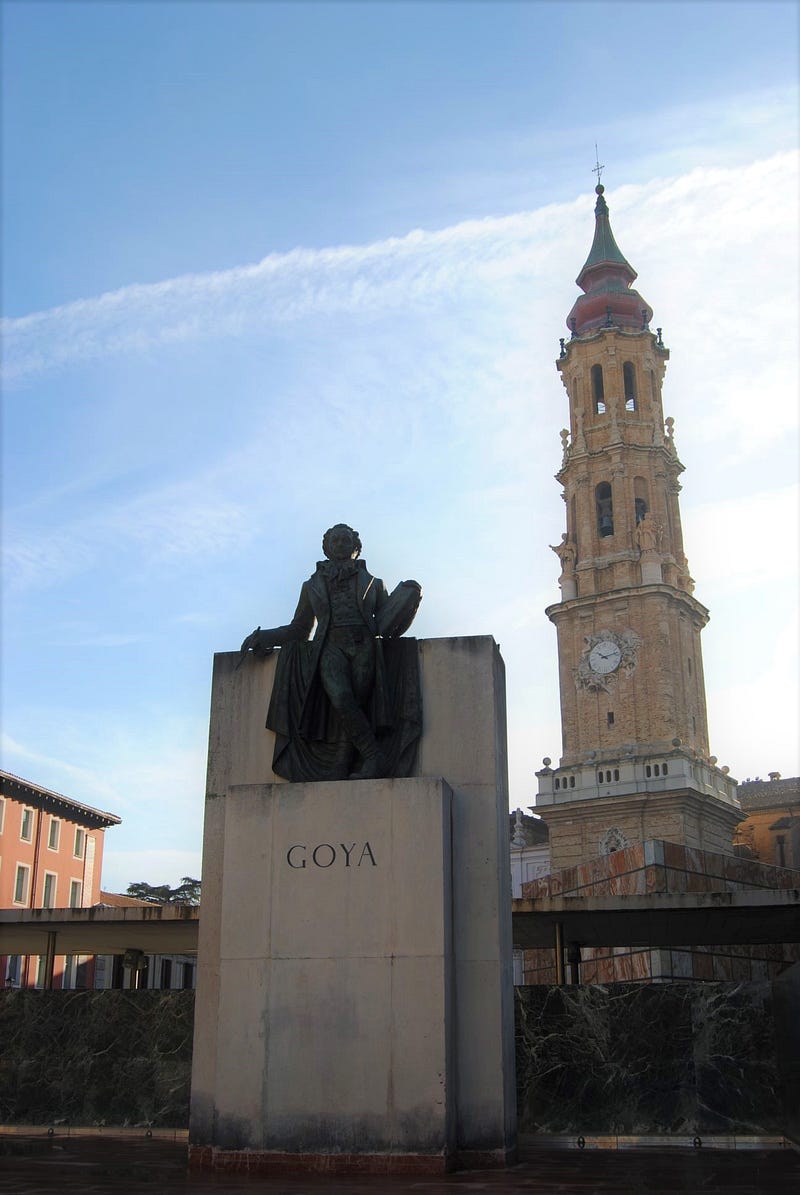
Zaragoza is steeped in Roman, Islamic and Catholic history and treats visitors to ancient ruins, ornate Mudéjar architecture and is one of a few cities in Spain to have two Cathedrals. Aragón is the birthplace of Francisco Goya, one of Spain’s most important artists, and his work can be seen in situ throughout the region and in the museum dedicated to his work. The city also has a vibrant modern art, festival and music scene with concerts and events and fiestas galore! Nature lovers indulge in the outdoors, and Aragón’s dry climate makes hiking and cycling a pleasure. It is a well-connected, affordable city of 700,000, almost exactly between Barcelona and Madrid, yet often overlooked on the tourist radar in favour of its famous neighbours. This makes Zaragoza the perfect place to immerse yourself in authentic Spanish life, free from tourists.
If you are longing to learn Spanish, this is a great place to do so as there is little English spoken here. I arrived, barely speaking Spanish basics, and found people to be patient and helpful. I muddled through most interactions with either a terrible version of the language or blank stares, and uttered the words “I don’t think I can do this,” when I had to return a defective hair dryer to the department store (But I did it. I needed the twenty euros! #motivation), and mixed up words like caliente and calor regularly. The Spaniards would just laugh, make me feel better by telling me their English was bad too, and do what they could to help. I couldn’t have asked for a warmer welcome from the locals.
After becoming comfortable with the city, getting settled in my new apartment and going through the anxiety-inducing tasks of opening a bank account, setting up a new phone number and dealing with my residency paperwork, it was time to do what I went there to do, travel! Actually, it was time to work. I was placed in a high school in a small village, a half hour drive outside of Zaragoza, where I would assist eight teachers in teaching English to 500 wild teenagers ranging from 12 to 18 years old. I would be at the school three days a week and would teach four classes per day. My role, aside from being the ‘cool aunt’, would be to give presentations and lessons in English on different subjects and on cultural aspects of Canada and other English-speaking countries. I also assisted in an art class with the students in the school’s English immersion program, which, as an art lover, was my favourite.
Spanish teenagers are like teenagers everywhere, except they talk more and really love football. It is difficult to keep them focused, they are hard to teach, many are unmotivated and do not like to do homework. They are also charming, energetic, hilarious and so excited to share their culture with foreigners. I could never be annoyed with them for very long. The Auxiliares are not teachers. It is not our job to discipline or give them exams, so we automatically have a different rapport with our students which allows a wonderful relationship to develop. How much English did the kids learn from me? If I’m honest, probably not much. But our days were filled with fun and laughter and that made it all worthwhile.

Although the Spanish siesta can be frustrating for a North American who is used to having everything open all day, the concept of the siesta and the relaxed work-to-live lifestyle is one I fully embraced. The program offered the luxury of a lot of time off, so in between work and running life’s normal errands — because this is still real life — I could spend my time learning Spanish over wine in sunny plazas, checking out the wonderful markets, art galleries and historic sites, cycling the paths alongside the Ebro River, and taking weekend trips around Spain.
Teaching English abroad is generally thought of as something to do in a university graduate’s gap-year before settling down into ‘real life’. Most of the people who participate in this program are in their twenties and are there to let loose and party in Spain. But for those of us who have experienced a few decades of ‘real life’ and are thirsty for new experiences and new connections, the Auxiliares de Conversación program is also a wonderful and rewarding opportunity, one which I feel I was better equipped to handle and appreciate more in my forties. While it still presented all of the challenges moving to a new country brings, some exciting, others not so much, my life and travel experiences made the transition much easier. I was comfortable navigating everything on my own and fully participated in local life by attending events and taking classes, which made this time very meaningful and memorable for me.
Working as an English teaching assistant isn’t exactly a career path and the program can be far from perfect some days, but for those who need a time-out to experience something new and earn a little bit of money to fund travelling, there is no better way to do it.
If you’ve enjoyed this story, there is plenty more where that came from! For $5/month, you can get unlimited access to my stories and thousands of others on Medium. Sign up for a membership and a portion will go to support my writing! Thank you!! https://medium.com/@cattravelwriting/membership


