
Moving on After Auschwitz
Is there such a thing as moving on after Auschwitz? Victor Frankl and Lale Sokolov say there is.
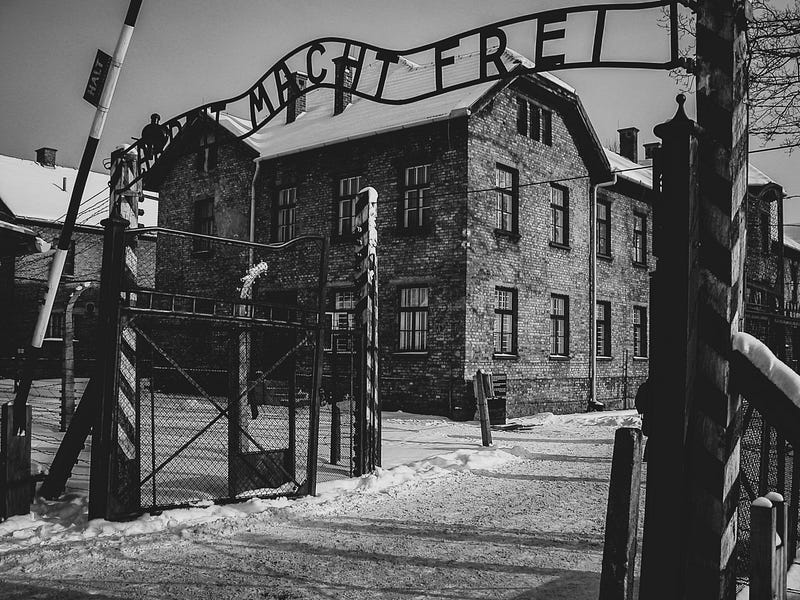
In the last three days, I’ve devoured a book, in every sense of that word. “The Tattooist of Auschwitz” by Heather Morris quite literally kidnapped my attention. Almost every free moment I had I spent reading. (It took me so long only because work got in the way.)
I was so mesmerized by the plot of the Tattooist that it was so painful to imagine that it happened. It’s a true story about Lale Sokolov who found himself sacrificing for his family, thinking that his labor in a “working camp” will spare his mother, father, sister and brother.
Shortly after his departure, his mother and father were taken as well. His brother joined the opposing forces and lost his life. Lale’s sister was the only one that survived. His story is sadly not the only one. Many people survived, and unfortunately, many more did not.
One of the other stories that I’ve read is about a man (that happened to be a psychiatrist as well) called Viktor Frankl. He wrote a book called “Man’s search for meaning” in which he describes his life after losing his parents, brother, and a pregnant wife and then slaving away in 4 different death camps including Auschwitz.
Simply said, he has lost everything.
After such happenings where does one find a will to live? How did they all do it? How did they survive it?
From our comfortable sofas, chairs, and beds it’s hard to imagine the conditions in which many of the prisoners were living for years. And I am not only talking about the cold or hunger. I am talking about the humiliation, psychological and mental pain that they all endured. Not knowing when it will all end, will you ever be free again, in addition to the constant fear that you might die today.

To go back to Frankl’s book, where he, in my opinion, makes the biggest point and sets the foundations for his future work —
“We cannot avoid suffering but we can choose how to cope with it, find meaning in it, and move forward with renewed purpose.”
I think that was the secret to surviving Auschwitz. The suffering was given, and the only way to endure it was to find a new purpose even if it was confined by the wire and walls. Just like Lale smuggled jewelry in exchange for food, not just for himself but for other inmates as well, even after he got caught and beaten.
Is it always possible to continue living a meaningful life? Many concentration camp survivors have proven that it is.
However, would we blame V. Frankl or Lale if they didn’t continue living their life the way they did? I would dare to say no. After all, many people attempted suicide in these conditions.
The act of living is a fight already.
Nevertheless, Viktor Frankl walked his own talk, he encouraged his inmates almost every day to endure, he continued practicing psychiatry and went on to establish his school of psychotherapy — logotherapy. Logos is a Greek word for meaning, reason, word, hence the name — reason-therapy.
His premise was that an individual’s main motive is to find meaning in life. It might sound very logical for us today but at that time his premise was quite a new one, considering that it was coming after established Freud’s belief that the primary motivational force is a pleasure and after Niztesche’s concept of will to power. Don’t worry I’m not going into the depths of any of the above-mentioned.
As with any therapy, logotherapy has a couple of its principles as well. They are listed below, quoted from Wikipedia.
- Life has meaning under all circumstances, even the most miserable ones.
- Our main motivation for living is our will to find meaning in life.
- We have the freedom to find meaning in what we do, and what we experience, or at least in the stance we take when faced with a situation of unchangeable suffering
What if you are thinking now: “None of the above apply to me? How can I find meaning?”. V. Frankl has an answer in his book for that too:
- by creating a work or doing a deed
- by experiencing something or encountering someone; and
- by the attitude we take toward unavoidable suffering” and that “everything can be taken from a man but one thing: the last of the human freedoms — to choose one’s attitude in any given set of circumstances”.
All three of the advice are taken and can be found in his book “Man’s Search for Meaning”, so I warmly recommend it. And to go back to the start of this article, the book “Tattooist of Auschwitz” does have a happy ending. How exactly did the story end? You will have to find out for yourself.
If you like reading articles like this, consider joining Medium for only $5.00 a month! You’ll get full access to all of my writing and million other articles. Joining Medium through my referral link will support me (and other writers) and won’t cost you anything extra!


