
Moving Beyond the Tourist Sites as Worldschoolers
A travel tale featuring Italy
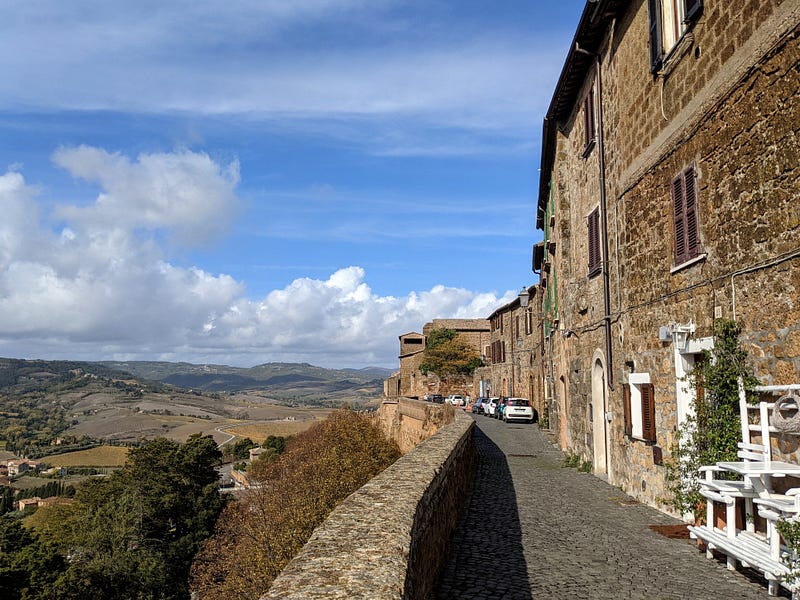
My daughter and I wove down cobblestone streets and out a primary gate of Orvieto, Italy, a town that sits atop a plateau of rock high above the plains of Umbria. To reach Orvieto, one must ascend 1,000 feet via elevator, funicular, footpath, or windy road. With no destination in mind, my daughter and I walked a curving trail down toward the plains.
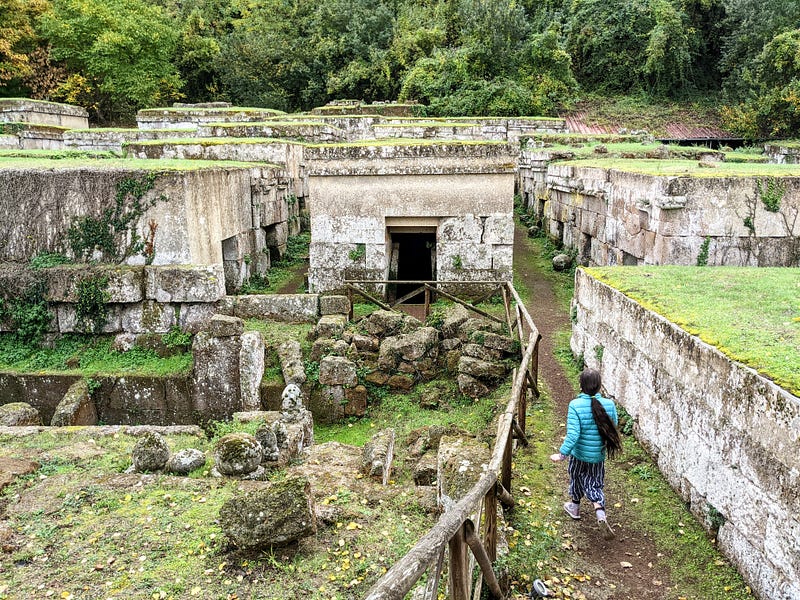
Partway down, we spotted rectangular buildings resembling Hobbit houses capped with sod. Intrigued, we descended to find a crumbling ticket booth, a single employee, and the entrance to a 2,500-year-old necropolis populated by the deceased of an Etruscan city.
Italy offers a trove of treasures for travelers to explore, and my family spent weeks visiting famous sites and consuming art and history: Rome’s Pantheon and Colosseum, works by DaVinci, Botticelli, and Michelangelo, and the ancient ruins of Pompeii. We ate pizza in its birthplace, Naples, and gazed in awe at Brunelleschi’s dome atop Florence’s cathedral.
But stumbling upon 2,500-year-old Etruscan tombs became the apex of our Italian journey.
Our family was spending a week in Orvieto, a quiet place with under 30,000 inhabitants off the radar of most tourists. After two hectic months of traveling through much of Europe, we needed a rest.
We are a family of worldschoolers, and we’re traveling for two years while working and homeschooling. Worldschooling is a lifestyle in which parents educate their children through intentional interaction with the world outside of their borders.
While adventurous families have always crossed borders for exploration, education, and memory-making, worldschooling has gained prominence since the pandemic began, when parents and students alike embraced remote work. Educational approaches differ from family to family, but one strategy applies to all: Worldschoolers absorb lessons on history, science, ecology, geology, and more by wandering the planet and exploring its sites.
My family prizes immersive travel, moments of deep interaction with local cultures and communities, and we tend to eschew touristy locations. We’ve hiked in Northern Vietnam, floated down the Nile River, enjoyed tortes in Vienna, and cared for street animals in Thailand.
Even with this orientation, though, we have trouble moving off the tourist track, as the internet leads us to the best, most popular, must-sees, most of which are touristy.
Which leads us back to Orvieto.
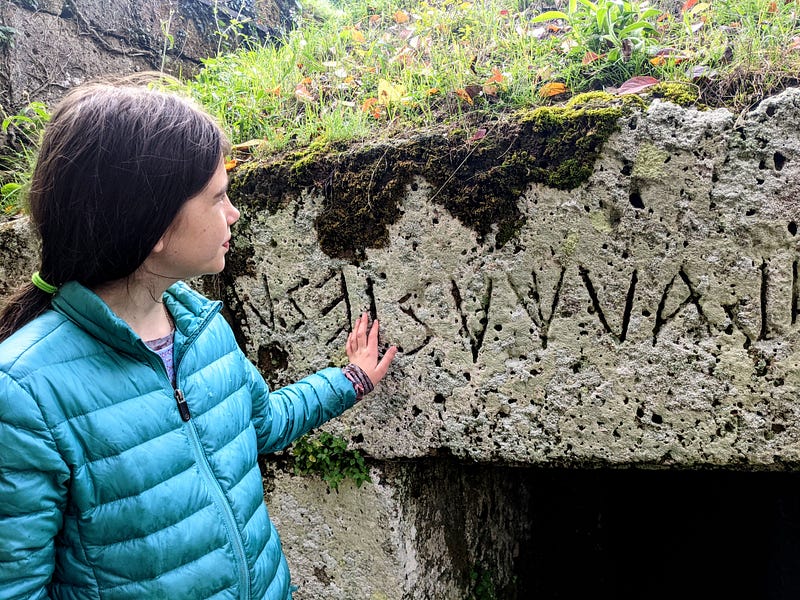
As we wandered the tombs, we marveled at the script that looked Dwarvish and the benches that held urns for family members who were interred together. Like explorers, we absorbed the sights and scents of a place we hadn’t known of before.
We didn’t care that Orvieto’s City of the Dead wasn’t undiscovered. It was unknown to us, and that was all that mattered.
Stephanie Tolk is the founder of Deliberate Detour and the creator of the first complete worldschooling course on the market. Check out Worldschooling: A Comprehensive Guide to Long-Term Travel to learn how to plan a life-changing international journey that’s just right for your unique family.