
Movies and Justice
When Justice League’s Cyborg Dreamt of Justice
To Crush Your Enemies like the Rich and Powerful Use These 3 Tools
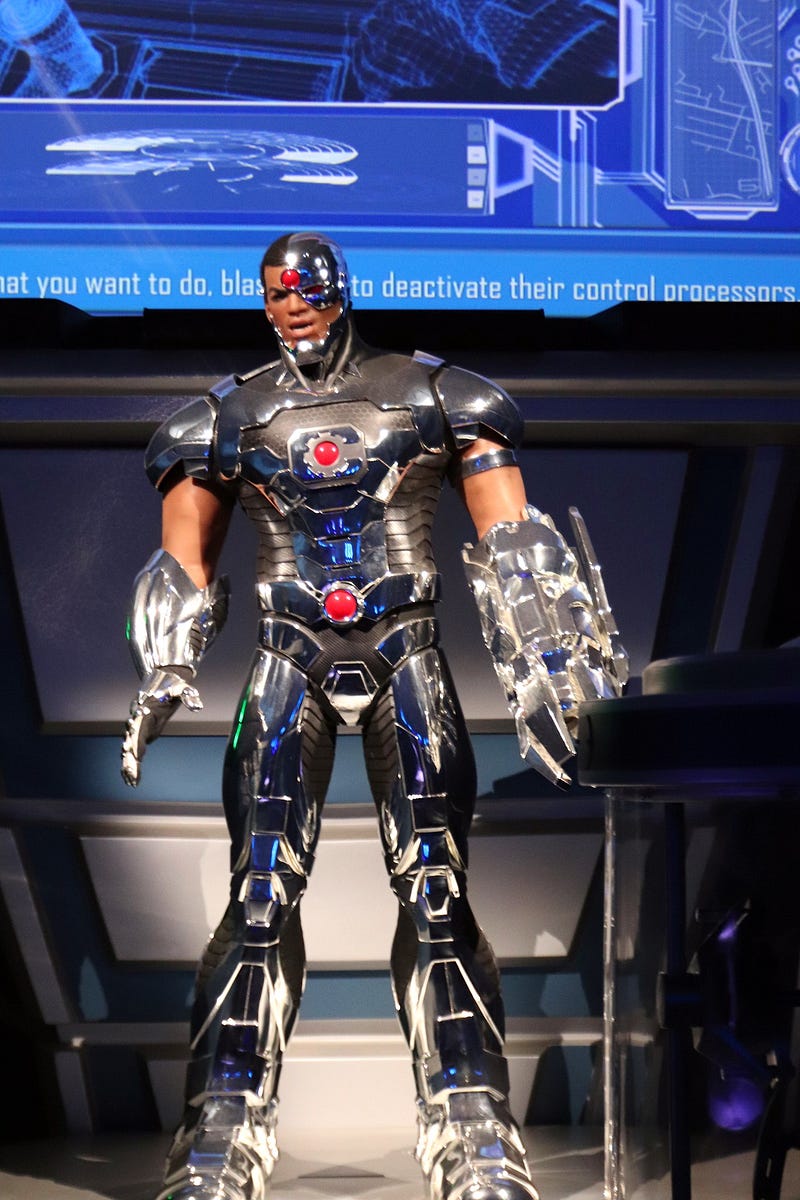
Hollywood has a problem with racism and abuse. After Me Too, Black Lives Matter, and Times Up, with studios mouthing “we support, we vow to do better” you’d think Hollywood would’ve stepped up its game to protect the abused.
You’d be wrong.
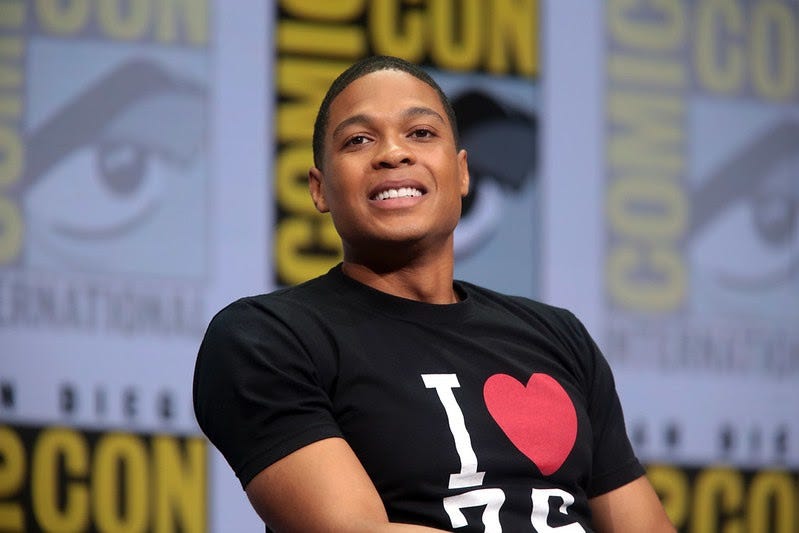
When Ray Fisher (Cyborg in The Justice League movie, 2017) tweeted to the world that Joss Whedon was abusive and unprofessional on the set of the movie, Warner Brothers went into full-on Deny, Deflect, Discredit mode.
Deny
Warner Bros didn’t immediately launch into denials. They were much smoother than that. Their strategy was subtle, starting with the launch of an investigation into Fisher’s claims. If I’d been Warner’s crisis advisor, my first bit of advice would’ve been, “Stop. Deny nothing. Do an investigation. Let it go a little off the rails, so he gets upset with the investigators. Makes him look like he can’t get along with anyone.”
Ultimately, they denied Fisher’s claims.
As if it were the next stage in an elegantly designed plan, the studio’s campaign to smear Fisher’s reputation began and they accused him of not cooperating with the investigative team.
(Clearly, something was going on with the investigation because the former Cyborg posted updates criticizing the proceedings.)
Uncooperative is a loaded word for a Black person. It’s a sneaky way to say, “sure there might have been something off (racism). It wasn’t a big deal. You need to develop a thicker skin for this industry. Stop playing the victim.” Ahh white people, always with the helpful “how we should respond to your callous behaviour admonishments.” Always welcome.
Any attempt at defending yourself and you’re, you guessed it, uncooperative (and difficult). It’s a label that invites negative assumptions. Potential co-workers get a little skittish, and those who hire are maybe wary of hiring you.
The labels are another form of denial. They shift the blame onto the abused and away from the accused while conjuring an alternate story. There could be one tale of accuser malfeasance or many, as long as they start fires the accuser is forced to put out.
Deflect — It’s not us, it’s you
Responding to Fisher’s claim about changing the colour of a Black performer’s skin tone. Warner Bros. claimed he didn’t understand the movie-making process.
Whedon shot in 1 format, Snyder in another. Merging the two meant fixing the colour to accommodate the different formats, and it wasn’t an attempt to change the performer’s skin colour and here’s the editor, the one who worked with Zack Snyder, the original director and he says we weren’t changing the colour and here’s another editor to tell us this is normal.
Okay, guys, that’s a lot of circling the wagons. Maybe your story is true, maybe not. It’s irrelevant except for the intent. You delivered the story intending to diminish Ray Fisher.
You actively worked to protect the abuser and to discredit the victim. You should be proud, you’ve learned nothing from Me Too.
To cast doubt and shift the narrative from the accusations of abuse to, if Ray Fisher doesn’t understand how movies are made, what else doesn’t he get?
Whedon wasn’t doing anything nefarious, he was only following the process required to make an outstanding movie. But Ray, oh my, he’s a hothead, a troublemaker, talking about things he doesn’t quite understand. Haha, poor Ray.
But we’ll indulge him, so he understands how wrong and misguided he is.
Discredit
We’ve given him everything, and he’s still not happy! Argh! That’s the story at this stage. He wanted an investigation; he got it.
But he failed to cooperate.
We’ve taken “remedial measures” in the situation (although we refuse to say what those “measures” are) and still he’s not happy.
We’ve done everything we can do — short of real justice and accountability—and nothing’s good enough for Ray. He’s accusing everybody. Everybody can’t be nefarious. “Everybody can’t be racist.”
And surely no one’s going to catch racism simply because they’re born into a system created to protect racism and enable white supremacy.
I admit I was concerned when Fisher expanded the accusations to include more executives at Warner Bros. Truth doesn’t really matter when you’re dealing with accusations of racism. I’m paraphrasing based on what was told to me during my anti-racism case at the Ontario Human Rights Tribunal. You want to be truthful, but with a clear and direct focus. A simple, single story.
Everything else stirs up the mud.
Fisher accused Whedon. That’s the story. Leave it there. Ray Fisher didn’t follow those rules. He made it clear this wasn’t a problem at a low level; it went all the way up the executive ranks:
Including Walter Hamada, Toby Emmerich, Geof Johns, and Jon Berg, the big guys.
Instead of backing down, Fisher let it be known he would meet every attack.
He told Warner Bros. any plans they had to toss Whedon out as the sacrificial lamb best be forgotten. Because the decision-makers who would determine Whedon’s fate were also complicit, and that should be cause enough to remove their authority.
Of course Fisher’s right.
Executive Berg responded to Fisher’s accusations (denial)
categorically untrue that we enabled any unprofessional behavior
He followed up (discredit)
I remember [Fisher] being upset that we wanted him to say ‘Booyaa,’ which is a well-known saying of Cyborg in the animated series
Really? While the merits, or not, of a fictional character saying “Booyah” might be welcome, it’s not my story. The take-away here is Fisher was memorably angry at being forced to say, “Booyaa.”
We’re to equate that with Fisher is petty. Small things that shouldn’t bug anyone irritate him. Ray Fisher is a bad man. He wanted to take “Booyaa” from the kids.
Ray Fisher is indefensible. Or rather, he must be vilified.
The way these fables go — when you accuse power of well, anything if the accuser isn’t blemish-free their lack of perfection means they can’t accuse.
Although I could get into the psychology of why looking at the world through such a simplistic and underdeveloped lens isn’t perhaps the most mature outlook — I’ll leave that for another article.
What we’re supposed to take away is Ray Fisher isn’t perfect, therefore he’s not believable. It’s an easy-to-remember narrative. And it should be easy to remember that is; it’s used frequently — always — against accusers.
It’s also a knee-jerk reaction to protect the perpetrators because they can’t bear the idea of being wrong. Remember how funny it was that The Fonz (I know I’m dating myself. It’s cool.) Couldn’t say sorry?
I was wrrrrrrrroooo….
It’s not so funny when you realize he’s afraid apologizing for his mistakes makes him look weak. He puts how he appears to others ahead of his responsibility to others.
Grown-ups aren’t afraid to say sorry.
Victims into Villains
If executives like Berg, Emmerich, and Johns have to go because they’re unfit, what about the ones above them who didn’t reel in their inappropriate behaviour?
How far up does the rot really go? There’s no mystery here. Abuse of power is a top-down endeavour.
Ray Fisher (and Meghan Markle) aren’t just standing up for themselves. They’re kicking white supremacy which needs and deserves all the knocks we can throw at it.
Stopping abuse ultimately calls for removing everyone who has the mindset that abuse of any kind is okay. Having people appreciate your art isn’t a license to create harm. Somehow those in charge don’t get that seeing as how they actively protect abusers.
Ray Fisher stated the truth. It’s not Just Joss.
We can’t and should not pretend that somehow it was just Joss. Joss Whedon didn’t act alone. Warner Bros. bestowed great power on him. Zack Snyder says Whedon was given “excessive power” propelling him to walk away after a single conversation with the man.
Before these recent revelations from the Buffy cast and Zack Snyder, Ray Fisher was essentially alone in the wilderness. Even with the support of actors like Jason Momoa, Aquaman in Justice League, Ray was simply a Black man alone, fighting to be heard, to be believed.
Like so many who point out injustice and abuse, he risked much, including his mental peace. Accusing the powerful of abuse isn’t a simple path. It’s not like choosing between my black track pants or the grey flannel tracks. The fall-out is real, with potentially severe consequences, including mental, emotional, health, and economic effects.
Racism is associated with higher rates of stress, increasing a person of color’s risk of developing high blood pressure. In fact, the Centers for Disease Control and Prevention (CDC) report that Black people are more likely to have hypertension than any other racial or ethnic group.
Fisher may have made as much (little?) as $500,000 playing Cyborg in Batman v Superman. Consider if he doubled his ask for Zack Snyder’s Justice League to $1million. He was slated to play Cyborg in a slate of DC movies, plus his standalone movie.
Assume 10 ensemble movies — at the $1million pay rate for $10 million total. His own movie at a $20million. Ray Fisher is no longer playing Cyborg. He’s lost an incredible economic payday.
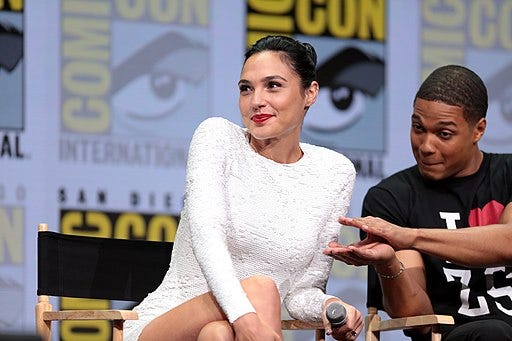
Standing up to power costs accusers. They know they will be doubted, accused, vilified, and possibly re-victimized.
Markle and Fisher are talking about their experiences, what they went through. Their personal stories are doubted and reworked to suit those who are uncomfortable with truth.
There couldn’t have been that much racism.
It wasn’t everybody.
They must have misunderstood.
The victimizers must never be wrong. To be wrong is to permit an attack on the system, which is verboten. It’s why we see raging fury directed at Meghan and Harry. It’s why there are loud denials and backlash anytime anyone talks about racism. What’s the first rule of Fight Club?
The foundational rule of our racist system is you don’t talk about racism.
If racism doesn’t exist, Ray Fisher and Meghan Markle are liars. But, if racism is real, that’s a fault line those who benefit from our current system don’t want to see and don’t want us to see.
Facts cannot intrude upon the carefully constructed fairy tale of merit and god-given right to rule. If we doubt their right to lead, what head might next rest ‘neath the guillotine’s sharp blade.