avatarMotobu Naoki

Summary

Motobu Chōki, a renowned karate master, established his Karate Research Institute in Naha, Okinawa, during his one-year stay in 1936, and his influence extended to mainland Japan through his teaching and dōjōs in Ōsaka and Tōkyō.

Abstract

Motobu Chōki, after moving to Ōsaka in 1921 and occasionally returning to Okinawa, established a significant presence in the karate community by opening his Karate Research Institute in Naha in 1936. Despite the misconception that he was frequently in Okinawa during this period, his mainland presence was substantial, as evidenced by his dōjōs in Tōkyō and Ōsaka. Notably, his Tōkyō dōjō, the Daidōkan, was re-opened by Kurihara in Ushigome-yanagichō after its initial closure. Miyahira Katsuya Sensei, a prominent figure in Shōrin-ryū, trained under Motobu Chōki at the institute and recalled his father's heroic status among Okinawan children of the time. Motobu Chōki's legacy is further cemented by the English translation of his history by Andreas Quast, published on the Ameba blog in 2020.

Opinions

  • The historical account challenges the notion that Motobu Chōki was frequently in Okinawa during his mainland stay, suggesting that such claims in karate literature are inaccurate.
  • Maehira Bōkei, an Okinawan historian, provided valuable insight into the location of Motobu Chōki’s Karate Research Institute, emphasizing its proximity to historical landmarks in Naha.
  • Miyahira Katsuya Sensei expressed admiration for Motobu Chōki, recalling him as a hero to Okinawan children and acknowledging the introduction by Chibana Chōshin Sensei to train with him.
  • The article reflects on the impact of Motobu Chōki's teachings, as he alternated between Ōsaka and Tōkyō every six months after 1938, influencing the spread of karate in Japan.
  • The mention of the Daidōkan's closure and the subsequent re-opening of Motobu Chōki's dōjō in Tōkyō by Kurihara indicates a dedicated effort to maintain and propagate his karate legacy.
  • The translation and dissemination of Motobu Chōki's history by Andreas Quast demonstrate the ongoing interest in and preservation of Okinawan karate traditions.

Motobu Chōki’s Karate Research Institute

Translated by Andreas Quast

Around 1921, Motobu Chōki moved from Okinawa to Ōsaka and stayed on the mainland until he returned to Okinawa again in 1942. In the meantime, although he sometimes returned to Okinawa for a short time, he basically lived on the mainland. That’s why it is strange to read that some people wrote in Karate books and magazines that during that period they had studied under Motobu Chōki for a long time in Okinawa.

But there is one exception. That was when Motobu Chōki went back to Okinawa to attend the famous “Round-table Discussion of Karate Experts” (1936) hosted by Ryūkyū Shinpō newspaper. At that time, Motobu Chōki stayed in Okinawa for one year, rented a house in Naha, and opened a karate dōjō.

Once I asked Okinawan historian Maehira Bōkei (1921–2015) about this. According to Maehira, this dōjō was close to Makishi Ugan in Naha, in the vicinity of the current Makishi Station of the monorail. Facing what is now Kokusai-doori, the name “Motobu Chōki’s Karate Research Institute” was written on a signboard of 13cm (5-inch) width.
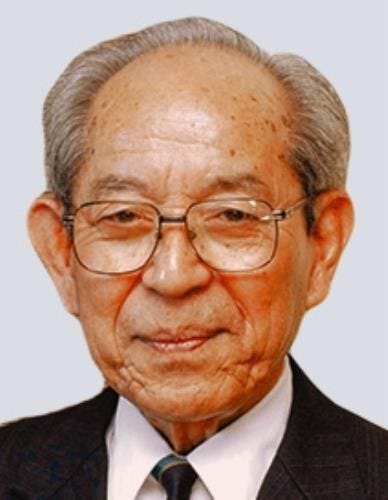
Maehira Bokei (1921–2015), from Okinawa Taimusu

During Uehara Seinsei’s 88th birthday celebration, Shōrin-ryū’s Miyahira Katsuya Sensei was present and came to greet Sōke (Motobu Chōsei). Miyahira Sensei seems to have learned from Motobu Chōki at this Karate research institute. Miyahira Sensei said,

“Your father was a hero of Okinawan children at that time. I wanted to learn from your father too and was introduced by Chibana Chōshin Sensei. I trained [with Motobu Chōki Sensei] for one year.”
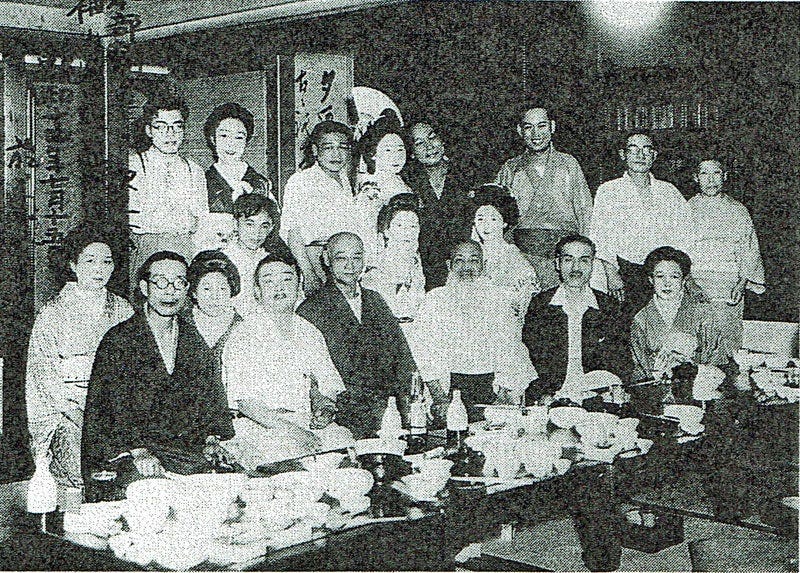
Motobu Chōki and Konishi Yasuhiro, July 15, 1939, in Tōkyō

Motobu Chōki returned to the Japanese mainland again in 1938. The dōjō in Tōkyō, the “Daidōkan,” was already closed, and since then he has lived alternating between Ōsaka and Tōkyō every six months. Later, in Tōkyō, a person named Kurihara searched for a house in Ushigome-yanagichō and re-opened the dōjō (interview with Marukawa Kenji). However, in the fall of 1941, this dōjō was closed. Motobu Chōki returned to Ōsaka and since then did not return to Tōkyō. He stayed in Ōsaka for several months and returned to Okinawa in the summer of 1942.

The original English translation was posted on August 6, 2020 on the Ameba blog.

Karate
Motobu Ryu
Motobu Choki
Maehira Bokei
Japan
Recommended from ReadMedium