
Motivate Children to Learn New Skills Without a Daily Battle of Wills
Don’t let them give up too soon
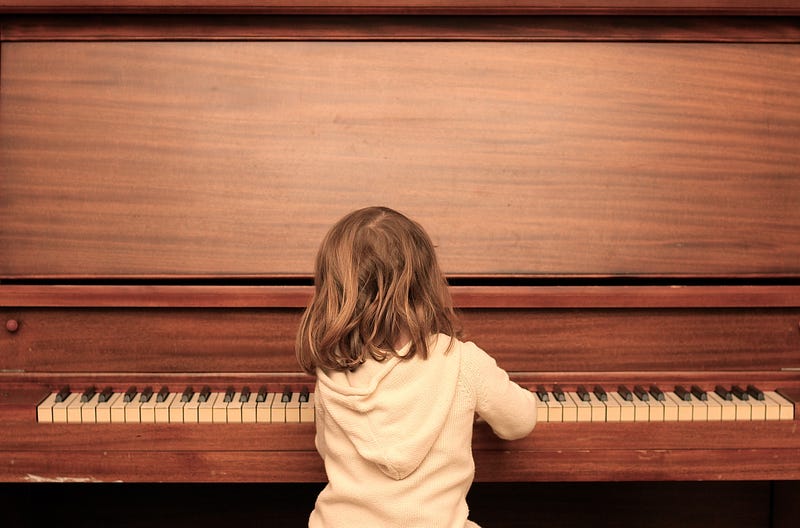
How do you motivate your children to learn a new skill? And how do you get them to practice? It’s not easy.
I play the piano. Every time someone hears this, I get the same response.
“I took piano lessons when I was little, but I quit. I wish I’d stuck with it.”
The truth is, learning an instrument takes practice and no child likes to practice when they could be playing with friends or leveling up on a video game. So, what do you do when your child starts piano lessons, baseball, or gymnastics, but refuses to practice? Do you give up?
No. You find an activity or related reward they can earn when they put in the required practice time. Not only will a goal incentive help motivate your child to learn a new skill, but it will also eliminate the daily battle of wills at practice time.
The Challenge of Getting Children to Practice
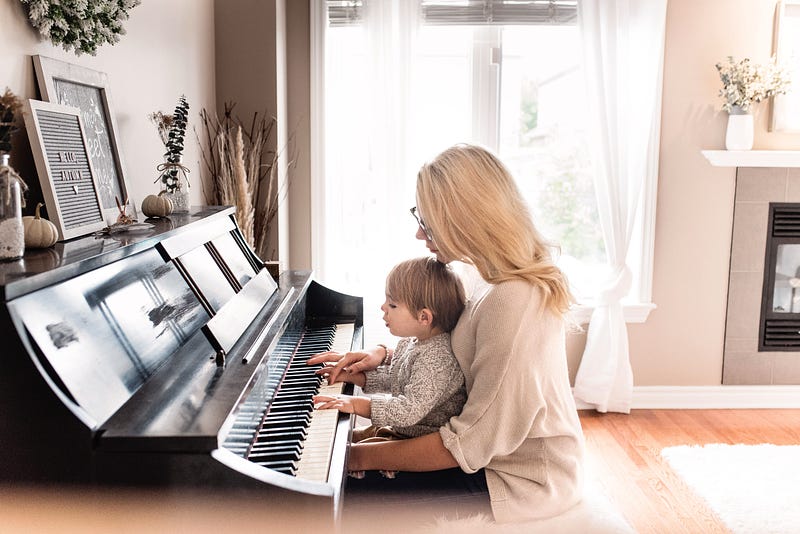
When I was a child my strict German piano teacher insisted I practice an hour a day. And she assigned me enough exercise and pieces to fill the time.
Fast forward several years to when I signed my son up for piano lessons. His first teacher was much nicer. She only assigned one or two pieces a week. My son rushed through each piece and seemed to finish his ‘practice’ in five minutes flat. When I insisted he practice each piece more than once, it turned into war. You would’ve thought I’d just asked him to clean every toilet in the house! I tried forcing it and got him to practice longer, but the daily battle of wills wasn’t a good experience for either of us.
If you’ve ever read Amy Chua’s Battle Hymn of the Tiger Mother you’ll remember the lengths she went to to get her daughters to practice the piano and violin. It was not pretty. In one instance, she threatened to take her eldest’s stuffed animals and burn them if a piano piece wasn’t perfect. In another, she hauls her youngest’s doll house to the car and says she’ll take it to The Salvation Army if her daughter doesn’t master ‘The Little White Donkey’.
I didn’t want to battle with my son every day or threaten to burn his toys, but I also didn’t want him to stop practicing because I could see he had a musical ear. Recently, I read about the idea of goal incentives and had an epiphany. I’d offer my son a goal incentive to increase his practice time from 5 minutes to 20 minutes.
Important goal incentive tips: Make sure the goal is reasonable and age-appropriate. I knew I wasn’t going to get my son to suddenly practice an hour at a time, so I settled on 20 minutes. Consistent baby steps have more chance of yielding long-term success than trying to do too much too soon.
Goal Incentives Vs. Bribery
In the book, On Becoming Childwise, Gary Ezzo makes a distinction between bribery and goal incentives.
“Rewards and bribes are tied to habits of the heart — moral issues- while goal incentives would be used for amoral activities, such as training a child to ride a bike, color a picture, improve a grade, or type… Parents use goal incentives to motivate actions associate with skills, talents, and intellectual challenges, but not to change or modify behavior, as is the case with rewards and bribes” (pg. 206).
Telling children you’ll reward them with candy if they behave well in the grocery store is bribery. This causes children to expect a reward every time you go to the grocery store and doesn’t provide any intrinsic motivation to behave well. They will only be good as long as they expect a reward.
It is not the the offer of candy in itself that is bribery, but rather the timing of the offer. If your child behaves well, you could offer to buy them a candy bar after shopping as a reward. This is not bribery because it’s unexpected. The candy is a reward and not offered as an incentive to behave.
Ezzo believes it’s okay to offer an appropriate incentive for practice or acquiring a new age-appropriate skill. To him, this is different than bribery for good behavior. The purpose of the goal incentive is to motivate your child to invest time in an activity.
For example, Ezzo offered to buy his daughter a snorkel if she learned to swim to the yellow buoy by the end of the summer. This was a reasonable goal for her age. He wanted her to be water-safe since they lived by a lake. The snorkel set was a goal incentive designed to motivate his daughter to reach this goal. If she didn’t make it to the buoy, she would have received praise for trying, but not the snorkel set.
Offering a Goal Incentive is a great way to encourage your child to acquire a new skill or develop a talent.
How to Choose the Right Goal Incentive
1. Offer More Time
Two weeks ago I presented my son with a goal incentive. If he practiced piano for 20 minutes without argument, he would earn an extra 20 minutes of screen time before dinner. If he ups his practice time to 30 minutes, he will earn 30 extra minutes of screen time.
There are many goal incentives I could have offered, but the one thing my son wants to do right now is to play Minecraft on his tablet.
Before the offer of extra screen time, I gave my sons 30 minutes while I made dinner. This started a few years ago when it was nearly impossible for me to make dinner with my youngest in the kitchen wanting to be picked up. TV kept him entertained long enough for me to get something cooked.
When I offered the extra screen time incentive, my eldest was happy about it. He always asks for more time when he’s on his tablet.
But, I had to think of a way for my youngest to earn the same amount of screen time as his brother so it was fair. I decided to have my youngest earn the extra time by playing in his room by himself for 20 minutes while his brother practices piano. As the youngest, he always wants someone to play with him and he usually gets his way. This is actually a big ask for him. It also keeps him out of the way so my eldest can concentrate on the piano.
To choose the best goal incentive for your child ask yourself what they would rather do than practice? Is there a way to offer them more time to do this?
2. Offer a Reward
Alternatively, you can offer your child a related reward to accomplishing a goal or increasing practice time. If your child really wants a new baseball bat or a visit to the batting cage, you can ask him to practice throwing and catching for a certain time each day.
If your child practices gymnastics consistently for 6 months or a year, you could get a trampoline or offer a new leotard for a shorter goal period. You know your child best. You can come up with an appropriate goal incentive. The goal incentive might be an offer of more time or a physical reward. Be sure to make the goal a challenge, but one that is doable.
Conclusion
If your child becomes interested in joining a team or acquiring a skill, but hates to practice, consider offering a goal incentive to motivate him/her and avoid the daily battle of wills. One day, when your child is an accomplished musician or baseball player, he/she will thank you.
If you liked this story, you may enjoy these as well:
Join me to learn and grow as a parent.
Originally published at https://learn2gether.org on January 7, 2020.


