Nature
Mother Nature Doesn’t Need Supervision
She is smarter than we are — so when will we stop trying to subordinate Her?
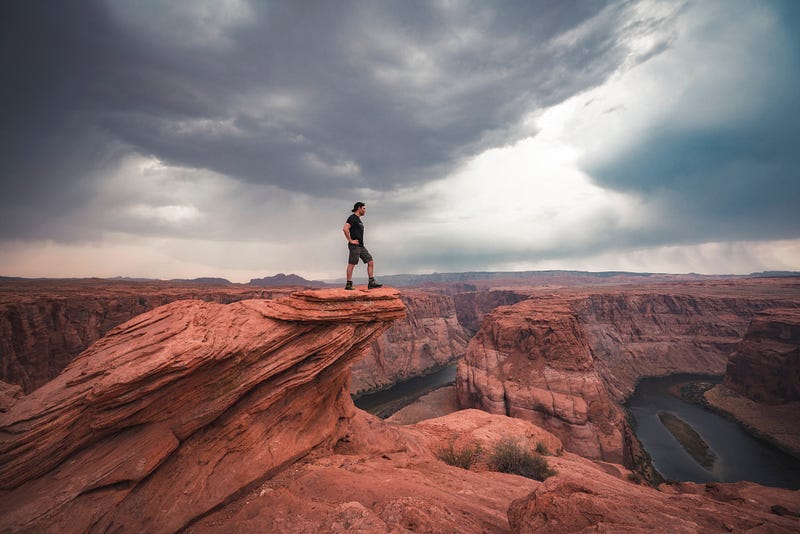
Have you ever stood in the presence of the Colorado River?
Most Americans who are acquainted with her met her in the Grand Canyon, where she winds through the awe-inspiring, red and brown rock walls, like a blue ribbon curling into any crevice available. Maybe you stood on a cliffside far above her, getting a bird’s eye view, or perhaps you had a more intimate experience bobbing along her waters.
How did you find her? Beautiful? Powerful? Overtaxed by a region that takes more from her than she can give?
Or perhaps you simply felt the peace of her being. The strength of her presence. The power of her aliveness.
I know I have.
Apparently, not everyone has had this experience.
I discovered this when I recently watched the documentary Into the Grand Canyon, in which journalists Pete McBride and Kevin Fedarko decide to walk the Grand Canyon (a journey the river can make in 277 miles, but which by foot takes 675 miles) in order to get to know the land better and raise awareness about the encroaching development and environmental threats.
“The prospect of monetizing beauty is almost irresistible,” Fedarko says at the beginning of their journey — an accurate observation, I think. But then he goes on to say, “The land is incredibly powerful. But the one power it doesn’t have is to articulate what it is and what it wants. Wilderness cannot be its own spokesperson.”
Wait…what?
I ask again, have you ever stood in the presence of the Colorado River? If you don’t think she has the power to articulate exactly what she is and what she wants, then I don’t know what to tell you, other than to say I am seriously questioning your powers of observation.
Wilderness cannot be its own spokesperson? Maybe the problem isn’t that nature can’t speak for herself, but that no one is listening.
The idea of taking an endurance-testing journey and filming it for a documentary in order to drum up public interest in an environmental cause is a beautiful and honorable aspiration. It’s a great way to educate the public, and frankly, I don’t know what I’d do with my time without National Geographic documentaries.
The problem is that this is a very patriarchal, masculine (or rather, what we perceive to be masculine) approach to conservation. It’s always a similar recipe: intrepid explorers, feats of strength, inhuman exertions of endurance. And with all this comes the documentation — cameramen, budgets, objectives, goals, timelines.
There’s nothing inherently wrong with any of that, except for the fact that there’s little attention to the aspects of an approach that might also include what we have designated as “feminine.”
What if the documented journey wasn’t so attached to its own goals and objectives? What if we balanced out the lessons of the post-colonial history of the land that’s being explored and the list of facts revealed about that land and its inhabitants with a dive much further back in its history, while bringing in indigenous voices sharing their ancestors’ relationship with the land? What if the men on these expeditions and conservation projects spent more time documenting themselves relating to the land in quiet moments of sitting still, observing, listening?
What if they stopped positioning themselves as the educator and took a more humble route of student? Clearly, when it comes to intelligence, Mother Nature is the smart one.
As I pondered this, I couldn’t help but think about the more dangerous aspects of this kind of mindset — however well-intentioned it might be.
You see, when men are brought up to believe that the parts of the world around them that don’t present in ways our culture has determined to be “masculine” are inferior, severe imbalances in power arise. If something doesn’t fit our definitions of “masculine,” then it immediately is downgraded to a subordinate position. Suddenly, we see men stepping into the roles of spokesperson, steward, and supervisor. Again, all with good intentions, but strangely, no one ever thinks to ask: Did we need a supervisor here? And is this supervisor qualified to do this work?
We just assume the answers to those questions are yes because our society hands out authority to men like candy to kids on Halloween night — all he has to do is knock. And our culture believes that anything that doesn’t fall into the category of “man” is not capable of taking care of its own affairs.
Nature, for instance. Or…women.
Adult women do not need supervision, though you wouldn’t know it by observing American culture. Whether it’s men questioning our ability to pick out the right drywall anchors at Home Depot or our politicians insisting on policing a woman’s reproductive system, we can’t seem to fathom that, like the Colorado River, we do indeed know who we are and what we want.
We don’t need a spokesman. A steward. A supervisor.
Just like Mother Nature, we are doing fine all on our own.
We can’t afford to keep proliferating the myth that men stand above everything else in this world, as the superior beings. With all due respect, particularly to those who are actually trying to use their privilege to make a difference, it’s not working the way we’re doing it.
After all, National Geographic has been making documentaries in order to “raise awareness” for a very long time…and decades later, they’re still doing it because their efforts have been no match for the suicidal death spiral of capitalism, one of the patriarchy’s best inventions.
Maybe it’s time to change the approach just a bit. To bring in more balance. To let the land guide us when it comes to conservation. To let women guide us when it comes to women’s rights.
Maybe it’s time to listen until we understand that just because nature doesn’t speak to us in a voice like ours doesn’t mean that She doesn’t have a voice, at all. Maybe it’s time we admit that we know exactly what nature wants. She’s been telling us all along. We just don’t want to listen.
What would happen if we stopped approaching everything like a puzzle to be solved and instead sensed the nuance, embraced the mystery, and married action with intuition?
I wonder what that documentary would have looked like had those men centered the voice, experience, (pre-colonial) history, and presence of the Colorado River and the Grand Canyon. You could already feel the gravity of their stories in the background. What if they had been brought forward and placed in the spotlight?
Be quiet for a moment. Listen to Her.
She knows and She’s speaking and She’s wondering when we are finally going to listen…
© Yael Wolfe 2022
Yael Wolfe is a writer, photographer, and creator of Howl. You can find more of her work at yaelwolfe.com.
More on nature: