
Most Successful Entrepreneurs Won’t Reveal This Time-Management Secret
Systems vs motivation, and the power of delegation.

The life of an entrepreneur is a roller coaster ride.
You get to make your schedule and be your own boss. But the downside is — it can be easy to slack off and not get things done.
When your work hours aren’t strict, you might wait for motivation to strike to start working.
But motivation is elusive.
It’s hard to rely on it to achieve your goals. If you only work when you feel motivated, you can’t innovate and come up with new ideas.
So how do you stay on top of your game as an entrepreneur? By building reliable systems.
Motivation vs. Systems
“You don’t rise to the level of your goals, you fall back to the level of your systems.” — James Clear
A system is a step-by-step process you can follow repeatedly to achieve a goal. When you break down your complex goals into daily steps, it becomes easier to take action. And when it’s easier to act, you don’t need the motivation to start working.
Here are some examples of systems to achieve your goals:
1. System to build a personal brand
- Publish one post every day on LinkedIn,
- Respond to all comments,
- Engage with the top five creators in a similar niche, etc.
If you stay in the game for at least a year, there’s no doubt you’d establish an authority in your niche.
2. System to do cold outreach
- Find ten potential leads every day,
- Send five cold emails daily,
- Follow back on five previous week’s emails,
- Analyze what to improve based on the reply rate.
If you stick to this plan for 90 days, you’d see some call bookings and sales coming in.
3. System for content creation and distribution:
- Create a content calendar at the start of each month.
- Plan images, videos, audios, and text for weekly content.
- Schedule content every Monday for the coming week.
- Repurpose LinkedIn content as Twitter Threads and YouTube videos.
Result: Over a year, this content creation and distribution system will help you build a great community of like-minded people.
When you have such solid systems in place, you’re much more likely to achieve results compared to solely relying on motivation.
The best part? Systems are nothing but small repeatable steps anyone can follow. This means you can train other people to do your job well using the power of systems. This frees up your time and energy so you can focus on other aspects of your business.
Team Building: Baby Steps
Most entrepreneurs fear building a team.
They worry about losing control or don’t want to appear like an agency.
This is a mental block that stops you from growing your business. If you’ve been on the journey for a couple of years, delegation is the next logical step to attain time freedom as an entrepreneur.
If you’re reluctant to build a team, start by outsourcing work to one person. This will allow you to identify challenges and develop a successful delegation system to expand your team later.
But building a team often leads to a more pressing problem: mandatory meetings.
According to a study by MIT, entrepreneurs spend around 23 hours a week in meetings, which is approximately half of the weekly work hours! This can negate the whole point of delegating work.
A Better Alternative (Secret to Entrepreneurial Success)
Asynchronous video meetings!
It’s the ultimate time management secret of the most productive entrepreneurs.
For asynchronous (short form: async) meetings, no one has to be live at the same time. You can shoot videos over weekends, late nights, or while strolling in the park, and your team can view them at their convenience. This helps you move projects faster and gain back control over your day.
You can block out time in your calendar to batch-create videos for one-on-one conversations, video feedback, work delegation, and more. This allows you to engage in deep work, get more done, and avoid being call-booked the entire day at the expense of real work.
Tips to Ace Async Communication
To conquer async meetings, you need a powerful tool to create, edit, share, and view videos with ease. That’s where Screencastify comes in.
It’s an end-to-end tool with amazing features that makes recording videos interactive and fun. With more than 12.4 million users worldwide, this tool is heavily used by entrepreneurs to do async communication and effectively manage their team.
Here’s how you can use Screencastify to ace async:
1. Break down each system into small actionable steps
For example — If you want your team to create a content calendar, the actionable steps would be:
- Monday: Publish a personal story.
- Tuesday: Share 3 common mistakes or learnings for entrepreneurs.
- Wednesday: Do an AMA.
- Thursday: Repurpose an old YouTube video for LinkedIn.
- Friday: Publish a poll.
This breakdown makes it easy for them to take action faster and match your expectations.
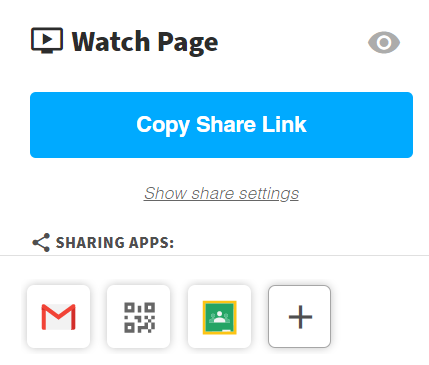
You can record a video for each step and share the nitty-gritty of the work using Screencastify. Once you finish recording, the video link will be available for you to share with your team.
2. Be specific with instructions
Convey all the crucial points and walk them through each step of the way. This eliminates confusion and unnecessary follow-ups.
You can do it using Screencastify’s interactive features like:
- Screen sharing and real-time annotation to make instructions clear.
- Use its interactive mouse pointer, pen, and rectangle to highlight important points.
- Embed questions at particular timestamps to get insights into their understanding level.
- Use emojis to add some humor and personality to your videos. Don’t overdo it to maintain professionalism.
3. Keep your instructions up-to-date
Your team members might change, but the system remains the same. This gives you the power to create videos once and use them to train new members on autopilot.
But if you want to update a few instructions or introduce additional steps, you don’t have to create the entire video from scratch.
Just record the updated version and merge them with your previous video using Screencastify’s modern editing features.
4. Give a crystal-clear feedback
Send your team video feedback to give a detailed context on your review.
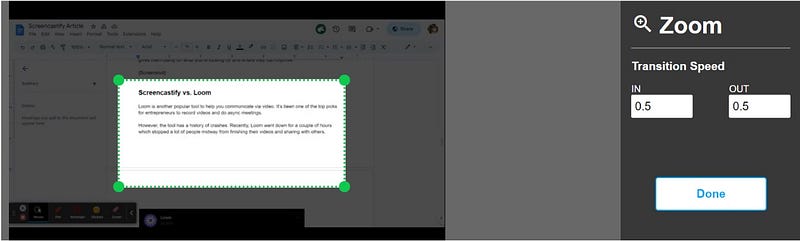
Use Screencastify to capture your screen, zoom in on key areas, add text in real-time, etc. This gives them clarity on what you’re looking for and where they can improve.
Screencastify vs. Loom
Loom is another popular tool to help you communicate via video. It’s been one of the top picks for entrepreneurs to record videos and do async meetings.
But recently, it went down for a couple of hours which stopped a lot of people midway from finishing their videos and sharing them with others.

Some people reported on Twitter they randomly got access to other users’ accounts and their private videos. According to Loom, a configuration change in their CDN fired incorrect cookies, which led to unauthorized access. However, some experts on Twitter believe the issue runs deeper and isn’t well communicated by Loom.
This is not good news for Loom users.
You never want your videos to get leaked in front of strangers who might use them for their advantage. If you’re a Loom user, this might be a good time to switch to a more reliable alternative — Screencastify!
It’s one of the most powerful video recording, editing, and sharing tools. Plus, it keeps your videos safe.
Here’s an in-detail comparison between the two:
Video recording
Both tools let you record the browser tab, desktop, and webcam. But Screencastify has better interactive features.
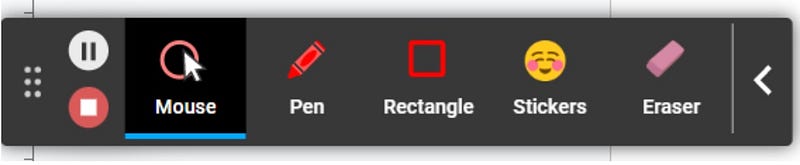
Screencastify: While recording your videos, you can use mouse tools to highlight the clicks, add text in real-time, use stickers to make it fun, and erase annotations from the screen.
Loom: It has subpar annotation features, which are only available with the Loom desktop app. You can’t use them while recording with the Chrome extension.
Editing
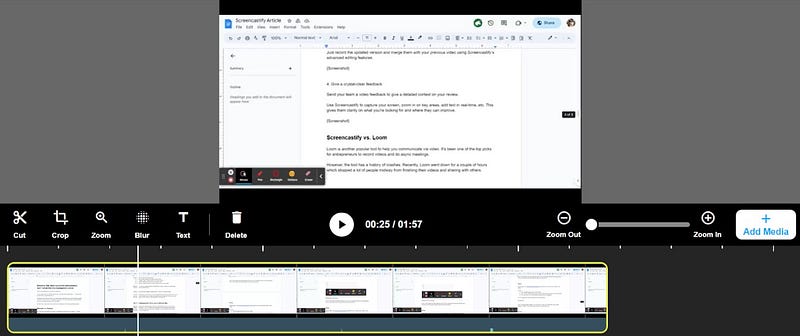
Screencastify: Has advanced editing features that allow you to create movie magic in your videos.
You can:
- Trim the beginning and end of your videos.
- Split, merge, and rearrange videos (even the ones that aren’t made with Screencastify.)
- Cut, crop, zoom, blur, and add text to make them more engaging.
You no longer need another editing tool with Screencastify.
Loom: Has basic editing features. You can only trim, split, and merge other Loom videos together. It doesn’t let you add videos that aren’t created with Loom.
Sharing
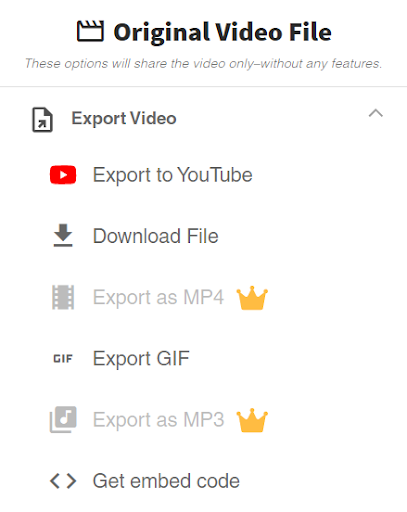
Screencastify: All videos are saved in Google Drive. You can share them with people via Drive or using Screencastify’s virtual link.
You can also save videos to your local device in MP3, MP4, and animated GIF formats.
If you’re a YouTuber, the tool lets you upload videos to YouTube directly from the dashboard. This makes your life pretty seamless as a YouTuber.
Loom: All videos are saved in the cloud. You can share them via Loom’s virtual link. It lets you share videos directly to LinkedIn, Twitter, Facebook, and Gmail. But it doesn’t have a direct integration with YouTube.
Interactiveness
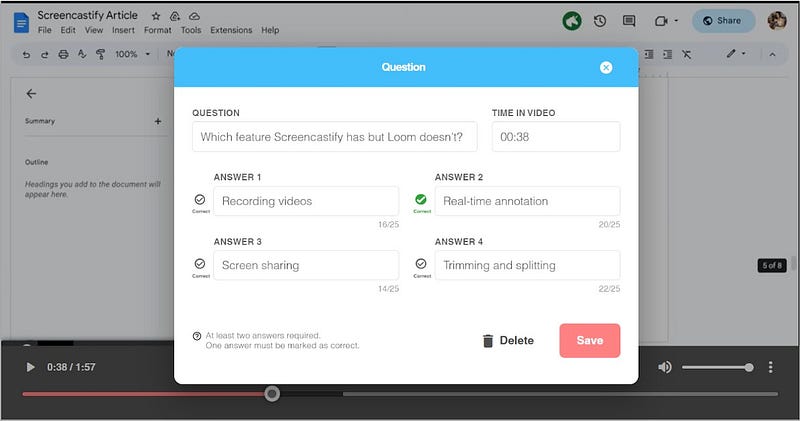
Screencastify: You can annotate in real-time and add interactive questions at particular timestamps to check your viewers’ understanding level. You can also create assignments for people and request them to submit video responses. This lets your team quickly share if they’re facing any roadblocks and have them resolved faster.
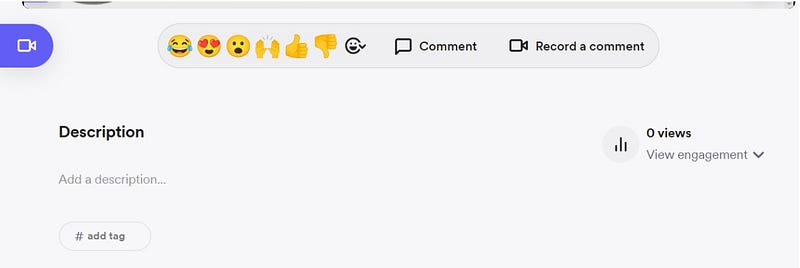
Loom: You can use time-stamped comments and emoji reactions to boost interactiveness. It doesn’t support real-time annotation, embedding questions in videos, or requesting video responses.
Analytics
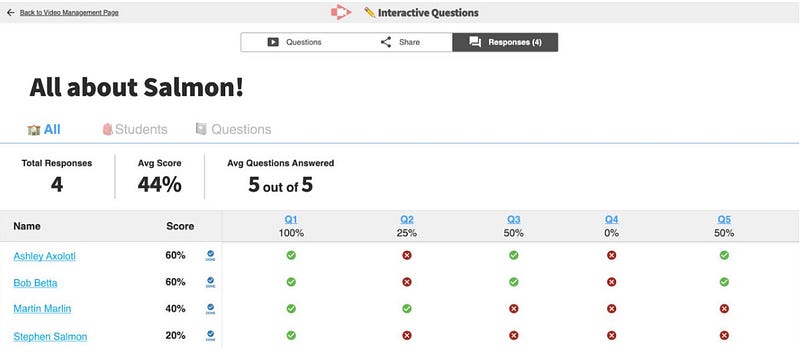
Screencastify: You can track who has watched your videos and how many times. Plus, it lets you analyze how people have responded to your questions.
Loom: You can track when someone views, reacts, or comments on your video.
Pricing
Screencastify: Offers a free plan with limited features and storage space of up to 10 videos. You can record videos of lengths of up to 30 minutes for free.
The paid plan starts from $7 per month per user billed annually. This lets you create unlimited videos of unlimited length with a storage space of up to 25 GB.
Loom: Its free plan lets you create up to 25 videos per user with a maximum length of five minutes each.
The paid plan starts from $8 per month per user billed annually, where you can record unlimited videos of unlimited length.
Conclusion
Motivation isn’t enough to drive success. You need a reliable system in place to achieve results. When you break down your goals into a system of small steps, it becomes easier to take action.
The beauty of systems is — they aren’t human-dependent. You can duplicate yourself by training other people to follow the exact steps. Since there’s little to no guesswork involved, your team is able to deliver good work.
But delegation leads to another problem — team meetings. On average, an entrepreneur spends half of the weekly work hours on live calls, which is huge! That’s why async communication is so important. It lets you and your team record and watch videos on your own time, which frees up your schedule and helps you attain time freedom as an entrepreneur.
Screencastify is a powerful tool for async communication. It has advanced recording, editing, and sharing features to help you ace async meetings.


