
Most Of My Articles Used AI, And Nobody Noticed
I have been employing AI for many months, and not once have you noticed. Feeling silly? No need to…
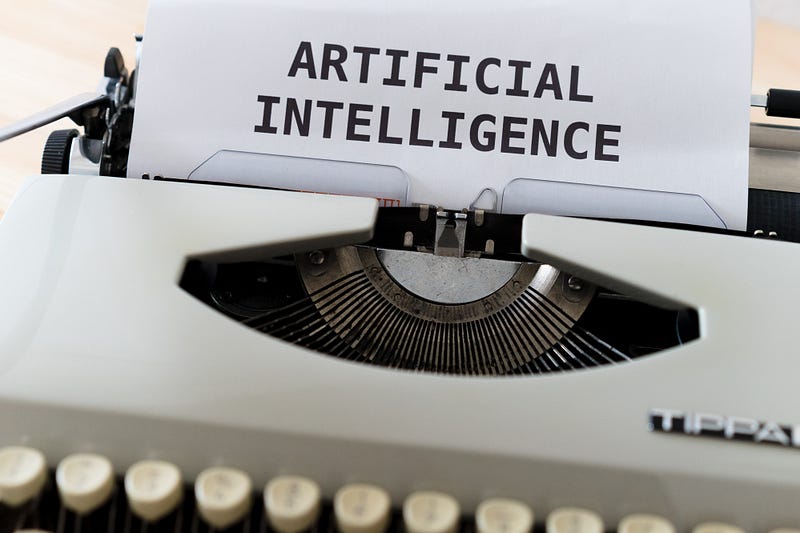
Most people write about AI as if it were the newest thing under the sun. Many of them never actually used it in the real sense of the word. Sure, they played around with it, but just like test-driving a supercar in a dealer’s parking lot and owning one, are far from being the same, having a quick go at any of the AI tools out there means nothing in the grand scheme of things. If anything, there’s a much higher chance of misunderstanding its capabilities, use-cases and overall value, making wild claims that ultimately, almost universally, will turn out to be wrong.
It’s time to make a confession. Nearly all my articles, 300+ of them, made use of AI.
If that confession worries you, and you’re about to unfollow me, please don’t. Instead, read on, as I am trying to make an important point — namely, that AI is incredibly useful in the right hands and takes content creation, among other things, to the next level.
- It has not made my writing any less human or original, nor has it degraded its overall quality and message.
- It has, however, enabled me to create more content with less effort. But not just that. It also elevated the quality of my articles in subtle but significant ways.
- It enabled me to focus on topics I truly care about, and find more time to invest in niches I previously could not find the time for.
- It helped me have a more pragmatic, balanced view on AI itself, to understand where it shines and where it doesn’t, what’s dangerous territory and what’s not.
Roughly 30% of every article I wrote, has been AI generated under human supervision.
You probably did not see that coming. What’s next, will clear that up, and you’ll understand, why I am happy to make these claims while not one bit feeling like a liar in front of you, my readers. You might, in fact, realise you’ve been doing the same, just never thought of it like that before, and perhaps by the end of this article you’ll feel a little bit more relaxed about the potential AI has in our lives.
Back to what I was saying…
AI is not new. OK, it’s new compared to the invention of the first computer operating system, or the transistor, but it has been around for plenty of years to refer to the likes of ChatGPT as nothing more than iterations of AI. It is quite likely that you, just like me, have been using AI for at least a decade or more now, in fact, you probably have it with you at all times in your pocket, purse, or on your night-stand. Yes, I am referring to your smartphone — specifically its camera(s), operating systems and web browsers. While everyone is suddenly aware of AI thanks to OpenAI’s ChatGPT, this has been over thirty years in the making, and it’s success in 2023 is more the culmination of hardware capabilities and size of datasets than anything else. Long story short, it may seem sudden, but AI has been around for a long time, even the 70s and 80s.
Armed with this knowledge, I hope you now feel much more at ease about my confession, and a lot less inclined to unfollow or unsubscribe. 🙂 To further help though, I’ll explain how I use AI on a daily basis for creating content, and you’ll quickly realise, you’ve been doing some of the same things yourself, you just never considered it to be AI, which is really the point of this article — that good AI, just like good design, doesn’t try to be obvious.
- Taking photos. You may have noticed that about 50% of my articles contain images made by yours truly. I use an iPhone 13 Pro at the moment. What Apple does, among others, is employ computational photography with Deep Fusion, which helps create images straight out of the camera that look good, with the desired depth of field, contrast, HDR, etc. If I were to rely on a bog-standard camera, I would have to work a lot harder, and have a lot better lighting than I traditionally do, to achieve similar results. Photo example.
- Editing photos. That being said, I don’t always leave the photos I take as Tim Apple intended. For instance, sometimes I want to add various effects, remove backgrounds and create collages. Back in the day, I would do this with Photoshop CS3, and it would take me as many as 2–3 hours to come up with something I would feel happy with. That isn’t the case anymore. With Pixelmator Pro and even Apple’s own Preview app, I can do things like remove the background in as little time as 1 second. Again, that’s all AI doing its thing in the background. Collage example.
- Spelling and grammar checking. While I am proud to have a good command of the English language, it is only my third language, after Hungarian and Romanian. I am nowhere near being a perfectionist, from where I’m standing that’s reserved for scientists and bored people with too much time, but I do want fairly well proofread articles to go live. My favourite text editor is Ulysses and its revision feature is something I make a lot of use of. I cannot 100% confirm it relies on AI, but given the suggestions it offers for improving my grammar and style, I’m fairly certain it uses some sort of neural network in the background.
- Search engine results. Perhaps you never considered it, but every time you search for something on Google, there’s a neural network at work, spitting you back results.
- Searching images. The same goes for looking up images online. If you thought there are people mixing, matching and labelling images so that you can find them later, forget that, it’s all image recognition AI that has been trained on every image it got access to over the years.
- Using Siri. Sometimes, if I don’t want to break the flow of writing, I yell over at Siri and ask her for information on what I’m writing, such as when was Obama president, what is 1% of 8 billion, stuff like that, and all that is also AI at work.
So, there you have it. Creating original, authentic content with the help of AI, daily. On average, I’d say it has increased my velocity by 70%, because for the most part, all I need to do now is come up with ideas and write about them. The research part takes infinitely less, the heavy-lifting around photography is but a few clicks, and my editor is a smart writing tool that I don’t necessarily always agree with, but nevertheless saves me considerable time. Had I not employed these tools, I would have no time, for instance, to build LEGO sets and write about them.
That’s where AI cannot help, nor do I want it to. Building my LEGO sets and actual writing, these two I reserve as tasks for myself. 🙂
Attila Vago — Software Engineer improving the world one line of code at a time. Cool nerd since forever, writer of codes and blogs. Web accessibility advocate, LEGO fan, vinyl record collector. Loves craft beer! Read my Hello story here! Subscribe and/or become a member for more stories about LEGO, tech, coding and accessibility! For my less regular readers, I also write about random bits and writing.


