avatarMehek Kapoor

Free AI web copilot to create summaries, insights and extended knowledge, download it at here

3052

Abstract

w reader.</p><p id="f6e2" type="7">Remember — your articles will be read, only ‘once’ by most readers, so they have to be impactful, gripping, and powerful!</p><figure id="3bf1"><img src="https://cdn-images-1.readmedium.com/v2/resize:fit:800/1*RFNFtZgE3czmyUzy8sgUWg.jpeg"><figcaption>Person taking voice notes. Photo by <a href="https://unsplash.com/@maltehelmhold?utm_source=unsplash&amp;utm_medium=referral&amp;utm_content=creditCopyText">Malte Helmhold</a> on <a href="https://unsplash.com/s/photos/voice-message?utm_source=unsplash&amp;utm_medium=referral&amp;utm_content=creditCopyText">Unsplash</a></figcaption></figure><h1 id="fce9">The Speed</h1><p id="cd07">To write an article in under one hour, the most important thing is — speed. Although typing speed comes only with practice, the speed of generating ideas can be improved.</p><p id="dafd">I’m a full-time product designer, which means that for more than eight hours on any typical day, I’m only working on my office tasks. There is very limited time to write on Medium but still, I try to write as much as I can.</p><p id="5687" type="7">One way that I use to create content in under one hour is by speaking out loud. Believe me, it has always worked!</p><p id="4177">When you speak out loud, like you’re giving a lecture to an audience, you will realize that you are churning out words much faster than you would otherwise. Having a conversation is more effective than writing words.</p><p id="4251">If you just keep staring at a blank document page for hours, you might end up writing only fifty words.</p><p id="b727">But when you start speaking out loud, like you’re giving a lecture or a speech, you will observe that you are able to churn many words in hardly a minute.</p><blockquote id="c462"><p>To make sure you don’t forget anything, you can also use your phone’s recorder, or simply <b>create a WhatsApp group with only yourself in it, and send voice messages to yourself</b>. This has worked wonders for me in the past!</p></blockquote><p id="4066">You will be able to hold your thoughts for a much longer time and also write a piece that will sound like a conversation to your readers. While reading it, your readers will not be distracted, hence you will be able to hold their attention till the last word!</p><h1 id="cfce">Don’t Underestimate The Power Of Note-Taking</h1><p id="3bfc">Another effective trick that has worked for me while I’m planning to write any piece, is taking notes. Usually, whenever I am thinking about a topic, I just take some quick notes.</p><p id="1b6c"><b>In one of my previous stories, I mentioned how Kendrick Lamar reached the zenith of his career by taking notes —</b></p><div id="2e4f" class="link-block"> <a href="https://readmedium.com/how-note-taking-helped-kendrick-lamar-become-insanely-successful-a3dac9d6d97d"> <div> <div> <h2>How Note-Taking Helped Kendrick Lamar Become Insanely Successful!</h2> <div><h3>Kendrick Lamar has won more than 160 awards, 399 nominat

Options

ions, 13 Grammy awards, and 6 Billboard music awards, all just…</h3></div> <div><p>medium.com</p></div> </div> <div> <div style="background-image: url(https://miro.readmedium.com/v2/resize:fit:320/1*yBFxzxH7oxMaaDaAOCN2cA.jpeg)"></div> </div> </div> </a> </div><h2 id="ee2d">How do I take notes?</h2><p id="05b9">If I have access to my laptop, I quickly jot them down in Medium drafts, but if I don’t have my laptop with me, then I will write about it on my phone, in notepad, or sometimes even on a piece of paper.</p><p id="96d7">Then whenever I have my laptop with me, I will transfer those notes into Medium drafts with one-liners, or just high-level information about what the story is going to be about.</p><p id="592e">I do this so that whenever I come back to those drafts any time in the future, I have context about what I was thinking when I wrote the subject, and what I want to cover in this article.</p><p id="0cd9">A glimpse into my Medium drafts —</p><figure id="23bb"><img src="https://cdn-images-1.readmedium.com/v2/resize:fit:800/1*ckuukRj3Gbt6LZGg0UUnmQ.png"><figcaption><b>The screenshot of the author’s Medium stories draft page. Credits: Author</b></figcaption></figure><p id="ddd8">If you look up close, most of the drafts have less than 100 words written inside. And if I dive into any one of the stories to show you how I take notes, you can observe that there are only keywords and important points —</p><figure id="ca38"><img src="https://cdn-images-1.readmedium.com/v2/resize:fit:800/1*SPzPzOwh_hJv3zgz0zljLQ.png"><figcaption><b>Screenshot taken from the author’s story drafts. Credits: Author</b></figcaption></figure><p id="b8bd">In the above screenshot, you can see I’ve mentioned only six points, out of which I will churn out an article of more than 500 words.</p><blockquote id="8da2"><p>Another tip is that — when you take quick notes, you ‘<b>save</b>’ those ideas for the future, and when you return to those notes in the future, you can easily build upon those ideas and create an even more effective story out of it.</p></blockquote><p id="1c7b">So, this is how I usually write articles of 1000 words, or even more, in under one hour. I’m sure some of these tips and tricks can help you become more productive in your writing journey!</p><div id="98f4" class="link-block"> <a href="https://mehekapoor.medium.com/membership"> <div> <div> <h2>Join Medium with my referral link - Mehek Kapoor</h2> <div><h3>As a Medium member, a portion of your membership fee goes to writers you read, and you get full access to every story…</h3></div> <div><p>mehekapoor.medium.com</p></div> </div> <div> <div style="background-image: url(https://miro.readmedium.com/v2/resize:fit:320/0*nOlqTHE-pMhzMSCh)"></div> </div> </div> </a> </div></article></body>

WRITING

Most Effective Way To Write A 1000 Words Article In Under One Hour!

In this article, I will share tips and tricks that have worked for me, whenever I’m planning to churn something in under one hour.

Do you think writing is a laborious and time-consuming job? I won’t lie, because it is, but it doesn’t have to be like that.
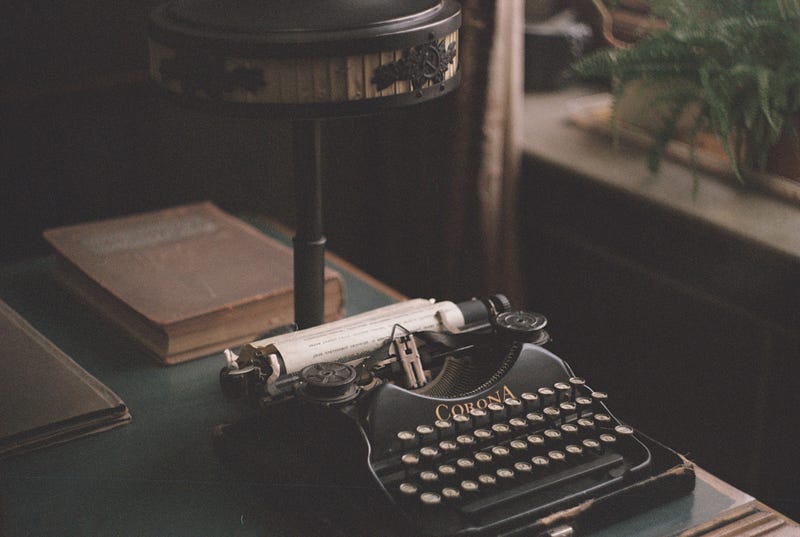
Typewriter. Photo by Daria Kraplak on Unsplash

The Topic

The toughest part about writing is not writing an article itself, but rather thinking about the topic on which you want to write. While thinking about a topic, you might discard subjects on which you ‘assume’ that people will not want to read a piece. But what if you’re wrong there?

One thing that I’ve observed as an online writer for over 10 years, is that you can’t predict what will go viral. If anyone really knew what makes content on internet go viral — people would go viral every day!

But more than algorithms, it is what people like and want to read. You can even beat algorithms by creating content that people like and want to consume. And you might assume that this subject might not work, or writing on this topic might not get you views — but you can be very wrong!

Maybe the subject you’re discarding is exactly the subject that has the potential to go viral.

So, don’t ever discard any piece, or doubt it for not having the potential to go viral.

Remember, the best articles that you will write will be the ones that will come to you naturally!

The Tone

The next most important thing is — how your article sounds to the readers. Sometimes, it becomes too boring and can’t hold the reader till the end. While sometimes it is so information-intense that you miss out on the point.

Sometimes your story might sound like an opinion piece, while sometimes it may sound like a conclusion. Nevertheless, how you want your readers to read and perceive your article is entirely up to you.

There is no right or wrong here. Articles of all tones and voices have worked in the past. So, saying that only informative articles can work, would be wrong.

But one necessary thing to consider and keep in mind here is that — the tone of your article should be what you want it to be. Once, you are done writing the article, do give it a read yourself before publishing it. Read it like you’re reading it for the first time, to see how it will sound to a new reader.

Remember — your articles will be read, only ‘once’ by most readers, so they have to be impactful, gripping, and powerful!

Person taking voice notes. Photo by Malte Helmhold on Unsplash

The Speed

To write an article in under one hour, the most important thing is — speed. Although typing speed comes only with practice, the speed of generating ideas can be improved.

I’m a full-time product designer, which means that for more than eight hours on any typical day, I’m only working on my office tasks. There is very limited time to write on Medium but still, I try to write as much as I can.

One way that I use to create content in under one hour is by speaking out loud. Believe me, it has always worked!

When you speak out loud, like you’re giving a lecture to an audience, you will realize that you are churning out words much faster than you would otherwise. Having a conversation is more effective than writing words.

If you just keep staring at a blank document page for hours, you might end up writing only fifty words.

But when you start speaking out loud, like you’re giving a lecture or a speech, you will observe that you are able to churn many words in hardly a minute.

To make sure you don’t forget anything, you can also use your phone’s recorder, or simply create a WhatsApp group with only yourself in it, and send voice messages to yourself. This has worked wonders for me in the past!

You will be able to hold your thoughts for a much longer time and also write a piece that will sound like a conversation to your readers. While reading it, your readers will not be distracted, hence you will be able to hold their attention till the last word!

Don’t Underestimate The Power Of Note-Taking

Another effective trick that has worked for me while I’m planning to write any piece, is taking notes. Usually, whenever I am thinking about a topic, I just take some quick notes.

In one of my previous stories, I mentioned how Kendrick Lamar reached the zenith of his career by taking notes —

How do I take notes?

If I have access to my laptop, I quickly jot them down in Medium drafts, but if I don’t have my laptop with me, then I will write about it on my phone, in notepad, or sometimes even on a piece of paper.

Then whenever I have my laptop with me, I will transfer those notes into Medium drafts with one-liners, or just high-level information about what the story is going to be about.

I do this so that whenever I come back to those drafts any time in the future, I have context about what I was thinking when I wrote the subject, and what I want to cover in this article.

A glimpse into my Medium drafts —
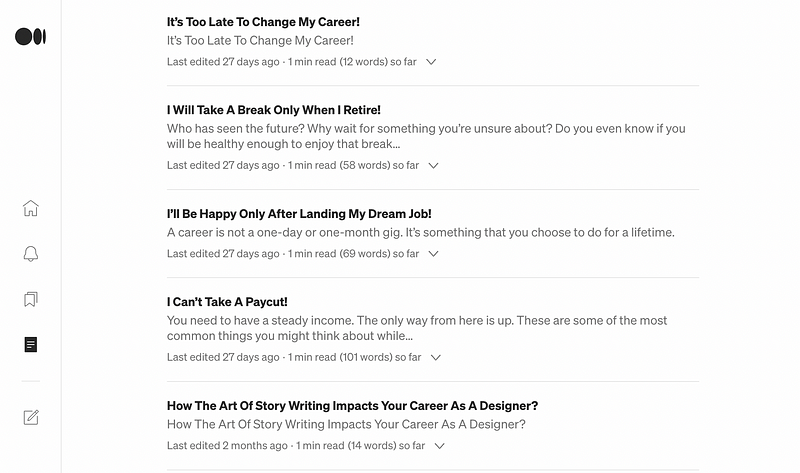
The screenshot of the author’s Medium stories draft page. Credits: Author

If you look up close, most of the drafts have less than 100 words written inside. And if I dive into any one of the stories to show you how I take notes, you can observe that there are only keywords and important points —
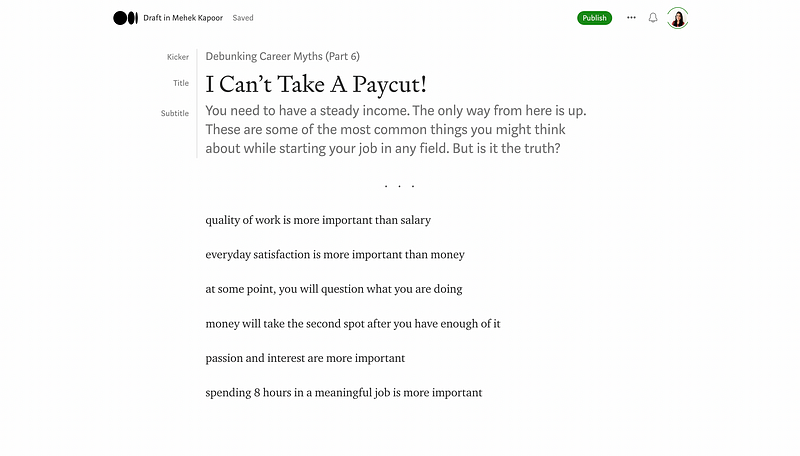
Screenshot taken from the author’s story drafts. Credits: Author

In the above screenshot, you can see I’ve mentioned only six points, out of which I will churn out an article of more than 500 words.

Another tip is that — when you take quick notes, you ‘save’ those ideas for the future, and when you return to those notes in the future, you can easily build upon those ideas and create an even more effective story out of it.

So, this is how I usually write articles of 1000 words, or even more, in under one hour. I’m sure some of these tips and tricks can help you become more productive in your writing journey!

Writing
Writing Tips
Advice
Technology
Synergy
Recommended from ReadMedium