
Most Americans Are on Drugs
You are in for a shock — this country is even unhealthier than you thought.
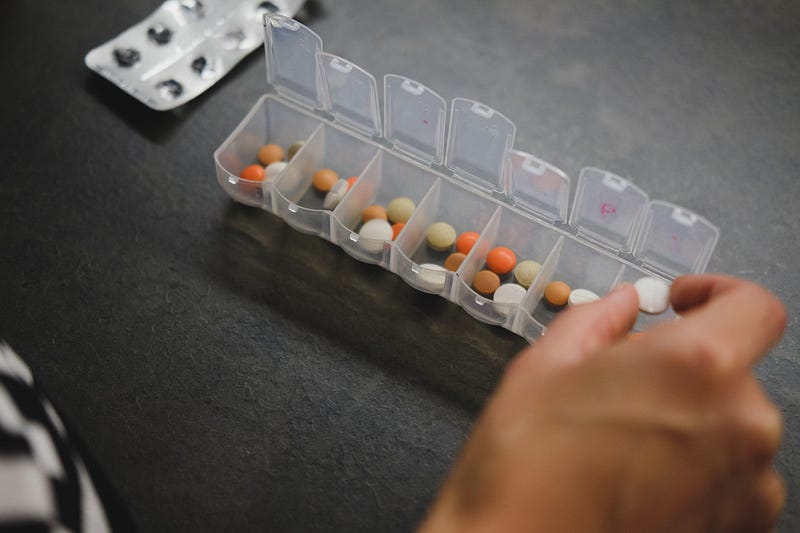
My husband is 70 and takes no medication, which is a miracle.
He used to self-treat with ibuprofen for aches and pains in the morning, but he went on a keto diet last month and within a week the aches and pains subsided.
Fifteen years ago I was diagnosed with an autoimmune condition called Hashimoto’s Thyroiditis, and prescribed levothyroxine (synthroid).
Levothyroxine is one of the most prescribed drugs in the world.
I was told I would be on it for life, but I stopped taking it five years ago because it didn’t help with my symptoms. Since then, I’ve tried elimination diets — finally hitting on the one that works.
My doctor was wrong. I am well on my way to remission, and my labs look great.
Autoimmune diseases are highly correlated with improper diet, intestinal permeability, and inflammation. Much of that research is relatively new, so my doctor couldn’t have known. But it might not have made a difference. She had no time to talk to me, just enough time to write a script and tell me it wasn’t serious.
And that is how medicine in America works.
Mind-Boggling Stats on Prescribed Drugs
Fifty-five isn’t old, yet the majority of us are on at least one prescribed medication.
In 2013, The Mayo Clinic reported that 70% of all Americans take at least one prescribed drug, and more than half take two.
According to Georgetown University Health Policy Institute, the vast majority of Americans who take meds regularly have one of five impairments:
Diabetes, heart disease, cancer, hypertension, or arthritis.
Many more are pre-diabetic or are taking statins because of elevated lipids.
A high total cholesterol number alone can be reason enough to fill a statin prescription. The same is true for anti-hypertensive (blood pressure) meds — all it takes is consistently high bp numbers.
The three most commonly prescribed drugs are:
Antibiotics, painkillers, and antidepressants.
The first and second are usually limited to days or weeks but the third might be taken for years, or a lifetime.
What Ails Us
While I am surprised that most of my middle-aged peers are on meds, I am not in shock. The alarming statistics on diabetes, mental illness, and chronic pain in the US are, unfortunately, old news.
Let’s break down how many people are ill enough to want, or need, medications.
Diabetes (T2) affects an estimated 34.2 million adults, of whom about 7 million are undiagnosed.
Diabetics are given oral meds to help control blood sugar, usually Metformin. As the dietary advice they get doesn’t work (low fat, high veg and grain) they eventually graduate to taking insulin. In the initial stages, meds that help break down starch and table sugar such as alpha-glucosidase inhibitors are prescribed.
Pre-diabetes affects 88 million Americans or 34.5% of the adult population.
People with pre-diabetes are often also prescribed Metformin.
Like diabetics, they are also given half-baked dietary advice that boils down to “eat less, move more.” Despite meeting with diabetes educators, it is a rare individual who reverses diabetes by following the standard ADA dietary advice.
The number of Americans who take medication for either pre-diabetes or diabetes is in the neighborhood of 115 million people. Although some will never fill a prescription due to cost — and a small minority will take corrective action through diet — about 100 million Americans will swallow pills or inject insulin to treat this common, preventable metabolic illness.
Autoimmune disease affects an estimated 23.5 million Americans.
The incidence and prevalence of autoimmune diseases like Hashimoto’s, Sjogren’s, Lupus, Celiac, Eczema, and Rheumatoid Arthritis are rising. The majority affected are women.
Multiple Sclerosis and Type I Diabetes are also autoimmune diseases.
Research on the causes of these diseases is sorely lacking.
Almost all individuals diagnosed with autoimmune disease take medications prescribed by their doctor to control symptoms such as pain, fatigue, dryness, and inflammation.
Mental illness (depression, anxiety, etc.) affects roughly 21% of Americans
In any given year, according to the National Association for Mental Illness (NAMI), about 1 in 5 Americans is affected by some form of mental illness. Only about 5% experience serious mental illness that requires intensive or inpatient treatment, but a majority of people suffering from any mental illness use pharmaceuticals.
Chemotherapy is used for 650,000 people in any given year in the US
Chemotherapy and radiation are frontline treatments for individuals with cancer. In addition to chemo, cancer patients are often prescribed painkillers and antidepressant/anti-anxiety medications.
Heart Disease is the leading cause of death, but many can’t afford their meds
Approximately 82 million people in the US are living with some form of cardiovascular disease, according to a study from the National Academies Press.
CBS News reported that a study by the American Heart Association revealed 2.2 million Americans with cardiovascular disease don’t take their meds due to cost.
Cardiovascular disease encompasses stroke, hypertension, and coronary artery disease. Each day, more than 2,000 Americans die from some form of cardiovascular disease.
Treatments usually focus on lowering cholesterol and blood pressure numbers. The CDC reported that in 2017–2018, 45.4% of Americans over the age of 18 had high blood pressure. Among those over 60, nearly 75% have hypertension.
Pills and Doctors
The cause of our prescription drug problem can’t be laid entirely at the feet of pill-happy doctors. We aren’t a healthy population, we suffer, and we go to doctors for help.
According to an NPR article on advertising of medications, direct-to-consumer drug advertising began with little fanfare in 1986. A clever ad-man found a way around listing multiple pages of side effects by never mentioning the drug by name.
“Your doctor now has treatment that won’t make you drowsy,” NPR reported. “See your doctor.”
Pharmaceutical companies were stunned and gratified with the response to such ads. In short, they sold a whole crapload more drugs. The rate of return for TV ads hawking pharmaceutical drugs is astonishing: about 1 in 3 people will speak to their doctor about the drug they saw on TV.
Advertising spending by pharmaceutical companies leapt from $230 million in 1994 to nearly $2.5 billion dollars in 2000, according to Prescrption Drug Trends: A Chartbook Update, by Kaiser Family Foundation.
We Have an Escape Hatch
The use of prescription drugs has fallen slightly, although not enough to be statistically significant, according to the CDC. The bottom line is that astronomical rates of drug use are staying the same.
Our health isn’t improving, and we need drugs to cope.
Children and teens mostly take asthma meds, young adults are on antidepressants, and people over 50 are on blood pressure, diabetes, or heart medication.
Doctors are stuck. Patients ask for drugs they see on TV, and doctors are backed into a corner. They are not trained in the proper human diet, so can only push the outdated and ineffective USDA Dietary Guidelines.
And most of all, they have only a few minutes to interact with each patient.
Doctors aren’t even particularly effective at getting patients to quit smoking, partly because they avoid frank discussions, but also because they lack training in how to intervene, and are always short on time to spend discussing the subject and attending to patient follow-up.
The answer must lie with each of us. Are we willing to do the research to find out what the alternatives are? Are we willing to give up foods that taste good but are implicated in diabetes, cancer, and heart disease?
Perhaps Millennials won’t be as willing to pop a pill, and might be less likely to accept the words, “You’ll have this for life” when they get diagnosed with a chronic illness.
The 40-year-olds of today might question their doctor better than I did fifteen years, and ask more questions. I hope they do, and I hope doctors are more inclined to say: “I encourage you to research it yourself. Here are some support groups online.”
All I got was a prescription and a stock line about how my illness was no big deal.


