
Moroccan Surprises
The best and the less good of a two-week tour of Morocco
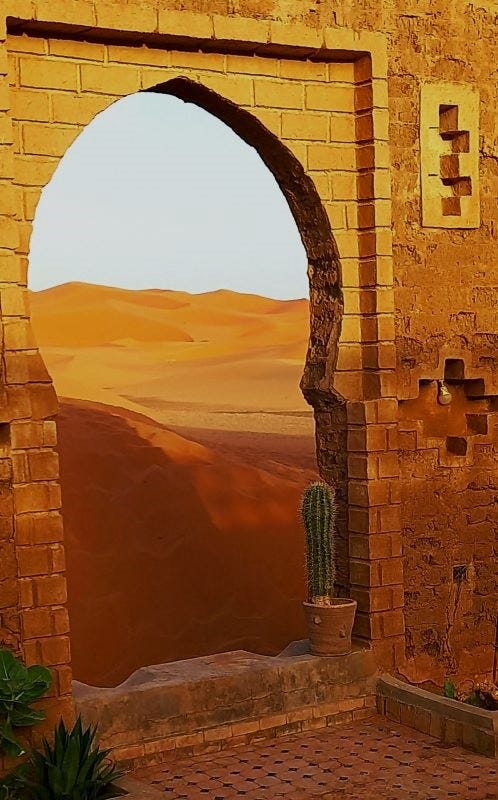
Just the name Morocco conjures up myriad exotic images from the tales of Arabian Nights.
On June 30 Marie and I and her two daughters with their spouses began a 12-day luxury trip through this magical country.
It was just the six of us in a chauffeur-driven Mercedes van and different guides depending on where we were. Our driver, Tarik was multilingual and drove us wherever we wanted the entire trip. It was a very exclusive and, I might add, expensive trip. Not normally my style of travel, but wonderful for a once-in-a-lifetime treat.
Casablanca
We landed in Casablanca (of movie fame) and embarked on a 4-hour whirlwind tour of the city. Casablanca is the financial capital of the country, but unless you need to go there on business, I can’t recommend it as a touristic city. Rick’s Cafe was closed for renovations, and the only other site of tourist interest is the elaborate Mosque of Hassan II.
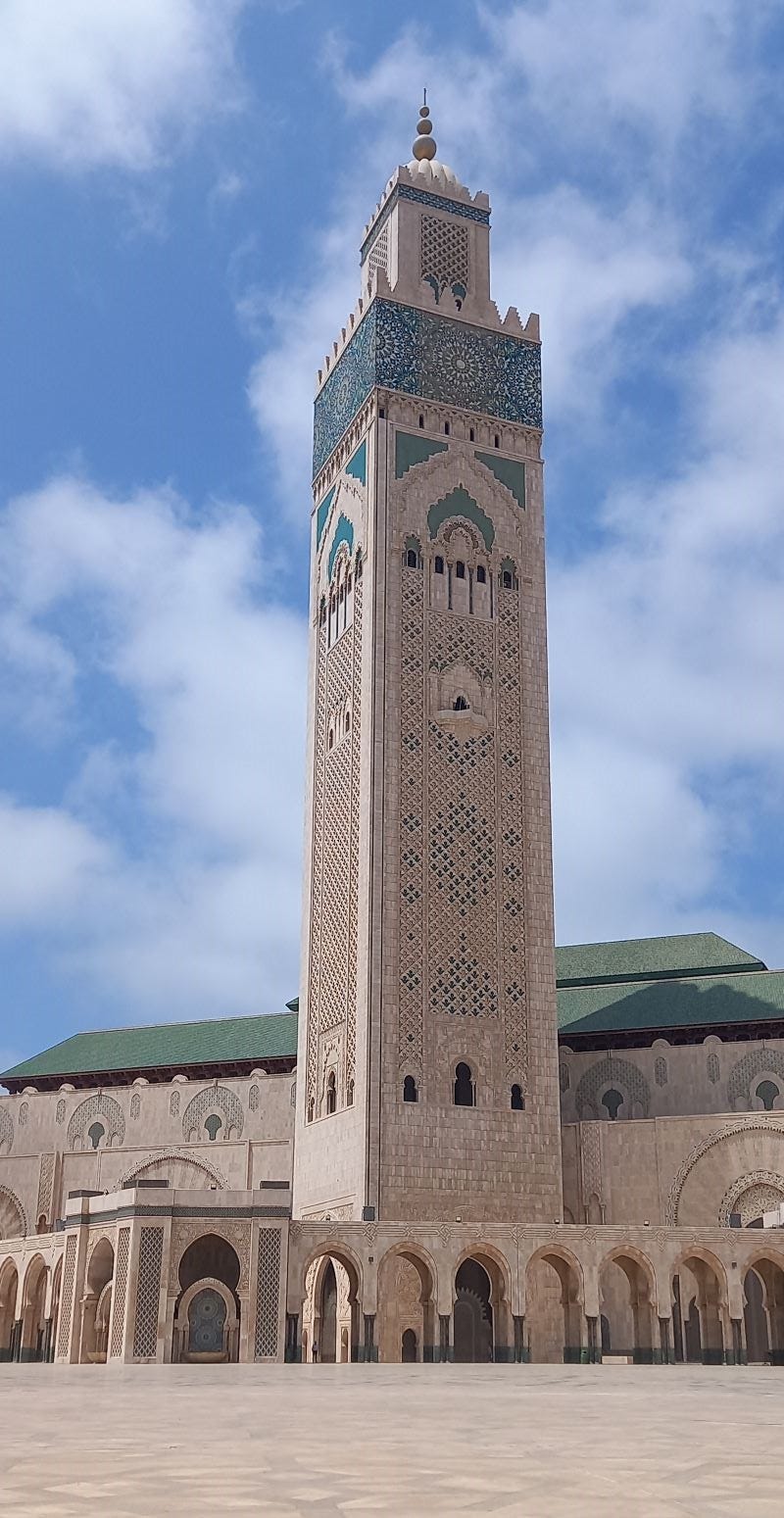
One of the largest mosques in Africa, it can hold 105,000 worshippers. Completed in 1993, over 6000 master craftspeople worked six years to build this edifice at a cost of over 800 million dollars.
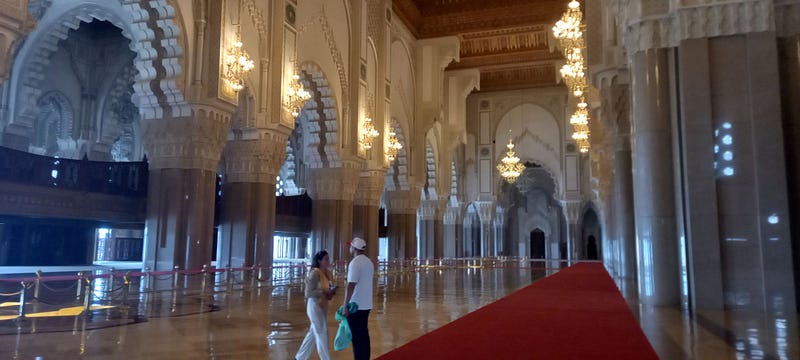
What surprised and bothered me about this was that if you look just beyond the mosque, you see a view of the slums of Casablanca. I felt the money spent could have been better employed in bettering public housing for the poor. But that’s just me.
Rabat
From Casablanca, we drove to Rabat, the seat of government in the country.
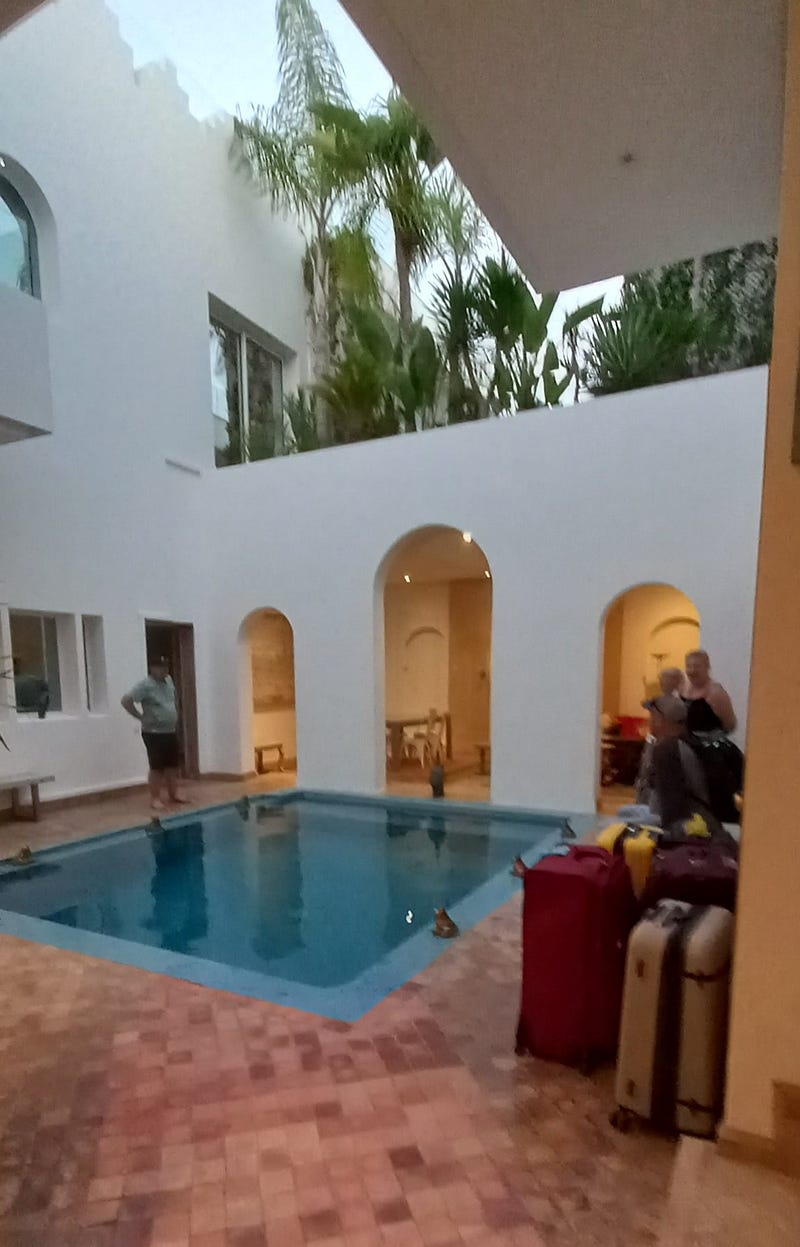
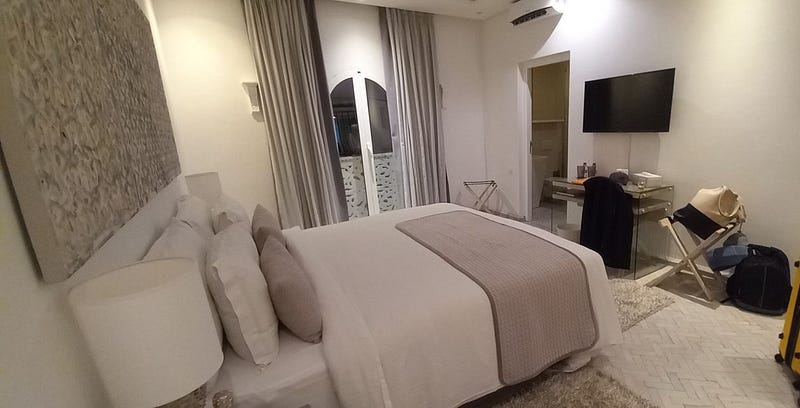
Moroccan cities are usually separated into two parts, The new, modern part of the city and the older part normally called the medina. It is in the medinas that you find the true Moroccan experience. In the medinas, the best places to stay are in riads (a traditional town home built around an interior garden. Often with a pool). Winding down a narrow street built for donkeys rather than vehicles, we followed a man pushing a cart with all our luggage to our lovely riad.
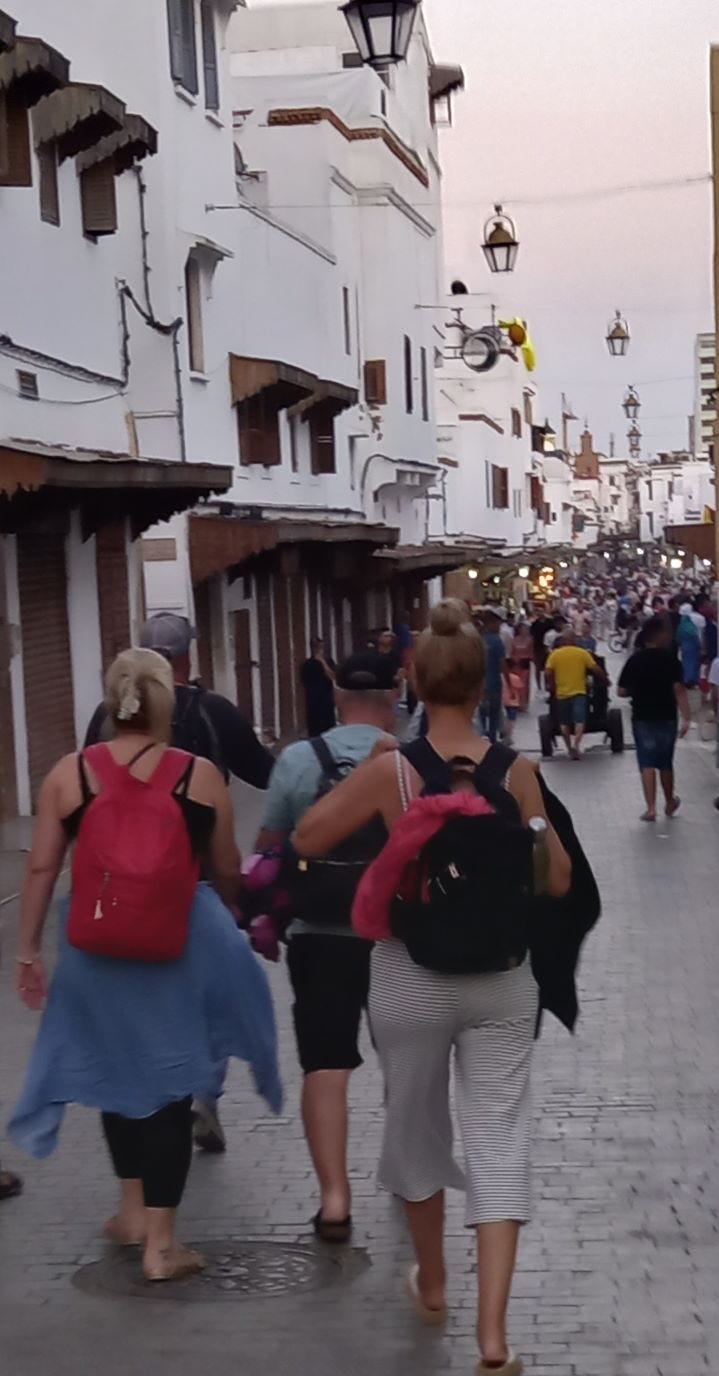
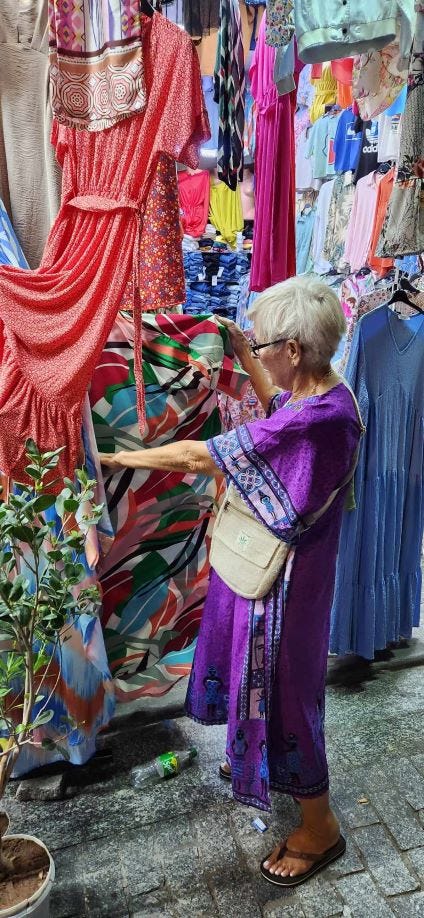
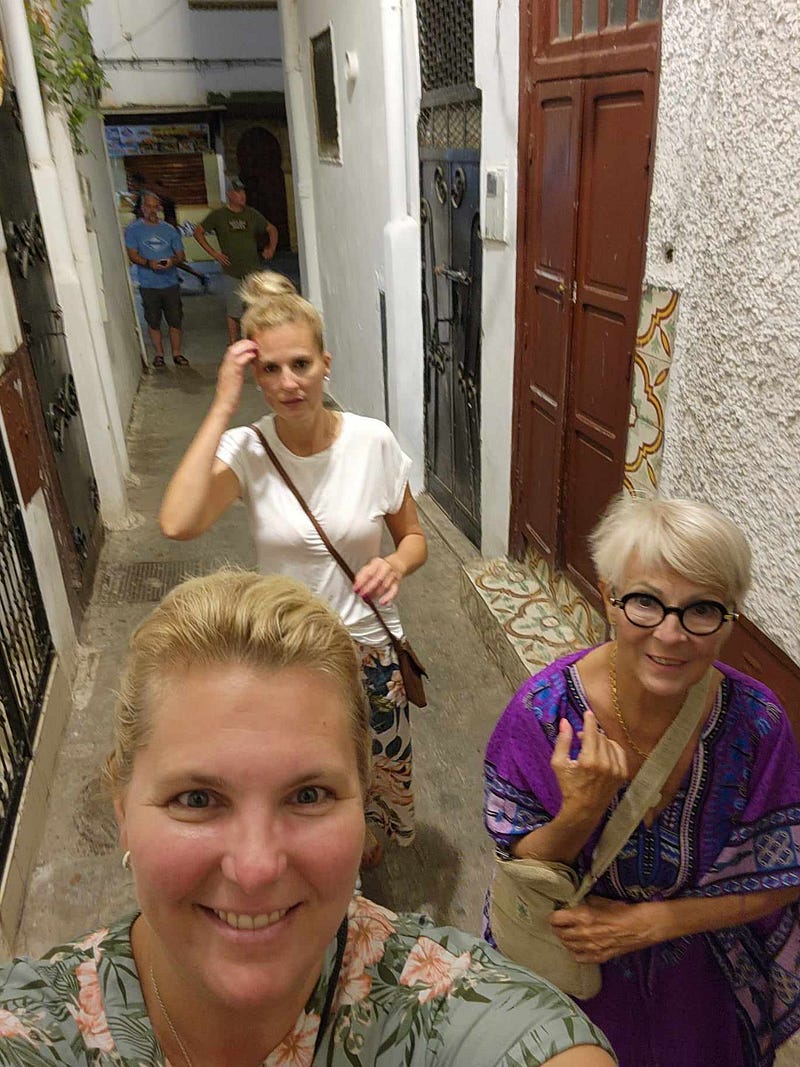
Marie and her daughters went shopping our first night in Morocco.
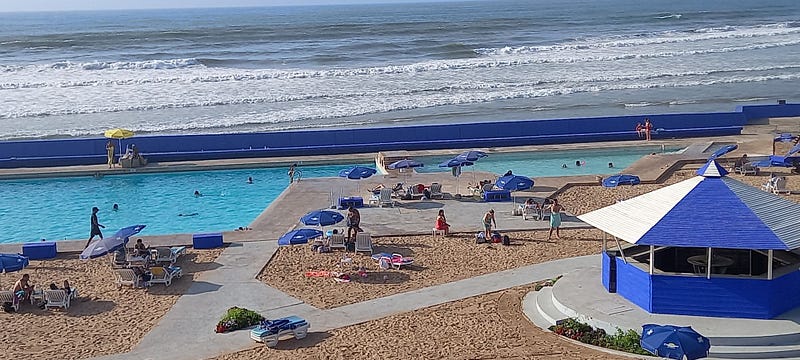
Both Rabat and Casablanca are seaside cities and in the heat of the desert in July people flocked to the beaches.
Surprisingly, for a third-world country, over 21% of the electric power in Morocco is provided by solar and wind compared to only 13% in the USA.
The King has many palaces all over Morocco, but the one in Rabat is his principal palace.
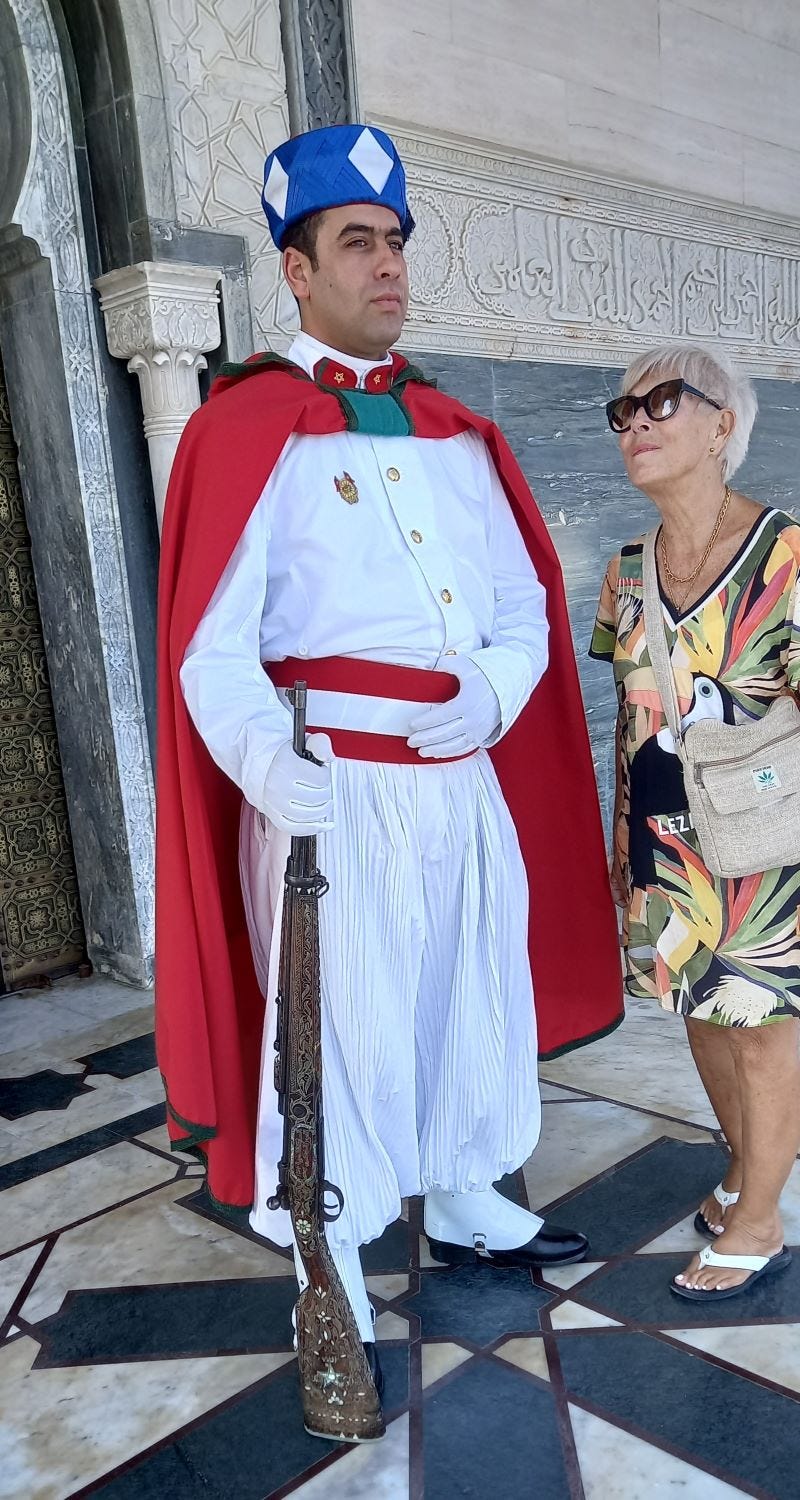
We only spent one full day in Rabat, and I would like to return and explore more.
From Rabat we headed to what is probably my favorite city that we visited in Morocco: Fez. On the way to Fez, we made a stop at a surprising spot.
Volubilis
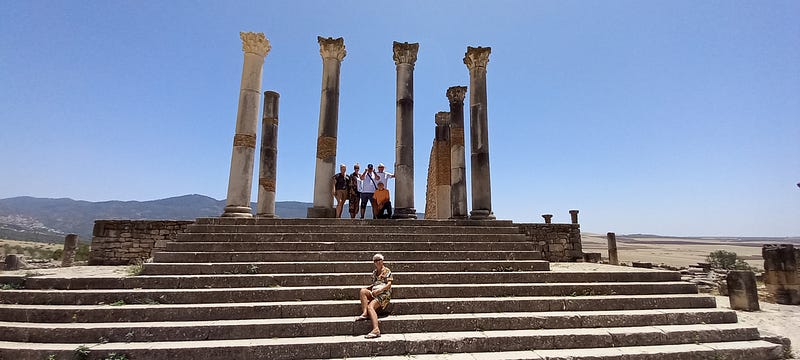
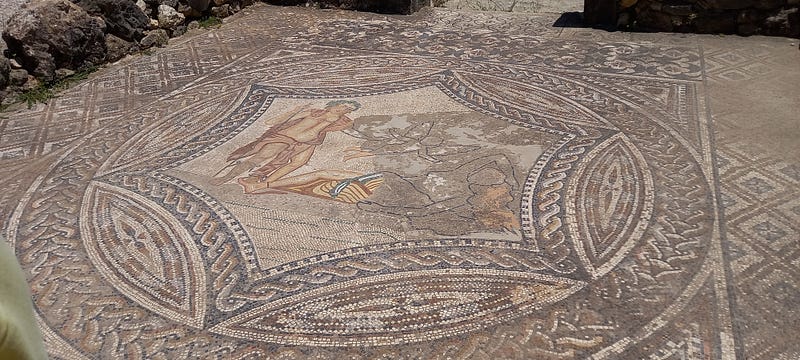
In 25 BCE Volubilis was a part of the Roman empire and served to supply Rome with agricultural products, principally, wheat. At one time it had nearly 20,000 inhabitants. Volubilis continued to be inhabited until the 18th century. Today it is one of several Roman ruins in North Africa.
Fez
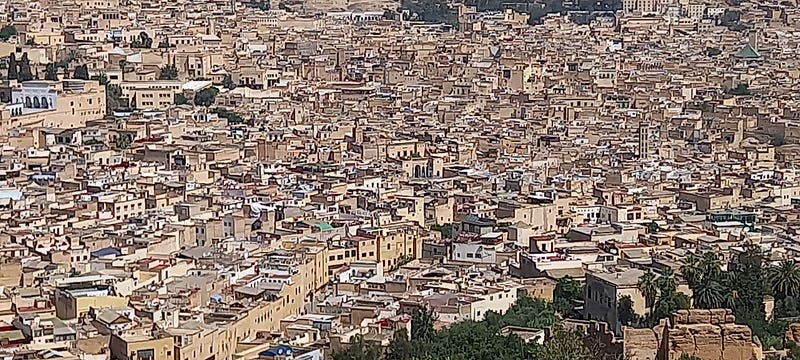
I was enchanted by Fez. The narrow winding paths of the Fez medina were like nothing I had seen before. To imagine that over 800,000 people still live in the world that is the Fez medina is overwhelming. The fortified walls of the medina enclose 220 hectares of homes, workshops, businesses, hovels, and palaces. Its sloping narrow streets are more serene and intimate than any city in the world.
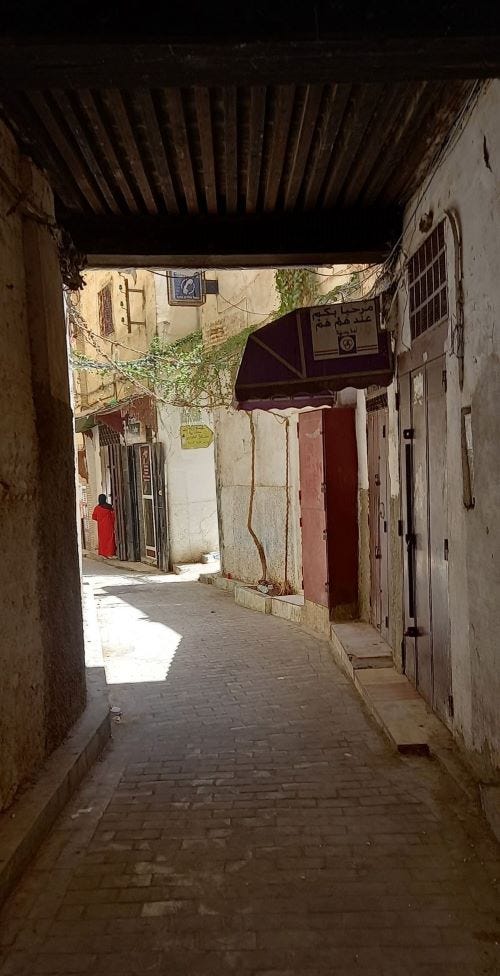
For privacy, the doors of the homes are placed several feet apart from each other so that no one opening their door is able to be seen by their neighbor. There is no way to tell if behind the door is a palatial home with interior patios, gardens and a pool, or if behind there is a very modest home.
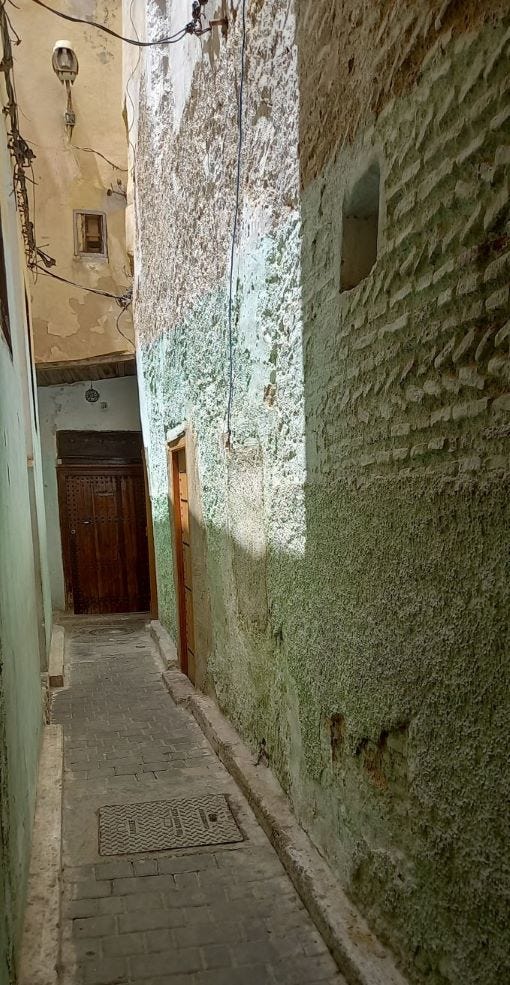
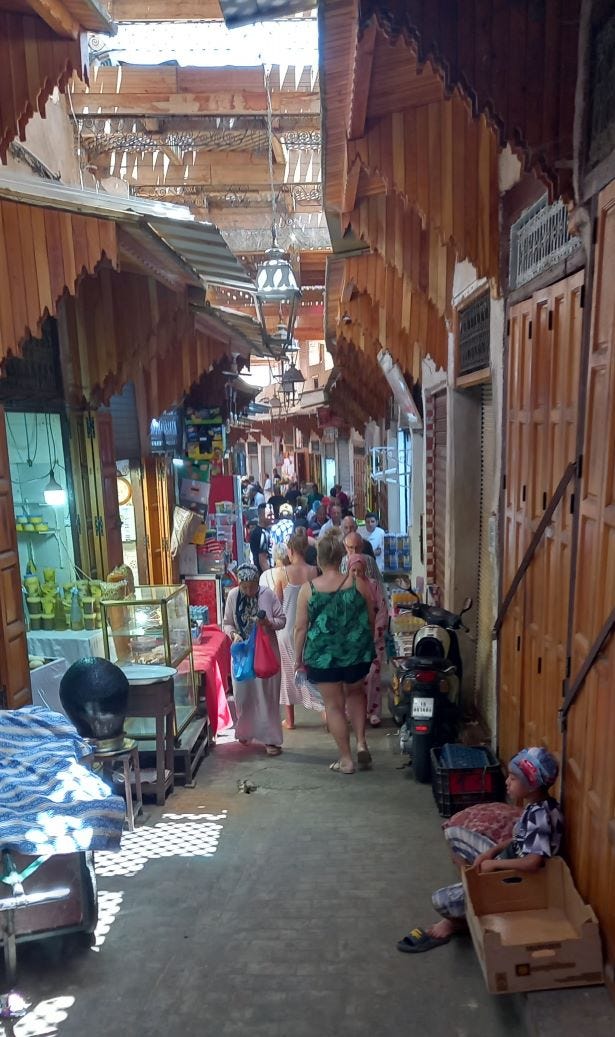
We passed by one business that was a small one-man bakery with a wood-fired oven. Neighbors would prepare their goods for baking and carry them to his business where for a small fee he would bake them.
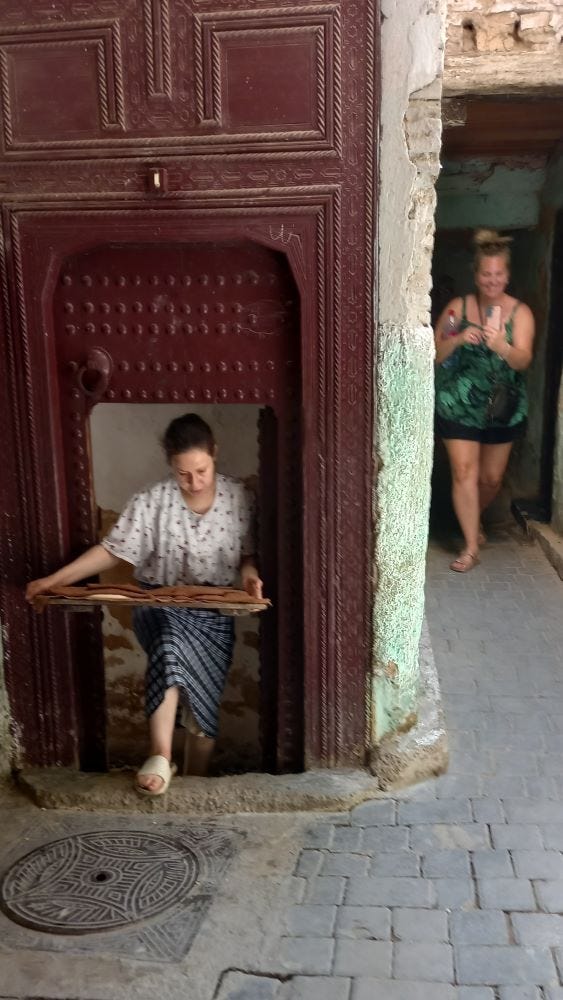
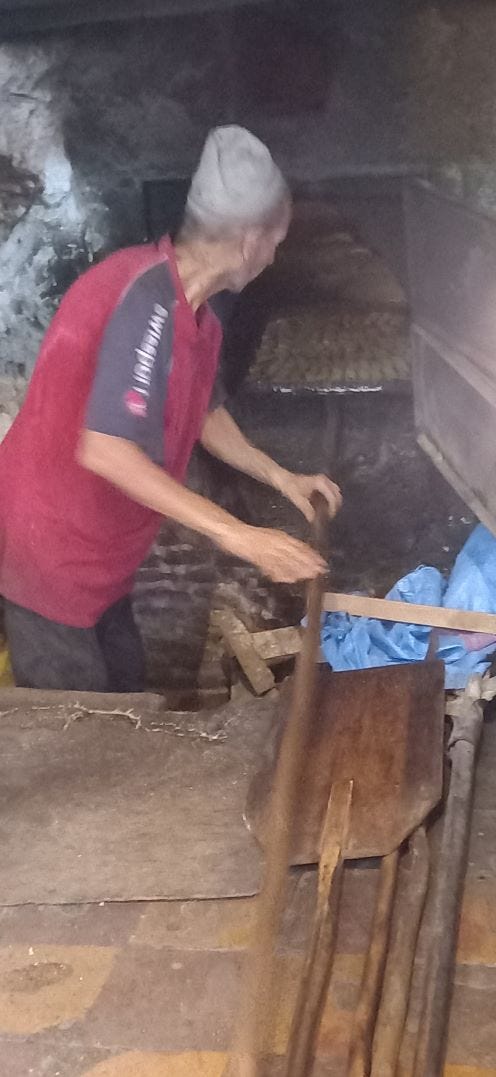
The narrow crowded streets of the medinas may seem dangerous, but our experience was that the people that lived there were respectful and generally more conservative and helpful than in the modern parts of the cities we visited. Nevertheless, good common sense should be used as in any city anywhere.
Once I left a restaurant where we were eating to go buy a mask I had seen on a street nearby. I got totally lost and ended up relying on a kind stranger who volunteered to guide me back to the restaurant.
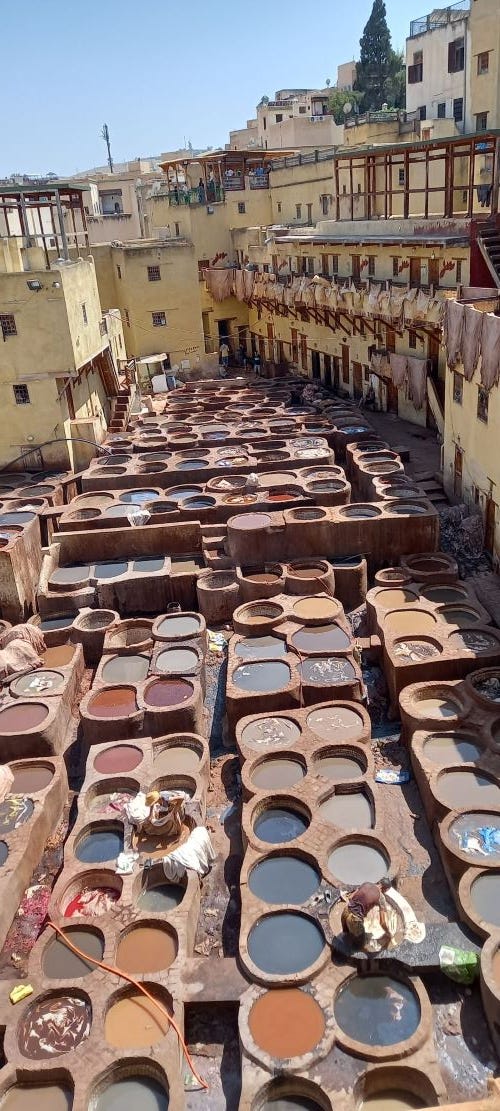
A major business in the Fez medina is the leather tanneries and leather goods shops. The smell in the tanneries can be quite acrid. We were given mint leaves to put in our nostrils to mask the smell. Products are high quality and prices are very negotiable (usually half or more of the asking price).
Bargaining is expected and a large part of the fun of buying things in Morocco. In fact, it’s almost an insult to pay the asking price. We took a large empty suitcase just to put the things we bought for our house in Mexico. We returned with a leather ottoman, a rug, a mask, a 100+year-old Berber satchel, several candle holders, spices and essential oils, and ceramic items plus one very special tray made from fossilized sea creatures embedded in a prehistoric marble-like stone. Fun and unusual things. For shopping Fez and Marrakech are the best places.
Fez is also the site of what is considered the world’s oldest university, established in 859 and still operating today.
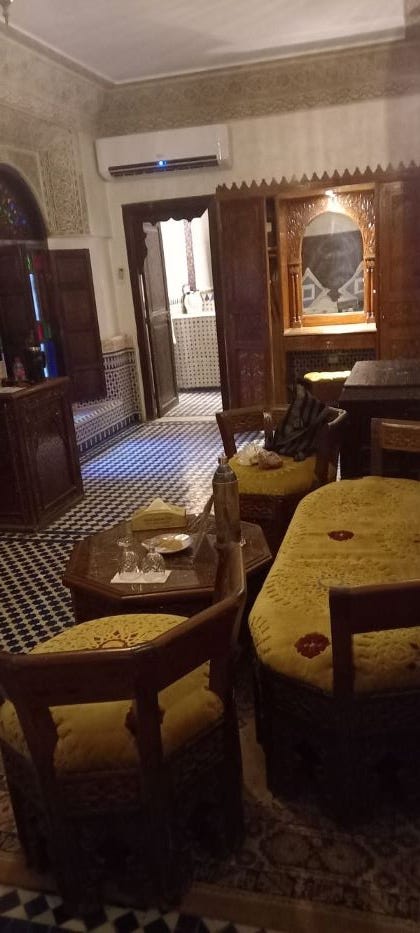
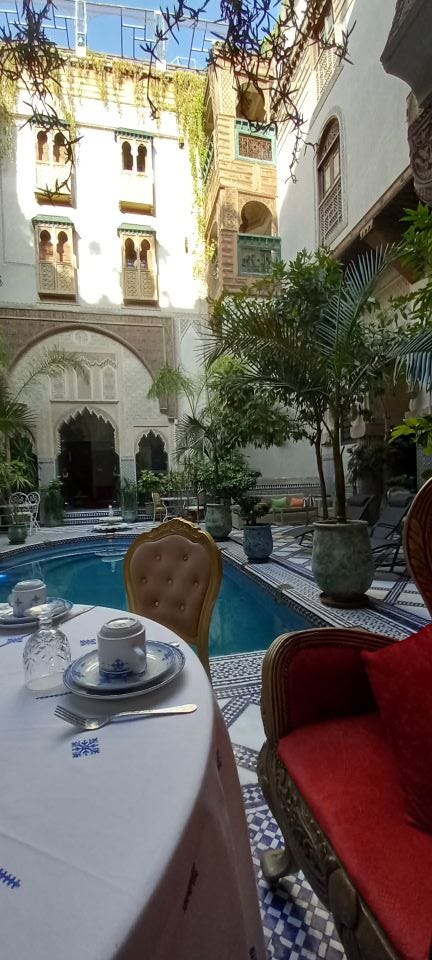
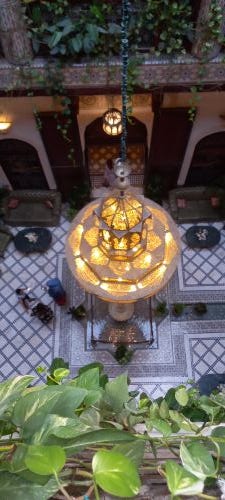
Our riad (hotel) in Fez was a delightful surprise. The unassuming entrance hid a luxurious old Moroccan building, built by combining 5 different neighboring structures. While the décor seemed to be something my great-grandmother would have chosen, that only served to emphasize the uniqueness of the riad.
Across the Atlas Mountains to the Sahara
We left Fez for what would turn out to be an exhausting 13-hour drive over the Atlas Mountains to the Sahara Desert.
The middle Atlas is full of deciduous forests and miles and miles of apple and olive orchards.
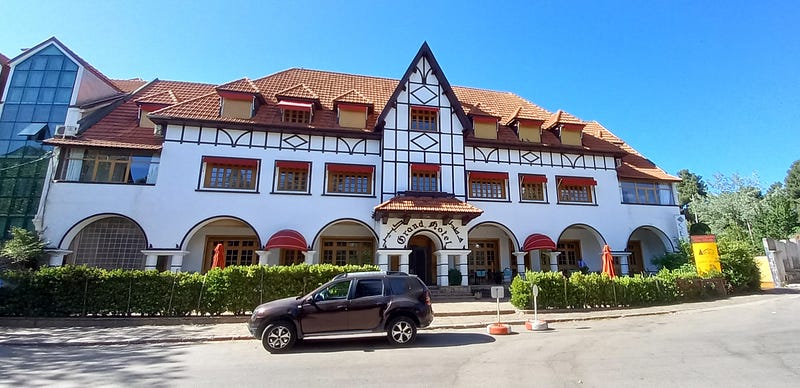
One surprise in our 13-hour odyssey was the Middle Atlas town of Ifrane. While most tourists flock to Marrakech and the medinas, locals go to Ifrane for a break from the heat. Built by the French in the 1930s to seem like a village in the French alps, Ifrane is cooler due to its altitude and even has skiing in the winter.
Passing over the Middle Atlas and the High Atlas was a grueling road trip on winding mountain roads that I would prefer to not repeat.
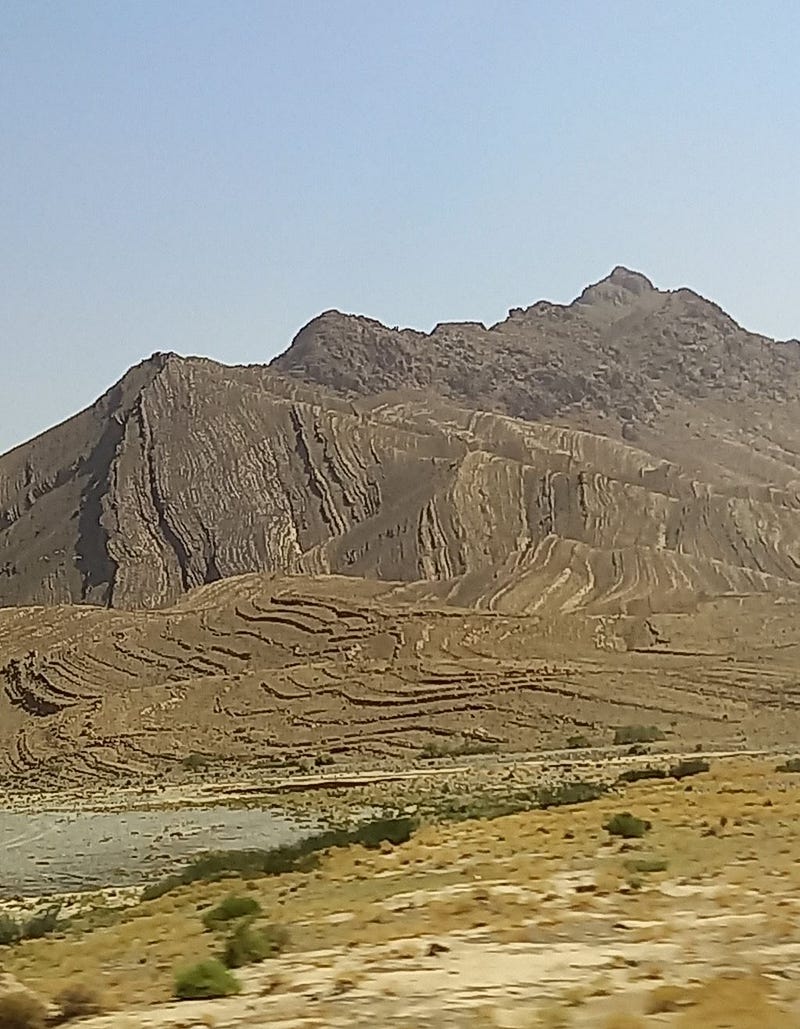
But the end of that road trip was in the Sahara Desert and possibly ranks as another high point in the entire two weeks.
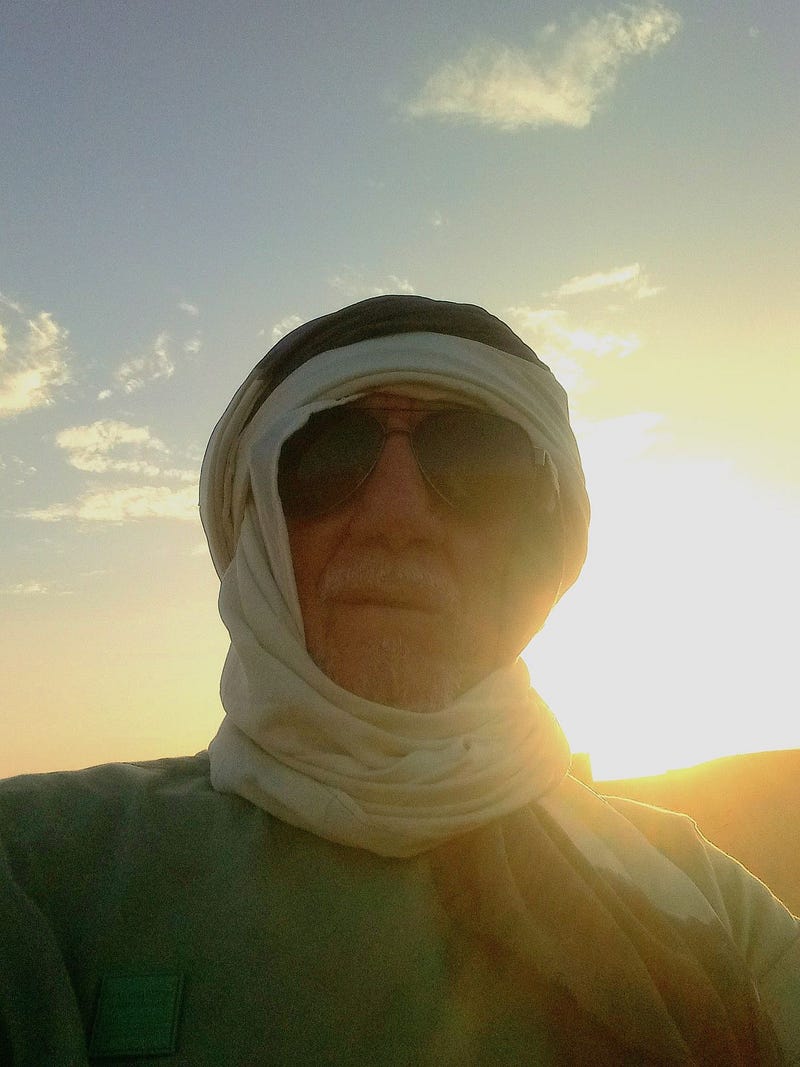
Look for my next post coming soon covering the wonders of the Sahara, Marrakech, And camels on the beach at Agadir.
Read every story from Robert Knight (and thousands of other writers on Medium).
Your membership fee directly supports Robert Knight and other writers you read. You’ll also get full access to every story on Medium.


