avatarSusan Alison

Free AI web copilot to create summaries, insights and extended knowledge, download it at here

1487

Abstract

ickly in a vase. They were still beautiful for a while, though.</p><p id="3d2c">However, then someone else sent me a ‘waxed amaryllis’.</p><figure id="db22"><img src="https://cdn-images-1.readmedium.com/v2/resize:fit:800/1*7mxhbTeaTkJkm2Av8aXPWw.jpeg"><figcaption>Photo by Susan Alison</figcaption></figure><p id="d407">A waxed amaryllis is literally an amaryllis bulb coated in wax. This means that no soil — or water — is required for growth to flowering stage because the bulb already contains all the nutrients required.</p><p id="fe77">I didn’t like to read that the roots are removed from the bulb first before it is covered in wax which then prevents the growth of new roots. This means the amaryllis doesn’t live after blooming. A circular metal stand is embedded in the wax to keep the bulb upright.</p><p id="1526">Well … the thought of tearing roots off a plant makes me feel slightly ill, as if it’s a living entity having its little legs ripped off. Oh, wait — it is!</p><p id="d187">The wax itself can be colourful and inventive. You could pick the colour to suit your decor. It can be marbled, glittered, metallic — you can even have a waxed amaryllis with a face on that looks like a red-nosed seasonal creature usually seen leading a team of like-minded reindeer across the sky.</p><p id="dd03">(Eek!)</p><p id="8fa8">On the other hand, maybe it means that some people without the confidence to keep a plant alive still get to share space with flowers, and maybe those f

Options

lowers will be appreciated when otherwise they might not. Like cut flowers.</p><figure id="57b7"><img src="https://cdn-images-1.readmedium.com/v2/resize:fit:800/1*mEyskTuYN3HQ4bLFPqssmw.jpeg"><figcaption></figcaption></figure><p id="093a">The other plant from this part-tour of my bay window is also a plant without a pot. This time, though, the plant, a bird’s nest fern (Asplenium nidas) still has its roots, but they are enveloped in a ball of moss (with soil in the middle), known as Kokedama, literally meaning (Japanese) moss ball. I like this. All it asks for is a good soak in a bucketful of water every week or so, and, if you really want to spoil it, surround it with some other plant-pals, and give them all an occasional spray-misting to up the humidity.</p><p id="bf32">Generally, plants do better when surrounded by other plants.</p><p id="a64d">Here is the first part of my bay window tour:</p><div id="4549" class="link-block"> <a href="https://readmedium.com/a-tour-around-my-bay-window-1c39f74467e9"> <div> <div> <h2>A Tour around my Bay Window</h2> <div><h3>Part One: Clivia miniata</h3></div> <div><p>medium.com</p></div> </div> <div> <div style="background-image: url(https://miro.readmedium.com/v2/resize:fit:320/1*wejRKwo8mjmhD2NedLTtyQ.jpeg)"></div> </div> </div> </a> </div></article></body>

Photo by Susan Alison

More Touring around my Bay Window

Part Two: Amaryllis and Bird’s Nest Fern

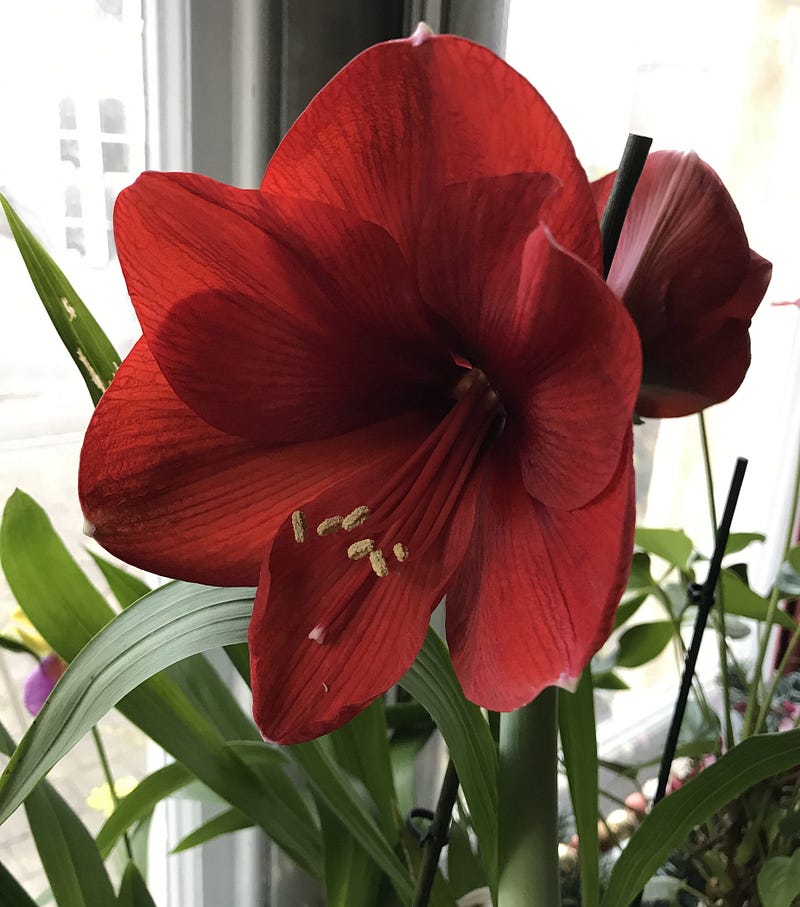
I expect you’re familiar with the amaryllis bulb that is often sold a few weeks before Christmas — there will be piles of boxes artistically arranged just inside the entrance to the supermarket — an easy present to chuck into your trolley for your plant-loving relative, or to have as a spare present in case there’s someone you’ve left off your gift-list.

After the flowering period it’s best to cut away the flower-stalks, keep the leaves and continue feeding and watering as usual to encourage growth for the next flowering season. Keeping the bulb dry after that will conserve its energy for when you want to start it off again later in the year. These are not one-flowering bulbs although they are often thrown away after the first head of flowers fades.
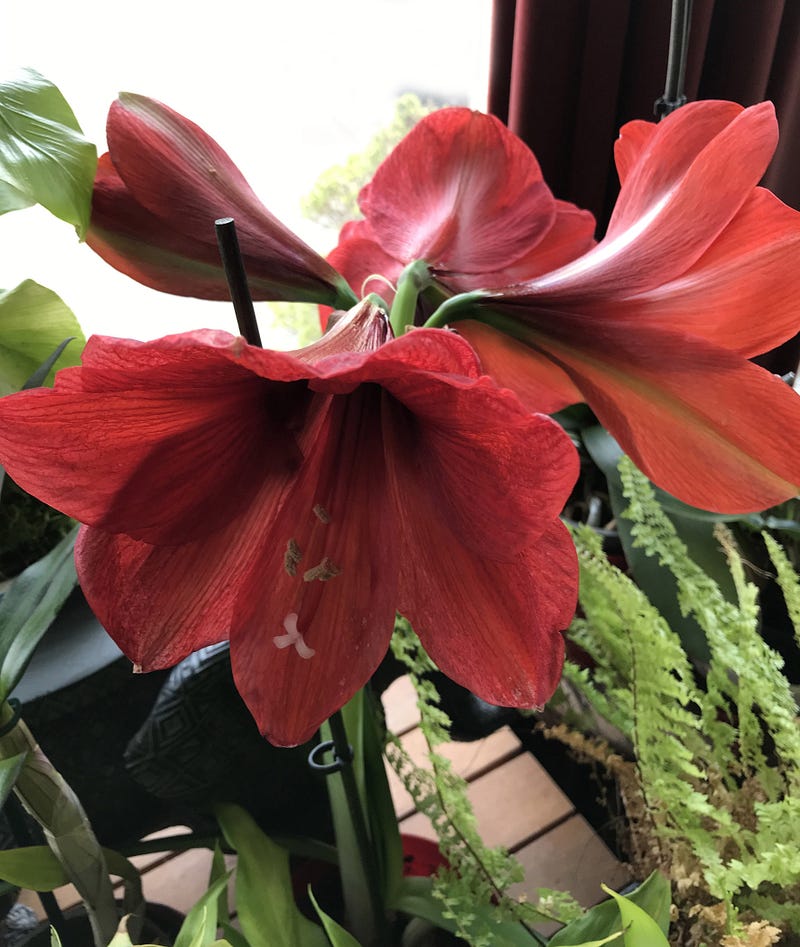
Photo by Susan Alison

I was sent a bouquet of cut amaryllis flowers for which I was duly grateful, but I was also dubious about it. It didn’t seen quite right to me to cut them. Also, they have hollow stems which rot and disintegrate quite quickly in a vase. They were still beautiful for a while, though.

However, then someone else sent me a ‘waxed amaryllis’.
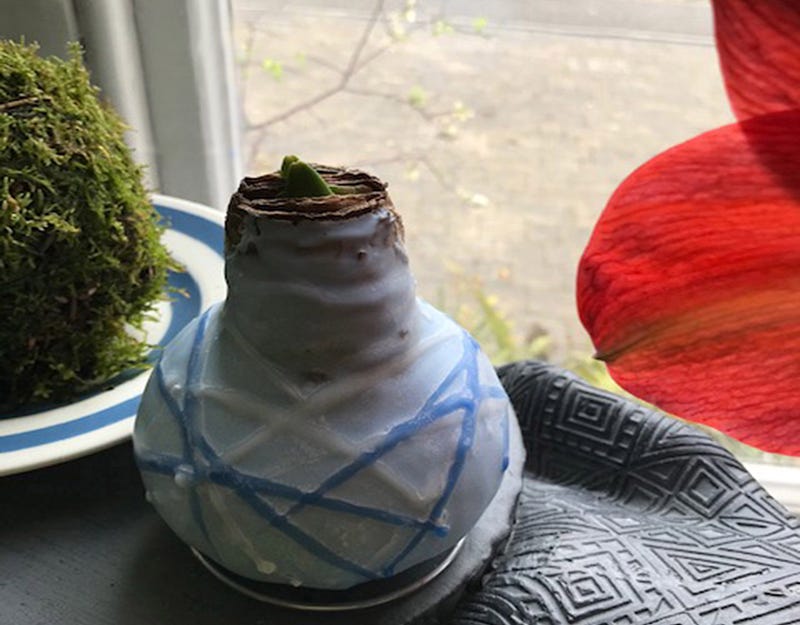
Photo by Susan Alison

A waxed amaryllis is literally an amaryllis bulb coated in wax. This means that no soil — or water — is required for growth to flowering stage because the bulb already contains all the nutrients required.

I didn’t like to read that the roots are removed from the bulb first before it is covered in wax which then prevents the growth of new roots. This means the amaryllis doesn’t live after blooming. A circular metal stand is embedded in the wax to keep the bulb upright.

Well … the thought of tearing roots off a plant makes me feel slightly ill, as if it’s a living entity having its little legs ripped off. Oh, wait — it is!

The wax itself can be colourful and inventive. You could pick the colour to suit your decor. It can be marbled, glittered, metallic — you can even have a waxed amaryllis with a face on that looks like a red-nosed seasonal creature usually seen leading a team of like-minded reindeer across the sky.

(Eek!)

On the other hand, maybe it means that some people without the confidence to keep a plant alive still get to share space with flowers, and maybe those flowers will be appreciated when otherwise they might not. Like cut flowers.
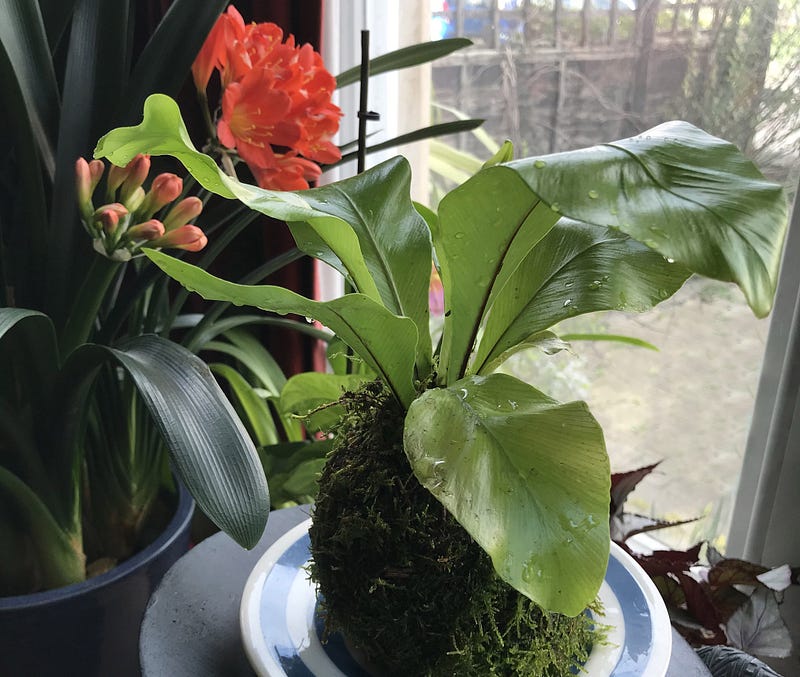
The other plant from this part-tour of my bay window is also a plant without a pot. This time, though, the plant, a bird’s nest fern (Asplenium nidas) still has its roots, but they are enveloped in a ball of moss (with soil in the middle), known as Kokedama, literally meaning (Japanese) moss ball. I like this. All it asks for is a good soak in a bucketful of water every week or so, and, if you really want to spoil it, surround it with some other plant-pals, and give them all an occasional spray-misting to up the humidity.

Generally, plants do better when surrounded by other plants.

Here is the first part of my bay window tour:

Photography
Nature
Plants
Indoor Plants
Photos
Recommended from ReadMedium
avatarLouise Peacock
Walking the Garden

July 2024

6 min read