
More Reasons Have Emerged To Doubt The Official Narrative About Syria
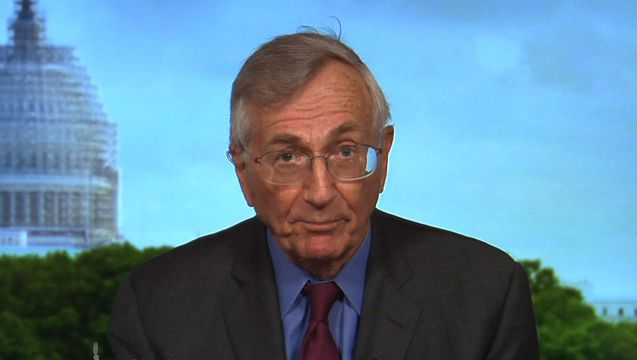
The highly decorated Pulitzer Prize-winning investigative journalist Seymour Hersh is back again, throwing yet another monkey wrench in the propaganda narratives of the US war machine.
Hersh’s latest piece, titled “Trump’s Red Line”, was published in the German publication Welt am Sonntag, reportedly after London Review of Books backed out for fear that it would make them “vulnerable to criticism for seeming to take the view of the Syrian and Russian governments”. LRB’s decision is understandable in light of today’s fact-free McCarthyist feeding frenzy given the criticism they’d already received from establishment loyalists for publishing Hersh’s explosive 2013 report “Whose Sarin?”, which attacked establishment allegations of Assad having used chemical weapons that year. Their decision points straight at the invisible state censorship that goes on within the editorial boards of every western outlet and the self-censorship that goes on in the minds of every western journalist when confronted with these uncomfortable and seemingly unreportable truths. The ruling class can make life very difficult for you if you don’t sing their propaganda song.
Hersh’s central source, whom Welt reportedly was able to contact and confirm the veracity of, describes a US president hell bent on attacking Syria regardless of facts, evidence, logic, or what he was being told by his own advisors. Hersh writes that it was known within defense and intelligence agencies that there was not sufficient intel to justify such an attack, breaking down some of the many plot holes in the establishment narrative about the alleged sarin gas strike on civilians in the Idlib province on April 4, but there was no dissuading Trump from an attack which ultimately manifested on April 6 in the form of a cruise missile strike on a Syrian airbase.
Asked by Welt if government lies still infuriate him as much as they did in the early days of his career, Hersh replied,
“It is more than being upset about lying — it’s about the reluctance of us in the press to hold the men and women who run the world’s governments to the highest possible standards. We have a President in America today who lies repeatedly about the most meaningless of information, but he must learn that he cannot lie about the intelligence relied upon before authorizing an act of war. There are those in the Trump administration that understand this, which is why I learned the information I did. If this story creates even a few moments of regret in the white house it will have served a very high purpose.”
We can all be forgiven at this point, I think, for indulging in a little feigned astonishment at the fact that a damning report on some deeply reprehensible behavior by Donald Trump has been forced to seek publication in Germany instead of at the Washington Post or the New York Times. The story has everything these outlets have become known for since November: it makes Trump look evil, it hints at the possibility of a hidden conspiracy that the US public is not privy to, its assertions are reportedly based on the testimony of anonymous insiders, and it describes conflict and a lack of cohesion within the administration. Oh, oops, except this one contains highly critical information about a despicable act of war, something these mainstream outlets have consistently stumped for and which they unequivocally applauded on April 6.
Predictably, there was an instant attack on this article from the intensely shady neocon propaganda outlet Bellingcat. You may remember Bellingcat as the outlet which has defended the known Al Qaeda propaganda network White Helmets and made the absolutely pathetic and indefensible argument that Bana Alabed is a perfectly legitimate Twitter account and not the blatant psy-op that it unquestionably is.
Bellingcat is run by a man named Eliot Higgins, who is thoroughly exposed for the establishment propagandist he is in this excellent piece by Graham Phillips. Higgins is a Senior Fellow at the Atlantic Council, an extremely suspicious virulently anti-Kremlin think tank which is funded by both Saudis and a Ukrainian billionaire, which Paul Craig Roberts has labeled “the marketing arm of the military-security complex”. You may also remember the Atlantic Council as the home of the chief technical director of CrowdStrike, the cyber security firm which to this day is the only organization which has ever directly examined the servers alleged to have been hacked by Russia.
So things are already being shaken up a bit. It is absolutely infuriating that a mere 14 years after the US and coalition forces perpetrated the evil and unforgivable invasion of Iraq based on lies there is so little public skepticism of the narratives being promoted about the US war machine’s next target. I’m glad there are still a few real journalists like Seymour Hersh out there trying to get people asking the questions they should be asking.
Here’s a hyperlink to Hersh’s article again, here’s a link to Welt’s article about their involvement in its publication, and here’s a link to a chat protocol Hersh provided of a security advisor and an active American soldier on duty at a key base near the Syria strikes.
— — —
Thanks for reading! If you enjoyed this, please consider helping me out by sharing it around, liking me on Facebook, following me on Twitter, or even tossing me some money on Patreon so I can keep this gig up.


