
Food Innovation
More Milk Thanks to Music? That’s Just the Tip of the Iceberg
Things you didn’t know about the use of sound in the food industry
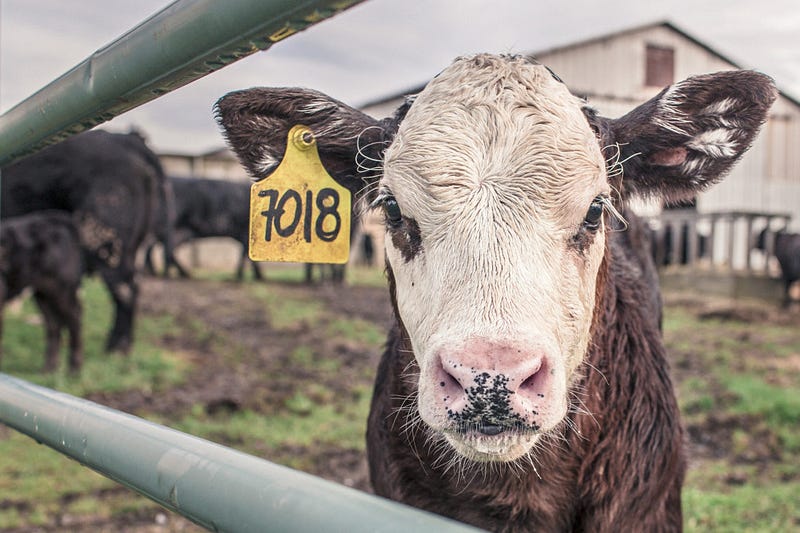
Music and food supply.
Do these two even go together?
I certainly don’t get to see it in the news, but that could easily change.
We all enjoy listening to or playing music, but what if we used it beyond the pleasure it gives us?
Think of it as a tool.
One that is non invasive, low cost, easy to implement, and free of secondary effects.
If we’re used to consuming food pumped with god knows how many additives, flavorings, and other chemicals, why not try something less risky to our health for a change?
Some have taken the first step and tried using different music genres with their livestock with some promising results. All the songs used in these experiments are at the end of this article if you’d like to try them out (or suggest it to someone you know).
So let’s look at the evidence!
Benefits of a sound-rich environment for dairy cows
This is the one most of you have heard about.
The media learned about this effect after a group of researchers from the University of Leicester found that dairy cows produced more milk when listening to relaxing music.
The researchers, Dr. Adrian North, and Liam MacKenzie had heard of farmers playing music to their chickens to reduce their stress levels so they wanted to test that belief and to their surprise, it worked.
By alternating between fast, slow, and no music for 12 hours a day, during a 9 week period, they found that cows prefer slow paced music. The cow’s milk yield increased by 3% per day on these slow music days.
Other studies have been conducted since then and the results are impressive.
One study found that cows gave 12,64% more milk when listening to Indian classical music, while another research established that listening to classical music increased milk production between 1 and 6 liters of milk per cow per day.
Not only do cows produce more milk, but they make the whole process much easier for the dairy farmers.
Gathering cows for the milking process can take some time, all the more if they don’t come voluntarily to the automatic milking system. Music attracts them to the milking compartments and the machines can be used more frequently, thus getting more milk out of them.
If you ask me, this is a great non-chemical alternative for increasing milk production.
What they like: classical, slow-paced and country music.
What they dislike: rock and folk music.
A win-win situation for chickens and farmers alike

Chickens that are meant for meat consumption can also benefit from music.
Well, who are we kidding here? Their owners get the best out of the deal.
If you’ve ever been to a broiler farm or seen a video of one, you would’ve heard a noisy environment inside of those facilities.
Imagine thousands of chickens crammed in large warehouses and making cluck sounds non-stop. Interior noise levels can reach up to 90 decibels, which is equivalent to a roaring motorcycle 7.5 meters away from your position. In that kind of environment, our hearing would likely be damaged after 8 hours of noise, just so you get an idea of the situation they’re in.
The use of music in these environments has proved highly beneficial for chickens.
Over a 8 week period, American researchers found that classical music reduced their stress behavior and increased their feeding frequency and bodyweight.
The group of chicks exposed to music intermittently (1hr on/1h off) showed fewer signs of fear, fed more often, and increased their weight between 11% and 15% compared to the control group.
Another study suggests that the sound of Quran verses can have a similar benefit. Broilers exposed to these recordings weighed more, showed fewer signs of stress, were fed more and had a lower death rate compared to the control group.
These experiments have captured the interest of governments across the world and countries like New Zeland, Australia, and Taiwan have been offering sound solutions to reduce the farmer’s high cost of chicken feed.
For instance, a chicken farmer in Taiwan acknowledged a 10-day decrease in feeding time on his broiler farm thanks to the use of music. Instead of feeding them for 90 days, he could now grow a chicken to 3kg in 80 days. This meant saving $3,500 in feeding costs per batch of chickens. Not bad, right?
We might soon find chicken-tailored playlists on Spotify.
What they like: classical, country, jazz, and sound of Quran verses.
What they dislike: rock and roll.
Multiply the fish!

Fish are not meant to live in such confined spaces.
With so many moving around, their environment becomes very stressful. So why not try to make it more comfortable with music?
But first of all, can fish even discriminate one musical piece from another?
One of the first studies on this subject found that koi carp could distinguish different music genres. By pushing a button and receiving a pellet for each successful trial, the fish were able to discern blues recordings from classical music pieces.
This means that fish can have unique hearing experiences for complex sound patterns.
The next step entailed seeing the effects of music on them.
Researchers from India found that carp exposed to Indian folk music increased their growth rate between 18% and 50% compared to fish with no music stimulation.
Interestingly enough, every time the music played the fish would gather around the speaker, as if they were listening to it, moving very slowly from time to time. Compared to the very active fish in the silent tanks nearby, I would say the carp really enjoyed what they were hearing.
We’ve seen that classical music has shown positive outcomes on other animals, and fish are not an exception.
This next study also investigated the effects of music on carp. Why carp fish? Because they’re highly sensitive to sound and researchers have already established that they’re able to distinguish different music genres.
After 106 days of playing classical music for 4 hours a day (vs a no-music condition), scientists discovered that the carp under the music condition and higher light intensity (200 lux) had an increase in body weight between 9.5% (for Mozart’s Eine Kleine Nachtmusik) and 13% (for anonymous's Romanza).
Now if you think it’s because of the change in light intensity, it’s important to point out that on its own light didn’t influence their body weight. The trick is to combine it with the right musical pieces.
It’s time fish farms consider this alternative and stop pumping so many chemicals into these poor creatures. Music is a low-cost and eco-friendly alternative, so why not try at least?
What they like: classical and Indian music.
What they dislike: human-generated sounds.
Final Thoughts: What can music do for animals?
There has been more and more awareness of the poor living conditions of animals on industrial farms with many proposed solutions to improve it.
Part of this upgrade might include having an auditory-enriching environment that can both benefit animals and farmers alike.
Animals would see an improvement in their life in captivity:
- Music can mask disturbing background noises.
- It can decrease anxiety, stress, and aggressive behavior.
- It can provide a better environment than what they were used to.
And of course, farmers would benefit the most:
- It can reduce the cost of animal feeding.
- They can sell their product much sooner.
- It’s a cost-effective tool, with minimal cost, ample availability, and a lack of significant side effects.
To be fair, not all animals might enjoy listening to music. Some research states that pigs don’t react favorably to rock music and also slow-paced music doesn’t seem to have any effect on them. So maybe, some just don’t need any auditory stimulation at all.
Each species should be treated differently.
Anyhow, many tools can improve animal farming, but not one as simple as just turning the music on.
Music used in these experiments:
- Romanza (anonymous) for carp fish
- Second Movement from Eine Kleine Nachtmusik (Mozart) for carp fish
- Pastoral Symphony (Beethoven) for dairy cows
- Bridge Over Troubled Water (Simon & Garfunkel’s) for dairy cows
- Baby, Now That I’ve Found You (Alison Krauss) for dairy cows
- Four Seasons (Vivaldi) for chickens
- Raga Nalinakanthi (Indian folk music) for carp fish
Are you curious about the world of sound and music? Learn how music can enhance a plant’s growth, the way sound changes our sense of taste, understand the music industry, and much more! Join my newsletter to embark on this journey of sound awareness.