Monsters are evangelical creatures.
Guillermo del Toro on monsters. (The Commonplace Book Project)
The Commonplace Book Project is a daily post based on Ray Bradbury’s advice to aspiring writers: read a poem, a short story, and an essay every day for 1000 days. These posts start with a quote and go wherever the rabbit hole leads. Follow The 1000 Day MFA publication so you don’t miss a thing.
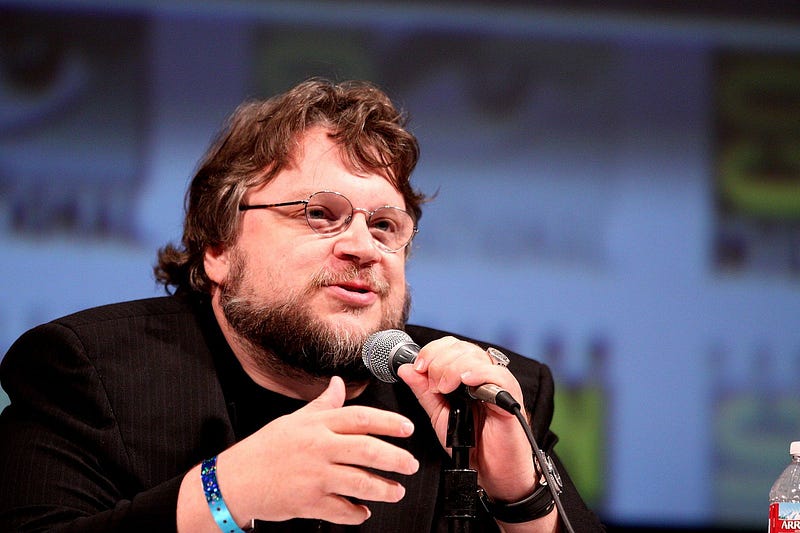
Monsters are evangelical creatures for me. When I was a kid, monsters made me feel that I could fit somewhere, even if it was… an imaginary place where the grotesque and the abnormal were celebrated and accepted. — Guillermo del Toro, in Vanity Fair.
I went looking for a quote about monsters today because I’ve been watching one of my favorite TV series of all time, and it started me thinking.
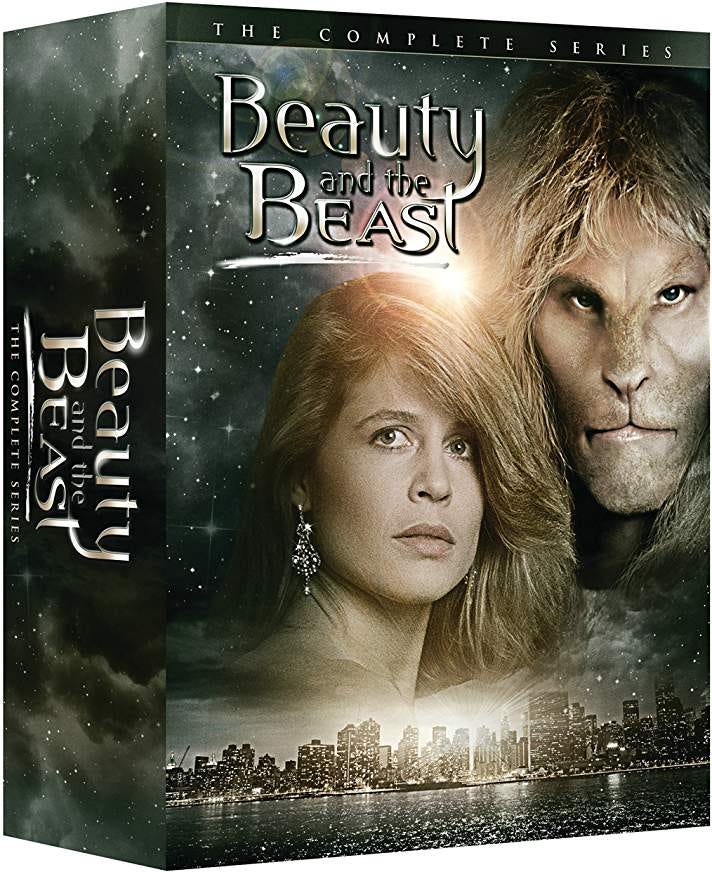
The show is Beauty and the Beast — the series that started in 1987. It stars Linda Hamilton as Catherine Chandler, a pretty DA, and Ron Perlman as the lionesque beast (or monster?) she loves. And who loves her.
In 1987 I was sixteen years old and I watched this series with bated breath. I loved everything about it then and, thirty-plus years later, I still love it even if it’s imperfections are more pronounced to 47-year-old me.
Every several years I just get this overwhelming urge to watch it again. And it reels me in, hook, line, and sinker, every single time.
Everything from Vincent’s low growly voice to Katherine’s over-sized, flowy 1980s power wardrobe, to the beautiful underground world where the outcasts live is perfect. To me, it’s all perfect.
Every single time Vincent looks up from whatever Shakespeare sonnet he’s reading or opera he’s listening to from beneath the theater and growls Catherine and goes running off with his lion’s mane of hair and his capes flying . . . just every single time. Perfect.
Every time they almost kiss and he promises to keep her safe, but never asks for anything from her. Perfect.
Yes, there are a few episodes that watching from 2019 are uncomfortable. The one about voodoo, the one about the Gypsies. But still, this story is deeply rooted in the troubled teenager part of my soul.
One thing I learned watching Beauty and the Beast this time that I didn’t know already is that George R.R. Martin was a major writer for the series. I even spotted him as a subway rider in episode two.
I wonder if I love Beauty and the Beast for some of the same reasons that my millennial daughter loved Twilight when she was sixteen. A girl/woman I can identify with falls in love with a man who is so broken and so different.
There’s heavy, heavy romance in both stories — true, pure love. Empathetic love that goes deeper than plain old human love. Love that is all full of angst and drama, but is never consummated. Not even with a kiss, in the case of Beauty and the Beast.
Until it is and then — boom, a baby. But the baby-making part is almost barely touched on.
I don’t know. As a writer and a mother, I tried to read Twilight. I got through two books. I was able to clearly know that if it had been around when I was falling in love with Vincent, it would have been one of my stories.
But in my 40s? It just wasn’t written for me.
I love the del Torro quote above. The idea of monsters as evangelical is intriguing, but it’s the imaginary place where the grotesque and the abnormal were celebrated and accepted that shows up in my work over and over. And in the stories that sink the deepest into me.
Del Torro directed some of my favorite movies. There’s a dark, anarchist fairy tale feel to them — very like the 1980s Beauty and the Beast television series. Pans Labyrinth, the Hobbit trilogy, and The Shape of Water are his most famous.
I think it’s interesting that he’s worked several times with Ron Perlman. He directed the actor in Cronos, Blade II, Hellboy, Hellboy II: The Golden Army, Pacific Rim, Book of Life, and Trollhunters.
I really enjoy del Toro’s Twitter feed.
And I absolutely loved this del Torro essay about why he’s chosing optimism in 2019. It’s short and well worth reading.
Optimism is radical. It is the hard choice, the brave choice. And it is, it seems to me, most needed now, in the face of despair — just as a car is most useful when you have a distance to close. Otherwise it is a large, unmovable object parked in the garage.
And here’s a short video with del Torro’s advice to aspiring filmmakers (and writers.) Basically it boils down to if you want to do it, do it. And also, if you don’t like what’s out there funnel the energy you put into criticizing into making something better.
Tonight’s going to be a Pan’s Labyrinth night for me, I think. If I can tear myself away from Beauty and the Beast.
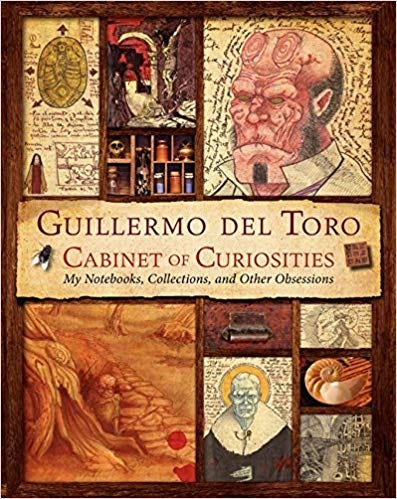
I’ve added del Toro’s Cabinet of Curiosities: My Notebooks, Collections, and Other Obsessions to my reading list. I’m always fascinated by artist’s notebooks.
Today’s Poem:
Stray by Elizabeth Alexander, 1962
On the beach, close to sunset, a dog runs toward us fast, agitated, perhaps feral, scrounging for anything he can eat. We pull the children close and let him pass.
Is there such a thing as a stray child? Simon asks. Like if a mother had a child from her body but then decided she wanted to be a different child’s mother, what would happen to that first child?
The dog finds a satisfying scrap and calms. The boys break free and leap from rock to rock. I was a stray man before I met your mother, you say, but they have run on and cannot hear you.
How fast they run on, past the dark pool your voice makes, our arms which hold them back. I was a stray man before I met you, you say. This time you are speaking to me.
Shaunta Grimes is a writer and teacher. She is an out-of-place Nevadan living in Northwestern PA with her husband, three superstar kids, two dementia patients, a good friend, Alfred the cat, and a yellow rescue dog named Maybelline Scout. She’s on Twitter @shauntagrimes and is the author of Viral Nation and Rebel Nation and the upcoming novel The Astonishing Maybe. She is the original Ninja Writer.