
Hong Kong English/Cantonese (XXXII)
Money. Money. Money. Must Be Funny.
Money “ambassadors” and money “diseases”
It is a truth universally acknowledged, I believe, that every single Hongkonger in possession of some money must be in want of more.
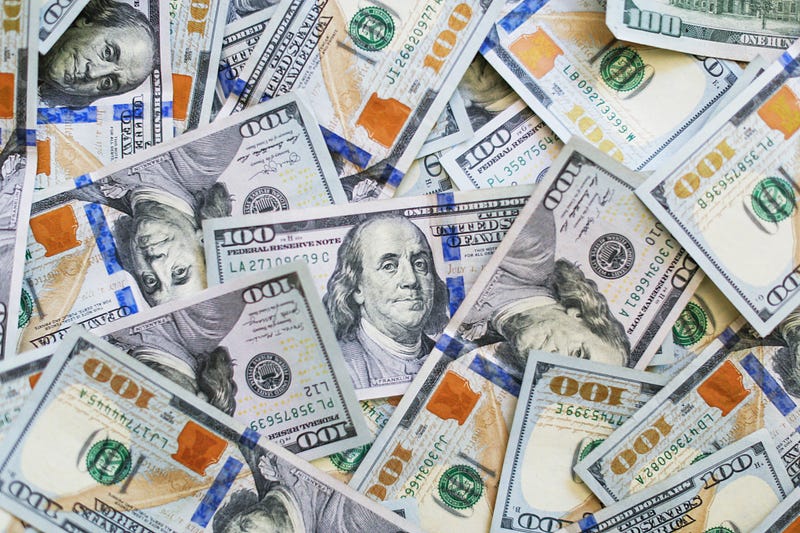
In southern China, especially Cantonese-speaking regions, people connect water and money in their culture. Therefore, there are an ocean of money-related Cantonese vocabulary that has “water” (水). But it would be too much for me if we dive into this trench today.
Instead, I would like to talk about some money-related phrases that looks/sounds like an ailment.
But before that, I need to introduce you two Japanese names: Nagami Nagasaki and Yoshimi Nagasaki. These two people share the same kanji, 長崎良美. As Japanese kanji are just Chinese words (though some of them are Japanese creation), we can pronounce the Japanese kanji using Chinese pronunciation.
Poor Nagasakis, their names are pronounced as coeng4 kei4 loeng4 mei5 in Cantonese and it shares the pronunciation with 長期糧尾 (“always at the bottom of the budget from salary”, or “not having enough to spend before the next salary comes for long”).
And so Nagami and Yoshimi Nagasaki are how Hongkongers name someone who are always unable to spend money, including themselves, even soon after they receive their salaries.
But it seems that Nagami and Yoshimi are prone to some “diseases” owing to their lack of money.

In Hong Kong, we say that these people have caught a “money cold” (發錢寒, Jyutping: faat3 cin2 [note 1]hon4). It sounds like somebody has caught a cold because they haven’t got enough money and so money is their only remedy.
You may get chills, and don’t feel pretty comfortable when you have the money cold. Your monthly prescription of money (i.e. your salary) may be your only solution. It means that you are pretty obsessed with money.
But if you are suddenly in short of money, you may have caught an “acute money cold” (急性發錢寒, Jyutping: gap1 sing3 faat3 cin2 hon4). Like any acute medical conditions, it doesn’t seem that you can scrape through it easily as your own savings is usually your only hope.
Looking at it more seriously, I feel that this sounds more like withdrawal symptoms than a disease.

Some people may have a “chronic disease” too.
A “wallet cirrhosis” (荷包乾硬化, Jyutping: ho4 baau1 gon1 ngaang6 faa3) , as shown in the above picture, is a severe condition that the damaged wallet (due to the lack of money) can no longer function properly.
Symptoms varies person by person, but common “recorded” symptoms include feeling poor, loss of drive to spend, having money cold (see above) and/or feeling fishy and disgusted by money (see below).
Common causes of a wallet cirrhosis include going out too often [note 2], being shopaholic and not earning enough to cover your expenditures.
In order to better diagnose and treat this condition, which is hard to cure, you may need to always check your spending and see whether it matches your earnings. If you spend too much, cut it down.
My suggestion to prevent a wallet cirrhosis is to limit your expenditure and aim for a value in your savings account.
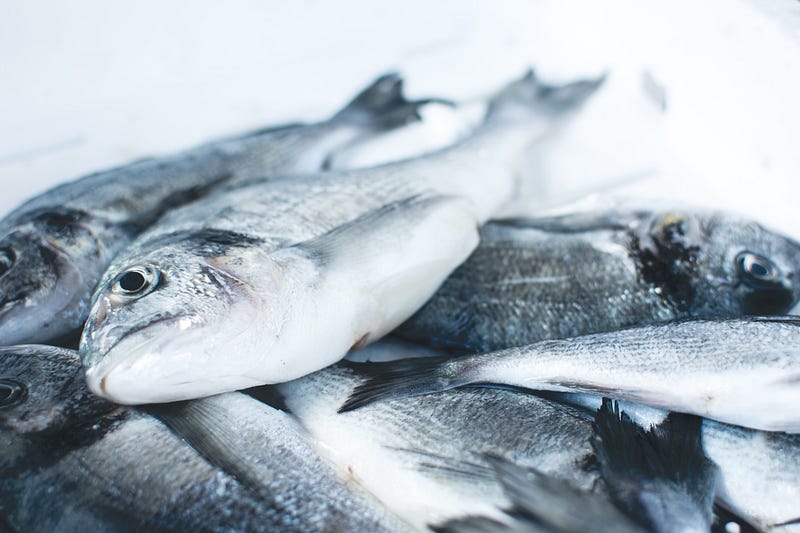
The last condition that I’m going to tell you is weird. People having this symptom may have two outcomes.
A disgust of fishy money (嫌錢腥, Jyutping: jim4 [note 3] cin2 seng1) is a condition that someone may feel that money (especially cash, perhaps) smells like fish.
Out of logic, I believe you understand that people having this disgust would love to put the money as far away from them as possible. Therefore, two outcomes occurs.
First, people may spend all the money they have. This may be a good way to not keep money around as it smells bad.
The other type of people having this condition may save the money. As the money smells bad, they just want to put it aside and not use it.
That’s why it would be so weird to have this condition. Two contrasting outcomes may occur: a wallet cirrhosis or becoming rich.
I keep writing here to earn just some money only enough for a snack each month. Seems like I also have a money cold.
We all love big fortune.
Notes:
- 錢 (money) is pronounced as cin4 according to dictionaries. However, the colloquial pronunciation adopts a diminutive tone change and so it’s usually pronounced as cin2 in Cantonese.
- If you go out and drink too often, be careful and I suggest you check whether you may have higher risks of hepatic cirrhosis (肝硬化, Jyutping: gon1 ngaang6 faa3), the origin of the wordplay for wallet cirrhosis.
- According to all dictionaries nowadays, 嫌 is only pronounced as jim4 in Cantonese. But I don’t know why I sometimes pronounce it as him4, which was a recorded pronunciation some 170 years ago. What happened to me? (ref.)
References:
https://apps.itsc.cuhk.edu.hk/hanyu/Page/Search.aspx?id=5003


