
Money and Wealth, Interchangeable?
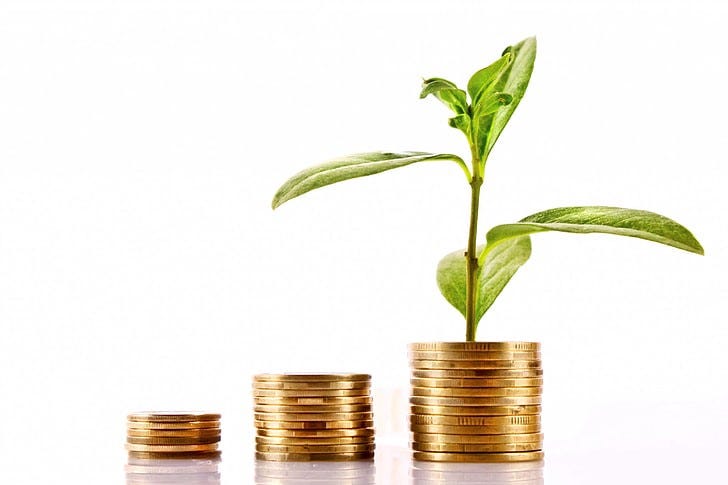
If you have a lot of money, you are wealthy; that is what it is, right? The amount of money is usually thought as it signals the amount of wealth. And we oftentimes talk about money when we are referring to wealth, and wealth when we are referring to money. Are these two interchangeable?
Many Philosophers and Economists say that we should differentiate between the two and warn that it is dangerous to think of them as the same. Philosopher Alan Watts says that thinking about money, when we should be thinking about wealth is a limiting belief that hinders advancement.
He says money is the instrument to measure wealth like meter measures distance and kilogram measures mass and urges us to think of money as if it were not an object. And he says not to measure our wealth by the material things we accumulate. Economic slumps and downturns are the results of this faulty perception and it should be avoided, according to him.
He further explains how people find it hard to think of wealth as different from money. Everyone is chasing money and seems to never stop and think about what they are doing. He says one who pursues money is pursuing an abstraction, not anything tangible.

I think this is mostly because of the nature of money. Yes, money is a measure of wealth. But it is not the same as meter and kilogram. Hunter Lewis explains this difference in his two books series: Are the rich necessary? and How much money does an economy need?
As he explains if we measure the length of our backyard and know that it is forty meters, it always stays forty meters. Or a kilogram of steel always stays one kilogram. That is not the case with money. The amount of money you once bought a refrigerator with might not buy a loaf of bread now.
He further illustrates this by an example. Let’s say you are in a desert with somebody and you have two apples, and your companion has two dollars. Then the price of an apple will automatically be one dollar. Then let’s say your companion gets two more dollars from his other pocket. Now the money is doubled to four dollars but the number of apples stays the same. This increases the value of an apple from one dollar to two dollars. The amount of money is increased but no wealth is generated.
Money is not a constant scale of measurements like that of meter or kilogram. The scale varies. The wealth of an individual, a company, or a country changes and that is a must. The value of money also changes, when we expect it to not change as a unit of measurement. It measures wealth but not in a way we’ll be able to understand.
We don’t know a thousand dollars at some time in the past equaled a million dollars now — or that a thousand dollars at some time in the past equaled the same thousand dollars a few decades later — unless someone who knows tells us.
Let’s see another example from the books. You add water to milk and it seems that the amount of milk increased. The same is true for wealth and money. You may increase the amount of money but not wealth.
It is always very hard to exactly know how much money an economy needs. Let’s follow the same example and elaborate. Milk has 85% — 95% water in it. It is a perfect drink with the proper constituents. That means we know the percentage of water we need in milk. Unfortunately, we can’t know the amount of money an economy needs for sure.
Money deceives, wealth doesn’t. That is one reason why we should pursue wealth rather than money. When we think about land, it doesn’t matter to think about its measure in meters and kilometers or the land as a farm or construction land. We can’t do that for money.
The takeaway is that we should be pursuing wealth and not money. Wealth is what shows our achievements and instead of measuring it with money, we should measure it with value, change, and innovation.


