
Monarchs in our Butterfly Garden
Studying Lifecycles with my Grandkids
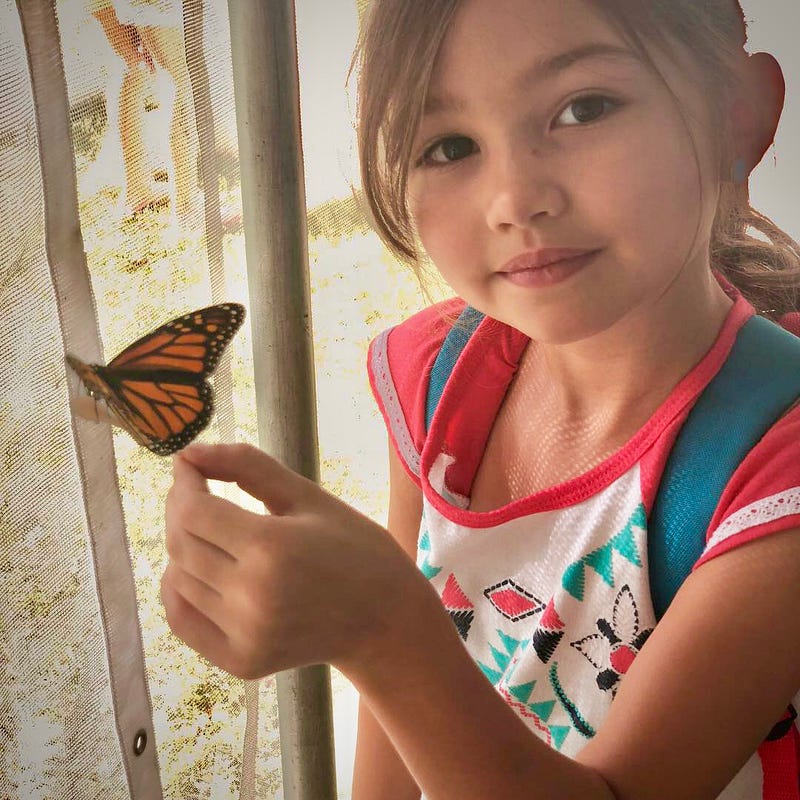
I’m a retired science teacher. I’m also a grandma to three wonderful grandkids. My retirement goals were to spend more time in my garden and to spend time with my grandkids. Happily, the grandkids love to spend time there with me. They help to plant both vegetables and flowers. They help to water the plants, and they help to weed and to mulch around the plants.
They also love to help in the butterfly garden. We planted flowers to attract butterflies that need nectar from the flowers. There is nothing more fun than to walk outside and to have a butterfly land on your head briefly as it seeks another delicious nectaring flower. The grandkids can identify several butterflies and point them out to me as the butterflies fly through the garden.
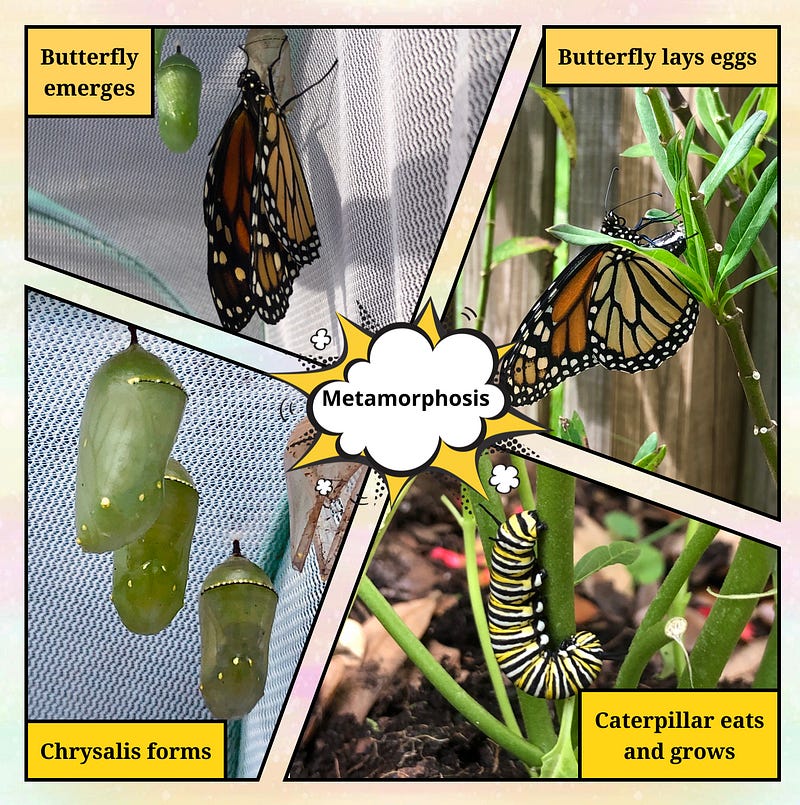
Butterflies are insects that go through metamorphosis which means they change from one form to another form. We enjoy watching them hatch from an egg into a caterpillar and then change into a chrysalis and then change again into a butterfly. The butterfly lays an egg and the life cycle starts again. The grandkids, of course, can identify the stages and know which stage comes next.
We have plants in the butterfly garden for the caterpillars to feed on. The Monarch butterfly caterpillars only eat milkweed leaves so we grow milkweed in the garden along with several flowering plants that provide nectar for the Monarch butterflies. The Monarch butterfly only lays eggs on milkweed leaves since the caterpillars will only eat milkweed leaves.
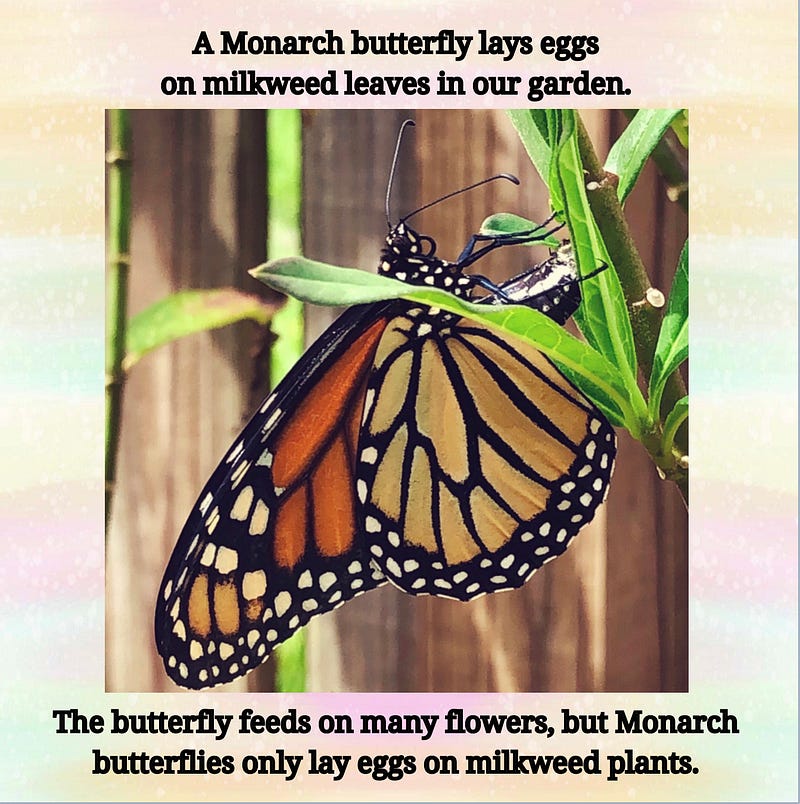
We search the milkweed leaves looking for butterfly eggs and young newly hatched caterpillars. My grandkids have better eyesight than I do, so they usually spot the eggs or newly hatched caterpillars before I do. Sometimes we place the tiny caterpillars in a caterpillar cage, a small net cage that I purchased for the caterpillars. I usually keep the cage with the caterpillars in our screened patio area. Once when I left it outside, something chewed through the top of it to get to the caterpillars.
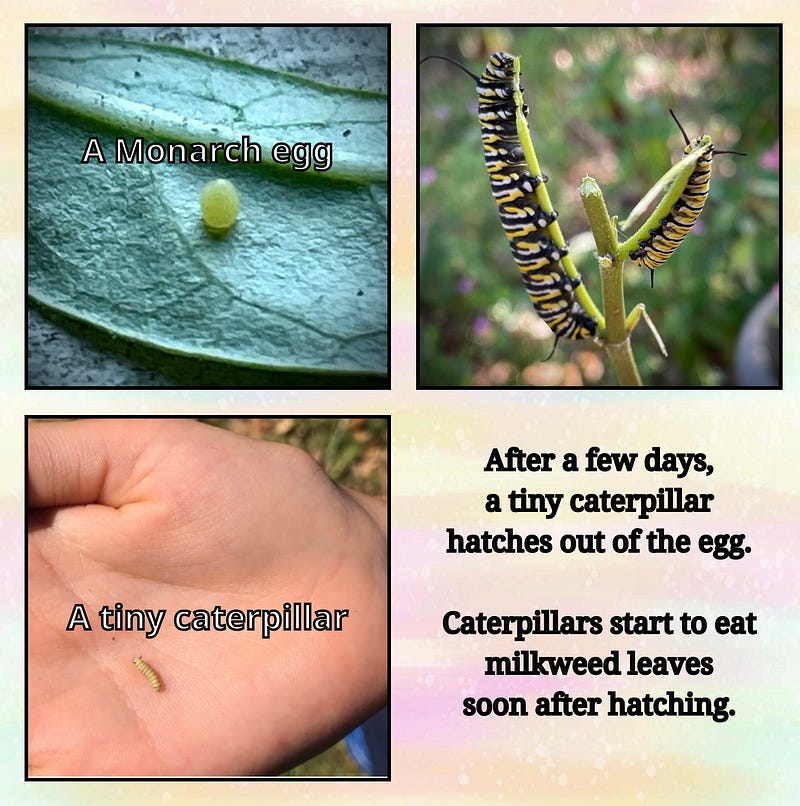
We place a milkweed plant in a pot in the cage with the caterpillars, so they have something to eat. We watch them eat, grow, shed their skin and grow some more. They may shed their skin five times or more. Before they metamorphose, they crawl off the plant to find a spot to hang from. The caterpillar produces a silky thread to attach itself to the surface. It rests for a few hours or a day. When it curls into a J-shape we know it is ready to become a chrysalis.
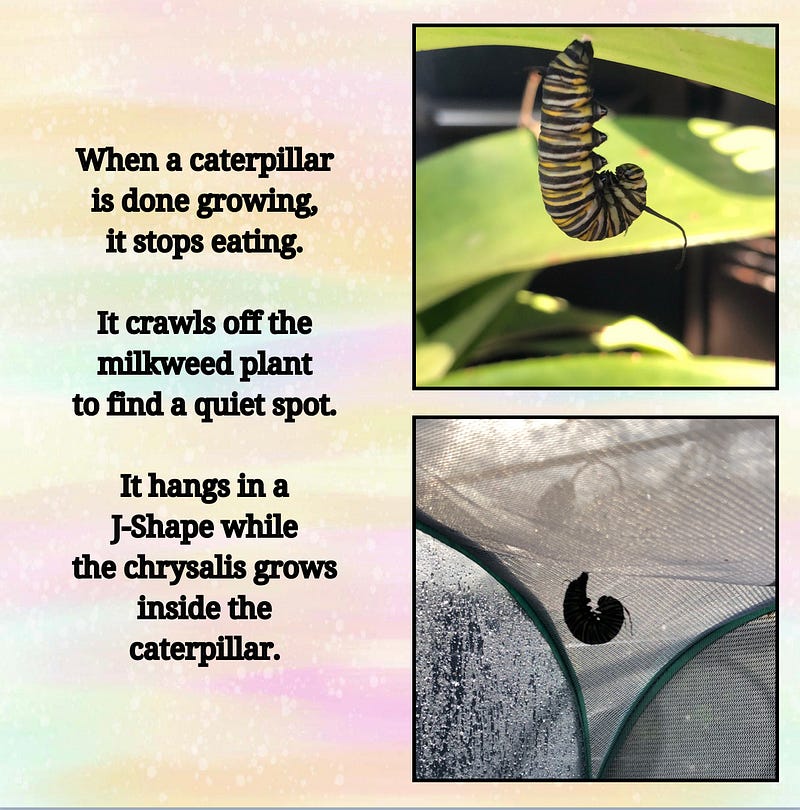
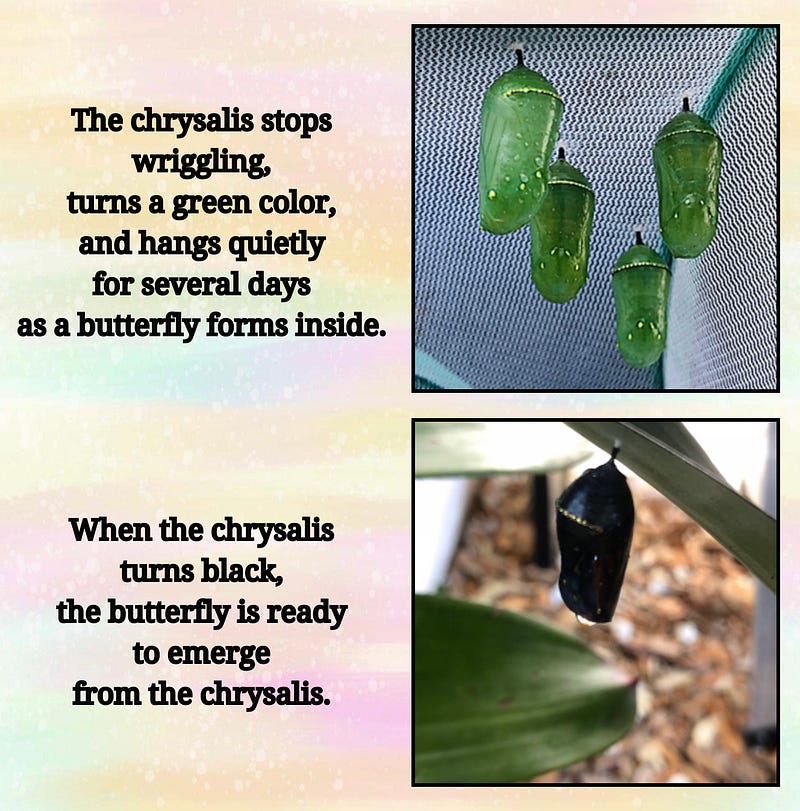
The grandkids and I find it fascinating to watch a hanging caterpillar shake and twist as the last caterpillar skin splits open. The old caterpillar skin is pushed up to where the caterpillar is attached by its silky thread and then the last caterpillar skin drops off. The newly formed chrysalis is a shiny green color with a gold trim.
As the Monarch butterfly forms inside the chrysalis, the chrysalis gradually turns black and the pattern of the butterfly wings shows through the chrysalis skin. We patiently wait for the butterfly to emerge from the chrysalis. This process may take 8–15 days depending on the temperature.
When the chrysalis splits open and the butterfly emerges, its wings are damp and curled up. It starts to pump up and to dry its wings. It cannot fly until the wings are dry and fully extended. When it is flying in the cage, it is ready to be released. We carry the butterfly cage out into the butterfly garden. Each of the three grandkids has had a chance to help release a butterfly. We put a sugar water solution on a stick, gently put the stick in the cage and then wait until the butterfly is attracted to the sugar. The sugary stick with the butterfly is then carefully pulled out of the cage. The butterfly senses the change and flies off. “Bye, bye butterfly, have a nice life” is the usual shout of encouragement from the grandchildren.
Metamorphosis and life cycles are fun to watch. We have several other butterfly life cycles that we observe in our butterfly garden. I will write about some of those later.


