
Momentous Leap - Day 7 : Life & Culture Evolve in Layers - Leaps are Inevitable in Stratified Systems
Preface- The only way we can successfully envision the possible ways in which the future might unfold and how we can positively influence that unfolding, is to understand the dynamics of the evolution and transformation of living systems. We did not arrive here by accident- where we are today in the Anthropocene is the direct result of where we came from and how we transitioned through thousands of years of evolution.
The polycrisis we are in was caused by 250 years of runaway industrial development (Era 3), and we are now in the transition to Era 4 as you’ll discover in future episodes. Our evolution as a species has accelerated dramatically, to the point where we are experiencing a momentous leap in every aspect of society and our lives. The breakdowns and breakthroughs are coming fast and thick, and we need a collectively intelligent, wiser way to navigate this transition for thriveable outcomes.
Are you looking for some hope and inspiration? Then read on. If you read Days 1 to 6 (and thousands of you did), thanks for your positive feedback, and enjoy this next short installment.
Day 7 is part of a 48-part series on thriveable transformation in the 21st Century, excerpted from: “The Momentous Leap- Thriveable Transformation in the 21st Century: Healing Ourselves, Healing our Planet”. The book contains 9 Parts- Parts 1–7 have five “episodes” each, while Parts 8 and 9 have seven and six “episodes” respectively.
If you are in North America, you can get your book copy here.
Leaps are Inevitable in Stratified Living Systems
The history of humankind comprises a series of momentous leaps between successive layers of increasingly complex ways of being. Right now we are at one of the significant turning points for our species, as we saw in Day 6. The decisions we make now, especially in the next decade, will shape the future of homo sapiens and life on earth for many centuries, if not millennia, to come.
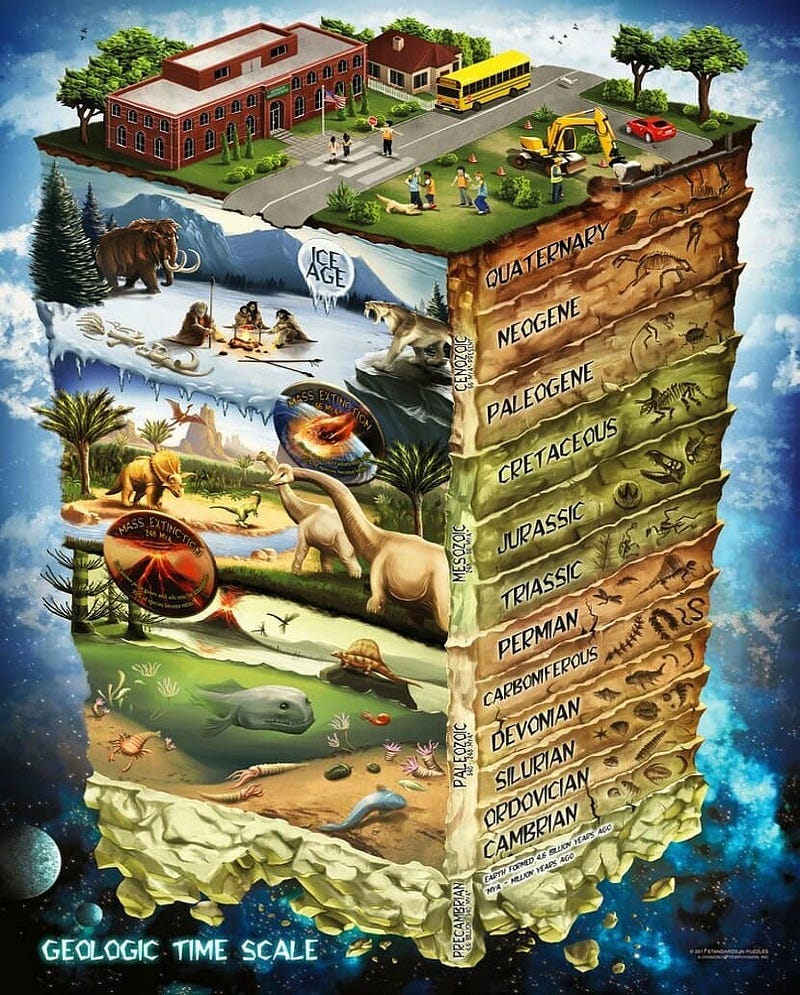
Geology, evolution, cultures, and progress all have one thing in common: they are laid down one layer at a time so that it is possible to see the different layers from the oldest to the newest, the oldest at the bottom and the most recent at the top if we dig deep enough. These layers, or “strata”, give rise to the name we give these systems: “Stratified systems”.

Each time a new layer is added to a stratified system, new materials and a large amount of energy are mixed into a solution that eventually solidifies under pressure to become the next layer. Take a look at what we call the geological record or the fossil record to see these different layers, graphically arranged before your eyes. Gravity compresses them together over time.
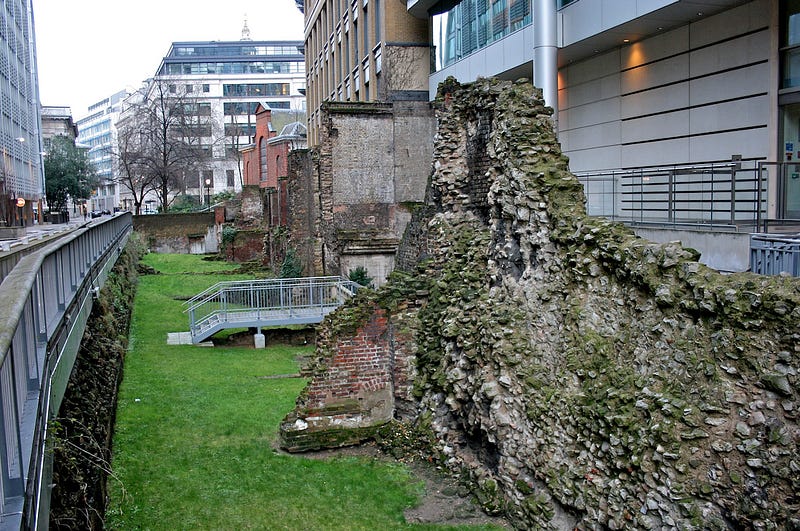
In human stratified systems, we can most easily see the layers of civilization through ancient archaeological sites, whether ancient Greek temples in the Mediterranean or the Roman walls in parts of the City of London. Within several vertical meters, one can see thousands of years of history piled on top of each other, layer by layer. Each layer represents a hundred or so years of human events, from the first marble stones laid for the first temple to the ruins left by fires and conquests to the next layer of wooden houses in Shakespeare’s time until we find the red bricks of Victorian days and then the concrete and steel of modern times.
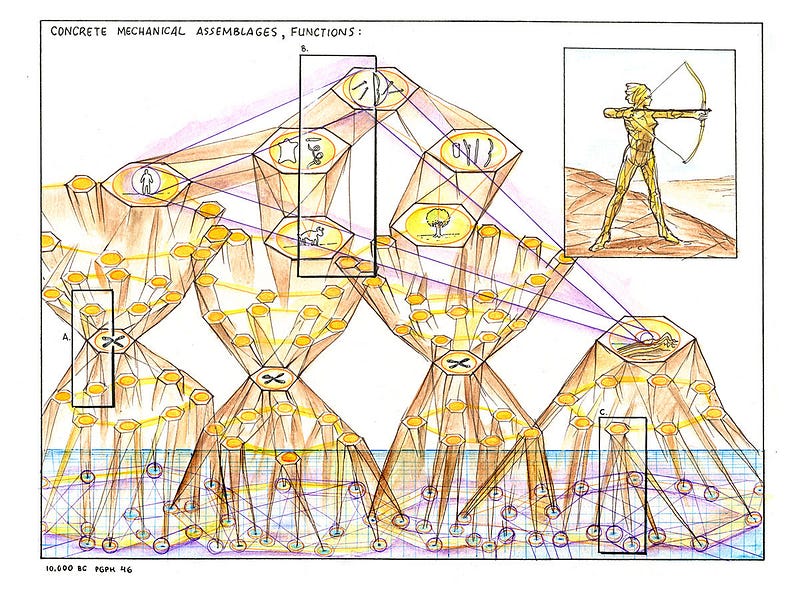
Stratified systems that are invisible to the naked eye are, however, much harder for the layperson to see or understand, much as the workings of the human body were a mystery until the practice of anatomy and dissection revealed the many systems comprising the living human organism.
When we attempt to understand the needs, values, priorities, and intentions of living systems and how they interact and co-evolve with the other stratified systems that constitute their life conditions, we must resort to maps and models with sufficient dimensionality to represent such interactions and their outcomes.
We must not only scale up the technological and scientific solutions needed to avert a global catastrophe- we must go deeper to redesign and shift our psychological, organizational, and social habits as part of the next momentous leap.
The significant breakthroughs in biology, psychology, neurology, cognitive science, and sociology in the past century, enable us to better map and model the interactions between living and stratified systems of all kinds.
This has given us deep insights into the evolution of life, civilization, and our species, together with some predictive powers that have helped us design better life conditions and interactions that are conducive to thriving rather than struggling and suffering.
Our beautiful blue pearl of spaceship earth is host to 8 billion earthlings, in the midst of at least eight major transitions through four eras. The “Momentous Leap” describes the leap into Era 4 — the post-global, post-modern leap to a distributed network of globally interconnected but autonomous projects and programs that not only knit together the best of diverse eras and cultures but at the same time ensure this is done so as to enhance the ability of each autonomous unit to thrive in its own unique way.
In other words: “Think global, act local, and synergize the interactions of diverse eras and cultures to produce beneficial, thriveable outcomes locally and globally”.
Stay tuned for Day 8 tomorrow- “The Momentous Leap Transcends & Includes 3 Eras”. We’ll be talking about the emergence of Era 4 around the world today, and how understanding the dynamics of this shift helps us be more effective in shaping thriveable shifts in our own lives and worlds.
You can grab a copy of the Momentous Leap book here in Kindle or paperback if you would prefer to read it all at once :-) If you are in North America, you can get your book copy here.
You’re also welcome to leave a tip below if you enjoy my writing, whether it’s the equivalent of a cappuccino at the coffee shop or whatever you’re drinking as you read this. It all adds up for us writers :-) Thanks!