
Modesty Is The Means To All Beauty:
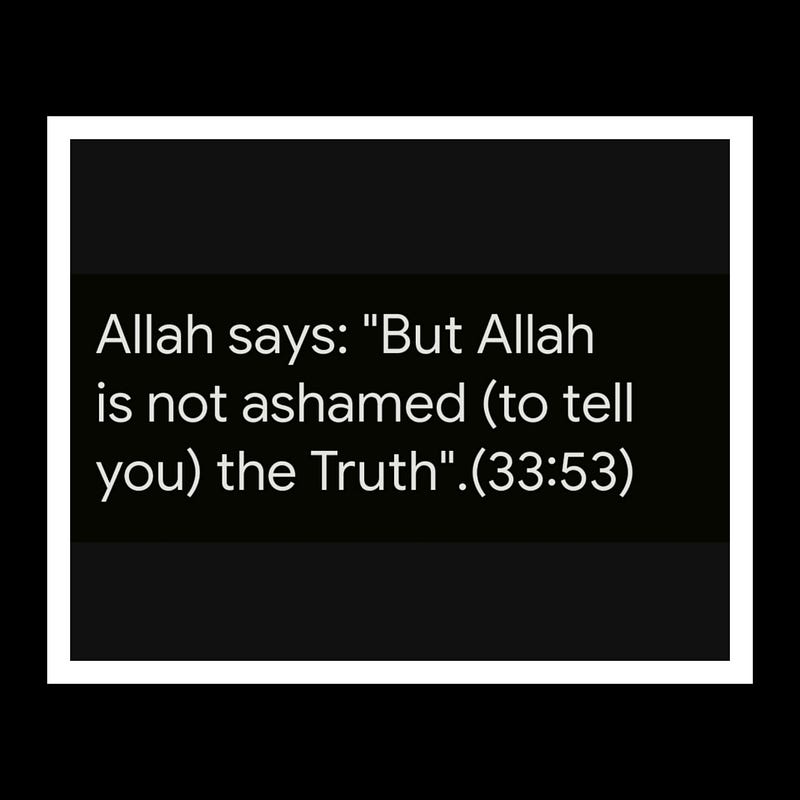
The linguistic meaning of ‘Haya’(Modesty) is ‘Restraining one’s self From something and abandoning it out of Fear of rebuke’.
‘Allamah Jurjani (rahimahullah) writes: ‘Modesty is of two types:
Nafsani [i.e. Intrinsically/Naturally], Allah(swt) has created this natural shyness/modesty in humans like not exposing one’s private areas in public etc.
Imani [i.e. The modesty that comes about due to Iman], Iman stops a person From carrying out sins due to the Fear of Allah(swt). (At Ta’rifat, pg. 83)
Hafiz Ibn Hajar (rahimahullah) writes: ‘Haya’ in Islam is a characteristic that enables one to abstain From undesirable acts and prevents a person From Falling short in Fulfilling the rights of others’. (Fathul Bari, Hadith: 9)
A virtue cherished by people of all walks of life and all times is modesty. The terms modesty, shamefulness or Haya are used particularly with regards to women and are often accompanied with the term Hijab.
Modesty in the Quran is not the same as hijab — Modesty in the Quran is the Feeling of shamefulness in exposing one’s nakedness to others; and hijab is the result of the Feeling of modesty. In other words, when one is modest, one would not like to expose his nakedness to others, hence, he/she covers himself/herself up.
Modesty in the Quran is rooted in a sense of self-respect, honor and dignity. Haya is a contraction of the soul or Feeling of shame. It leads to graceful and honorable behavior and avoiding wrong actions, in other words, it leads to abstaining From the haram and avoiding abandoning the obligatory acts (wajibat). One knows that a respected observer is watching.
Haya entails the power of your soul — It means that you are not weak or a coward, but a powerful person. This power comes From the Fact that you consider a high position For yourself and your soul.
The word Haya (modesty) and its derivatives have been used Four times in the Quran. Twice with regards to Allah (swt), once with regards to Prophet Muhammad (saw) and once about a woman.
There are many Islamic narrations which define Haya and explain about the practice of this virtue in one’s life. For instance, Ja’far ibn Muhammad (May Allah be pleased with him) considers modesty (Haya), chastity (‘Iffah) and guarding of the tongue as manifestations of Iman (Faith).
Ali ibn Abi Talib (May Allah be pleased with him)says: We read that religion (Din), intellect (Aql) and modesty (Haya) always go hand in hand.
According to this, if one possesses intellect, he/she will also have religion and modesty.
There are two kinds of Haya — One of them is an indication of one’s weakness and the other, One’s strength, Islam and Faith in God.
An instance of the First kind is when you have to say the Truth yet you Feel ashamed and do not want to be belittled. Or you do not ask any questions in the class because you Feel ashamed of the teacher and the students.
When a person has Haya, he/she considers oneself as an honorable person in the presence of God at all times — Therefore, he/she would never lower oneself to do that which is disliked by God, such as having a haram relationship or begging For Food or money to others which are instances of unchasefulness based on the Quran. In other words, with modesty comes chastity.
So,the point is that — the Lord has placed modesty in the nature of man, but when man disobeys his Lord and Follows the path of Satan, then Satan leads man to the path of misguidance by making immorality pleasurable. Modesty is a part of Faith and Allah(swt) loves a Modest person.
May Allah(swt) include us among His Modest and Obedient Servants. (Ameen).
JazakAllah (May Allah Reward You [with] Goodness)For Reading.
https://sanahawan.medium.com/subscribe
Kindly Follow & subscribe to receive the latest insightful stories by email.