
Modern Slavery Underpins All Our Lives
Slavery and quasi-slavery lie at the heart of our lives, in the phones we use, in every stitch and seam of the clothes we wear, and every cup of tea we drink.
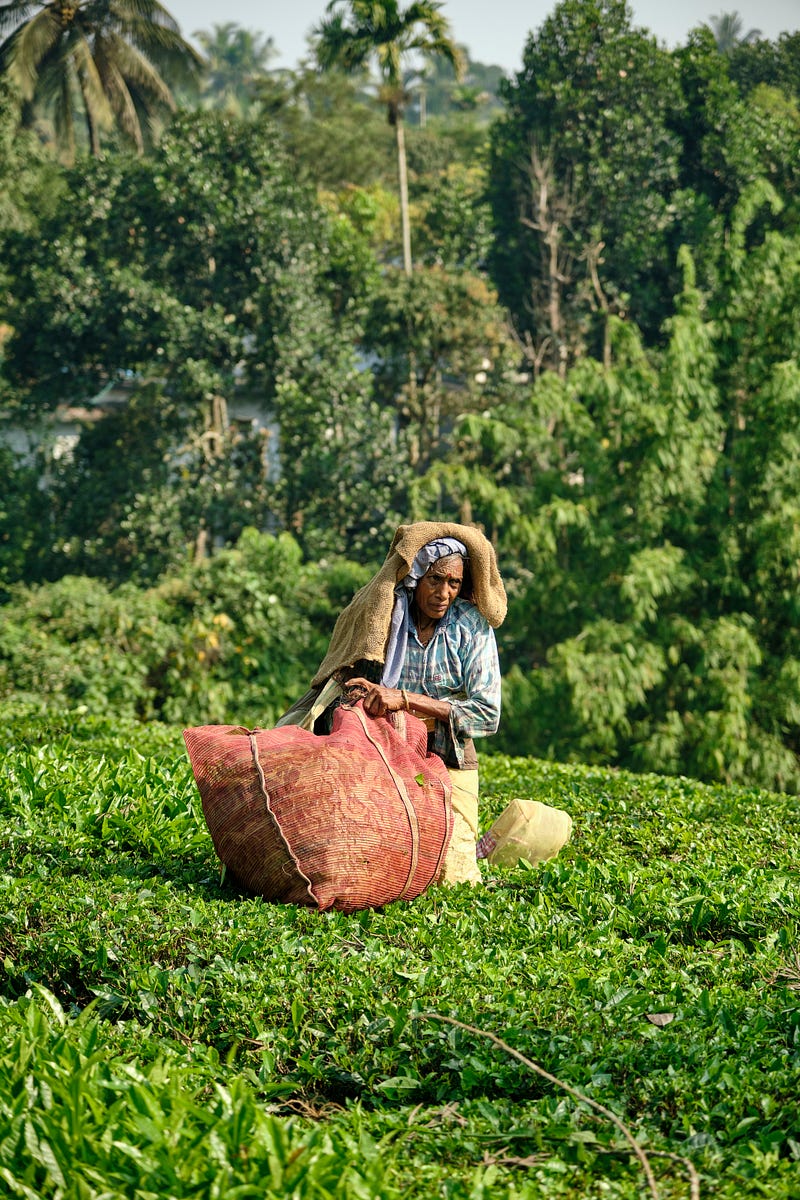
Slavery is a vital component of our interconnected world. That is difficult to believe seventy-five years after the signing of the Universal Declaration of Human Rights.
Article 4: No one shall be held in slavery or servitude; slavery and the slave trade shall be prohibited in all their forms.
Yet without the work of the millions of people locked into slavery or servitude, global trade would collapse. Slavery benefits everyone living in the global North, as well as the moneyed classes in the rest of the world — and we are all guilty of looking the other way.
To take a mundane example, I recently bought a new pair of trousers for £24 (about 30 US$). The government takes 20% VAT (value added tax\), Say the shop takes another 20% to cover its overheads. That leaves £14 to pay for shipping, manufacturing, and the cost of the fabric itself. With prices this low, it is not possible for factory workers sat all day at their sewing machines to be paid decent wages.
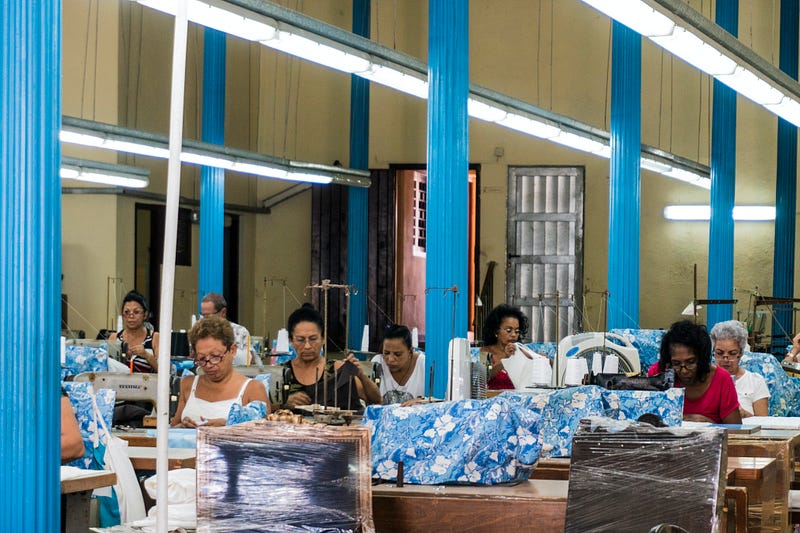
I left the shop feeling a diffuse sense of guilt about my own comfortable lifestyle compared to theirs — and did nothing about it. The national living wage in the UK is currently £10.42 an hour (rising to £11.44 an hour in 2024). That means that those few companies that do manufacture in the UK and pay UK wages would charge me £240 upwards for a new pair of trousers. That’s unaffordable for me, and for most people.
In practical terms, I can ill afford my principles, and out of sight is out of mind.
I recently won second prize in the 2023 Anita McAndrews Award for poetry about human rights. My poem, below, highlights the human brain’s schizophrenic ability to ignore unpleasant facts:
HIDDEN IN PLAIN SIGHT
Madeleine McDonald
We do not want to see, hear or know.
To preserve our ignorance, we allow shifting sands to settle over brutal truths.
Day by day, hour by hour, we unlearn inconvenient facts; we lock them into a vault in our minds.
50 million people are held in slavery or servitude in our interconnected modern world.
The facts are there, recorded in stark newsprint or on fleeting digital screens.
We turn away. It is not our children who choke on dust, or whose fingers bleed. It is not our children who sleep under workbenches and see no daylight.
We turn away, unwilling to acknowledge the human price of our modern comforts. It is easier to focus our outrage on the slaveries of yesteryear.
A hundred years hence, once our denial has acquired the patina of history, our grandchildren’s grandchildren, appalled, will ask, ‘Why did you not act?’
Hand on heart, we will say, ‘But we did not know.’
The plain truth is that we refuse to know. The figure of 50 million I quote is the UN’s estimate for all forms of modern slavery, including forced labour, bonded labour, domestic servitude, child slavery and forced marriage.
We can imagine the figure of 50 million as the population of a mega-city. That is easier for the human brain to envisage than the statistic that it represents under 1% of the world’s population. However, just above enslavement on the scale of human misery is the quasi-slavery of the almost 700 million people who live on less than $2.15 a day. The World Bank further estimates that just under half the world lives on less than $6.85 a day. About the price of two cups of coffee to us.
Little has changed since the collapse of the Rana Plaza garment factory in Bangladesh ten years ago, a building collapse that killed 1000 workers and injured another 2500. That was a wake-up call to the world. Yet, while companies issue bland statements of reassurance, their statements ignore the tangled reality of outsourcing our farming and manufacturing to layer upon layer of intermediaries and sub-contractors.
Millions of words have been written in justifiable rage at the slaveries of the past. Yet how many of those who sign petitions for reparations have even heard of The Anti-Slavery Society, now Anti-Slavery International? Do they ever ask themselves the question why the world still needs a campaigning anti-slavery organisation, 180 years after its foundation?
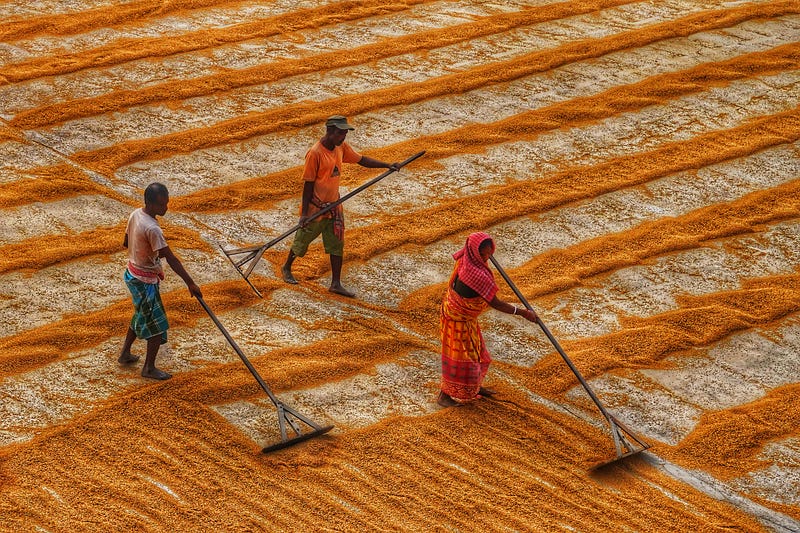
Slavery and servitude continue to exist — out of sight, out of mind — because we have become addicted to cheap food and cheap consumer goods. Our parents spent most of their income on necessities. We spend a lot on fripperies.
Out of sight, out of mind. We continue to upgrade our phones, without a thought for the miners who descend into unsafe shafts to dig out the rare earth elements needed to make them. We continue to buy shimmery make-up, without a thought for the children who grub in the dirt of India’s surface mica mines.
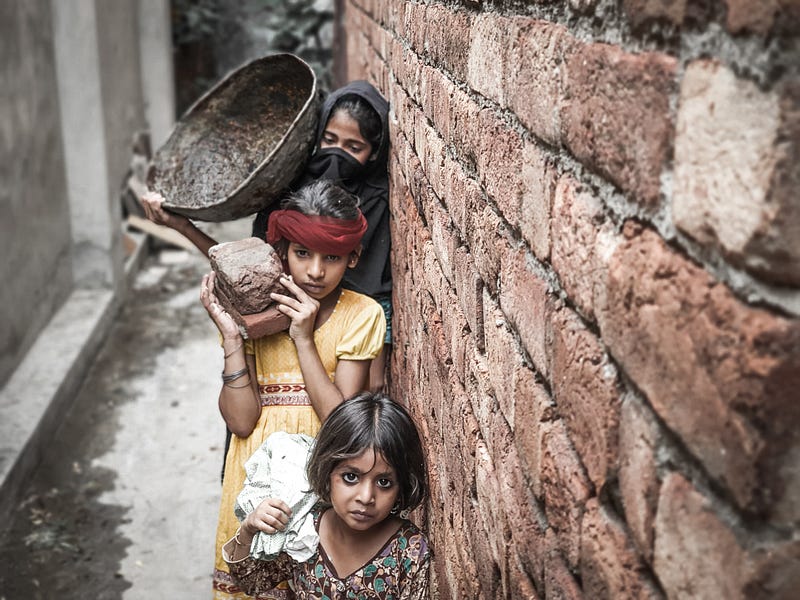
Faced with this scourge, what can any one individual do?
I don’t have the answer. The message that the prosperous parts of the world need to pay a lot more for both essentials and extras is not popular in the current cost of living crisis.
In the UK, it took 170 years for the idea of a fairer, more equal society to take hold, from the anti-slavery pamphlets penned by the Methodist preacher John Wesley in the 1770s to the blueprint for a welfare state in the postwar 1940s. Those years were marked by recurrent social upheaval, encompassing the abolition of slavery, the Peterloo massacre and the bloody birth of trade unionism, and the victories of the suffragettes. The ruling classes ceded power and privilege step by reluctant step.
Our modern, interconnected world does not have 170 years in which to act.
References:
https://readmedium.com/the-rice-of-tea-a0850e9ffe5d