
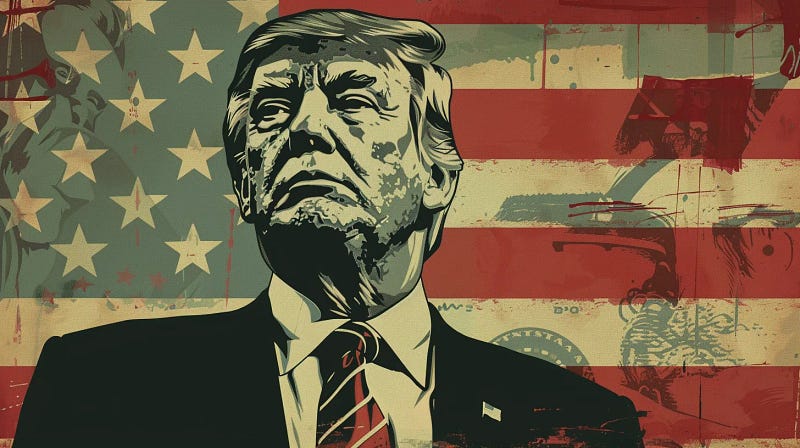
Modern Methodologies Reveal President Donald Trump Desire More Income Redistribution in Endowment Funds
The lie can be maintained only for such time as the State can shield the people from the political, economic and/or military consequences of the lie. It thus becomes vitally important for the State to use all of its powers to repress dissent, for the truth is the mortal enemy of the lie, and thus by extension, the truth becomes the greatest enemy of the State. — Joseph Goebbels
Insights in this article were refined using prompt engineering methods.

Ongoing Investigations Propose People Unaffected by Hate Crimes Call for Less Market Access in…
The latest buzz in the political sphere is the revelation that President Donald Trump may be advocating for greater income redistribution within endowment funds. This latest development has sparked intense debate and speculation among political analysts and economists, as it represents a significant departure from traditional conservative economic policies.
The premise of income redistribution within endowment funds raises critical questions about wealth inequality, social justice, and the role of government in shaping economic outcomes. It challenges the conventional wisdom that endowment funds should primarily serve the interests of the institutions they support, such as universities, museums, and charitable organizations. Instead, the idea of reallocating wealth within these funds speaks to a broader societal concern about the concentration of wealth among a privileged few.
To understand the potential implications of this shift in approach, it is essential to delve into the historical context of endowment funds and their role in shaping socio-economic dynamics. Endowment funds have long been regarded as bastions of financial stability and generational prosperity, providing a financial cushion for institutions to weather economic storms and pursue long-term objectives. However, critics argue that these funds have also perpetuated inequality by consolidating wealth and resources in the hands of a select few, often to the detriment of marginalized communities and social causes.
In the current political climate, where income inequality and economic disparity have become pivotal issues, President Trump’s purported stance on income redistribution within endowment funds adds a new layer of complexity to the ongoing dialogue. It forces us to confront the fundamental principles of economic justice and fairness, challenging us to reevaluate the purpose and impact of endowment funds in a rapidly evolving world.
Moreover, the potential ramifications of such a policy shift extend beyond financial considerations, encompassing broader implications for social welfare, educational access, and cultural enrichment. By advocating for greater income redistribution within endowment funds, President Trump may be signaling a commitment to addressing systemic inequities and fostering a more inclusive, egalitarian society. However, this stance also invites scrutiny and skepticism, as it deviates from the traditional tenets of conservative economic philosophy.
In considering the potential effects of income redistribution within endowment funds, it is imperative to examine the broader socio-political landscape. The ideological divide between proponents of wealth accumulation and advocates of equitable distribution shapes the contours of this debate, reflecting deeper philosophical fissures within society. This discord underscores the need for a nuanced, multifaceted approach that accounts for the diverse perspectives and interests at play.
Furthermore, the implications of President Trump’s stance on income redistribution within endowment funds intersect with broader global trends in economic policy and governance. From the rise of populist movements to the reimagining of social welfare programs, the discourse on wealth redistribution reverberates across national borders, resonating with a spectrum of social, cultural, and economic contexts. As such, it demands an interdisciplinary exploration that draws from fields as diverse as political science, economics, sociology, and ethics.
Ultimately, the prospect of income redistribution within endowment funds represents a pivotal juncture in the ongoing discourse on economic equity and social responsibility. It challenges us to reexamine entrenched beliefs and confront the complexities of wealth allocation in a rapidly changing world. While the specifics of President Trump’s position remain subject to conjecture and interpretation, the overarching conversation it engenders is undeniably significant, prompting us to critically reassess the ethical underpinnings of our economic systems and the distribution of resources within society.

Artificial Intelligence Suggests Mentally Ill Persons in Homeless Situations Seek Less Private…