
MLflow Deployments Server: A Comprehensive Guide
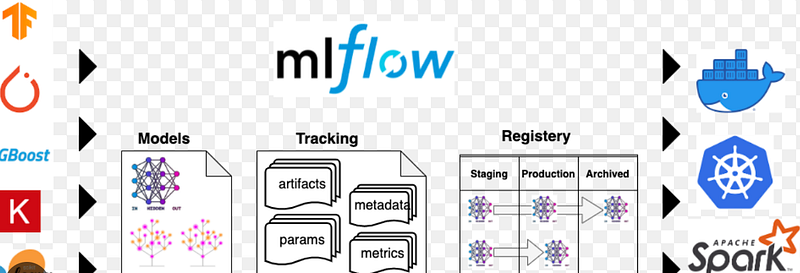
MLflow Deployments Server is a powerful tool designed to streamline the usage and management of machine learning models. It provides a standard interface for deploying models to various environments, making it easier to manage and monitor these deployments[1].
## Features of MLflow Deployments Server
MLflow Deployments Server supports a variety of model providers, such as OpenAI and Anthropic, each with its specific characteristics and configurations[1]. It offers flexibility and adaptability, allowing for easy definition and management of endpoints by updating the configuration file. This adaptability makes it an invaluable tool for simplifying and centralizing language model interactions[1].
The MLflow Models module acts as an interface between technologies and enables simplified deployment. Depending on its type, a model is stored as a binary, such as a pure Python function, or as a Keras or H2O model[2]. MLflow also provides support for model deployment on various machine learning cloud services, such as AzureML and Amazon Sagemaker[2].
## Use Cases
MLflow Deployments Server can be used in various scenarios. For instance, it can be used to ensure synchronicity in an exploratory context where data preparation and modeling workflows are developed locally[2]. It can also be used to deploy the model with the best accuracy metric, with the MLflow tracking server accessed via the Python API to identify the best model[2].
## Best Practices
Some best practices for using MLflow include:
- Centralizing experiment tracking: MLflow allows a simplistic way to transform this function by centralizing the tracking details[3]. - Testing on staging environments: One of the functionalities provided by MLflow is Model Staging, which refers to a replica of the production environment where models can be tested and readjusted[3]. - Leveraging AWS for MLflow server: The combination of MLflow and AWS stands out as a superior combination due to the ease of setup and minimal costs[3]. - Tuning the complete pipeline: Instead of tuning individual components of the pipeline, it’s recommended to tune the entire pipeline[3].
## Comparison with Other Deployment Tools
MLflow provides integrations for third-party model serving solutions, such as Microsoft’s AzureML, Amazon SageMaker, and Apache Spark. It also provides a Python interface for deploying to custom targets, enabling users to write their own deployment integration[4]. This gives teams the flexibility to choose the optimal model serving solution for their use case, but it often comes with engineering and maintenance overhead or additional costs[4].
## Conclusion
MLflow Deployments Server is a powerful tool for managing and deploying machine learning models. It offers flexibility and adaptability, making it an invaluable tool for simplifying and centralizing language model interactions. By following best practices and understanding its use cases, users can effectively leverage MLflow to streamline their machine learning workflows.
Citations: [1] https://mlflow.org/docs/latest/llms/deployments/index.html [2] https://www.statworx.com/en/content-hub/blog/3-scenarios-for-deploying-machine-learning-workflows-using-mlflow/ [3] https://censius.ai/blogs/mlflow-best-practices [4] https://neptune.ai/blog/best-mlflow-alternatives [5] https://mlflow.org/docs/latest/python_api/mlflow.deployments.html [6] https://stackoverflow.com/questions/67961741/differencies-between-mlflow-deployment-possibilities [7] https://www.reddit.com/r/mlops/comments/17qvz2b/best_practices_for_deploying_mlflow_models/?rdt=34975 [8] https://www.restack.io/docs/mlflow-knowledge-mlflow-vs-tensorflow-serving [9] https://mlflow.org/docs/latest/deployment/index.html [10] https://www.honeybadger.io/blog/machine-learning-lifecycle-management-using-mlflow/ [11] https://www.restack.io/docs/mlflow-knowledge-mlflow-best-practices [12] https://neptune.ai/blog/best-ml-model-deployment-tools [13] https://www.restack.io/docs/mlflow-knowledge-mlflow-production-deployment [14] https://mlflow.org/docs/latest/introduction/index.html [15] https://learn.microsoft.com/en-us/azure/machine-learning/how-to-deploy-mlflow-models?view=azureml-api-2 [16] https://www.qwak.com/post/a-brief-comparison-of-kubeflow-vs-mlflow [17] https://mlflow.org/docs/latest/llms/index.html [18] https://linuxhint.com/securing-mlflow-deployment/ [19] https://mlflow.org/docs/latest/models.html [20] https://mlflow.org/docs/latest/cli.html [21] https://docs.zenml.io/stacks-and-components/component-guide/model-deployers/mlflow


