
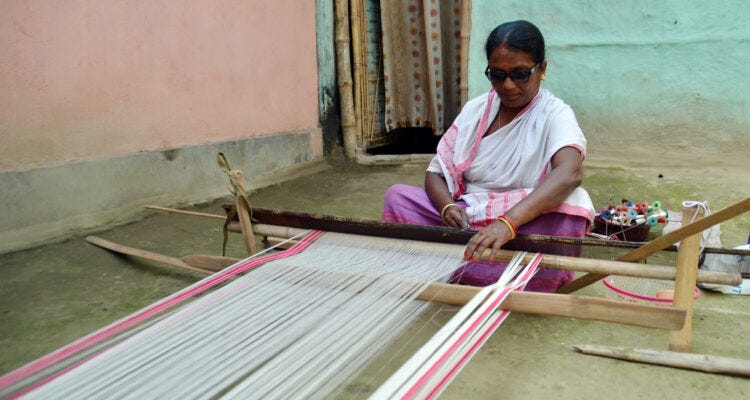
Mixing contemporary Fashion with Cultural Heritage
The power of heritage will become one of the strongest assets in the new generation of creatives and business leaders throughout the next years. Aesthetics and stories in upbringing and cultural background do not need to be blended in anymore, they form power and uniqueness which is appreciated and needed.
Fashion itself is inherently linked to cultural references and textile skills, which have been wonderfully preserved or horrible diluted for numerous years now. Even in our western society, the majority of textiles come from production hubs as India or China, all countries with breathtaking textile manufacturing histories. The motivation to write this text comes from my long love for the translation of artisan and craftsman skills into contemporary and globally wearable fashion items as well as from my experience working on several international artisan projects with DS AGENCY.
Did you know that even major textile companies hire local communities of homeworkers in India to embroider or decorate high fashion textiles? The artisans who are specialized in a certain skill, usually depending on the region on the sub-continent often work with techniques that have been part of their family ancestry for generations. If those vulnerable communities do not get the same rights as workers in factories, their long-lasting traditions and knowledge might die out and their livelihoods will be at risk. This is not an India specific phenomenon though, we can see the same pattern from Africa, South and Latin America or Asian countries. The introduction of new ways to melt heritage and zeitgeist can support craftsmen around the world and stabilize economies through fashion choices.
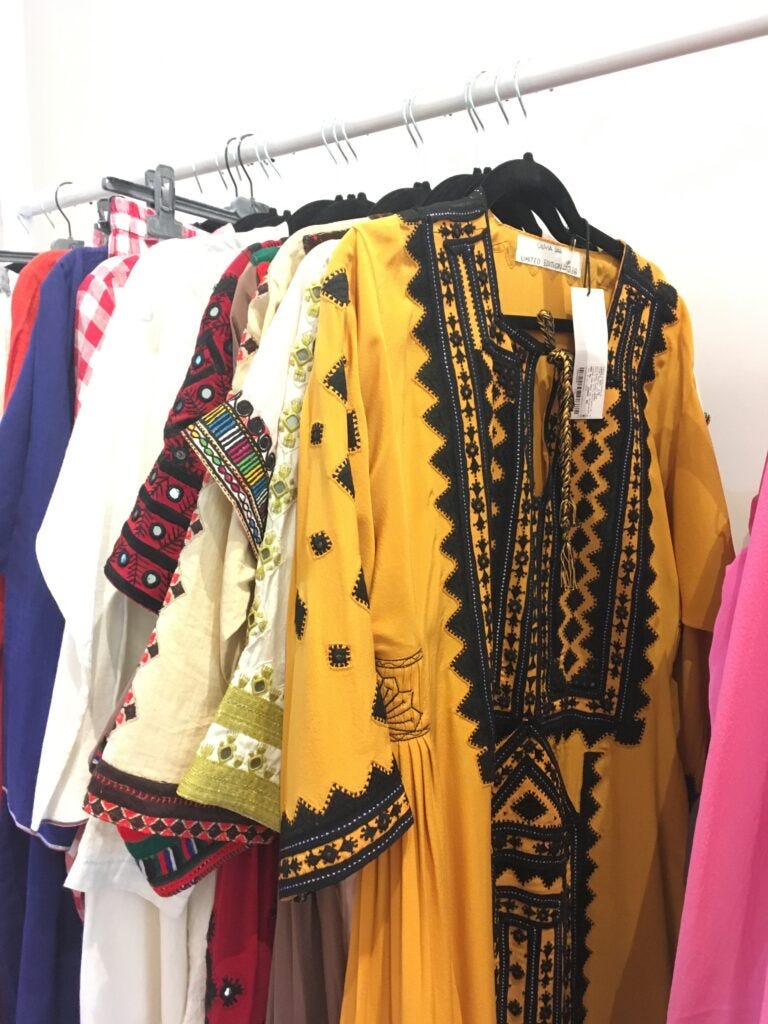
Le Mill store in Mumbai
A wonderful source for fashion with a link to localism is the amazing No Borders shop. The project with a permanent space in Mumbai operates globally and has the aim to connect designers, artists and creators who work with a story in mind. Their online shop stocks some of my personal forever fashion crushes like Nor Black Nor White, Bodice or IAMISIGO.
Recently, I came across a collection of brands being exhibit at a current EARTH & WATER pop-up at Ei8hty20. The dreamy concept store is located in Seef and supports Bahrain artists, while also carrying Middle Eastern and North African brands. Amongst the current event’s designers are Atelier MM which with their modest alternative to caftans hit the nerve of every classy dresser around the world; the handmade garments are a reference to a traditional piece of clothing set in a modern context. Not part of the exhibit but equally influential is Rawan Maki, an environmental engineer and fashion designer creating by the belief of beauty can only be built on the grounds of sustainability and justice. Her designs are inspired by the interaction of the natural and the man-made and became quite an obsession in Bahraini fashion for me.
This is only a small selection of cultural references and design creations that can emerge through cultural sustainability and the empowerment of your own heritage as a creative person. Appreciating the old ways and learning from a slower approach in production and consumption can be the tools to manifest a healthier fashion business though.


