Mixed Race Lives Matter? How Do You Define Black? White?
A black descendant of Confederate President Jefferson Davis? 75–90 percent of African Americans have some white ancestry?
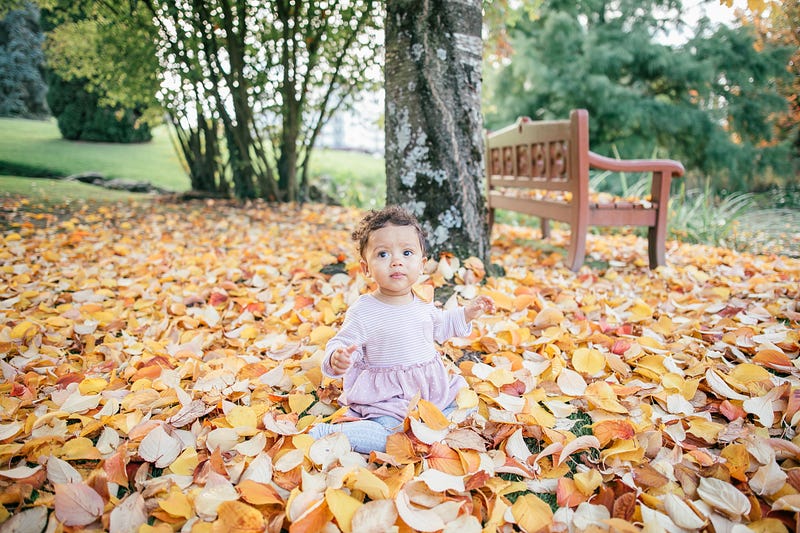
During race debates, at least 10 million Americans formally identifying themselves as “multi-racial,” can relate to everyone.
The teen’s afro styled hair, light skin, and blue eyes revealed his mixed heritage. A surgical mask covered his expression, but the pain in this young protester’s eyes accentuated the words on his homemade posterboard sign:
“Biracial babies shouldn’t have to pick a side. One Race. Human Race.’’
The words sting. The image was posted by Jordann, a Christian Millennial father who joined our parish during the 2019 Easter vigil. I think he is African American, or he could have a mixed heritage. I honestly don’t know because I never asked.
The easiest thing about putting Jesus first is I don’t have to overthink: I simply believe we are all brothers and sisters. My faith and science back up that assertion. It’s especially easy to say when we are attending the same Church functions.
“Fundamentally human beings are the same,’’ the Dalai Lama writes. “Imagine being lost in some remote place and suddenly seeing someone coming towards you over the horizon. You wouldn’t care about their race, nationality or religious faith, you’d be filled with the joy of encountering another human being.
We all have common ancestors — yet all are unique
A massive study of 5 million genetic “bar codes’’ shows all humans are descended from one man and one woman who lived between 100,000 and 200,000 years ago.
So both science and the Bible say we are all family in some way. Yet we are all unique, and DNA testing showing how we are related makes it even more complicated.
Millions more Americans feel forced to choose one part of their racial heritage over another, identifying as one race while denying the rest of their family tree. Imagine the life of my friend and former professor Bryan:
People assume Bryan is African American. Few know he is a direct descendant of Jefferson Davis, president of the Confederate States of America (the U.S. states who left the union from 1860–1865). Ironically, Bryan was born on February 12, the birthday of Abraham Lincoln, the president who went to war with and defeated Davis in the American Civil War.
“It’s complicated,’’ Bryan said with an eyeroll, a laugh and a wink.
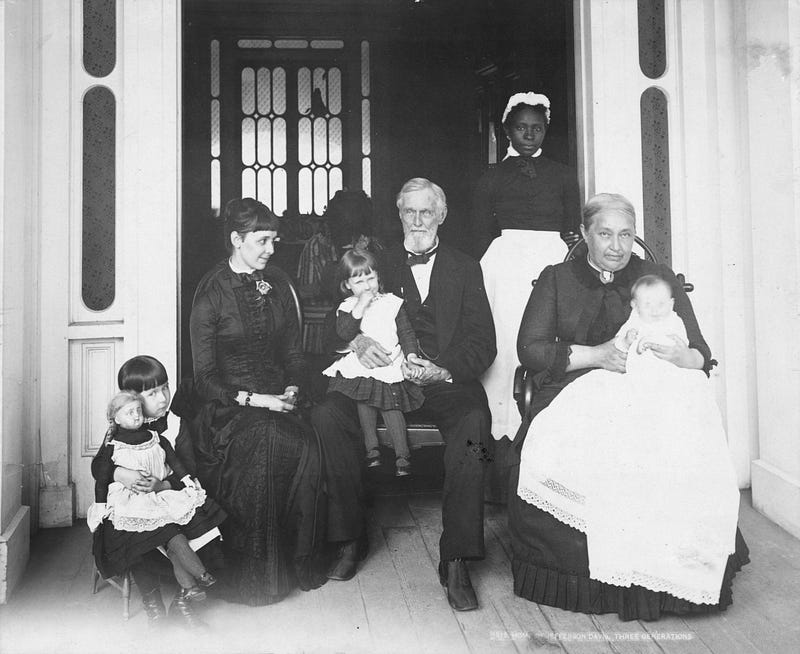
I searched online for Jefferson Davis’ family photos, and one in particular (from 1885– about 20 years after Davis lost the Civil War) is indeed complicated. Most racial debates focus on differences but families who disagree need to either learn to keep their distance or focus on what unites them.
I never asked Bryan to elaborate on how he was related to the Confederate leader.
But Jefferson Davis did have slaves. His family also took in an orphaned son of mixed race who took the family name, Jim Limber Davis, who is sometimes described as a “ward’’ since interracial adoption wasn’t legal in the Confederacy.
Something else new to me (that I’d never before learned in a lifetime of studying American history): Davis offered to free slaves in both 1864 and 1865 if they agreed to fight for the Confederacy.
“He was willing to jettison slavery in order to save Southern independence,” historian William Cooper argued in a 2012 talk at Virginia Military Institute.
Then there’s historian Christopher Columbus XX, a direct descendent of Christopher Columbus, the explorer credited with “discovering’’ America, as well as Montezuma II, whose culture was already here. When people attack either of his ancestors, he calls for preserving all history and culture.
“From 75 to well over 90 percent of all American blacks apparently have some white ancestry,’’ sociologist F. James Davis explains in “Who is Black? One Nation’s Definition.’’
The U.S. Census has always tried to identify people based on racial identity, but it keeps changing the parameters. The original racial categories in 1790 were free whites, all other free persons, and slaves. Until 1950 the government agent rather than the individual decided which group you fit into. That morphed over time from appearance to identity.
The Census had categories for people of mixed race in 1850–1890 and 1920–30 and again starting in 2000. By 1960, Americans themselves identified which race they belong to, and today we’ve gone from the original three race categories to more than 63 variations (six for single races and the rest for mixed heritage).
New DNA tests, which show where our families have moved through time, and efforts to connect every family tree further complicate our understandings of family and race. Studies show:
- The average African-American genome is 73.2 percent African, 24 percent European, and 0.8 percent Native American.
- Latinos often carry an average of 18 percent Native American ancestry, 65.1 percent European ancestry, and 6.2 percent African ancestry.
- About 3.5 percent of European-Americans carry African ancestry, but the percentages vary by U.S. region.
How do you define race? And which heritages do you embrace?
Spelman College President Emeritus Beverly Tatum, a psychologist, wrote a thought-provoking (still timely) book, “Why Are All the Black Kids Sitting Together in the Cafeteria and Other Conversations About Race.’’
“It is important to understand that the system of advantage is perpetuated when we do not acknowledge its existence,” Tatum writes.
From a Christian perspective, racist ideas are heretical because they deny we are all children of one Heavenly Father, all brothers, and sisters.
“We may agree that racism is a perennial poison in our nation, as evidenced by persistent racial disparities, particularly between black and white Americans, but we disagree over what racism is, what sustains it, and how to respond to it,’’ Nathaneal Blake counters.
In a secular non-Christian world, Joshua Mitchell argues in this essay, that we may behave more like pagans “venting their cathartic rage upon another.”
Is black about heritage or belief?
Davis explains racial definitions have changed over time.
“To be considered black in the United States not even half of one’s ancestry must be African black. But will one-fourth do, or one-eighth, or less? The nation’s answer to the question ‘Who is black?” has long been that a black is any person with any known African black ancestry. This definition reflects the long experience with slavery and later with Jim Crow segregation. In the South it became known as the ‘one-drop rule,’ meaning that a single drop of “black blood” makes a person a black.’’
However, as Joe Biden considers a running mate, saying he will pick a woman, New York’s Black Lives Matter leader says Biden would be “an idiot’’ to pick Val Demings as a running mate because she is a former police chief:
“When black people become police officers, they are no longer black. They are blue,” said Hawk Newsome, chairman of Black Lives Matter New York.
Mirroring: Jesus offers a third way to approach battles
Both humans and animals have two ways to respond to violence. Bishop Robert Barron argues:
1. Fight. Battle your foe.
2. Flight. Escape the conflict.
Jesus, who is related to each of us, taught a third way:
“To turn the other cheek, accordingly, is not acquiescence or surrender; rather it is a mirroring technique, which compels the aggressor to see his aggression. In the martial art for aikido, the warrior does not aggress his opponent, but rather uses his opponent’s weight and momentum against him. As one proponent of this method explained once to me, the purpose of the aikido warrior is not to injure or kill his counterpart, but instead to leave him laughing on the floor.’’