

Mistake on the Lake?
Define “Mistake” and then get back to me
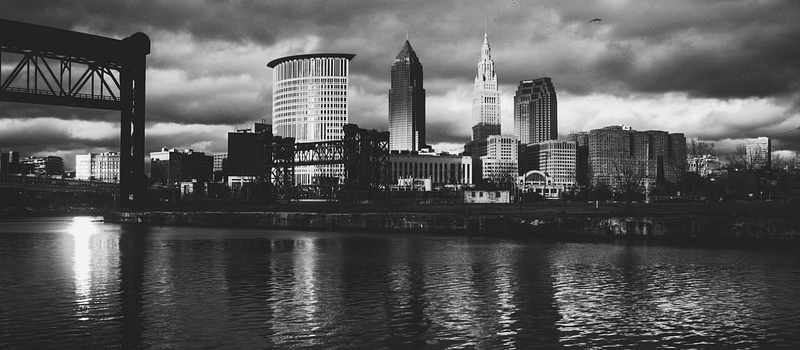
I moved to the West Side of Cleveland, Ohio in the Halloween blizzard of 1976 with a man I barely knew. For a kid who was too shy to ask for ice cream at the roller rink, I sure took some crazy chances.
Cleveland was suffering badly in the ‘70s. The movement of heavy manufacturing to other countries with the accompanying loss of decent-paying jobs decimated the tax base. Young men without college degrees couldn’t buy the kinds of homes that their fathers had while those same fathers struggled to pay property taxes. Lorain Avenue, one of the main drags on the West Side, was lined with vacant storefronts.
My good friend, Pete, who died in 2012 liked to wax rhapsodic about how great it was back in the ’70s and ’80s here in New York when you had to stomp your feet walking through Soho to keep the rats from coming out from under the cars. He’d have loved 1970s Cleveland.
It’s important to know that Cleveland is actually two cities. There’s the West Side — where I lived — and the East Side which is actually the original city on the east bank of the Cuyahoga River. On 22 July 1796, a surveying party lead by General Moses Cleaveland landed and began laying out town lots. General Cleaveland felt it was a fine place for a city. With that assertion, he promptly departed and returned to civilization — aka Connecticut — and never returned to the city named for him but misspelled by one of the original surveyors.
Things were slow to get started in the new little town on the banks of the crooked Cuyahoga River with only 150 determined souls settling the place by 1820. Being situated on the lake and next to the river, however, meant that trade would come and people always follow trade. Things picked up after the opening of the Erie Canal in 1825 which provided a direct route to get goods to the east coast. Go capitalism!
Eventually, people began moving across the river and the West Side was born. Where the East Side is a rabbits’ warren of curved, snaky streets and dead ends, the Westside is mostly a very orderly grid. The East Side has the museums, Severance Hall for the world-class Cleveland Symphony, the Cleveland Clinic, and University Circle. The West Side has many bowling alleys and thousands of two family wood-frame homes.
My Cleveland
I moved to the West Side and never moved East. That’s pretty much how it works in Cleveland. A bold move across the river costs people in terms of broken connections as well as losing their favorite ice cream shop or bar or autobody shop. People seldom make that move. I did go across town regularly during my brief three semesters at Case Western Reserve University, a renowned medical and engineering institution where I studied — wait for it — fiction writing.
Moving to Cleveland when I was 18 from a town of 3,000 surrounded by farm country was radical and dangerous. My family did not approve. Bad things happen in cities (fast forward 24 years and ask them about me moving to New York City…or maybe don’t).
On that windy, snowy October night in 1976, I moved into an old house on the corner of Milligan and West 130th Street. It was the home my boyfriend grew up in and his father and younger brother lived there. It had once been a stable and blacksmith’s, I was told, and had been added to and renovated until it was a rambling green heap of a house. My boyfriend’s father was a shutdown man who worked maintenance at one of the last remaining slaughterhouses in the city during the day and then came home to sit silently in front of the television until it was time for bed. His younger brother suffered from schizophrenia and often accused people, including me, of stealing his powers.
On Christmas Eve we left the old man at home alone with the not-particularly well-trained white German Shepard someone had given us to deliver gifts. No one saw the younger brother light the candle we’d put on top of the Christmas tree since we had no star. When we came home, the windows downstairs looked strange. There was no sign of the curtains and the entire window frame looked blacked out. My boyfriend and his brother ran to open the front and back doors which was all the smoldering fire needed to explode.
Eternity is the time it takes to hear the first sirens when you’re watching the house you live in burn down.
My boyfriend’s father died in the fire as did that dog. We lost everything except what we were wearing at the time. I lost all my art supplies, my portfolio, my journal. We slept on relatives’ couches and in spare rooms until we rented a walk-up place over an upholstery shop next to where the house had been for $100 a month. The family couldn’t afford a complete demolition and removal job and for the rest of the years I lived in Cleveland old pieces of the foundation jutted out from the overgrown weeds in that lot.
Now everything is gone. A huge block-wide Atlas Transmissions emporium has replaced the upholstery shop and Rito’s Italian bakery. The parking lot behind the emporium is the lot where that old house stood.
In 1978 we tried to solve all our problems by moving to San Diego. Three months later we were back in Cleveland. Turns out you can’t run from a problem when you’re the problem. Who knew?
Two decades plus four
I lived in Cleveland, Ohio for 24 years. I moved there when I was 18 with that man who was 9 years older than me and who I didn’t know. I left to live in New York City when I was 42. Alone. A little old to be pulling up stakes and taking a chance in what, even then, was a very tough place to gain a toehold. Was I incredibly brave or simply out of my mind? The committee hasn’t arrived at a decision yet.
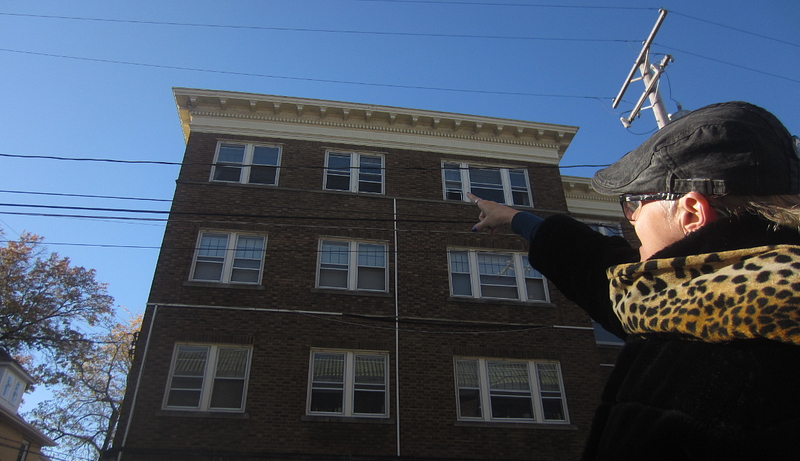
Over the course of those two decades plus, I lived in:
- An apartment over an upholstery shop that had so many leaks that when it rained outdoors it rained indoors, too;
- The upstairs of a two-family house not far from I-80;
- An enormous ramshackle four-bedroom house with only one phone jack in the whole house and one electrical outlet per room;
- On the third floor over a laundromat where the water temperature in the shower could change to blazing hot or ice-cold in a flash;
- A three-room apartment where the clanking of the steam radiators woke me in terror the first time;
- A railroad apartment where the junkie I had upgraded to almost died in the kitchen of an overdose with me standing next to him;
- And finally, the first apartment that was mine and mine alone with a view of the lake in the winter when the trees were bare. I’d never lived on my own until I was 38 years old.
Mistake on the Lake
Like most of the cities that ring the Great Lakes, Cleveland had its glory days during and after World War II when heavy manufacturing ruled. At its peak, the population of the city flirted with one million but it got gutted like all the major manufacturing cities by trade deals that sent manufacturing to other countries. After all, who wants to pay union wages and ensure a stable economy? Go capitalism.
The maelstrom of manufacturing may have contributed to a healthy middle class but it took its toll on the environment. The build-up of toxic waste in the river became the stuff of legend when the river burned (again) in 1969. Many industrial cities had trouble with the toxic waste in their rivers catching fire, but it wasn’t until 1969 that enough people freaked out about it to take action.
But that burning Cuyahoga along with the decimation of the middle class and the race riots of the late ’60s and early ’70s saddled Cleveland with the hated nickname of Mistake on the Lake.
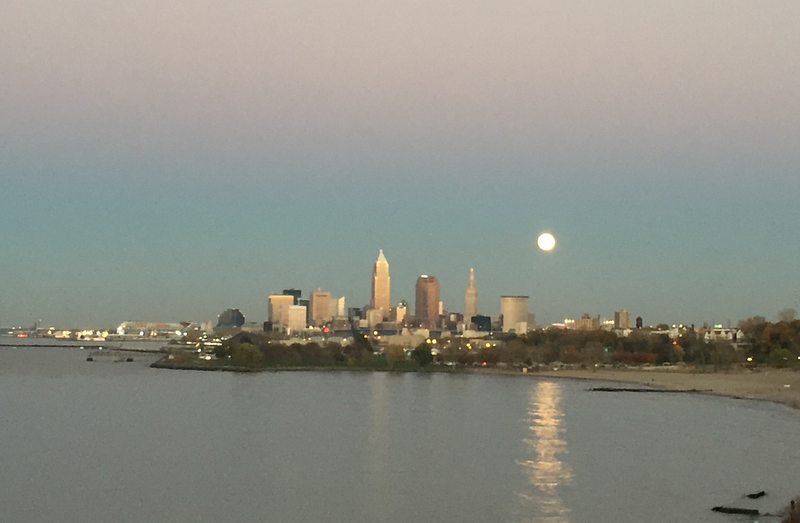
So, yeah, by the time I got there things were dire and getting direr. But mistake? Yeah, no. The city itself is pretty wonderful sitting as it does right on its own inland sea, the most treacherous of the lakes due to being the most shallow. No one knows how many ships are quietly corroding under its waves. There is a number of afternoons, early mornings, and quiet evenings I spent on “my” bluff above the lake and I’ll never know what that number is.
For those who care about such things, Cleveland does have some major league sports teams and is the home of the ridiculous Rock and Roll Hall of Fame. That howling you hear once each year? That’s the faithful of Cleveland having their annual freakout that the induction ceremonies are never held there and are always a big draw in New York.
The city boomed into the 20th century, ready to take its place among other prominent cities. For about twenty minutes it was The Sixth City in that it was the sixth-largest city in the country. Now it’s like the 39th.
This has understandably created an unlovely inferiority complex that the city strains to put behind it. The more it boasts its beautiful lakefront and world-class cultural institutions, the more desperate it comes off.
Ease up, my dear old home, you don’t need to try and convince anyone of your worth. True, it’s sad to see how empty your enormous and beautiful downtown is even on weekdays, but you don’t need to so hard to get people to like you. You can chill and enjoy what you’ve got because all too soon the world is going to realize what a treasure you and all the other Great Lakes cities are.
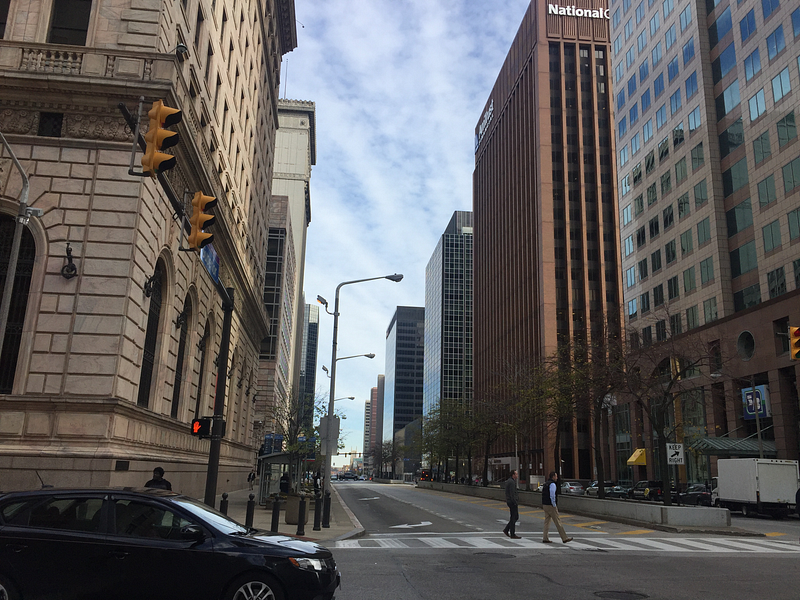
Here’s what you’ve got that people want. You’re perched on the shore of part of 21% of the world’s supply of fresh water by volume. Activists in 2020 were able to pass the world’s first bill of rights for a body of water — LEBOR — giving Lake Erie many of the rights and privileges of the people who love it. Radical, my friends, radical.
Cleveland is the only city I know that has major league sports teams, world-class cultural gems, a downtown theatre district, that lake, and it’s still possible to rent a two-bedroom apartment with a view of the lake for under $900 a month. The median price of a home in the city — are you sitting down? — is under $70,000. Here, let me help you up. The downside of this outrageously affordable cost of living is that there really aren’t many good-paying jobs in the city. That’s about to change, too, courtesy of our friend, the virus, as remote work becomes more and more the norm.
True, winters on “America’s North Coast” can be harrowing. And you kind of do need a car in this part of the world. No place is perfect.
Am I running the risk of screwing everything up for a last remaining affordable paradise? Well, to call Cleveland — or any other American city — a paradise is pushing it. When I was accepted into Columbia University and needed someone to drive me and my rented van to New York, my friend George stepped up. He and his wife had left the Montclair, New Jersey area because there was no way they could afford their own home in this part of the world. That was in 2000 and I suspect that there’s been a steady reverse flow of people “discovering” that there’s this enormous middle of the country with all (ok, most of) the amenities and super cheap housing.
Would I move back?
If we should somehow lose the lease to our current rent-stabilized apartment two blocks from Central Park, well, there would be far worse places to retire to. But, no, it’s not a likely choice simply because that would be a move backward. Nothing wrong with that, but if I have the choice, I’d probably hire a lawyer to see about getting Polish citizenship for AleXander and fleeing to Europe, also not perfect.
With COVID-19 basically calling the shots for the next year at least, who knows what will happen.
But don’t rule the Great Lakes’ cities out. They have a lot to offer and I’m deeply grateful for my decades in Cleveland where I learned resiliency, creative thinking, and perseverance. None of those things happened because I lived in a mistake. I lived in a great city and am always grateful for that.
© Remington Write 2020. All Rights Reserved.