
Missing Buddy
The day I learned not to judge a book by its cover
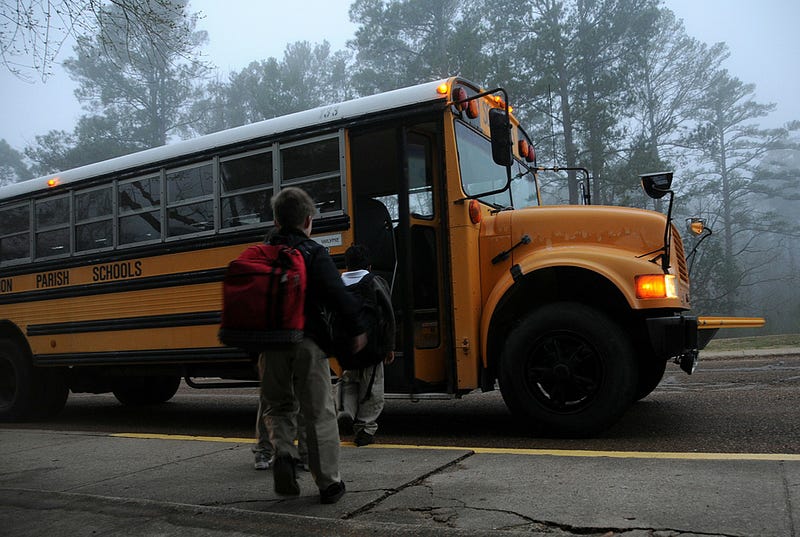
I hated riding the bus to school. It was an assault on my senses. I was prone to motion sickness. Between the movement, the smell, the noise, the extreme temperatures — stifling in the warm months, freezing in the cold months — and having no friends to sit with, I dreaded the ride to and from school each day. It was the worst two times of my day. Five days a week.
Mr. Moses drove the school bus I rode. He worked at a gas station. He wore a grease-stained uniform of dark blue work pants and a light blue shirt with his name on a patch, “Preston”. He had one arm and was bald. His one hand was dirty. He smoked. He smelled like a gas station and cigarettes.
The other kids on the bus made fun of him behind his back. At that time, singer/songwriter Jerry Reed had a popular country song named “Amos Moses”. The song’s Amos Moses was also a one-armed man. The kids on the bus would sing the song and substitute the bus driver’s name in the lyrics. Their version started like, “Preston Moses was a mean ol’ man…”
Mr. Moses smoked while driving the manual transmission school bus. He steered, changed gears, and smoked with one hand. So there were times when his one hand was not on the steering wheel. I was years away from being a driver. That method of driving seemed dangerous, and a little scary, to me.
The school bus had a hierarchy of where the kids sat. There seemed to be a preponderance of boys on the bus and very few girls. The loud, noisy boys usually sat in the back. I tried to sit close to the front and look small, so no one would notice me, including Mr. Moses. He kept his eyes on the rowdy boys in the back.
Each morning going to school and each afternoon going home, Mr. Moses would yell at us, “Sit down and shut up!” No smile, no hello, no goodbye. He was dirty, he smelled, and he was mean. I was afraid of Mr. Moses.
One afternoon the standard routine of getting on the bus and leaving school changed. We got on the bus, moving to our preferred seats. Mr. Moses yelled, “Sit down and shut up!”, just like he did every day. But he didn’t start the bus to head home.
“Where’s Buddy?” he yelled. Buddy lived across the street from me. He was in my grade. He was chubby and had red hair. The other kids on the bus did not like Buddy. The loud boys on the bus picked on him. Again, Mr. Moses yelled, “Where’s Buddy?”
Buddy had ridden the bus to school that morning. Mr. Moses looked at me since I was in the front. I was good at shutting up. As I sat with my books held close to my chest, my heart beat faster and I shrugged my shoulders. “Go into the school and see if you can find Buddy,” he said to me.
I quickly got off the bus to do his bidding. “Ask in the office,” he yelled after me. I realized we weren’t leaving until I found Buddy.
That’s when I realized Mr. Moses cared. He cared that we got home. He wasn’t going to leave until he knew where Buddy was. I had always assumed if I wasn’t on the bus, no one would miss me. Least of all Mr. Moses. I wasn’t even sure he knew my name. But Mr. Moses had looked and missed Buddy. No one else on the bus had asked about Buddy, including me. If he missed Buddy, maybe Mr. Moses would miss me too.
I checked with the office. Buddy had gone home, sick. I reported back to Mr. Moses. This time when I boarded the bus, he didn’t look as mean. He cared about us. He even cared about the chubby, red-headed kid that no one liked.
That day I got a peek inside Preston Moses. The phrase “don’t judge a book by its cover” has been around since the 1860s. All this time I had judged Mr. Moses by what I saw on the outside. As a child, that was easy for me to do. I didn’t have the range of experiences to help me see past his outward appearance. But that afternoon I saw beyond the cover of his gruff words, dirty appearance, and lack of an arm. Mr. Moses made me feel safe. I was no longer afraid of him because I knew he cared. He wasn’t as mean as I thought he was. Maybe even not mean at all.
I’ve learned that people will forget what you said, people will forget what you did, but people will never forget how you made them feel.
This quote has been attributed to many authors, including Maya Angelou. When I read these words now and think of my experience on the bus with Mr. Moses, I understand them perfectly.
Now, even as an adult, I can be quick to judge using a first impression based on looks, rumored gossip, first conversations. When this happens, I need to take a moment and revisit my memory of Mr. Moses. I need to remember how he made me feel the day he sent me looking for Buddy.
After I reported back to Mr. Moses that afternoon, I reclaimed my seat at the front of the bus and hugged my books close to my chest. I felt different about being on the bus. “Sit down and shut up!” he yelled. The bus’s diesel engine roared to life, blowing fumes into the open windows. The bus bounced out of the school bus loading area into the street, as we pulled away from the school. I took a slow, steady breath to calm my stomach. It was still a physically uncomfortable drive, but not nearly as scary.
David Majister inspired me to write this with his Pixar 30-Day Storytelling Challenge