
Misogyny Is About Keeping Women In Their Own Lane
For the most part, it isn’t about hate
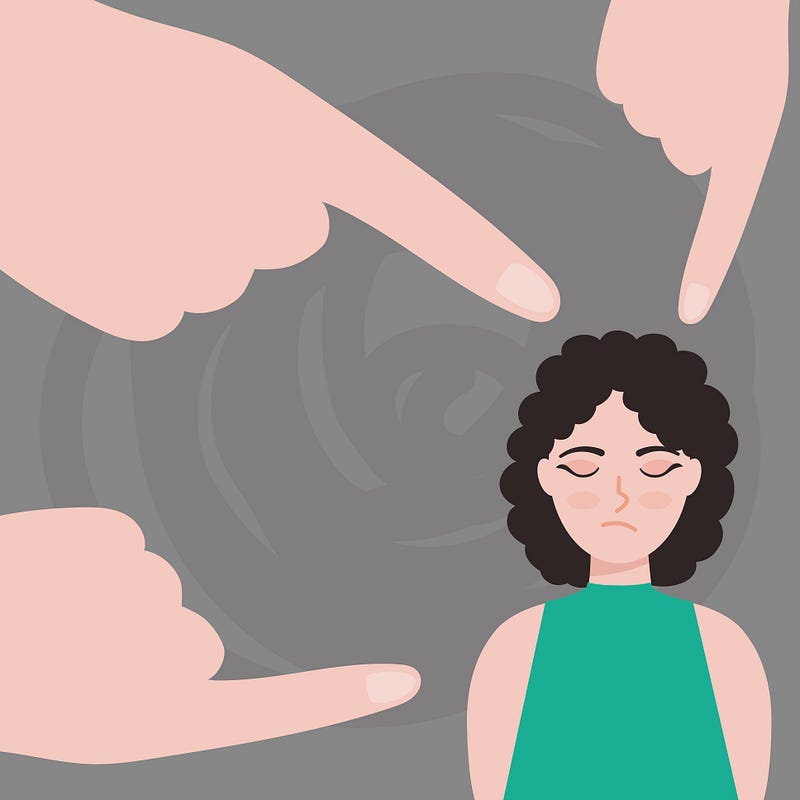
For the most part, misogynists don’t hate women in a general sense. In fact, they may truly love their mothers, wives, girlfriends, sisters, and female friends — but only as long as they maintain their perceived place in the social structure. A woman who is too outspoken or too independent is a problem because she has violated the tacit social contract of a patriarchal society. I both see and experience instances of this every day as an outspoken woman on the internet.
It often feels to those in its grip like a moral crusade, not a witch hunt.
Men (and even some women) may target women who express opinions that challenge patriarchal norms by calling them gender-specific slurs like bitch, slut, and cunt. They threaten, intimidate, and vilify, and the more high profile the woman, the more vehement the reaction is to her. It’s a strange indicator of having made it as a writer when you begin to be regularly harassed in this way, but a woman like this is both a stand-in for and an example to other similar women. Her offense is that she has refused to stay in her lane where she belongs, quietly tending to the needs of other people. Instead, she is advocating for herself and for other women and this feels not only improper to some but downright offensive as well.
To misogynists, what they are often experiencing feels like righteousness: like standing up for oneself or for morality, or — often combining the two — for the “little guy.” As social philosopher Kate Manne points out, “It often feels to those in its grip like a moral crusade, not a witch hunt. And it may pursue its targets not in the spirit of hating women but, rather, of loving justice.”
That certainly resonates for me since the tone of many of the comments I receive from misogynists is filled with just this sort of righteous anger. A woman who is dutifully and lovingly catering to the needs and desires of the males in her world has no reason to be vilified or punished. It is only if she is insubordinate, negligent, or otherwise out of line, that such a woman deserves to be viewed negatively and actions are taken to rein her in. Misogyny is, fundamentally, the enforcement of patriarchal structures and gender norms.
A woman not having her focus where it belongs (on the needs of men, or others in her care) is one of the things that is most triggering to misogynists. In this culture, women have been and to a large extent still are envisioned not so much as human beings but as “human givers.” Their purpose and social value is in being the caretakers of everyone else. Mothers, in particular, are supposed to put themselves last lest they be considered “selfish.”
Her humanity may hence be held to be owed to other human beings, and her value contingent on her giving moral goods to them: life, love, pleasure, nurture, sustenance, and comfort, being some such. This helps to explain why she is often understood perfectly well to have a mind of her own, yet punished in brutal and inhumane ways when that mind appears to be oriented to the wrong things, in the wrong ways, to the wrong people — including herself and other women.
Manne, Kate. Down Girl (pp. 22–23). Oxford University Press. Kindle Edition.
Even people who value equality and want to support it may find themselves at times acting on subconscious scripts about where women belong and what they should be doing. As Manne points out, sometimes acting out is even a replacement for a conscious experience of these feelings.
Women who resist or flout gendered norms and expectations may subsequently garner suspicion and consternation, which has less to do with their challenging gendered norms per se, and more to do with their challenging entrenched norms simpliciter.
And for some people, feminism, in particular, has profoundly disrupted their sense of the social order. The hostility they display to women who disrupt or pose a threat to gendered social hierarchies, say, is compatible with their being egalitarians in the abstract. They may nevertheless perceive powerful women who do not wield their power in service of men’s interests as abrasive and threatening.
For that reason among others, a misogynist social environment may be partly the result of more or less well-intentioned people acting out of disavowed emotions or exhibiting flashes of aggression that are not consciously experienced. And indeed, such aggression may be acted out partly as a substitute for feeling it: the expression “acting out” is suggestive in this context.
Manne, Kate. Down Girl (p. 61). Oxford University Press. Kindle Edition.
I see and experience this all of the time, often from men who tell me about what I should have written, typically something that talks more about the things that men experience in this culture. Even though my focus is always on the harmful aspects of a patriarchal culture, including the ways that this is detrimental to men, that’s sometimes not enough. Anything that centers my personal experiences as a woman or the societal dynamics that women face as a demographic is seen to be unfairly excluding the issues that men face. It just feels wrong to them somehow, both ungrateful, but also neglectful of where my focus rightly belongs according to them.
Men, and white men, in particular, are so used to being the focus of the culture, that it feels quite offputting to many of them for this not to be the case. I noticed a real uptick in this dynamic around the time that George Floyd was murdered. Quite a few men I know who professed to be progressive and concerned about equality started openly complaining at having so much of a spotlight put on Black experience. Many of my female friends noted and commented upon the same thing at the same time, that many of the “progressive” white men they knew were suddenly showing their asses. We all found it quite shocking to see beneath the veneer to find this entrenched sense of entitlement.
Around this same time, I was told by a male friend that I ought to be “nicer” to someone who had not been nice to me. My justifiable anger was experienced by him as inappropriate because I didn’t use my feminine socialization to placate, soothe, and otherwise smooth over the situation. I was expected to do the emotional labor of “keeping things friendly” in the face of someone being rude and belligerent to me. My anger was unattractive and out of line.
Here’s in part, what I said to him:
“Here’s why I think that you are being blinded by your social conditioning around all of this. You keep telling me that I owe dignity and understanding to people who are defending things that are indefensible, like racism, and sexual harassment. WTF do I owe people who are doing that anything at all? What I owe my society is to stand up to people like that and to tell them that is not acceptable.
It’s not my job to be nice and kind and understanding of those who are having some type of childish tantrum, at my expense, at the expense of the societal good, at the expense of people who have a much less privileged experience in the world. And if you believe that I do owe that, I think it’s a part of your cultural conditioning around women.”
To his credit, I think he did begin to understand what I was saying, but it took a while to get there. Our society is built upon a dominance hierarchy and those who are closer to the apex of that pyramid of societal power have been conditioned to believe that their feelings and their needs are paramount. Not only do they have the tacit right to behave aggressively or abusively to those with less power, but those people are expected to take it with stoicism and grace. Their only recourse is to go home and kick the dog (to behave aggressively or abusively to someone with even less social power).
To not be dominant is from their way of thinking, to open yourself up for the short end of the stick, and who would want that?
Over the past 50 or 60 years, this long-standing hierarchy has been continuously challenged, as relates to gender, but also to race, sexuality, religion, disability, etc. Trying to regain what has been lost as the hierarchy flattens has become the central platform of the Republican party, but other people struggle with it at times as well. Despite some social progress, we’re still deeply indoctrinated into this zero-sum system where someone has to lose in order for someone else to win.
A dominance-based hierarchy like patriarchy reinforces social stratification and keeps people “in their place” by preventing them from competing with those with more traditional power. This helps to bolster the illusion that those at the top have earned their place there through their own hard work and diligence.
Misogyny is not just the fear of losing the comfort of always having people around you whose job you believe it is to assist and please you, it is also the fear that there can be no win-win with equality — somebody has to lose, and misogynists don’t want it to be them. To not be dominant is from their way of thinking, to open yourself up for the short end of the stick, and who would want that?
Misogyny is rampant in our culture, but for the most part, this has nothing to do with hatred, and everything to do with patriarchal gender norms where women are envisaged as “human givers.” Our best recourse is to keep dismantling this dominance-based system and to allow actual hard work, merit, and aptitude to lead the way, for men, women, and everyone. Greater emphasis on cooperative win-win scenarios will also go a long way toward breaking down the fear that undergirds so much of misogyny.
© Copyright Elle Beau 2022


