
Mirror, mirror on the wall, which is the most sustainable of them all?
Hemp Vs Organic Cotton
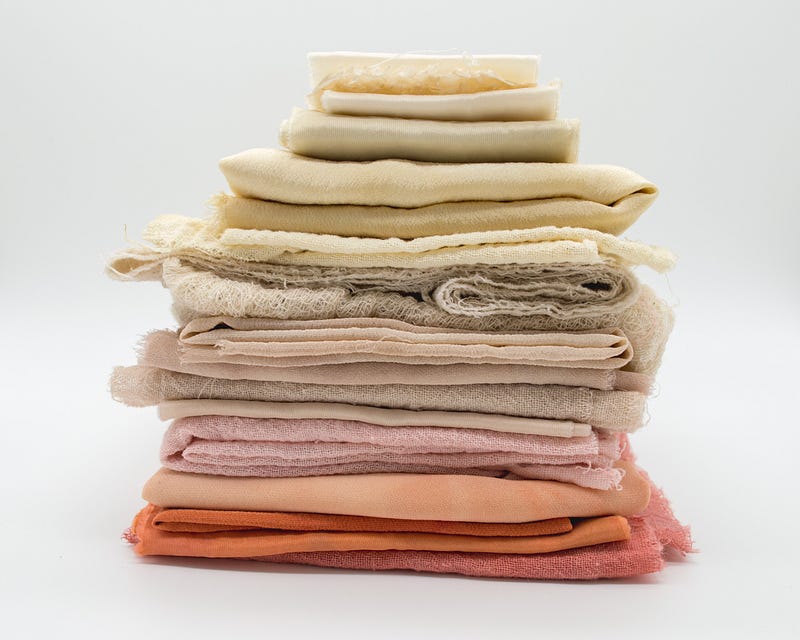
The Ellen Macarthur Foundation has estimated that every second, the equivalent of a rubbish truck load of clothes is being burnt or buried in a landfill [1]. This glaringly points to the obvious failure of the linear business model of the fashion industry where less than 1% of old clothing becomes new clothes [1]. As more and more people become aware of the same, a significant portion of the population want to know the environmental impact of their clothes.
Where do your clothes come from?
Most of us are aware of the different kinds of fabrics in the market. Synthetic fibres have dominated the global market since the mid-1990s and it continues to this day. To give an overview, in 2022, 116 million tonnes of fibre was produced, of which synthetic fibres had 65% of the global share [2].
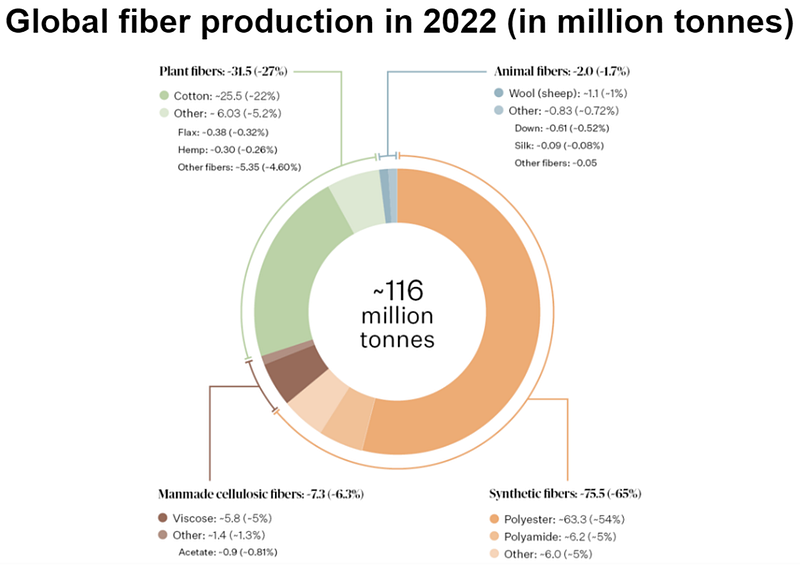
Among plant fibres, cotton was the most widely produced standing at 25.5 million tons in 2022, followed by jute at 3.4 million tons. Organic cotton contributed to ~1.4% of total cotton production at 0.34 million tonnes while hemp stood at 0.3 million tonnes [2].
Among the plant-based fibres available in the market, most of us are aware of the sustainable fabrics such as jute, linen (made from flax), hemp, bamboo and organic cotton. Among the top 3 plant-based fibres, although jute is the second most important plant-based fibre, it is better suited and mostly used to make home furnishings, twines, burlap, bags and canvas due to its texture. In this post, we will be addressing one of the most frequently asked questions out there, “Is hemp or organic cotton better for the environment?”.
The answer is not as straight forward as expected and relies heavily on a number of factors. Let’s break it down based on the factors mentioned below for you to make an informed decision as an eco-consumer.
Sustainability
Water footprint
There are three kinds of water footprints, i.e., blue, green and grey and are defined by the water footprint network as below.
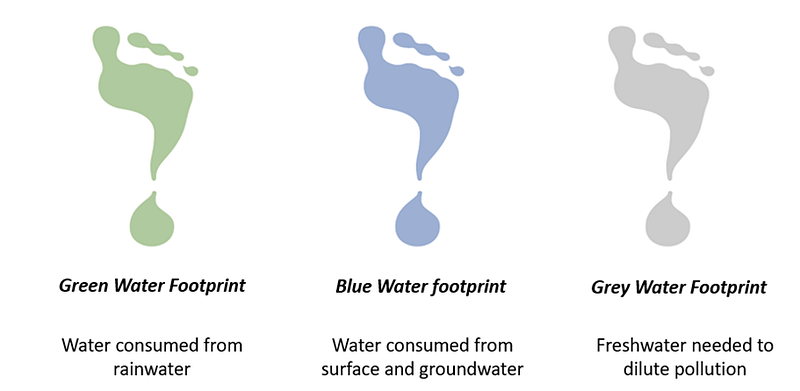
On a global average, organic cotton requires 8,000–15,000 litres of water per kg of fibre [4][5][6]. However, 95% of the water used is green water, i.e., water held in the soil and available to plants which may vary based on the region and rainfall.
The blue water footprint, the category with a high environmental relevance of conventional cotton is ~2120 l/kg cotton fibre vs ~200 l/kg of organic cotton fibre (i.e., 91% reduced blue water consumption compared to conventional cotton [7]).
Although industrial hemp has a total water footprint of 2500–3500 litres/kg of fibre [8], the blue water footprint for industrial hemp fibre is nil [9][10], as most of its water requirements are fulfilled by rainfall.
Although the total water requirement for organic cotton varies widely and is highly debatable, when we compare the blue water footprint (which is the most environmentally impactful parameter) for hemp and organic cotton, the former trumps the latter.
Winner — Industrial Hemp
Land required
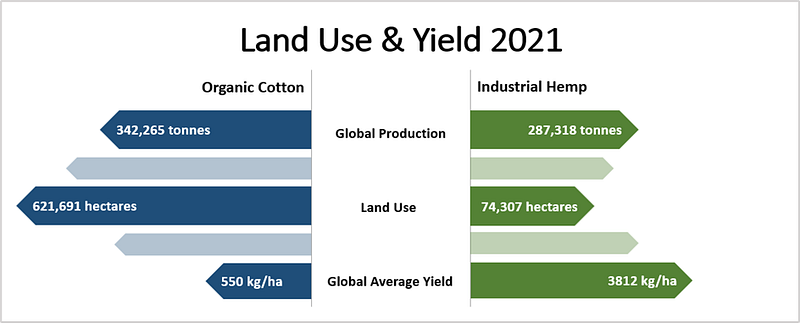
In 2021, hemp had a global production of 287,318 tonnes, harvested from 74,307 hectares across 20 countries. The global average of hemp yield stood at ~3812 kg/ha in 2021, ranging from 300 kg/ha (in Czech Republic) to 7850 kg/ha (in Italy) based on the country grown [11]. The yield by country can be found here.
Organic cotton had a global production of 342,265 tonnes, harvested from 621,691 hectares of land across 21 countries [10]. The global average yield of organic cotton stood at ~550 kg/ha in 2021, calculated by dividing the kilograms of organic fibre produced by the hectares of certified organic land. Although India is the largest producer of organic cotton, the yield stands at 580 kg/ha as compared to countries like Turkey and China where the yield is 1865 kg/ha and 2141 kg/ha, respectively [12].
Based on the above data, industrial hemp is the clear winner as it requires roughly 7 times lesser land to cultivate compared to organic cotton, freeing up land for other crops.
Winner — Industrial Hemp
Carbon Footprint
Both industrial hemp and organic cotton sequesters carbon. However, when talking about the carbon footprint of each crop, according to LCA accounting rules, it is not possible to account for carbon sequestration if the carbon is sequestered for less than 100 years. Hence, the carbon footprint included below is excluding the effects of carbon sequestration.
On a global average according to Textile Exchange (2014), organic cotton produced 978 kg of CO2e per tonne of cotton fibre produced [4][7]. A later study on industrial hemp done in 2017, put that number at 680–850 kg of CO2e per tonne of hemp fibre [13]. However, another study done in China in 2021 mentions that the carbon footprint of hemp is 4143 kg of CO2e/ tonne of hemp fibre [14].
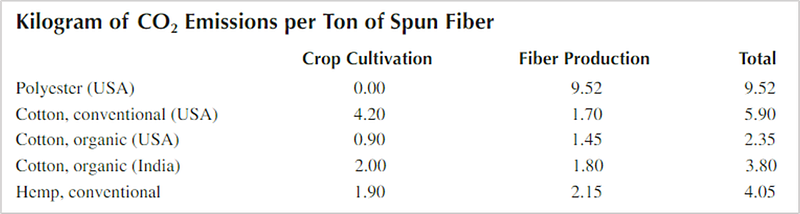
A much older study, done in 2005 [15], shows that hemp has a higher carbon footprint compared to organic cotton due to fibre production processes used. Organic cotton produced anywhere between 2.35 to 3.8 kg CO2e per tonne of spun fibre while conventional hemp came in at 4.05 kg CO2e per tonne of spun fibre. This can be attributed to the fact that hemp requires more energy intensive processing compared to cotton as evidenced by the split in the below table [16].
Tip: Choosing hand spun (or khadi) is always an eco-friendlier option compared to machine spun to reduce your carbon footprint.
Winner — Unclear
Although hemp sequesters more carbon than organic cotton, the carbon footprint results are still unclear. Different studies done over time provide varied results as indicated above (require recent comparative studies as past data is as old as 2005).
Biodegradability
Both pure organic cotton and industrial hemp fabrics are 100% biodegradable, provided they are dyed using natural colours and not blended with synthetics. Organic cotton fabrics biodegrade within 4–12 weeks [17] in soil while industrial hemp fabrics takes up to two weeks to degrade in soil.
Tip: Opting for naturally dyed clothes, irrespective of whether it is hemp or organic cotton, reduces water pollution and supports 100% biodegradability of the fabric back to the soil (end-of-life).
Winner — Tie
Consumer focused Factors
Availability
The misconstrued association of hemp with marijuana led to the reduction and disappearance of the material from the textile industry. From a legal perspective, hemp is a cannabis plant that contains less than 0.3% of THC (Delta-9-tetrahydrocannabionol, the psychoactive component found in cannabis plants), while marijuana contains more than 0.3%. Although industrial hemp, used in the textile industry is different from the one used for marijuana, as they belong to the same species, there are numerous laws across the world with limitations on hemp cultivation.
By contrast, organic cotton is more widely grown across the world and hence easily available.
Winner — Organic Cotton
Durability
Hemp is one of the strongest naturally occurring fibres ever produced owing to its high tensile strength, known to be stronger than cotton fibre. Additionally, it is anti-microbial, UV resistant, naturally resistant to mildew and rot, accepts dyes readily, breathable and softens after each wash without fibre degradation [11]. Although cotton is also breathable and softens after each wash, the soft fibres tend to degrade after a point. This makes hemp more durable and lasts longer than organic cotton.
Winner — Industrial Hemp
Comfort
Organic cotton has high-moisture absorption ability and also eliminates body odour with its moisture wicking capability. Although both fabrics has high breathability, cotton fabrics are softer on the skin compared to hemp due to its texture, which is why most hemp fabrics are blended with cotton when it comes to clothes.
Winner — Organic Cotton
Other factors to consider
Hemp enhances soil health by adding diversity to crop rotations and reduces the need for synthetic pesticides as it is naturally resistant to pests. Additionally, hemp can clean contaminated soil using phytoremediation if grown well. Phytoremediation uses green plants to remove metal pollutants from the soil or renders them harmless. It is a sustainable, economical and feasible alternative for cleaning polluted soil. Industrial hemp (Cannabis sativa) has the ability to extract toxic metals from the soil using its deep roots and accumulate in all plant parts [18]. Hence, can be grown on contaminated sites for the sole purpose of cleaning the soil (do note that if hemp is grown solely for this purpose, it limits its use as raw material in clothing and food).
The Verdict
Overall, industrial hemp seems to be a more sustainable option compared to organic cotton. However, this would be heavily reliant on location and accessibility to hemp. For example, the Marijuana Tax Act of 1937 effectively ended hemp farming in the US, but cultivation of industrial hemp has been legalized in the US as recent as 2018. If buying hemp-based textiles includes international shipping (if it is not legal in your country yet, it adds to the transportation carbon footprint), then buying locally produced organic cotton would be a greener option. Hence, it is vital to understand the laws of the country you reside in before making the switch to hemp fabrics.
The idea is not to swap out all clothes you own with a more sustainable option. It is to make full use of what you already own and then slowly over time start replacing them with a more sustainable option.
Choose wisely!
References
[1] Ellen Macarthur Foundation, accessed in October 2023 https://www.ellenmacarthurfoundation.org/topics/fashion/overview
[2] Textile Exchange Dashboard, accessed in October 2023 https://textileexchange.org/materials-dashboard/
[3] Water Footprint Network, accessed in October 2023 https://www.waterfootprint.org/water-footprint-2/what-is-a-water-footprint/
[4] Life Cycle Assessment of Organic Cotton Fibre commissioned by the Textile Exchange, 2014 https://www.ajsosteniblebcn.cat/the-life-cycle-assessment-of-organic-cotton-fiber_38172.pdf
[5] International Cotton Advisory Committee, 2022 Databook https://www.icac.org/Content/PublicationsPdf%20Files/5a7e599d_0ce4_45a4_9331_2dab12829637/DATABOOK-2022-ss.pdf.pdf
[6] Cleaner, Greener Cotton, A summary report, World Wildlife Fund, 2007 https://wwfint.awsassets.panda.org/downloads/cotton_for_printing_summary_report.pdf
[7] Cool Cotton, Organic Cotton and Climate Change, Soil Association, 2015 https://www.soilassociation.org/media/11662/coolcotton.pdf
[8] Cellulose Textile from Hemp Biomass: Opportunities and Challenges, 2022 https://www.researchgate.net/publication/365589452_Cellulose_Textiles_from_Hemp_Biomass_Opportunities_and_Challenges
[9] Global Water Footprint of Industrial Hemp Textile, J. Averink, Univeristy of Twente, 2015 https://essay.utwente.nl/68219/1/Averink%2C%20J.%200198501%20openbaar.pdf
[10] The green, blue and grey water footprint of crops and derived crop products, M.M. Mekonnen and A.Y. Hoekstra, 2010 https://www.waterfootprint.org/resources/Report47-WaterFootprintCrops-Vol1.pdf
[11] Growing Hemp for the Future, Textile Exchange, 2023 https://textileexchange.org/app/uploads/2023/04/Growing-Hemp-for-the-Future-1.pdf
[12] Textile Exchange Organic Cotton Market Report, 2022 https://textileexchange.org/app/uploads/2022/10/Textile-Exchange_OCMR_2022.pdf
[13] Carbon Footprint of Natural Fibres, 2017, https://eiha.org/media/2017/01/15-04-Carbon-Footprint-of-Natural-Fibres-nova1.pdf
[14] Hemp Textile Eco-Development Report, China Bast and Leaf Fibers Textile Association, 2021 https://www.hempfortex.com/blogs/articles/hemp-textile-eco-development-report-2021
[15] Ecological Footprint and Water Analysis of Cotton, Hemp and Polyester, Nia Cherret et al, Stockholm Environmental Institute, 2005 https://mediamanager.sei.org/documents/Publications/SEI-Report-EcologicalFootprintAndWaterAnalysisOfCottonHempAndPolyester-2005.pdf
[16] Carbon Footprint of Textile and Clothing Products, Sohel Rana et al, 2015 https://www.researchgate.net/publication/276193965_Carbon_Footprint_of_Textile_and_Clothing_Products
[17] Cotton and Climate Change, The Untold Story, Kai Hughes, International Cotton Advisory Committee, Kai Hughes, 2021 https://www.usda.gov/sites/default/files/documents/S21_Hughes-Climate-Change-USDA-V4.pdf
[18] Potential of Industrial Hemp for Phytoremediation of Heavy Metals, Dant F. Placido and Charles C. Lee, 2022 https://www.ncbi.nlm.nih.gov/pmc/articles/PMC8912475/