
Miro, iPad, storyboard and lockdown. A success story.
What do you do when you have to work with people you have never met? When you barely speak a common language? When audio quality is poor? When lockdowns started, some people around me started to go crazy about having a TOOL, but not just a TOOL, we needed THE TOOL. Once we get THE TOOL, THE TOOL will free us from our home office into the infinite universe of virtual reality. It happened to be that THE TOOL became a whiteboard app, Miro. To be honest I was very skeptic about the value of whiteboard apps until I started this new project I want to talk about, but then Miro blew my mind.
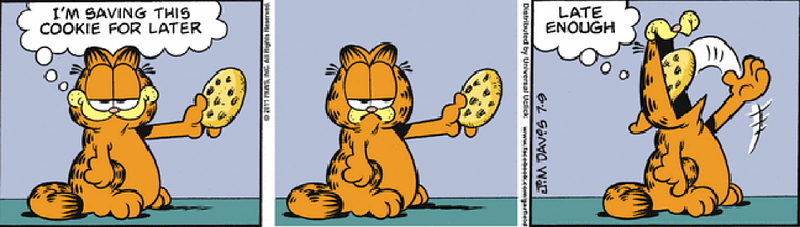
Before we go deeper into the topic, I want you to understand something about me. Before I got my first PC, before it totally sucked me into the cyberspace around the age of 13, I mainly found joy in two activities, reading Garfield comics — all of them — and drawing. I never fell into love with superhero comics, I did not really find superheroes and stupid their drama too interesting, I was rather interested in that fat, coffee-addicted sarcastic cat. It fascinated me how much you can express with 3 boxes of picture, 3 characters in each at most and with short, simple dialogs. Everything had a place and a purpose in these comic strips, everything had a meaning. This was so true that if you remove an element from those comics, the story gets totally altered. If you are curious about this I recommend you to check garfieldminusgarfield.net, it’s truly a gem on the internet. So I learned to draw at a very early age and I learned to construct very simple simple but meaningful comic strips too. However I turned to much different things in my teenage years, this knowledge never got lost, and when I bought my iPad, all this forgotten creativity exploded into my mind again.
The years passed by, I became a Software Developer, then a Business Analyst, then a Product Owner, and then came the virus. I started a new project with a very tight schedule, with a user group which had little to do with computers other than Word and Excel. To make things worse, the lockdown made any personal contact impossible. I had a relatively complex topic with relatively unknown people and I had to define user stories based on their inputs, I had to make sure that we all have a common understanding.
When I started to write down the first user stories, I started to freak out and to have a panic attack. I was looking at a wall of text, a page of bullet-pointed sentences and I told myself that there is absolutely no way that these people will understand the big picture (Why the big picture is important and how to keep it) or anything without a visual aid. That’s when I remembered that we have THE TOOL. First I sketched up a BPMN diagram, which was even worse than a bullet point list, it was pretty straightforward for a software engineer and it covered every detail but it was a visual horror, a brain-killer which was completely unsuitable to be the subject of any discussions through a 3 hours long workshop. When I recognized this, in my desperation I started to draw some very nasty things with my mouse to give my pain away, and that was the point when I realized the potential in Miro. The potential was a canvas, where I could apply all skills I learned as a child.
I took the list of the stories and I started to sketch up 3–4 main storylines based on them, each of them had 2–4 outcomes. A main storyline had been split where a decision was needed by the customer or by the user. This way, by sketching up the main storylines we could go through the user’s journey so easily like it was a comic book, and we were able to pick the versions with the most desirable outcome. I did not go to the workshop with empty hands and the workshop did not end in a brainstorming loop. I shared the Miro board and everybody could check it and understand it, I got immediate feedback, I took notes, changed details, provided alternatives on the fly with my iPad and my iPencil. It was magic. After the workshop I removed the undesired versions, I ended up with something like this:

As you can see (sorry for the low resolution but the content is not public), the end-result looks pretty friendly for the human brain. These storylines were describing in high level what the system was supposed to do and they became the four main epics I worked with. In the first round I was able to define the main epics in a 3 hours long workshop. If I had to do the same without my iPad and without Miro, getting the same amount of information would have taken at least 2 weeks.
I had the epics, now I had to define the stories too. How did I do it? I simply split up these storylines into smaller stories. My rule of thumb was that each story should be at most 5–8 boxes long, if it gets longer, then it has to be split. I not only broke down the stories but I also started to detail them a bit more, I also created new stories to cover important cases. This is how I ended up with a very good-looking storyboard:
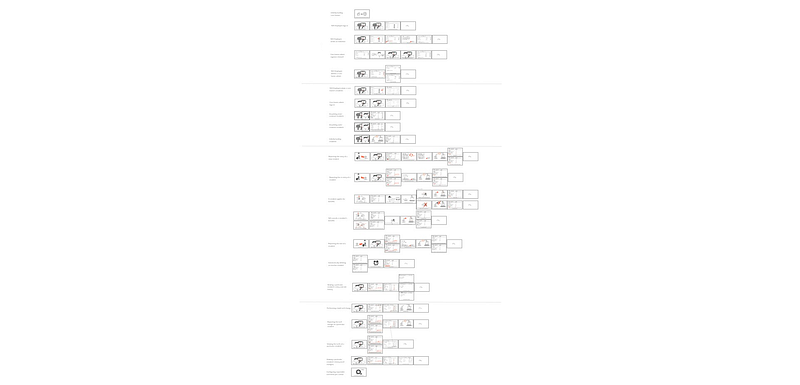
This storyboard contained enough epics and stories to start the development, there were just three things left to do. Validating the stories with the customers, prioritize them and detail them. You might have already thought that this storyboard became too big to talk about and you are right. For the second workshop I picked the 6 most important stories, the ones which are absolutely necessary to be able to deliver something testable at the end of the first sprint. These stories were the core of the application, the MVP of the MVP. During the second workshop we mostly talked about these core stories, the other stories were just briefly mentioned at the start to assure the customers that the stories I picked are only a small part of what we have and to ensure that everybody sees the big picture. We discussed issues, we defined the details, we sketched up wireframes and so on.
Once we got the necessary details, we said goodbye to Miro. Just as you can’t keep your post-its forever on your wall, drawings on a flip chart, you can’t specify and document a software on an online whiteboard. Each story of the storyboard has been exported and put into its own confluence page. These pages contained all necessary details, acceptance criteria, wireframes, all information required to fulfill the definition of ready. We created Jira tickets for the stories, and everything was ready for development!
If you enjoyed reading this article, please support me with a few claps and please follow me. Thank you!