
Minimal Equipment Strength Workout at Home
Strength training made easy
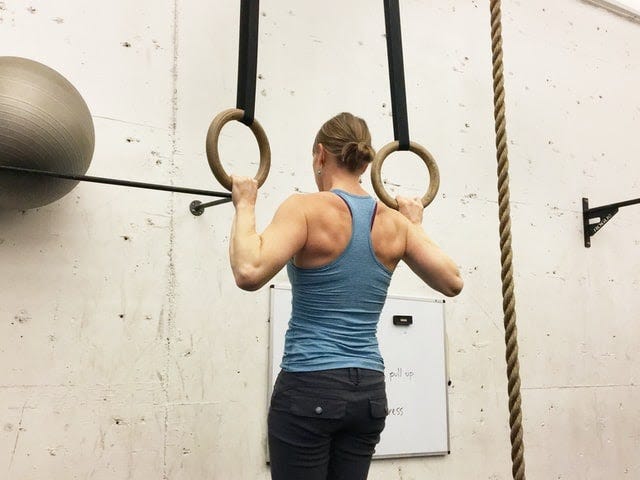
Here we are, several months into the lockdown and stuck at home for far more time than we are used to. Lots of us have been looking to use that time productively. Maybe now is the right moment to fulfill that New Year’s Resolution and finally get in shape! For those of you who were already doing well with a gym routine, that has also been derailed by social distancing norms and regulations. Some of us just want a good reason to put our headphones on and tune out our housemates for an hour.
We need to work out from home now, but where do we start? Most of us don’t have a pile of disposable income to invest in getting fit, nor do we have much extra space in homes that have suddenly become our offices.
I was lucky enough to begin this home workout journey a few months before the world turned upside down. I found a system that works and below I share some tips on doing an effective strength workout from home. I will cover a great cardio workout in another article.
DISCLAIMER: I am not a professional fitness or health professional. In this article, my aim is to share my personal experiences and investigations. Consult your doctor before starting any exercise routine.
We’re often told that any activity is better than none, so if you have trouble with this full workout, a lighter version is better than nothing! Do whatever you can do!
Researching
At the beginning of my journey to find a good home workout, I just created my own routines. I’m a smart guy, I’ve done plenty of workouts in my life and worked towards several fitness goals. How hard could it be?
I had some moderate successes over different routines, but each had their own flaws. One of them I started having some pain (probably going too fast), another wasn’t seeing many results, and most were simply boring.
So I kept digging and researching. There is a ton of information out there. Some of it is good, and some of it isn’t. Here’s a quick summary of what I found:
- Strength training builds general health (and women generally don’t “bulk up”)
- Cardio training is great for your heart
- Diet is the key to weight loss
Everyone has different goals, and therefore should do a different combination of strength training, cardio, and diet modification. All three of these work together, though each emphasizes different aspects of our health. Here, let’s stay focussed on strength training.
The Equipment
I had access to a few pieces of equipment from past forays into home workouts, but I was looking for a workout that kept the equipment out of it as much as possible. Equipment can definitely help you focus on certain muscle groups, but it’s also expensive and often takes up a lot of space!
I’ll get into the details of the workouts in a second, but first I’ll describe the equipment I settled on. All can be used for a variety of different exercises and all can easily be stored out of the way.
Disclosure: This article contains Amazon affiliate links to products. Purchasing via these links supports our writing at no extra cost to you!
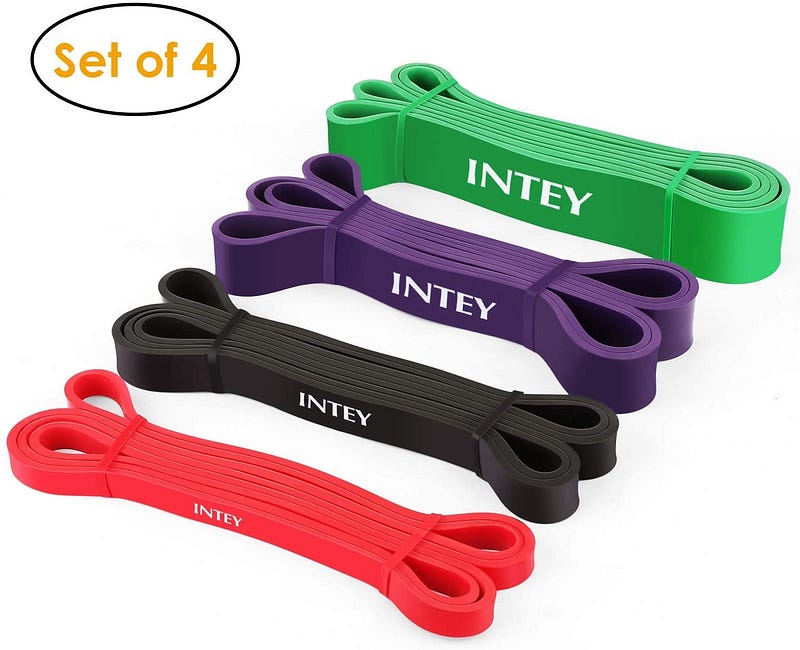
First, resistance bands. They’re giant rubber bands, and there are countless strength training and stretching exercises you can do with them. They’re inexpensive and can be stored in a bin when you’re not using them. If you have a big metal pole in your basement you can attach them to that, or you can screw in a wall anchor to loop them through. They’re also portable, so you can take your workout to the park or the woods and use playground equipment, exercise equipment, or even trees as your anchor! Look for a set of different strength bands so you can progress in exercises and use them for different body parts.
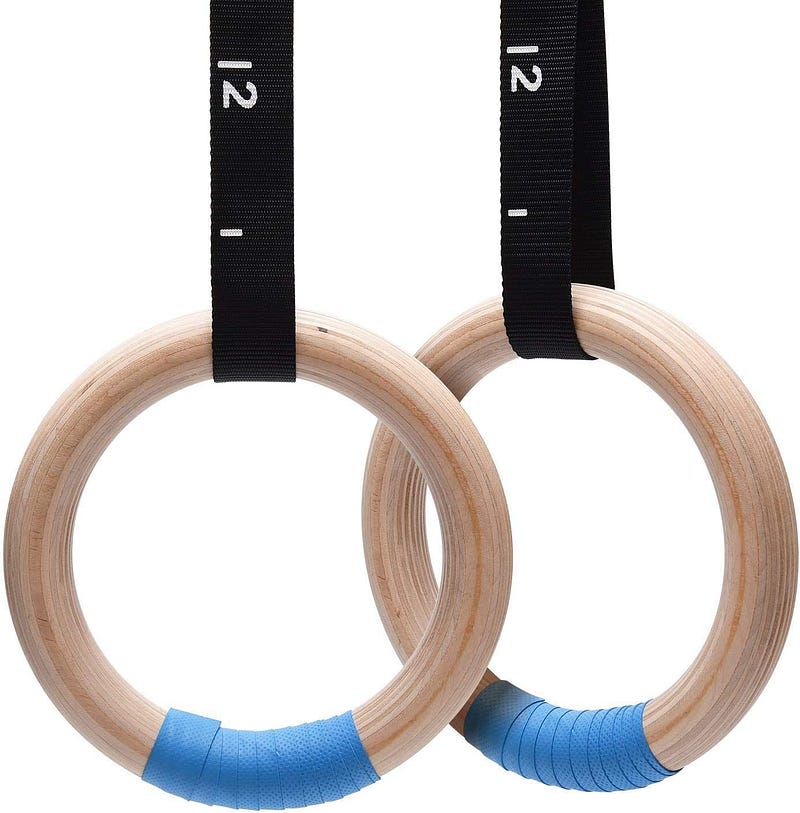
Second, adjustable rings. Like with the exercise bands, these can be set up in several ways and are portable so you can take your workout to a park. I use ceiling anchors at home, though some people loop them around joists or even get a pull-up bar and loop them around those. Look for ones whose straps have numbers on the bands. Those let you quickly move to a known height for different exercises.
ALTERNATIVE OPTION: Lots of people buy pull-up bars instead of rings and those are great options as well. They can be permanently installed, added to a doorway, or pressure locked inside a door frame. The only downside is that they’re more limited in where you can set them up and what exercises you can do with them. Since most non-pull-up exercises can be done in other ways, though, it’s still a good option.
Finally, an app. Not at all required, but there are some good ones out there to help you track your progress while also timing your sets in ways that are specific to this kind of workout. I currently use Progressive Workouts on my Android device. It has worked well for me, has great videos of most of the exercises, and lets me add in other routines as well. Another app that gets good reviews is Fitloop (Android and iOS versions).
And that’s it! Rings and resistance bands are enough to have a great workout in a small space (or in a park) and can be stored away when you’re done.
Minimal equipment strength training
In my research, I stumbled onto a dark corner of the internet: Reddit. On Reddit, there’s a group of people who dedicate themselves to determining the optimal bodyweight strength workout for various levels of people. They base their workout plans on the best available research on the subject. They are /r/bodyweightfitness, and have been at it for years. They call their workout the Recommended Routine. I don’t suggest you go down the rabbit hole of reading everything they’ve written until you’ve tried it, but if you’re the type to do some more research then their FAQ will answer most of your questions.
What I found was a workout routine that stressed slow and constant progression, included a lot of data and discussion, and described alternative options depending on your available equipment and ability. The progressions kept it interesting, the slow progress meant less chance of injury, and the data correlated with my own research.
The way it’s described there can be a bit difficult for some folks to decipher, so let’s walk through it in brief.
A key point is that this routine is done three times a week.
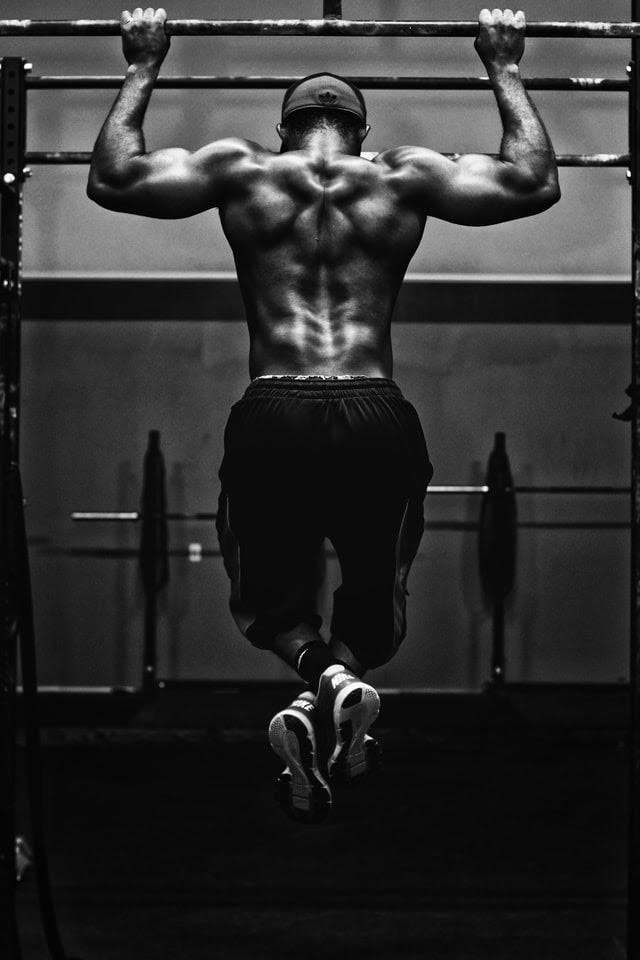
Warmup
To get started, the first section is a general warmup and is pretty easy to follow. They include videos describing each exercise and some alternate options.
It progresses through a shoulder warmup using the resistance bands, squat reaches, wrist work, core stabilization, pull-up form sets, light dips sets (use two stable chairs or two tables if you don’t get rings), squats, and “hinge” work like curls or deadlifts.
If this sounds like a lot, that’s because it is! The first time you try it you’re going to spend more time looking at the variations and videos than doing the actual workouts. Don’t worry about it. Within a week you’ll get through the warmup in ten minutes or less.
Strength Building
Here’s where this workout is a bit different. It does not simply advise you to “do X sets of an exercise Y times in a row”. Instead, it outlines very specific pairings of exercises with timed breaks. Remember, this is training for strength, not cardiovascular exercise.
So the goal is to start with three sets of 5 with 90 seconds of rest after each exercise. Each day, if you’re able, add one repetition in total. For example, if you are doing pull-ups and squats as a pair, your days might look like this:
- Day 1:
- 5 pull-ups, rest 90 seconds, 7 squats, rest 90 seconds
- 5 pull-ups, rest 90 seconds, 7 squats, rest 90 seconds
- 5 pull-ups, rest 90 seconds, 7 squats, rest 90 seconds
- Day 2:
- 5 pull-ups, rest 90 seconds, 7 squats, rest 90 seconds
- 5 pull-ups, rest 90 seconds, 7 squats, rest 90 seconds
- 6 pull-ups, rest 90 seconds, 8 squats, rest 90 seconds
- Day 3:
- 5 pull-ups, rest 90 seconds, 7 squats, rest 90 seconds
- 6 pull-ups, rest 90 seconds, 8 squats, rest 90 seconds
- 6 pull-ups, rest 90 seconds, 8 squats, rest 90 seconds
- Day 4:
- 6 pull-ups, rest 90 seconds, 8 squats, rest 90 seconds
- 6 pull-ups, rest 90 seconds, 8 squats, rest 90 seconds
- 6 pull-ups, rest 90 seconds, 8 squats, rest 90 seconds
- …
When you get to 3 sets of 8 of any exercise, like the squats in the example above, you progress to the next exercise in the series and start with 3x5. For example, if you get to 3x8 on Assisted Squats, you replace those with regular Squats and start them at 3 sets of 5. You may not be able to always increase your reps, and that’s fine. If so, stay at that count the next time. The goal here isn’t “working to failure”, but rather to build muscle safely.
Here’s where you might start in the Row progression:
And here’s where you might end up for Rows if you follow the “Tuck Front Lever” progression:
Seems impossible, but these routines provide a path to really impressive and fun exercises.
Pairing 1: Pull-up and squat variations
Equipment: Adjustable rings or pull-up bar for the pull-up variations. For the squats, depending on the exercise path, you may need something to step up onto like a box or bench.
Can’t do a pull-up yet? Don’t worry. The progressions guide you through from the very beginning with exercises to build up to pull-ups. In fact, with all these, I’d recommend starting at the beginning of each progression to anyone starting for the first time. I came to this routine being able to do about three sets of 6 pull-ups. Not bad for a start, but when I tried some of the simpler variations, I found I was having trouble with an earlier step in the progression — Arch Hangs. To make sure I was building up my balancing muscles as well, I started over at the beginning of the progression and built my way back up to pull-ups. It definitely improved my form considerably.
Pairing 2: Dip and Hinge variations
Equipment: Adjustable rings, two sturdy chairs (be careful), or a counter that makes a ninety-degree angle for the dips. For the hinges, you have the option of incorporating resistance bands or weights if you want.
Remember this follows the same progression, starting at 3x5 of each exercise and progressing to the next one when you’re able to do 3x8.
The dip progressions work you up to doing dips, dips on the rings, or even handstand pushups. Each variation starts with working towards a simple hold, so don’t worry about picking a difficult end goal.
The hinge progression can use bands or body weight to do body curls, or you can work through deadlifts and eventually add weights. Remember, milk jugs can be used as a poor man’s kettlebell for simple exercises!
Pairing 3: Row and pushup variations
Equipment: Adjustable rings, a sturdy table, or a pull-up bar with your feet raised to some surface for the rows. You can also use something to elevate your feet (a box or stool or chair) for the push-ups. As with the dips, be careful to use something sturdy.
For the row portion of the routine, it starts working towards bodyweight rows, where you use rings to pull your body upward in a reverse push-up motion. Once you’re through the beginning exercises, you can start working towards other interesting exercises on the rings. My personal favorite is the Tuck Front Lever and further progressions shown in the video above.
The push-up progression eases you into traditional push-ups if you haven’t done those regularly. Those build great strength. When you’re ready, you might advance to ring push-ups or even planche push-ups!
Core work: Anti Extension, Anti Rotation, and Extension variations
Equipment: All kinds of things can be used, but the adjustable rings and resistance bands are ideal here.
The basics are that you work through some core exercises where you use your core to resist gravity or an exercise band. The Anti Extension portion has you doing body crunches of various kinds, the Anti Rotation portion has you twisting your core, and the Extension portion has you straighten your body in something like a leg press.
This one has a different count and timing pattern. Instead of starting with 3x5 and going to 3x8, start with 3x8 and go to 3x12 for your core work. Rest only 60 seconds between these exercises.
That’s it!
I like to do some stretching as a cool down after my workout, but that’s up to you. You’re done!
Again, reading through the workout, it might seem like a lot, and the first few times you go through it, it’s likely to take a full hour and a half. It takes time to review all the different variations and watch the videos. You’ll be amazed at how great other people look doing these exercises (I was certainly impressed) and provides a great motivation. After a few days it settles down into about a 1 hour workout you can do three days a week. If you’re consistent, you’ll be doing some really solid strength training work.
My personal experience with several months of this has been excellent. People have commented on my physique improving, my strength has obviously gone up, and I haven’t injured myself once. That last point is the real miracle for me given my history of sports injuries.
Hopefully this will serve as some inspiration for those of you who want to do something to get moving but are stuck at home. It is truly possible to do a great home workout with minimal expense and space. Please share your experiences with home workouts in the comments section below. Stay healthy!

Citizen Upgrade is a community of experts covering technology, society, and personal development. Visit us at our website, on Facebook, or on Twitter.

You just read another post from In Fitness And In Health: a health and fitness community dedicated to sharing knowledge, lessons, and suggestions to living happier, healthier lives.
If you’d like to join our newsletter and receive more stories like this one, tap here.


