avatarBoredGeekSociety

Free AI web copilot to create summaries, insights and extended knowledge, download it at here

2571

Abstract

b>: miniGPT4 can guide users through cooking processes by analyzing images of food dishes.</li></ol><figure id="f9d0"><img src="https://cdn-images-1.readmedium.com/v2/resize:fit:800/0*ohDrWFIqEpjlabQp.png"><figcaption></figcaption></figure><h2 id="e84c">Model Architecture</h2><p id="1047">miniGPT4’s architecture consists of a vision encoder with a pretrained ViT and Q-Former, a single linear projection layer, and the advanced Vicuna large language model.</p><p id="0807"><b>Only the linear layer requires training to align the visual features with Vicuna, making miniGPT4 computationally efficient!</b></p><figure id="0773"><img src="https://cdn-images-1.readmedium.com/v2/resize:fit:800/0*i_nLS8MNp8c5R0D6.png"><figcaption></figcaption></figure><h2 id="d4b6">Training Process:</h2><p id="f5f5">The team discovered that pretraining on raw image-text pairs could produce unnatural language outputs with issues like repetition and fragmented sentences.</p><p id="8038">To address this, <b>they curated a high-quality, well-aligned dataset for the second stage and fine-tuned the model</b> using a conversational template. This step proved crucial in improving the model’s generation reliability and overall usability.</p><h1 id="83a8">What made miniGPT possible so fast? The Two Major Improvements: Blip2 and Vicuna</h1><p id="1246">The story of miniGPT4 begins with two key advancements:</p><ol><li><b>Blip2</b>: A cost-efficient method for building state-of-the-art (SOTA) multimodal models that combine images and text.</li><li><b>Vicuna:</b> Fine-tuning Meta’s large language model, LLaMA, with AI-generated instruction to create ChatGPT-like models.</li></ol><figure id="83cf"><img src="https://cdn-images-1.readmedium.com/v2/resize:fit:800/0*gjyLPCK7Ao-k5OQa"><figcaption></figcaption></figure><h2 id="a481">The Emergence of LLaMA and Alpaca</h2><p id="13e7"><b>LLaMA, Meta’s leaked large language model, provided the AI community with a fully open-sourced model.</b></p><p id="56e3">This sparked Stanford’s ingenious idea to ask ChatGPT to generate 50,000 instructions and fine-tune LLaMA, resulting in the instruct model, <b>Alpaca</b>.</p> <figure id="5ac8"> <div> <div> <img class="ratio" src="http://placehold.it/16x9"> <iframe class="" src="https://cdn.embedly.com/widgets/media.html?type=text%2Fhtml&amp;key=a19fcc184b9711e1b4764040d3dc5c07&amp;schema=twitter&amp;url=https%3A//twitter.com/BoredGeekz/status/1637388437547253763&amp;image=https%3A//i.embed.ly/1/image%3Furl%3Dhttps%253A%252F%

Options

252Fabs.twimg.com%252Ferrors%252Flogo46x38.png%26key%3Da19fcc184b9711e1b4764040d3dc5c07" allowfullscreen="" frameborder="0" height="281" width="500"> </div> </div> </figure></iframe></div></div></figure><p id="ae37">Alpaca’s development in groundbreaking in <b>its ability to compete with ChatGPT for just a few hundred dollars, demonstrating the power of open source models and affordable datasets!</b></p><h2 id="17a7">Vicuna: A Game-Changing Fine-Tuned Model</h2><p id="a1f9">Inspired by Alpaca’s success, another team sought to improve the dataset used for fine-tuning and build a new model on top of LLaMA.</p><p id="d432">This fine-tuned model, <b>Vicuna, is comparable to Bard and ChatGPT </b>and serves as the base model for miniGPT4!</p><p id="905a">Vicuna brings a couple of improvements:</p><ul><li>A quality dataset 70k human conversations!</li><li>A larger context (from 512 tokens → 2048 token. ChatGPT is limited to 4k tokens todays)!</li></ul><figure id="84a6"><img src="https://cdn-images-1.readmedium.com/v2/resize:fit:800/0*KBWEAgOcGF4pSskf"><figcaption></figcaption></figure><h1 id="cc12">The Rapid Progression: Alpaca to miniGPT4</h1><p id="de8a"><b>The impressive part of this story is the speed at which these advancements unfolded. In just four weeks since the release of Alpaca (March 2023), an open source multimodal model with similar features to GPT4, was created and released!!</b></p><p id="95e8">The rapid evolution from Blip2 to miniGPT4 demonstrates the potential of open source models, affordable datasets, and efficient compute resources. With these tools in hand, the AI community can expect even more astonishing breakthroughs in the months to come.</p><p id="112c">If you like this topic, please consider supporting us: 🔔 <b><i>clap </i></b>& <b><i>follow </i>🔔</b></p><h1 id="7a83">Conclusion & miniGPT4 Resources</h1><p id="6db9">To learn more about miniGPT4 and see it in action, check out these resources:</p><ul><li>Test miniGPT4 and find the paper: <a href="https://minigpt-4.github.io/">https://minigpt-4.github.io</a></li><li>Watch a 1-minute video showcasing miniGPT4: <a href="https://youtube.com/watch?v=__tftoxpBAw">https://youtube.com/watch?v=__tftoxpBAw</a></li></ul><p id="6184"><b>The story of miniGPT4 is a testament to the relentless innovation in the field of AI. As we continue to push the boundaries of open source models and cost-efficient methods, the possibilities are truly limitless. There’s no better time to be part of the AI revolution!</b></p></article></body>

MiniGPT4 competing with GPT4? A New Era in Open Source AI Models

Towards competing against GPT4 through fast groundbreaking open source development!

The world of AI is rapidly evolving, and the development of miniGPT4 is a testament to that.

In just a few short weeks, a series of groundbreaking advancements have culminated in an open source model that rivals GPT4!

In this blog post, we’ll take a closer look at the journey that brought us to this exciting tipping point, from the inception of Blip2 and LLaMA to the creation of Alpaca and Vicuna, and finally, to miniGPT4 itself.

If you like this topic, please consider supporting us: 🔔 clap & follow 🔔

What is miniGPT4 and what can it do?

Capabilities in a nutshell

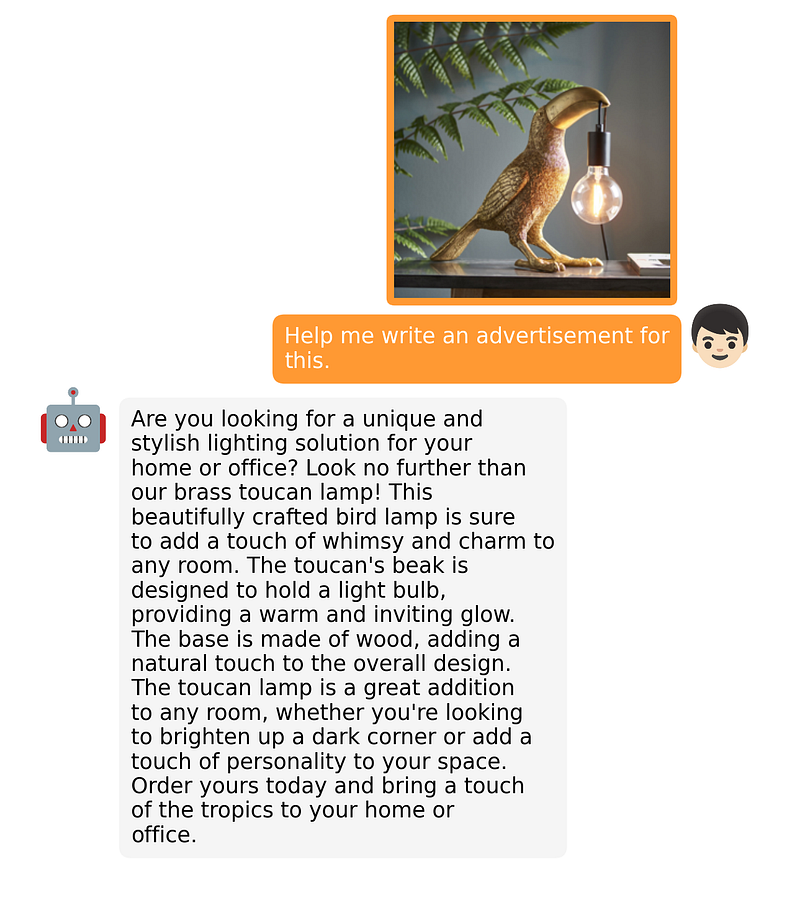
miniGPT4, an impressive AI model, enhances vision-language understanding by combining advanced large language models with visual encoders. It demonstrates a range of capabilities similar to those seen in GPT-4:

  1. Detailed image description generation: miniGPT4 can generate detailed descriptions for images, providing context and insight into the visual content.
  2. Website creation from hand-written drafts: Just like GPT-4, miniGPT4 can generate websites based on hand-written text, simplifying the web development process.
  3. Writing stories and poems inspired by given images: miniGPT4 can create stories and poems based on visual prompts, demonstrating its creativity and language understanding.
  4. Providing solutions to problems shown in images: miniGPT4 can analyze images that depict problems and generate relevant solutions.
  5. Teaching users how to cook based on food photos: miniGPT4 can guide users through cooking processes by analyzing images of food dishes.
Model Architecture

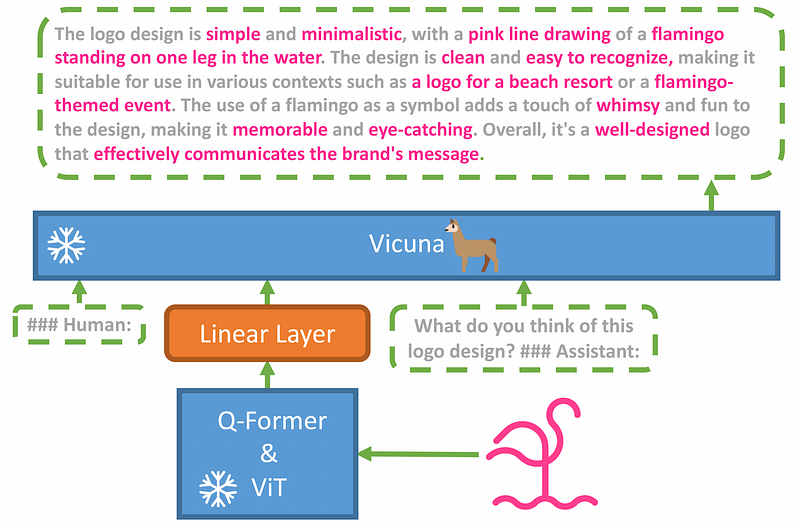
miniGPT4’s architecture consists of a vision encoder with a pretrained ViT and Q-Former, a single linear projection layer, and the advanced Vicuna large language model.

Only the linear layer requires training to align the visual features with Vicuna, making miniGPT4 computationally efficient!
Training Process:

The team discovered that pretraining on raw image-text pairs could produce unnatural language outputs with issues like repetition and fragmented sentences.

To address this, they curated a high-quality, well-aligned dataset for the second stage and fine-tuned the model using a conversational template. This step proved crucial in improving the model’s generation reliability and overall usability.

What made miniGPT possible so fast? The Two Major Improvements: Blip2 and Vicuna

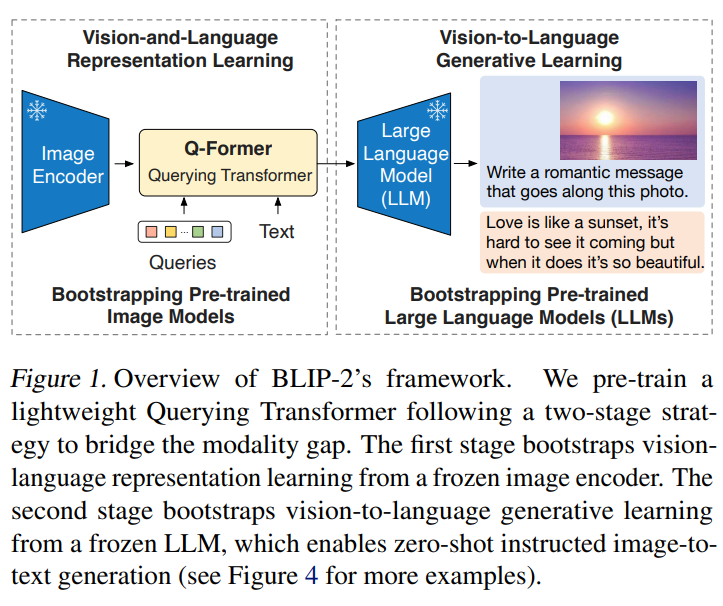
The story of miniGPT4 begins with two key advancements:

  1. Blip2: A cost-efficient method for building state-of-the-art (SOTA) multimodal models that combine images and text.
  2. Vicuna: Fine-tuning Meta’s large language model, LLaMA, with AI-generated instruction to create ChatGPT-like models.
The Emergence of LLaMA and Alpaca

LLaMA, Meta’s leaked large language model, provided the AI community with a fully open-sourced model.

This sparked Stanford’s ingenious idea to ask ChatGPT to generate 50,000 instructions and fine-tune LLaMA, resulting in the instruct model, Alpaca.

Alpaca’s development in groundbreaking in its ability to compete with ChatGPT for just a few hundred dollars, demonstrating the power of open source models and affordable datasets!

Vicuna: A Game-Changing Fine-Tuned Model

Inspired by Alpaca’s success, another team sought to improve the dataset used for fine-tuning and build a new model on top of LLaMA.

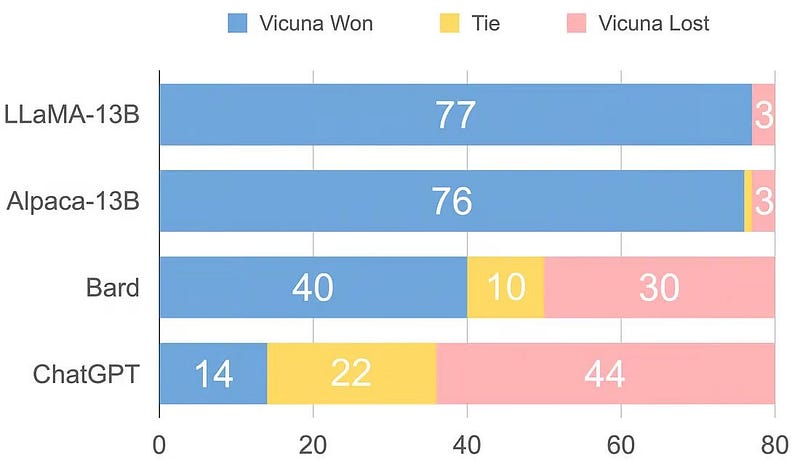
This fine-tuned model, Vicuna, is comparable to Bard and ChatGPT and serves as the base model for miniGPT4!

Vicuna brings a couple of improvements:

  • A quality dataset 70k human conversations!
  • A larger context (from 512 tokens → 2048 token. ChatGPT is limited to 4k tokens todays)!
The Rapid Progression: Alpaca to miniGPT4

The impressive part of this story is the speed at which these advancements unfolded. In just four weeks since the release of Alpaca (March 2023), an open source multimodal model with similar features to GPT4, was created and released!!

The rapid evolution from Blip2 to miniGPT4 demonstrates the potential of open source models, affordable datasets, and efficient compute resources. With these tools in hand, the AI community can expect even more astonishing breakthroughs in the months to come.

If you like this topic, please consider supporting us: 🔔 clap & follow 🔔

Conclusion & miniGPT4 Resources

To learn more about miniGPT4 and see it in action, check out these resources:

The story of miniGPT4 is a testament to the relentless innovation in the field of AI. As we continue to push the boundaries of open source models and cost-efficient methods, the possibilities are truly limitless. There’s no better time to be part of the AI revolution!

Artificial Intelligence
Gpt 4
ChatGPT
NLP
Open Source
Recommended from ReadMedium