
Mindset Shift: From Fiction To Nonfiction
How I learned the hard way from reading fiction to nonfiction, and how to not get stuck or bored reading nonfiction.
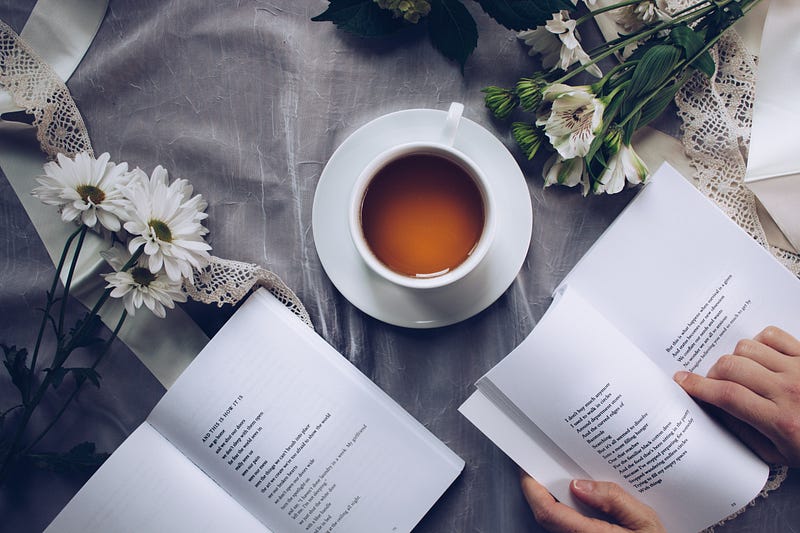
I have always loved reading since I was 4–5 years old. I remember there was a small local library near my house — only about 80 feet away — that I used to visit almost every day. I would stay there for hours reading (and playing, as to how a normal child should be) whatever I wanted to until the sun went down.
Having the habit of reading since my pre-school days, during my early elementary school years I intensely got into the world of fiction. I read short stories, novels, poetry, fairytales, comics, fables, you name it. There were no “PDF e-books” back then but the passion for reading had possessed my soul as I got addicted to reading nonfiction books daily, especially novels. My level of enthusiasm was I could stay home all day and sit on my couch reading 2–3 different novels per day.
The fictional universe has inspired me so much that I started writing poems and short stories on the side, even I wrote my own novels. I finished my first 253-page novel at the age of 11, all handwritten. Even though it has never been published, I was only doing it for fun, hence I never regretted getting finger callus for staying awake day and night writing all these works of fiction. Only years later I knew that it affected how I see the world through my imaginative lens.
The reality kicks in
As I grew older, I read lesser books because the internet — or more precisely, online social networking — stepped into my world. Thanks, Mark Zuckerberg — you have awakened me from my fantasy world (and made me enter another one, haha the irony).
Moreover, I had a social life, too (even though it was still the internet that changed everything). The rush and pressures of modern life got me carried away somehow. As things took turns in my life, I saw that the society I lived in became weirder and weirder every single day (I refused to see that I am the weird one), but I felt like I didn’t know what was going on. I wanted to know why things are the way they are, I wanted to understand the world and how it works. I realized I have to do something.
Welcome to the real world
And so, my journey began. I started buying nonfiction books, downloading e-books, following more useful accounts on social media, etc. I started reading nonfiction books a little persevered only in the last 3 years. I was (and still am) far from insightful but I really wanted to change for the better. I’m hungry for knowledge more than ever.
But as you might already know, it’s not that easy. As a person who has been exposed to fiction books since the age of 5, when I started reading nonfiction, I am perplexed as to why this factual and informative literature became a handful? I couldn’t read it all day long like I used to do when reading fiction, has my brain become duller because I stopped reading books (not articles or e-books) for some period of time? I think so.
And even though I was quite bright in my school days — not to brag, frequently getting top ranks in class — when entering college, I realized that there were so many things I didn’t know about the world. I felt so stupid and ignorant. The reality of life slapped me hard in the face.
But I know that it’s never too late to learn.
A change in direction: A Guide From Fiction to Nonfiction
The first thing I noticed when reading nonfiction was: it focused on actual events and people, all based on the real world, whereas fiction is created from the imagination. Therefore, I have to put aside my flights of fantasy when reading nonfiction and focus on the mechanics of my mind.
#1: Nonfiction is not “boring”
The reason why most people find nonfiction “boring” is because it isn’t focused on characters, settings nor plot as the way fiction does.
However, I believe that the main reason we find nonfiction boring is that we don’t have a clear goal. What’s your goal in reading nonfiction? Because it’s a classic, a hot best-seller, or because you wanted to actually ‘learn something’? It’s only natural to quickly get bored when we don’t have strong intentions to begin with. People usually read fiction for amusement, while nonfiction is for enlightenment. Whatever goal you want to achieve, find it and stick to it.
#2: If fiction is a playground, nonfiction is a workout for the brain
I can’t read nonfiction just to feel or experience something that will fly my mind away to the sky. Rather, before reading nonfiction, I have to stand tall on the ground and ‘warm up’ for my mental set. It takes more time to read nonfiction because I often have to stop to think about the concepts and ideas, think over the given facts and analyze them.
But the underlying reason why it was uneasy for me to read nonfiction is not that it’s ‘boring’, time-consuming, or is difficult to swallow, as it turns out, it’s because I’ve been reading all of these nonfictions the wrong way.
The Mindset Shift
I have to completely change my way of thinking to read nonfiction. That being said:
When reading nonfiction, the mindset is not ‘how to read’ it but rather ‘how to understand’ it.
In nonfiction, don’t focus on reading word-by-word like reading fiction, but focus on understanding what the author has to say, the perspective he/she offers, the opinions or facts the book conveys.
Fiction requires us to enter the world of the author, develop the imagination of the fictional story so that we can get the sensations of experience from there. Meanwhile, the goal of nonfiction is to make a point and asks us to learn from it.
#3: It’s okay to stop halfway through
Just like when we turn away from reading a hilariously bad novel, we can do that too for a self-help book that offers no help whatsoever. Whether it’s because we don’t like it or because it’s merely not useful for us, it’s okay to stop reading halfway through. Sometimes this kind of book becomes useless when we as the reader are not willing to learn from it, and how are we supposed to learn if we don’t like it from the first place? Just quit. You simply will not read every book in your lifetime. And yet, there are many other interesting books so we can try other books from other authors, find the ones that are more compelling for you.
#4: It takes power, process, and practice
Since reading nonfiction is like a workout for the brain, the important thing is to practice one step of a time until the mind is trained. Focus on the marginal process. The human brain has the ability to learn and grow — a process called brain plasticity — but for it to do so, we have to train it on a regular basis. Eventually, your cognitive skills will improve and you’ll expand your horizon because your brain has become more flexible. You can easily read any nonfiction from a social media influencer’s autobiography to a heavy philosophical book.
#5: What’s in it for me?
In the end, you have to ask yourself whether this book is worth your time and beneficial to your life or not. If it doesn’t give you something to learn in the real world, you tried in vain to make yourself grow as a person. Understanding what you read can bring change in the way you think and behave, whereas merely knowing something makes no difference to your life.
Knowledge is power but powerless if you don’t acknowledge it. It becomes a real strength only when you truly understand it, and thus apply it in real life. As to how Dale Carnegie put it:
“Knowledge isn’t power until it is applied.” — Dale Carnegie
The countless hours I spent reading fiction didn’t make me regret it one bit. Fiction has actually changed my life (and it still does). For those of you who like to read fiction as well, it’s not a waste of time, fellas. There are many benefits of reading fiction, such as it helps us develop empathy, a theory of mind, and critical thinking. However, for reading nonfiction, some say that it provides far more important benefits such as improves memory and analytical skills, predicts increased social acuity, and a sharper ability to comprehend other people’s motivations.
Nowadays, I don’t read fiction as often as I used to, and yet it doesn’t make me think that nonfiction is better than fiction. Both are equally important to me. It’s just a matter of priorities. For me, here and now, knowing the fact that there are many things that I don’t know in this vast and ever-growing world, nonfiction helps me make sense of the world and encourages me to consciously grow as a person.
I am grateful that I chose to start reading nonfiction because I was able to see the world through a new, bigger perspective.
And my life is more balanced ever since then.
© Annisarhmw