Mindhack: Strengthen Your MetaPhysique
The Quantum Physical Fitness Revolution
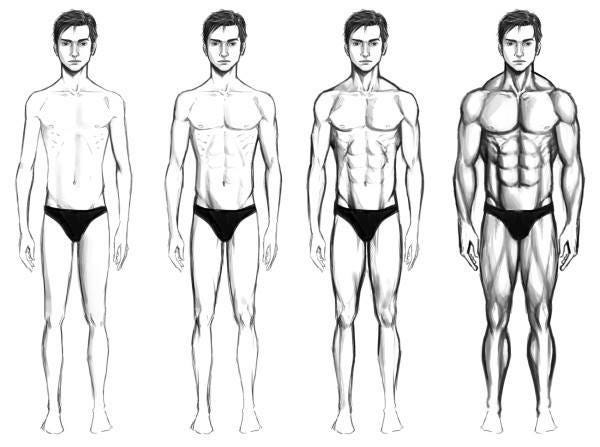
You can get ripped abs just by thinking it. But first you need to learn how to think. Then you need to think hard core. This is the science behind the technique of abs-traction, the mystery of The Abs•Tract: Core Philosophy, the ultimate metaphysical fitness program. By practicing kinesthetic visualizing through mental imagery of the body, you increase the strength of the neocortical output signal, which activates and increases muscle strength.
This doesn’t mean you can literally sit around and manifest muscles, but you can in a sense will yourself to strength. For example, if you break your arm in an accident, you should imagine yourself exercising it, because it keeps the neural pathways strong. This will maintain a higher level of muscle strength, as well as improve recovery time.
Visualization also increases proprioceptive (spatial awareness) abilities through the cognitive mapping of the body schema. This gives new meaning to the phrase “know thyself.” Through conscious refinement of one’s body schema and exercise of the imagined self, one can leverage their insight to multiply muscle strength.
This technique is supported by four papers on the mind-body interface. Two papers about the mental-muscle connection, and two papers about body schema mapping. Below that, two more papers have been added on the effect of placebos and power posing to enhance fitness. Through proper mental and physical training, one can optimize mind-body fitness, (dis-)embodied in the concept of a ‘MetaPhysique’; the metaphysical/ conceptual self.
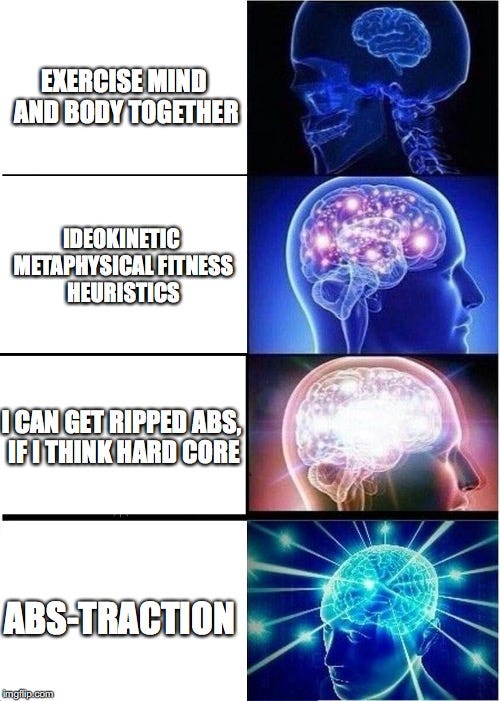
The MetaPhysique
The first paper From mental power to muscle power — gaining strength by using the mind (2004) concludes that “mental training employed by this study enhances the cortical output signal, which drives the muscles to a higher activation level and increases strength.”
More recent research along these lines is carried out in The power of the mind: the cortex as a critical determinant of muscle strength/weakness (2014). “Mental imagery has been shown to activate several cortical areas that are involved with actual motor behaviors” [and] “regular activation of the cortical regions via imagery attenuates weakness and VA (voluntary action) by maintaining normal levels of inhibition.”
In laymen’s terms, merely by thinking of the exercise, the motor-neural pathways are activated, and the loss of strength associated with immobility will be reduced. The papers go on to cite that this accounts for up to 50% of strength. The particulars beyond this are quite boring, and one is flabbergasted by the depth of empirical science to prove the obvious, but it highlights the importance of training mind and body together. Most important, it emphasizes the abstract power of the mind, and that it does not labor for nothing.
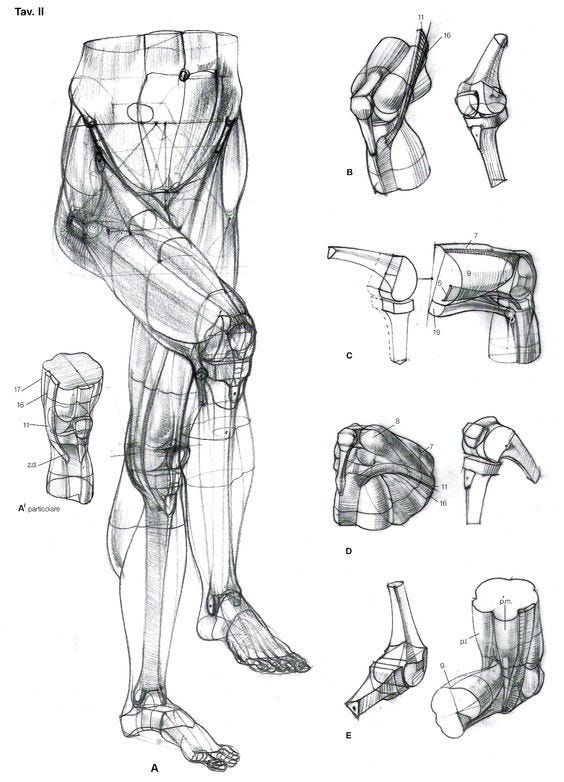
These images help break down anatomy into basic geometric mechanical relationships. It is the lucid abstraction of the human form.
Now that we know that we can mentalize our muscular anatomy to such effect, we must map out the body we will be puppeting. The next two papers explain how we construct a mental model of our physical selves; the MetaPhysique. According to the paper Neural representation of human body schema and corporeal self-consciousness (2014), the left fronto-parietal network appears to control the inverse kinematics of movement, while right creates the holographic projection of the self.
“Neuroimaging techniques have revealed neuronal substrates for human body schema,” as somatic signals are integrated up through the motor cortex into “higher-order somatosensory parietal cortices… capable of representing a postural model of the entire body.” In order words, scientists are able to measure brain activity representing the imagined self in coordinate space.
This latter point is addressed more explicitly in the paper Tactile remapping: from coordinate transformation to integration in sensorimotor processing (2015) “Tactile localization entails the transformation of the initial skin-based location into an external reference frame that accounts for body posture and subsequent flexible integration of these two reference frames… We suggest that spatial localization is best viewed as a process of integrating multiple concurrently active spatial representations rather than a sequential transformation process.”
In a way, this is just the banal proof of what we already know intuitively — that visualization is good, and it works — but the point of articulating it allows us to refine the process. The theme of mapping reality from our senses to our minds is one of abstraction, as has been discussed with respect to human evolution and worldview formation in The Abstraction of Jordan Peterson, but here it is of the flesh.
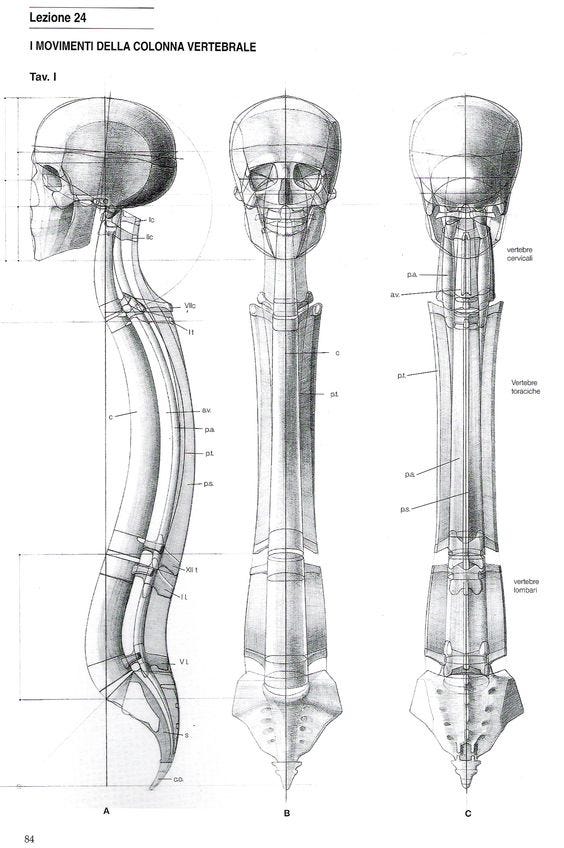
We can abstractly start to build this character in our imagination. Take our malformed homunculus and sculpt a superhero action figure. What is human movement potential if not to have the stature of gods? We don’t need to know exactly how it works at the biological level in order to do this (that is the subject of the papers), but we do have to understand the principles and geometry behind it. We aren’t stick people. Fundamentally, movement is figured in terms of the relationship between the skeletal and muscle layers of the body, controlled by the nervous system.
Our curved bones and spiralled muscles are part of a dynamic system, mechanically moving 206 bones with over 600 muscles. We need a simple set of rules and first principles to entrain the mind-body projection (what I call the meta-physique).
For example, good posture could be defined as optimal spinal balance at maximum height under minimal tension. This is executed by the simple heuristic of keeping the crown of the head up, but it is actually engaged by certain muscle configurations. From such a benchmark of stillness, we can isolate body parts and move others independently, orienting our abstract self. Likewise, by countless more heuristics we can articulate the body in and through space.
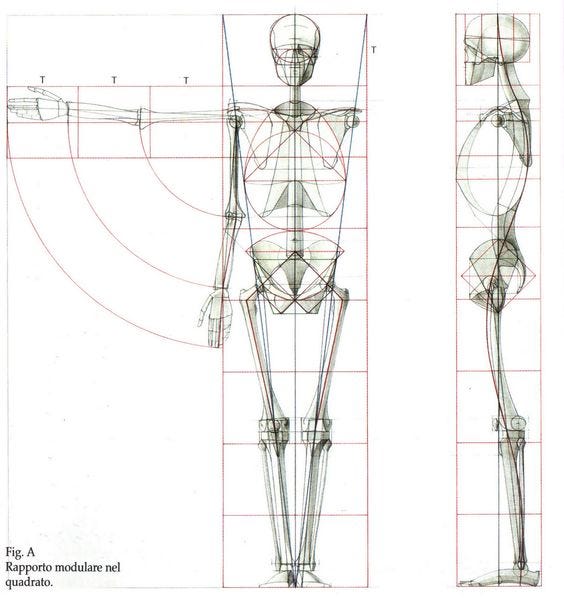
Actually, this field of inquiry has already been quite established with Human movement potential: its ideokinetic facilitation (1974) by Lulu Sweigard. The term ideokinesis — “imagined movement” — was developed back in 1920, by Mabel Elsworth Todd in The Thinking Body. Todd was one of a handful of pioneers transforming the dance and movement. Sweigard was a dedicated student of Todd who took it to the level of scientific verification.
This groundbreaking work systematizes the methodology of optimal movement. It is a conceptual precursor to the “functional movement” turn in sports medicine of this decade. The essence of it is energy conservation and stability achieved through advanced coordination. The scientific studies above make no reference to ideokinesis, reflecting a naivete about this experiential knowledge and qualitative field work.
It is typical of science in late capitalism, with it’s narrow focus and data fetishism, to miss the forest through the trees. The origin story of ideokinesis is noteworthy as well. Todd was impaired with childhood illness and later by an injury that forced her to have to literally learn to walk again:
“Soon after her graduation from the Keble School, Mabel suffered a back injury in a terrible fall from which it was feared she might never recover. For months, she struggled with pain and debilitating weakness until she found a way to take charge of her own recovery. Her high school study of physics served as the foundation for a rudimentary understanding of body mechanics that she expanded through further reading. Then, concentrating on specific aspects of anatomy and kinesiology as she attempted simple movements, Mabel gradually strengthened her body and improved her walking gait.” — ideokinesis.com
PRIME Movement
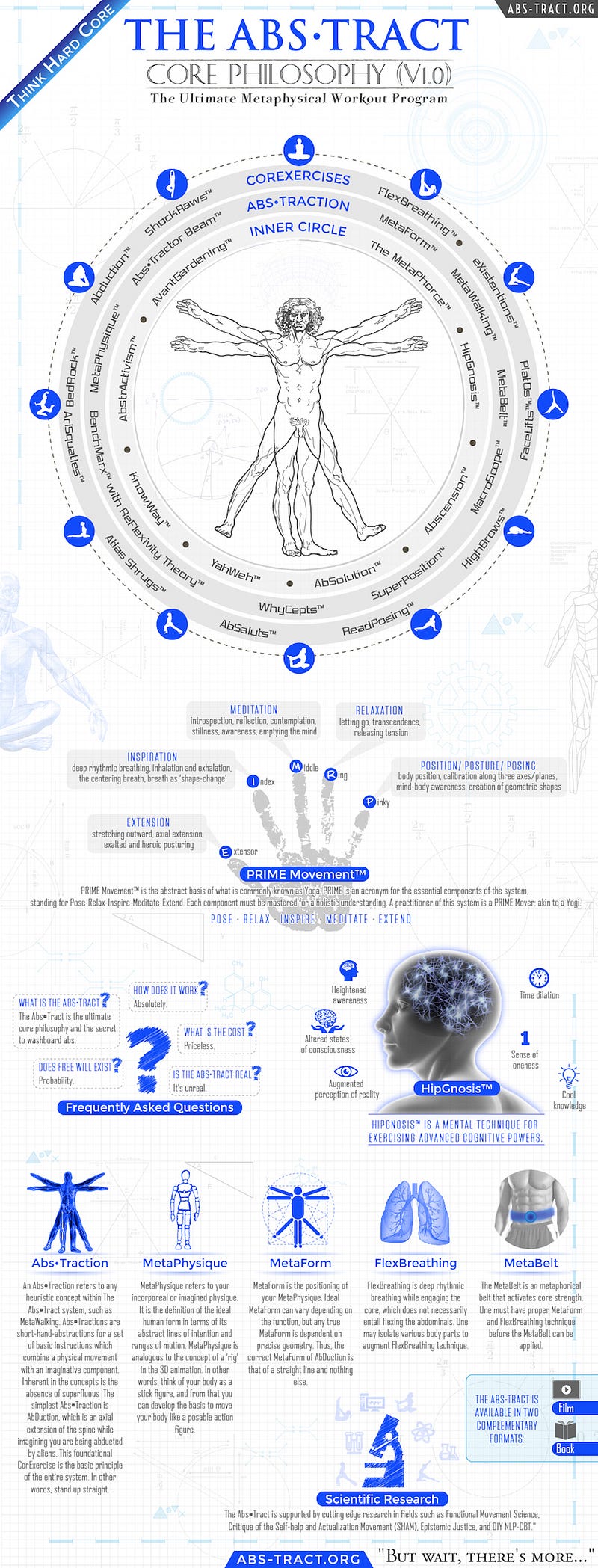
The idea of the MetaPhysque is precisely what is captured in The Abs-Tract technique of MetaWalking (tm), the ultimate mobilizing metaphor:
I cite those academic papers above not only as ‘proof’ for my claim of the secret of abs-traction (to get ripped abs by thinking it), but to illustrate how easy it can be to exploit and (mis-)construe overly-scientific papers in the context of a marketing gimmick. I’m not saying that’s what I’m doing — I think I’m invoking science within reasonable bounds, but also satirizing bad science. The irony is that no proof is necessary for some things, because its virtually self-evident. The scientific studies are almost made redundant when compared to the intuitive understanding of human movement through ideokinesis, for example. The proof is in the pudding.
The complete potential of human movement has been slowly determined by evolution through our exploring (mapping) the range of the physical body. Done in a systematic heuristic pattern to optimize discovery of the most efficient movement, we can discover and create algorithms for human movement. If we imagine early human attempts of this, we are essentially describing the prototypical iterations of yoga — the working of the body in geometric forms, often utilizing the principle of a plane, and rhythmic deep breathing, engaging the three diaphragms or bandhas.
As yoga literally means “union” of mind and body, it is the ancient and most abstract form of ideokinesis (I suppose we were ‘stick people’ in the very beginning). What makes yoga spiritual is the breathwork within and between each pose, which we discuss in the technique FlexBreathing. Of course, all of this goes all the way back to the ancient lost manuscript, the Abacus Tractatus. ;)
Now in the age of metamodernism, we are reconstructing archaic truths, recovering our lost wisdom, and undoing our psychic complexes that keep us physically inhibited. Cognitively, the process of mapping our movements involves complex computations of inverse kinematics; a coordinate programming system we are now using to teach robots how to move. Luckily we don’t have to think about that — we need only picture exalted imagery and the rest takes care of itself, granted that you actually animate yourself and feel the correspondence between blueprints and body schema.
After that long detour into the details of scientific health research, let’s abstract back out to the basic premise: “mental imagery of strong muscle contractions increases strength” (Ranganathan et al. 2004). Something to keep in mind whether you work out or not.
Abstraction of the MetaPhysique is all about sharpening the focus of your mind, through imagination and will power, to maximize your fitness gains. Ideokinesis is ultimately predicated on intimate knowledge of the body, and the schematic diagrams give us objective models to internalize. Finally, Abs-Traction is the literal technique of engaging the core by contracting the transverse abdominus, as in to ‘tract the abs.’
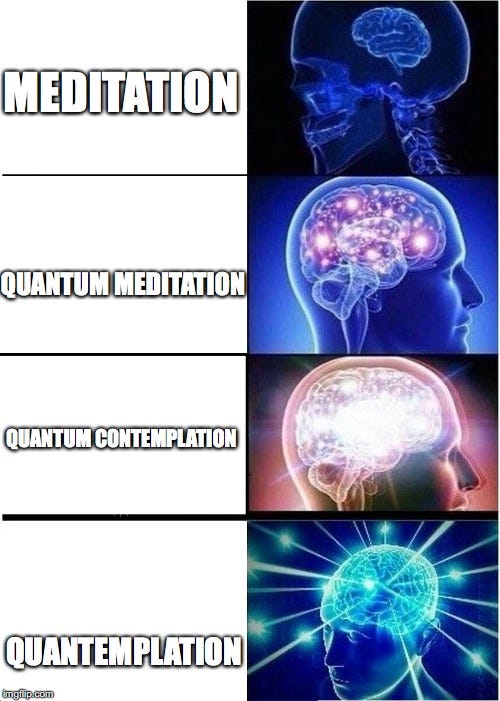
It is not wishful thinking, or woo-woo magic, but real power-knowledge — what Foucault really meant. This secret technique enables us to get absolutely shredded without having to waste money and time on fitness gimmicks and expensive equipment. Where this gets next level is that the mind is actually a quantum meat computer, and consequently capable of projecting a resolution of the MetaPhysique far beyond what is implied through ideokinesis, such as in lucid dreaming or astral projection.
To achieve these states of consciousness, we must go beyond meditation, abstracting much higher, to Quantemplation. But for the time being, these secrets are only available to initiates of the Core Philosophy. Join for details.
Quantum Physical Fitness
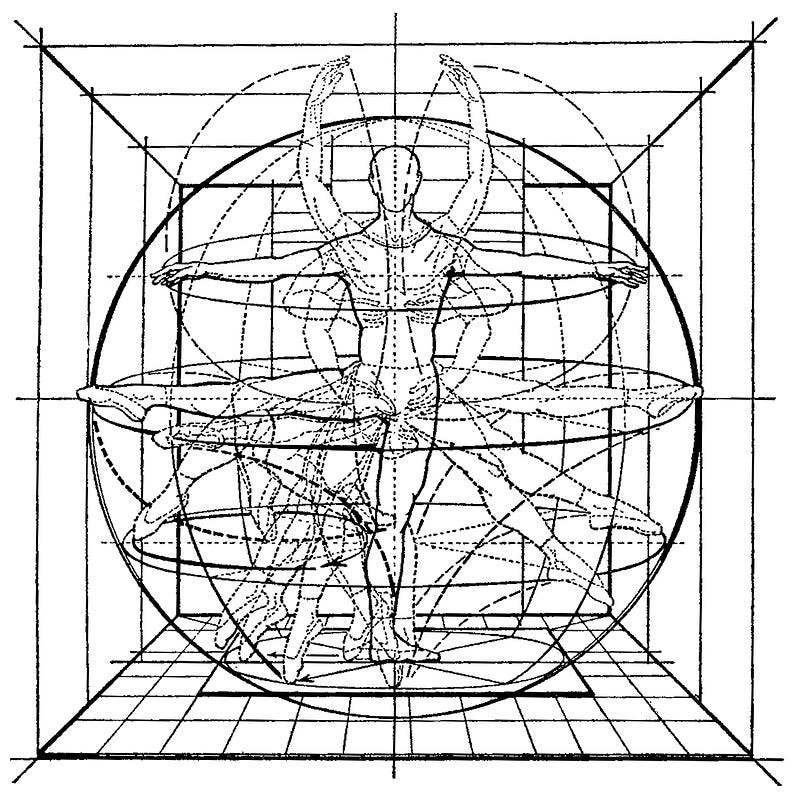
We can think of our ideokinetic holographic projection as a sort of quantum self (see “The Quantum Turn in Social Science” for more on that). The mental projection of our bodies into the world is described in terms of a “kinesphere” (pictured below). It’s like the Vitruvian man, but in a cube-sphere instead of a squared circle, and in even deeper superposition.
We have discussed the power of visualization, now we turn to the power of belief. The Science of Steroids reviews several studies that show placebos are as effective as steroids themselves. Dramatic results were achieved by bodybuilders who merely believed they were taking steroids. And when they were told they were taking placebos, their gains were lost. It is a testament to the power of intention and will. Expectations and actions in line with those expectations can produce incredible results. You can manifest muscles much easier if only you have the right mindset and faith.
“You’ve heard of the Bowflex. Well, think of this as the PlaceboFlex. And that’s how it works.” — David Vitruvius, The Abs•Tract
How can we tie all this together into a practical technique? I refer to Amy Cuddy’s famous paper and TED talk on power posing. It’s basically the act of positioning the ‘MetaPhysique’ — which we are discussing in this post — in an exalted way. It is akin to what we at The Abs•Tract describe in various heuristics such as MetaForm, SuperPosition, and standing in the Abs•Tractor Beam. Amazing that such a satirical fitness system can be based on science and also be better than the gimmicky snake-oily competitors out there.
“The results of this study confirmed our prediction that posing in high-power nonverbal displays (as opposed to low-power nonverbal displays) would cause neuroendocrine and behavioral changes for both male and female participants: High-power posers experienced elevations in testosterone, decreases in cortisol, and increased feelings of power and tolerance for risk” —Power Posing: Brief Nonverbal Displays Affect Neuroendocrine Levels and Risk Tolerance
However, of course, this is not really good science, its just using science to prove the obvious. A recent NY Times piece notes that others have failed to replicate Cuddy’s results, and there is a big methodological war within social psychology (of course there is; its at the fault line between psychology and sociology). Now, even one of the co-authors have distanced themselves from the famous paper, saying “I do not believe that ‘power pose’ effects are real.”
Well, we have a serious problem here, but we can solve it. The effects of power posing are both real and unreal. It’s the metamodern ‘both-and’ value again. Scientists keep failing to frame questions properly. It all depends on other factors, meaning, there are conditions and circumstances which could prove or disprove a given hypothesis, and this is the major blind spot of psych studies: sociological ignorance.
Power posing can be useful because of the placebo effect, or to correct posture by holding a better stance, etc. Obvious stuff. You have nothing to lose and much to possibly gain by power posing, just know that that alone may not to radically transform your life. The only thing that will, is will itself. And that, is how you strengthen your MetaPhysique to get ripped abs.
The Abs-Tract Organization is globally oriented meta- think tank, specializing in ‘abstraction’, but also moonlights as a mystery school for metaphysical fitness. Follow us on Medium.
If you appreciate the work we do, please support us on Patreon for $1.
Learn more and join the conversation at http://www.abs-tract.org and on twitter @tato_tweets.