
Mindfulness Models
A Graphical Explanation with Mental Models
What will you learn? …
By the end of this blog you will be able to picturize the concept of Mindfulness in your Mind through very simple but effective Mental Models. You will be able to understand it better, since you will comprehend it through clear images, rather than vague philosophical text.
My Credibility?…
In the past few years, I have read quite a few books on Mindfulness, have subscribed to various Mindfulness apps, watched various Mindfulness related YouTube videos and practiced it on and off with various amounts of success. In this blog, I am going to share, the mental models that have worked for me the most, so that you do not have to go though all of that. So carry on reading…
What is Self Awareness and What is Mindfulness?
Self Awareness is one the primary pillars of Emotional Intelligence and is about knowing your emotions as they happen. What we are feeling and why we are feeling it? A brilliant, extremely effective, tried and tested way to develop Self Awareness is Mindfulness. Listening to guided mindfulness Apps or YouTube videos is not a bad idea as per my own personal experience. Guided mindfulness exercises teach you to observe your emotions, that are happening to you, at the moment.
Ok, but what is so great about knowing your emotions as they are happening?
Because only when you know your emotions in the the first place, would you, be able, to manage them effectively, which is the next step …
And what exactly do we mean by Managing our Emotions?
Managing our Emotions gives us the ability to handle distressing emotions, failures and tough situations in an effective way, so that, they don’t come in the way of what you want to do or achieve in life. Simultaneously, they also give us the power to strengthen the positive emotions, discouraging negative ones and aligning your actions more with what gives you joy. The world famous psychologist Daniel Goleman, stresses that, you can not avoid emotions from arising. However, once they do arise, being aware of them and being able to control them is very much within human capabilities.
But how? …..
The practice of Mindfulness, is about about the ability to observe your own mind as it thinks, functions and emotes in the present. But how do you do this? How can one observe their own mind? A simple action to perform but a difficult concept to grasp. That is where the following two Mental Models can help us, which I personally found very effective ….
Mental Model ONE — The Outdoor-Indoor Model: —

Picture, a mental model of yourself outdoors. It might either be nice and pleasant, or, it might be drizzling, or raining heavily, or there might be uncomfortably windy or cold or it might be unbearably hot. Now picture yourself indoors, in a nice and cozy air-conditioned room, watching the weather outdoors, through your big glass window, while relaxing on your comfy sofa and sipping your cappuccino. Your emotions are like the weather. You can not stop them from happening. However, what you can do, is minimize how it effects you in a negative way. Mindfulness, provides you the luxury of observing your emotions through the window, from inside the well protected cozy room. When the weather is good, you have the option of going out for a walk ( which is what Daniel Goleman means by engaging more and more with positive emotions). And when the weather is bad, mindfulness gives you the option of staying indoors. In a nutshell, it puts you in a power position. It helps you control your emotions, rather than your emotions controlling you.
Mental Model TWO— The Inverse Thinking Model: —
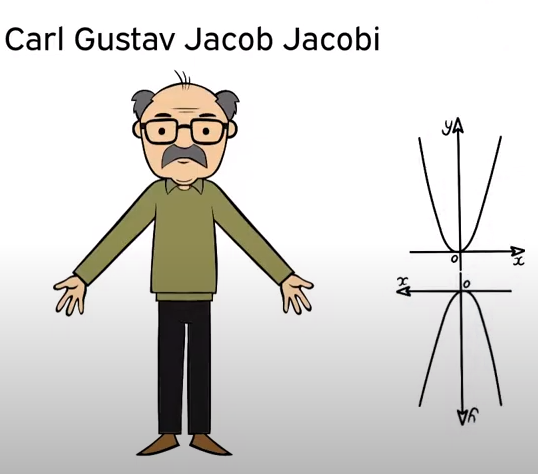
This is a concept first proposed by the German mathematician — Carl Gustav Jacob, who used it to invert mathematical equations to gain new mathematical problem solving insight. In the recent times, however, it was made popular by Charlie Munger ( Warren Buffet’s business partner) but was first pro. It is a counter-intuitive approach to problem solving and could be applied to anything in life. This inverse thinking model helps, because in many cases thinking how to create a problem is easier, than how to avoid it. For example, if someone has to think how to make her business more successful, she might think of all the ways she could possibly ruin it. Then avoid all all those things she just brainstormed.
In this context, the problem is — How to be Mindful? So you might begin with thinking, what are all the things around you and in your life, that distract you and stress you. Then avoid those things. Very simple.
Do a few controlled trials on yourself. Think of all the things that can distract you — like TV, Smart Phone, unhelpful frenemies and so on. One day, watch a lot of TV, and see how it effects your focus and concentration in doing what you want to do. Try different TV programs — one day a documentary, one day an action movie and so on. Repeat the same for all the activities or people in your distraction list. Note your findings. Take a print out and stick it in a prominent place. Now make sure you avoid the things that make you less mindful, when performing your core activities, in which you need focus and concentration.
Conclusion: Mindfulness, is a practice which has gone through several scientific studies and now, is a well accepted and well proven tool for mental health fitness. The idea simply is to keep you in the NOW. And why must you be in the NOW? Well… because thinking too much about the future makes causes anxiety and thinking too much about the past, causes depression ( irrespective of whether the past was pleasant or not). If the past was not pleasant, and you keep on ruminating on the mistakes you did, you become sad anyways. And if the past was better than what you have in the present, then the comparison makes you feel sad.
So, that is the logic of being in the PRESENT … being in the NOW. Mindfulness is the top tool to help you be in the NOW. And the two Mental Models proposed above, will help you practice Mindfulness in a more effective way, as they helped me. Thank you!!!
For more detailed understanding, please read:
— EMOTIONAL INTELLIGENCE by Daniel Goleman
https://uxplanet.org/emotional-intelligence-by-daniel-goleman-ae67c534d256