
NEUROGRAPHIC ART | AGEING | MIND BODY | CREATIVITY
Mindful Strokes: Unleashing Creativity Through Step-by-Step Neurographic Art
A calm meditative process
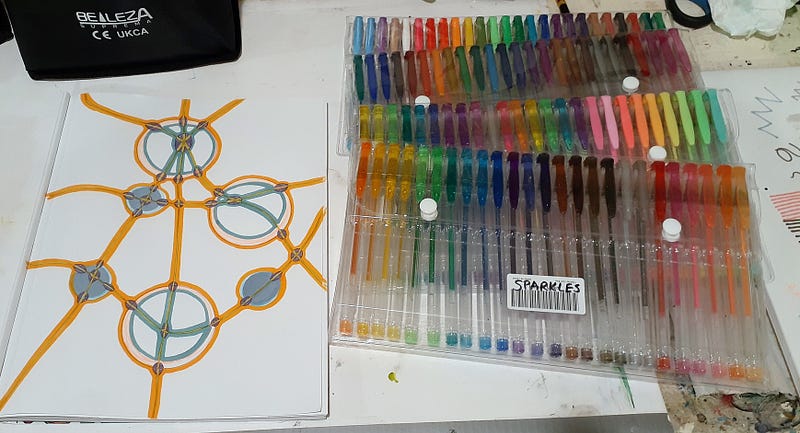
If you are looking for a way to help relieve chronic pain and anxiety, help gain clarity and peacefulness, neurographic art, might be the answer.
Drawing lines enables the connection between the conscious and unconscious. It helps you to help gain access to your inner self and helps you to manage your own emotions and understand the emotions of others around you.
Most importantly, neurographic art is relaxing.
The practice can also help with discovering new possibilities. Important when seeking to change something or let go of something. Which is something we all need as we make our way through our senior years.
Neurographic art was developed in 2014 by the Russian psychologist Paval Piskarew as art therapy to help his patients access their unconscious minds to gain new insights.
He concluded this intuitive practice uses more parts of the brain than we use in default day to day. You can read more about it here.
More and more research shows the importance of mental stimulation as a preventive against Alzheimer’s and other forms of dementia. Neurographic art becomes one more thing we can do. Along with getting more physical exercise, eating well, keeping our blood pressure in check, maintaining low levels of LDL (“bad”) cholesterol, avoiding alcohol and smoking. All these things combined help to decrease our risk of dementia.
So I’ve added neurographic art to my list of things to help me age well.
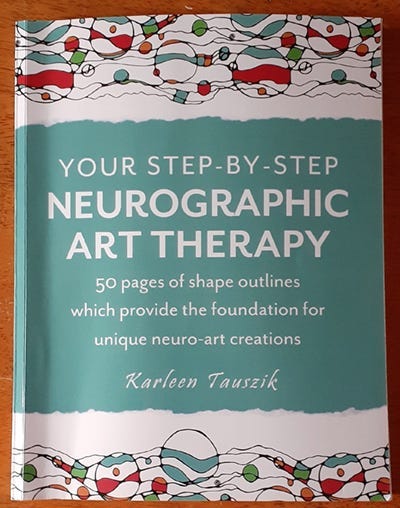
Inside the book is a brief history and explanation of neurographic art, along with its four basic components.
It has easy step-by-step instructions. 50 pages of original designs. Space on the back of each piece to date and state your intention as you begin the work. Four lined pages, at the end of the book, for additional notes and insights.
And the best part — no art experience or special supplies needed.
You can use markers, coloured pencils, pens, crayons, or whatever you have available.
What I also love about it is that it is great for your inner child.
I don’t know about you, but as a child I loved colouring books. It was a place where I found the freedom I lacked in other areas of my life. My mother didn’t allow us children to explore the neighbourhood freely. Other kids had to come and play on our property. Colouring allowed me to make choices. Colouring made me feel calm and carefree. And I’d like to keep feeling that way in my senior years.
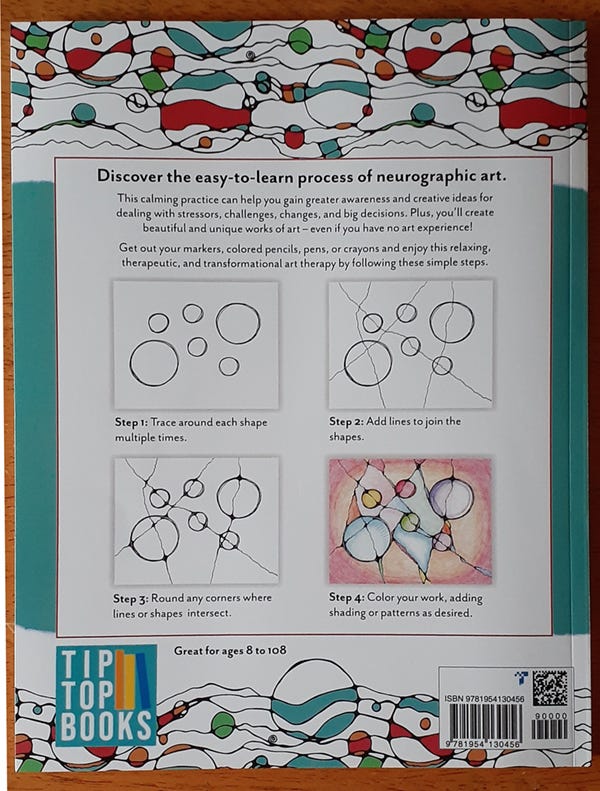
More good news is that you don’t need to own this book or any others in order to follow the easy instructions on the back cover.
First, draw some circles.
Step 1: Trace around each shape multiple times.
Step2: Add lines to join the shapes.
Step 3: Round any corners where shapes or lines intersect.
Step 4: Color your work, adding shading or patterns as desired.
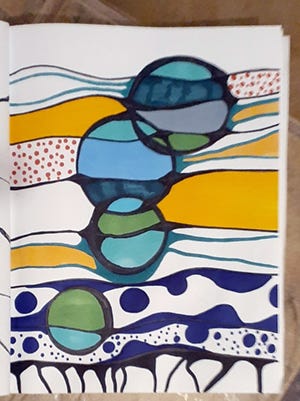
I must admit, I had a hard time with learning to round those corners at first. But with practice I got much better at it, as you can see in the picture below — compared to the picture at the top of this article/ the first once I did.
Circles are the most harmonious shape. Drawing circles and tracing around the circles repeatedly helps connect you to your emotions. Connecting mind and body.
The sharp edges of Triangles can represent danger or motivation and a new direction. In neurographic art, the sharp angles are rounded and filled in. This is to help lift inner constraints and to achieve harmony.
Squares are a human creation. It is not a shape found in nature. They represent stability or can represent stagnation. I personally live doodling squares and for me, they represent stability.
Neurographic lines are drawn intuitively, going where you might not expect. You simply pick a direction and the lines should shift gently in curves or angles.
This activity is also great to do with grandchildren, since it’s appropriate for a wide range of ages: from 8 to 108.
The other top tip for ageing is to stay curious and learn something new.
Barbara Carter — Artist and writer with a focus on healing from childhood trauma, alcohol addiction, and living her best authentic life.
Sign up here to receive our free weekly newsletter featuring the best of Crow’s Feet.


