
Millets — The Panacea For Diabetes, Weight Loss, Cancers, Heart Ailments And A Host Of Other Health Issues
Three Weeks On Millets Brought Blood Sugar Down To 5.4
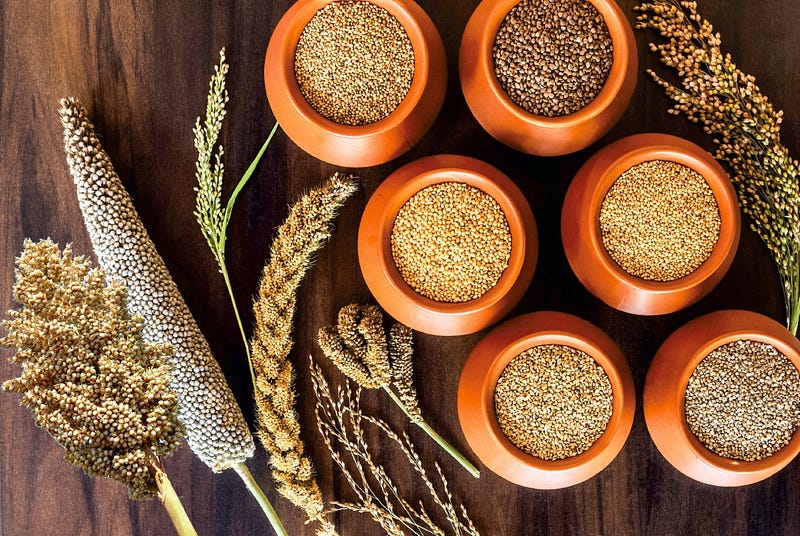
Last week my husband ecstatically said, “Wow, those millets are a wonder food! My blood sugar has come down to 5.4!” His blood sugar levels have never come down to this level ever since he was diagnosed with type 2 diabetes many years ago. Just three weeks prior I had started making millet based breakfasts at least four to five days a week.
In our first zoom meeting I was seeing Teresa for the first time after 46 years! We were friends in college and I have been fortunate to reconnect with most of my school and college friends. Old friends are “the great blessing of later years” — Horace Walpole. We are all in our 60s now, but in that meeting we became the teenagers we were during our college days! After all the excitement of recalling those wonderful days as students, Teresa enthusiastically said that she wanted to share something important.
She said, “please switch over to millets. The benefits of millets are so many, I cannot even enumerate. It can control diabetes and cure cancers.” My ears perked up! Having been a complete convert to millets and convinced about its miracle benefits she wanted to educate everyone about its health benefits! And who more so than to her college friends?
More than ever now when we are all confronted with the risks of Covid19 what better way to improve our health and immunity with a simple change in our diets?
I am one of those who likes to listen and try out. I did my research to find out where to buy them. I purchased a few different millet flours and grains. I looked up recipes online and learnt to cook with millet flour. I made millet pancakes which were very easy to make and I served it with a hot Indian chutney. I was amazed how satiated I felt and did not feel any pangs of hunger for 5 to 6 hours.
What are Millets:
Millets are a group of highly variable small-seeded grasses, widely grown around the world as cereal crops. They are tiny in size, round in shape and can be white, gray, yellow or red.
They are gluten free, high in fibre, minerals and vitamins. Millets are cultivated globally in Australia, Africa, Asia and Central America. It is grown in dry and arid regions and is resistant to droughts.
Known as the poor man’s food, I would often see labourers and many others making a quick meal with millet flour made into attractive chocolate like balls from Ragi the finger millet. They would take small chunks of it, dip it in a gravy or chutney and swallow it. I always felt attracted to it and wondered what it tasted like.
Jowar or Sorghum and Finger millet or Ragi are fibre rich millets that were cultivated extensively in India. Though millets have been consumed by our ancestors thousands of years ago, many more varieties have come into cultivation and are once again gaining popularity.
Nutritional Value and Health Benefits:
Regulate Blood Glucose Levels: Millets have a low glycaemic index, are gluten free, high in dietary fiber, proteins, amino acids, vitamins and minerals. They stabilize blood sugar levels preventing spikes and promote insulin sensitivity.
Helps In Weight Loss: With a high percentage of fibrous content, antioxidants, protein, low calories, gluten free status and high complex carbohydrates, millets are the ideal food for weight loss. Replacing rice, wheat etc with millets helps lower BMI (Body Mass Index), accumulation of fat, improves gut health and helps you in achieving sustained weight loss.
Improves Heart Health: Millets contain antioxidants that include beta-glucans, tannins, flavonoids, lignans, anthocyanidins and policosanols. These antioxidants help in lowering LDL cholesterol and help in clearing clots and maintain blood vessels healthy. Thus, lowering the risk of heart disease, blood pressure and stroke.
Prevents Formation Of Cancer Cells: Foxtail and proso varieties of millets are proven to be effective in inhibiting the growth of cancerous cells in various tissues according to research (see reference below). Phytochemicals in millets have an antiproliferative effect and lower formation of cancer cells in the colon, breast, and liver without causing damage to normal cells. (https://pubmed.ncbi.nlm.nih.gov/26075747/)
Assists Digestion: The high dietary fibre in millets helps in improving the digestive function. Millets are alkaline, reducing the risk of gastrointestinal conditions such as gastric ulcers and colon cancers. It helps overcome constipation, excess gas, bloating, cramping and regularizes bowel function.
Improves Immunity: It improves the overall health of other vital organs like liver, kidney and boosts the immune system.
Types of Millets and their benefits:
There are a number of millets that are used around the world. Common amongst these are:
1. Finger Millet or Ragi: Eleusine coracana commonly known as finger millet or Ragi, is an annually cultivated cereal crop, in the tropical regions of Africa and Asia. Being densely packed with nutrients, finger millet enhances digestion, reduces the risk of heart disease, helps manage diabetes and weight loss. It is abundant in polyphenols, amino acids, dietary fibre and has a low glycaemic index — an ideal food for diabetics. It is also a rich source of calcium that is highly beneficial for bone health, teeth and osteoporosis.
This wonder cereal keeps you satiated, lessens cravings, slows gastric emptying time and prevents blood sugar spikes. The rich source of iron in finger millet, helps boost haemoglobin levels amongst anaemic patients. Upon sprouting the vitamin C content in these millets increases aiding easy absorption of iron in the bloodstream. Finger millet is gluten free, high in protein and amino acids such as cysteine, methionine, tryptophan and tyrosine that help avert malnutrition.
2. Pearl Millet: Botanical name Pennisetum glaucum also commonly known as Bajra in India, Pearl millet is widely grown and used in West Africa and India. It is gluten free, rich in protein, high in magnesium, potassium and has an amazing variety of antioxidants such as phenols, tannins and phytic acid. The high dietary fibre and complex carbohydrates slows digestion keeping one satiated for long. It is an alkaline food that has Omega 3 oils, rich in Vitamin B9 and folic acid. It is also high in calcium and phosphorus.
Pearl millet with its rich content of minerals and dietary fibre is an ideal food for preventing Type 2 Diabetes as its slowly digestible starch can regulate glucose. It also aids in weight loss, being high in protein and low in carbohydrates it strengthens muscles and repairs tissue. It is gluten free and ideal for coeliac sufferers.
Loaded with iron and fibre, Pearl Millets cut down the visceral fat around the abdomen and helps regulate the menstrual cycle and conditions such as polycystic ovarian syndrome.
Being high in magnesium and potassium Pearl Millets play a crucial role in dilating blood vessels facilitating better blood circulation. It lowers bad cholesterol LDL preventing blockages of arteries and is high in Omega 3 fatty acids and plant lignans.
It is a natural detoxifier with an amazing mix of components and antioxidants including phenols, tannins and phytic acid that can prevent strokes, cardiovascular problems and various types of cancer. The catechins, quercetin in Pearl Millet cleanse liver, kidney and detoxify the body from within besides promoting beautiful skin.
Pearl Millet is an ideal winter food for those suffering from asthma and Chronic Obstructive Pulmonary Disease or COPD. The anti-inflammatory properties in Pearl Millet and the presence of Omega-3 oils reduce swelling, clear mucus and aid in proper breathing.
3. Little Millet: Panicum Miliare or kutki is a great millet option for all those fitness enthusiasts, as it serves as a healthy tweak for rice. Bestowed with fibre and minerals such as potassium, zinc, iron and calcium and vitamin B3 Little Millet supports fat metabolism, tissue repair, reduces cholesterol and energy production. The flavonoids present in Little Millets act as Antioxidants and help improve immunity.
4. Foxtail Millet: Botanical name — Setaria italica is a balanced food having 8% of fiber and 12% of protein. It is also high in antioxidants, calcium, iron, manganese, magnesium, phosphorus and vitamins B12. Some of the benefits of foxtail millets include easing constipation, promoting weight loss, regulating blood sugar, reducing cholesterol, and is said to get rid of fevers and convulsions in children. Also being rich in iron it helps overcome anaemia.
Nutritionists strongly recommend the intake of Foxtail millet for keeping various neurological disorders at bay. High in Vitamin B1, this tiny gluten-free cereal gives your 0.59 mg of it, in every cooked 100 grams. Eating this nutritious cereal not only slows down the progression of various neurodegenerative conditions like Alzheimer’s, Parkinson’s etc but makes a positive impact on the nervous system. The high amount of iron triggers cognitive function by providing more oxygenation to the brain. (Source: Netmeds.com)
5. Kodo Millet: Botanical name -Paspalum scrobiculatum. This acrid, bitter sweet millet helps in purifying blood, helps overcome anemia, controls diabetes, overcomes constipation, helps in weight loss and is good for sound sleep. According to Dr Khader Valli an Indian scientist and authority on millets, it is efficient in the functioning of bone marrow, gets rid of asthma and kidney problems and problems related to prostate, blood cancer and cancers of intestine, thyroid, throat, pancreas or liver. Being highly nutritious with plenty of vitamins and minerals, kodo millets are a healthy food for children. These millets are high in antioxidants and exceptionally high in fibre. They are also a good food for swollen joints and for women who suffer from irregular periods, diabetic patients and those who have weak eye nerves. The flour of Kodo millet is used to smear on swellings. It is also helpful for those diabetic patients who develop gangrene from leg injuries. They are also said to help in recovery from dengue, typhoid or viral fevers.
6. Sorghum Millet: Botanical name — Sorghum Bicolor also commonly known as Jowar in India, is very widely used and has high nutritional value and health benefits. Like other millets it is gluten free, a great alternative for people who suffer from bloating, pain and stomach cramps. It is also high in fiber and complex carbohydrates thus lowering the risk of obesity, high blood pressure, strokes, diabetes, cardiac disease and digestive problems.
It is high in protein, iron and minerals such as magnesium, potassium, phosphorus and vitamins B, zinc, copper and high in antioxidants.
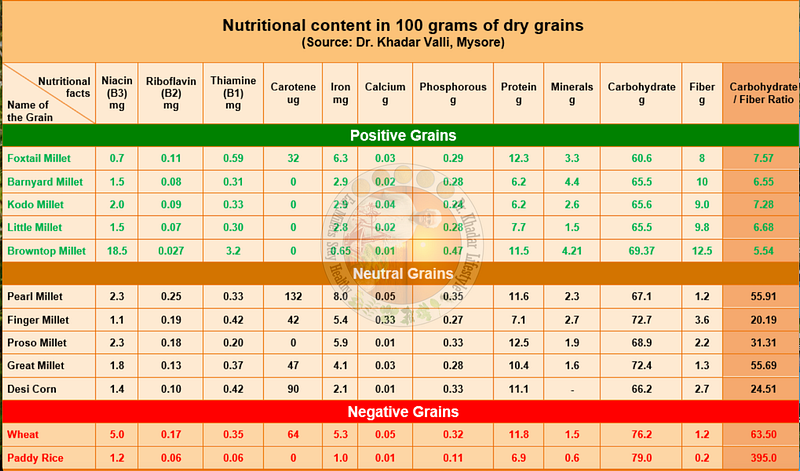
Conclusion and my experience: It is more than four weeks since I have started consuming millets and I am simply won over by this miracle food. It leaves me so satisfied with even a very nominal quantity, I do not have feelings of bloating or flatulence, I feel fit and healthy. The high fibre content, the complex carbohydrates, the vitamins and minerals present in these grains make it a truly miracle food.
However, I have found that using the various types of millet flours that now line my pantry are not very easy to cook with. I am not as experienced as many millet cooks. The lack of gluten in millet flours makes it difficult to hold it together when making flat breads. So I substitute it with a small quantity of plain flour or I add a beaten egg. But it will not deter me to go back to any of the glutinous foods that I was consuming before.
My favourite millet based food is a millet pancake or flatbread with a tangy Indian chutney and both recipes I would like to share with my readers.
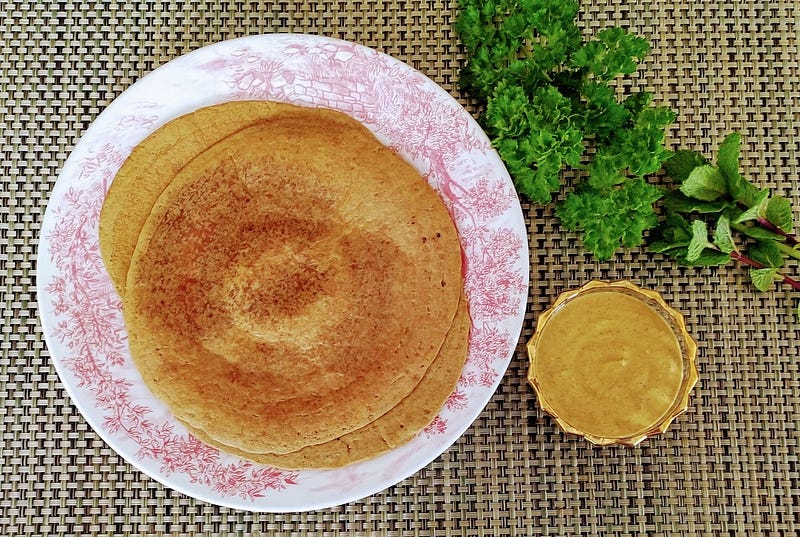
Millet Pancakes
Ingredients :
1 Cup Millet flour
½ teaspoon baking powder
½ teaspoon baking soda
A pinch of salt
1 teaspoon sugar
Pinch of cinnamon
1 egg
1 tsp melted butter
1 Cup buttermilk
Method: Mix all dry ingredients. Combine the egg and buttermilk by blending or beat together. Add to the dry ingredients, mixing well to form a thick batter. If the batter is too thick add a little water. Cover and leave aside for 10–15 minutes. Heat a frying pan on low heat, grease the pan well and pour two tablespoons of batter. Cover and cook on low heat. After 2–3 minutes when one side is cooked, flip it over to cook the other side and remove. Enjoy with the chutney.
Onion Garlic Chutney
Ingredients:
1 small onion
1 Pod Garlic peeled
4 dried red chillies
3 tablespoons roasted peanuts
2 teaspoons oil
1 teaspoon lemon juice
Salt to taste
Water
Method: Heat oil in a skillet. Roast the onion and garlic until slightly brown and soft. Add the dried chillies and roast for a minute. Allow to cool. Combine all ingredients and blend. This is a very basic chutney. Many improvised versions with enhanced tastes are available on the web.
References:
1. Sowmya Binu MSc., M.phil Food And Nutrition 21 November 2020 “5 Reasons Why You Should Include Millets In Daily Diet” Retrieved from https://www.netmeds.com/health-library/post/5-best-reasons-why-you-should-include-millets-in-daily-diet
2. PubMed.gov 6(7) July 2015 Targeted anti-colon cancer activities of a millet bran-derived peroxidase were mediated by elevated ROS generation Shuhua Shan 1, Jiangying Shi, Zhen Li, Huixian Gao, Tonglin Shi, Zongwei Li, Zhuoyu Li Retrieved from https://pubmed.ncbi.nlm.nih.gov/26075747/
3. ICRISAT Happenings Newsletter MILLETS AND SORGHUM: FORGOTTEN FOODS FOR THE FUTURE. Retrieved on 2 September 2021 https://www.icrisat.org/millets-and-sorghum-forgotten-foods-for-the-future/
4. Dr Harpeet Arora 15 December 2020 Health Benefits of Pearl Millet Retrieved from https://www.medindia.net/dietandnutrition/health-benefits-of-pearl-millet.htm
5. Dr Khadar Valli Protocols- Book-English- Dr Khadar Lifestyle pdf “Siridhanya and Kashayas for Leading Healthy Life and Curing Diseases” Retrieved 30 August 2021 https://www.scribd.com/document/477803419/Protocols-Book-English-Dr-Khadar-Lifestyle
Disclaimer: I am not a health professional. The above information has been provided from well researched websites referenced above and from personal experience.


