

ARTS o’ MAGAZINE
Artist Mike Kraus: Brushstrokes & Transformation
AUGUST REMOTE ARTIST FEATURE
In this interview with Mike Kraus, we delve into the captivating journey of an artist whose work serves as both a canvas of color and a canvas of values — honesty, kindness, and fairness. From his formative years in Muskegon, Michigan, Mike’s artistic voyage has been a dynamic exploration of the intricate interplay between the external world and his inner creativity.
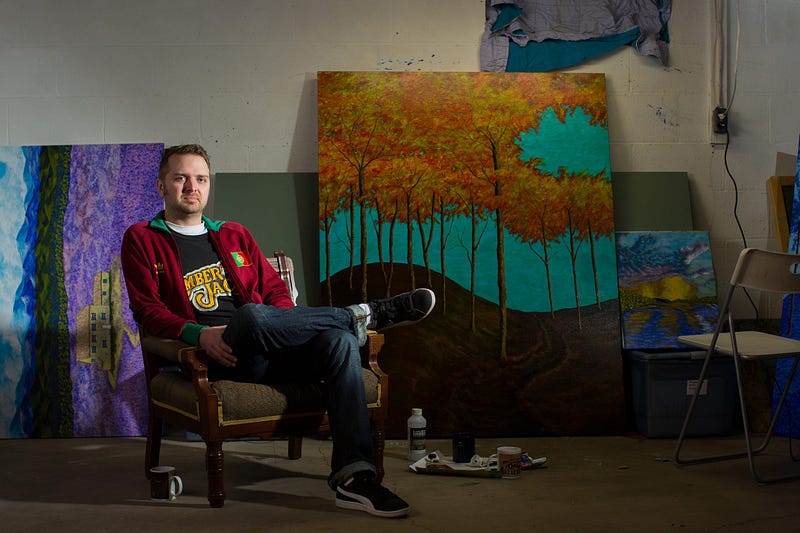
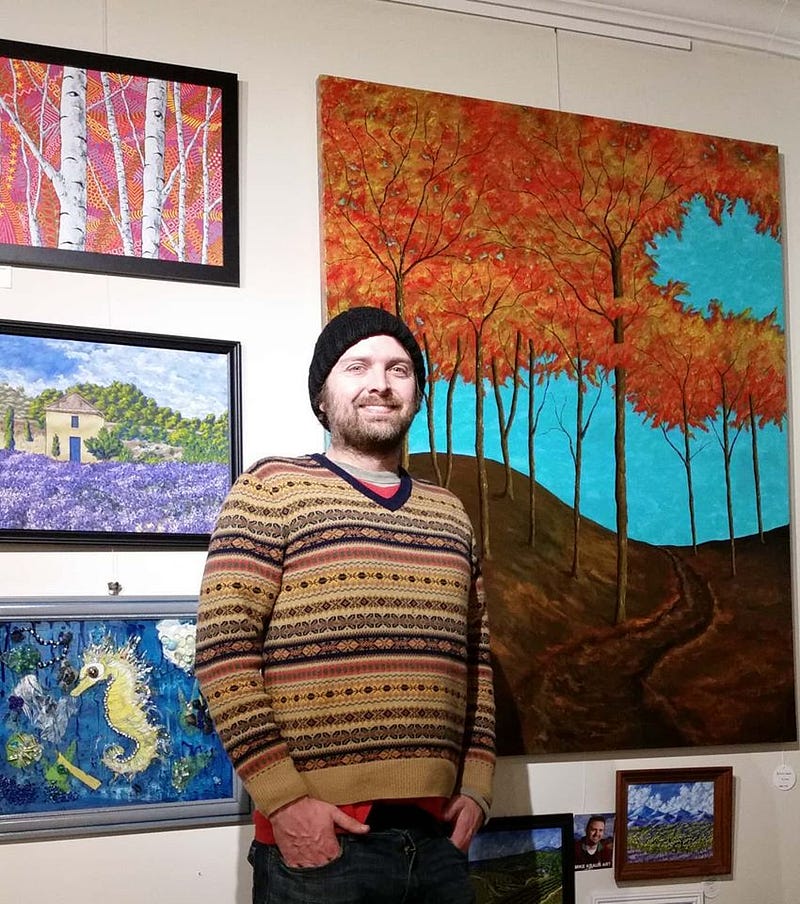
His early education posed challenges familiar to many aspiring artists — disheartenment and a lack of support. However, Mike’s unwavering determination and fervor for creativity empowered him to surmount these obstacles, finding solace in art and eventually pursuing formal education in the field. His educational journey, spanning from the School of the Art Institute of Chicago to his Master of Public Administration at Grand Valley State University, might seem diverse, yet they beautifully converge to shape the individual he is today. Mike’s art transcends mere paint and brushstrokes; it’s about forging connections with people and harnessing art’s potential to transform and heal. His tenure at the Muskegon Museum of Art and the Lurie Children’s Foundation exposed him to the profound impact of art therapy, setting him on a path to merge his artistic prowess with the healing potency of art.
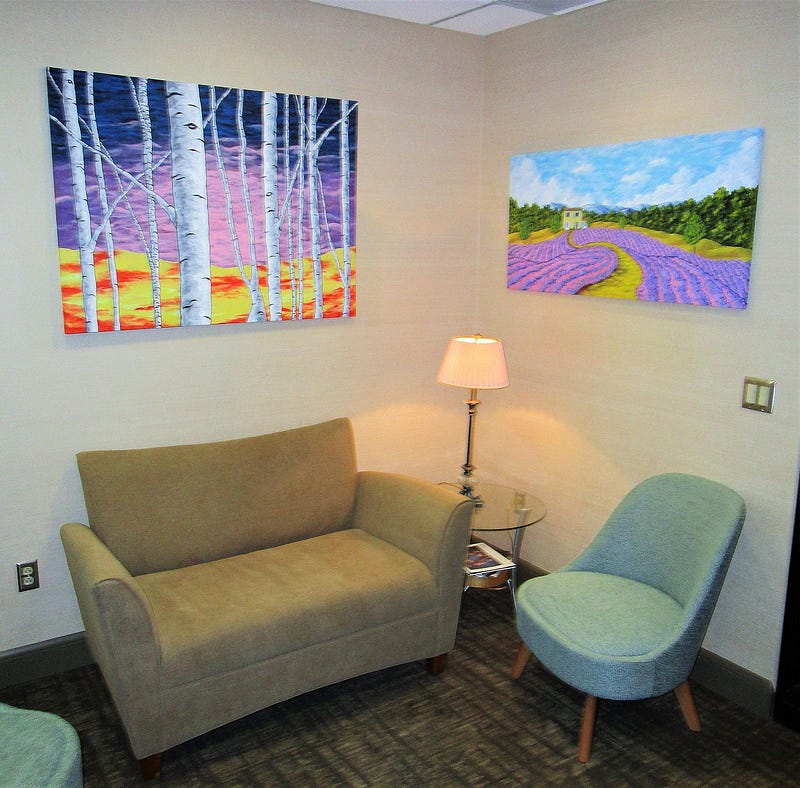
Mike’s mantra of “The Way To Beauty” is not a mere concept — it’s a guiding principle that molds both his art and his life. Through his exploration of this idea, he invites us to ponder our surroundings, actions, and existence. With each stroke of his brush, he advocates for change and equity, using his artwork to spark conversations about the world we inhabit. Even the COVID-19 pandemic was not a deterrent for Mike; rather, it was a new perspective. He harnessed art to promote hygiene, self-care, and social responsibility, demonstrating how artists can respond to real-world challenges with innovation and empathy.
As his artwork transcends borders, resonating with hearts and inciting conversations, Mike’s journey continues to evolve. His philosophy is not static; it’s a living, breathing force propelling him to explore novel themes and techniques, continually pushing boundaries and questioning norms. Through this interview, we accompany Mike Kraus on his artistic evolution — from initial struggles to current triumphs, from local artist to global influencer. We gain insights into his creative process, motivations, and dreams for the future. As we turn each page, we’re invited to perceive the world through his eyes — a world painted not only with colors but also with values, aspirations, and a profound sense of purpose.
(Interview: Indirah Ambrose:) Could you share your early experiences growing up in Muskegon, Michigan, and how the contrasting environments influenced your artistic journey?
(Artist: Mike Kraus:) I grew up in a place of stark environmental contrasts. Nestled on the shores of Lake Michigan, Muskegon boasted stunning blue skies juxtaposed with the next day’s green smog — a result of toxins discharged into nearby lakes from nearby factories. This environment bred a hunger for beauty, a craving to escape the filth, and an innate desire to create something different. I often sought refuge in the wilderness of northern Michigan, sketching idyllic towns with thriving communities. I’d conjure plans for parks, streetcars, plazas, and more, driven by the longing to transform the dismal into the possible.
(Interview: Indirah Ambrose:) How did your parents’ love for nature and camping impact your artistic inspiration?
(Artist: Mike Kraus:) Nature, a boundless well of inspiration, left an indelible mark on me. My parents cultivated various gardens, each a living laboratory, teeming with myriad flowers in every shape and hue. Fruit trees offered bounties of cherries, apples, plums, and more. The gardens were more than just produce; they were a sanctuary, a space to glean knowledge about our food’s origin. I documented bugs, growth stages, and landscapes, capturing the essence of growth and life’s cycles. Camping further intensified the experience, immersing me in an environment free of distractions, where I could learn survival skills and uncover the fragility of our existence. Nature, a teacher and nurturer, bestowed upon me humility and a deep understanding of our interconnectedness.
(Interview: Indirah Ambrose:) Could you shed light on the challenges you encountered in your early education regarding art discouragement and how you overcame them?
(Artist: Mike Kraus:) Early education often presents challenges, and my story is no exception. School’s monotony left me bored, prompting me to finish assignments rapidly, leading to more idleness. I’d sketch, distracting fellow students. Though my grades were good, certain teachers wielded cruelty. Their actions left an indelible mark — confiscating and mocking my artwork in front of the class, confiscating textbooks, isolating me in corners, and limiting my engagement to the chalkboard’s monotony. This hostile environment, coupled with a culture of bullying, eroded my love for school, rendering learning tedious and stifling my creativity. I ceased creating art for years.
(Interview: Indirah Ambrose:) Can you describe your experience at the School of the Art Institute of Chicago (SAIC) and its impact on your artistic style and philosophy?
(Artist: Mike Kraus:) SAIC offered an environment of organized chaos, akin to real-life Harry Potter, welcoming students from diverse backgrounds with varied talents. The initial year, a transformative phase, aimed to “unlearn” conventional education, urging exploration of creativity’s limits. Introductory classes spanned 2D, 3D, 4D, and art history, urging experimentation with diverse materials and bold ideas. The only restriction was avoiding actions requiring police intervention. Self-motivation was vital, separating those who persevered from those who faltered. SAIC ingrained the belief “you reap what you sow.” Absent traditional grades, we earned pass or fail, fostering a culture of self-responsibility. SAIC’s impact is profound, teaching me not to “see” art, but to truly “look” at it. Art history’s deep dive into culture and meaning enriched my creative repertoire. The immersive experience shaped my identity and practice.
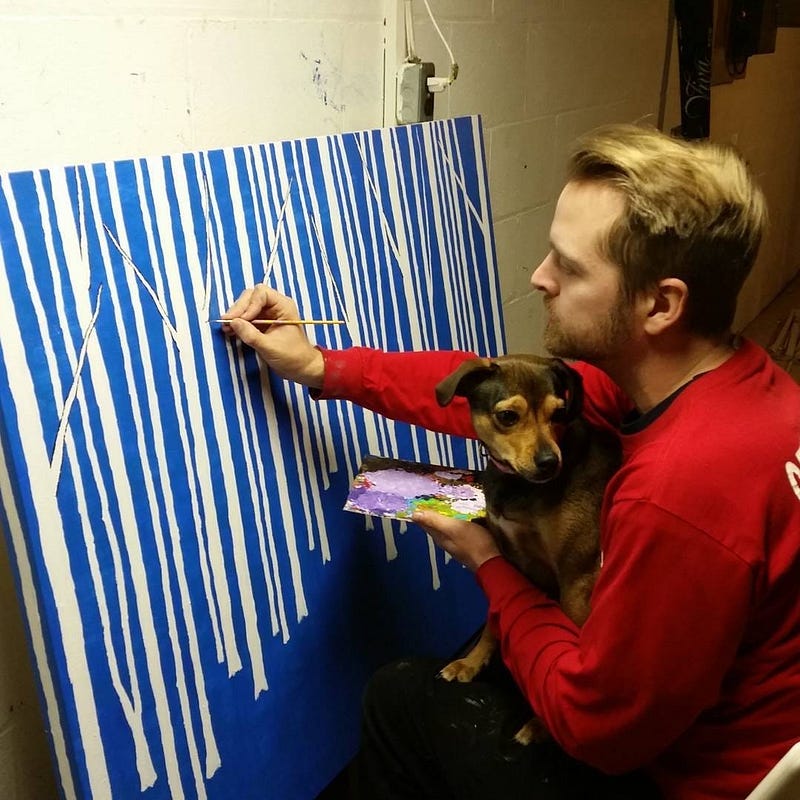
(Interview: Indirah Ambrose:) Could you elaborate on your internship at the Muskegon Museum of Art and how it influenced your decision to continue your education?
(Artist: Mike Kraus:) My summer internship at the Muskegon Museum of Art (MMA) proved serendipitous. Tasks ranged from digitizing their collection to curating exhibits, marketing, and even security roles. The comprehensive experience fueled my passion for art management. During a design meeting, the museum director sparked a pivotal conversation about my post-college plans. This interaction propelled me toward an unconventional yet rewarding path — a pairing of my BFA with practical skills. This journey granted me the ability to merge artistic pursuits with managerial acumen, a blend that resonates through my business, Mike Kraus Art Inc.
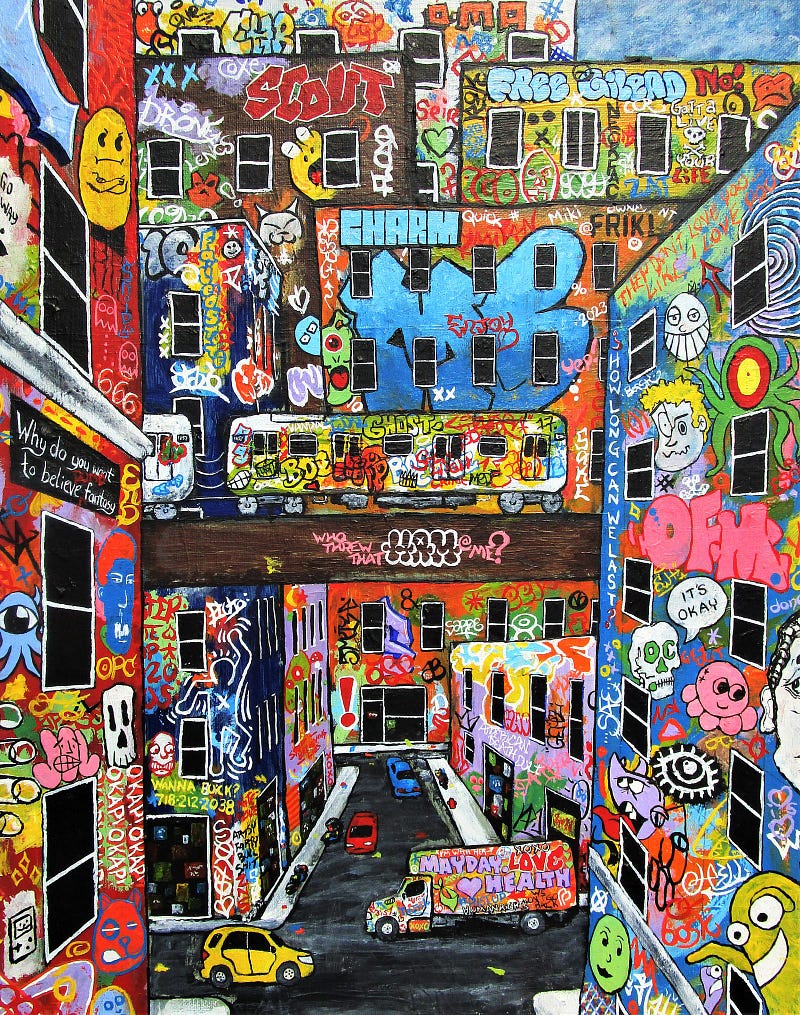
(Interview: Indirah Ambrose:) How did your Master of Public Administration (MPA) program at Grand Valley State University (GVSU) complement your artistic aspirations and experience at SAIC?
(Artist: Mike Kraus:) GVSU’s MPA program, in stark contrast to SAIC, offered an ordered, traditional learning environment. Yet, it provided a vital skill set — managerhttps://mikekraus.blogspot.com I make daily updates there. Including which galleries are showing my work, what pieces I’ve just completed, which pieces are for sale, and I try to have some kind of offer each day. Plus, it’s a fun way to learn about art and discover other artists.
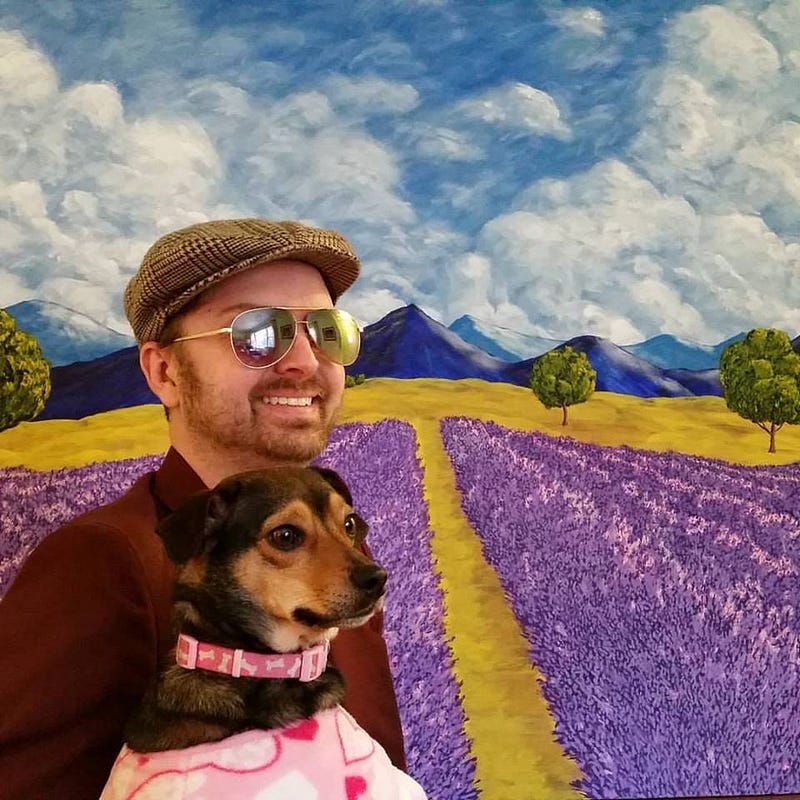
(Interview: Indirah Ambrose:) Your artwork has gained popularity across various states and countries. What do you believe attracts people to your paintings?
(Artist: Mike Kraus:) Kindness. I’m learning that everything is a gift. It is a gift when people buy a painting from me. I’m so lucky that my works hang on walls all over the world. And it has led to wonderful reciprocation as I’ve become friends with these people. And we develop relationships that lead to different opportunities. And those open other doors.
(Interview: Indirah Ambrose:) How do you maintain a balance between being an artist and working for Mike Kraus Art Inc.?
(Artist: Mike Kraus:) It can be difficult. Sometimes, I want to ONLY be an artist and hand over the organization to a business manager or agent. Other times, I want to sign other artists and become their business manager.
But, I’ve developed a process and I’m constantly tweaking it. I set aside time that is for the act of creation. And I set aside time for business tasks. And every year I review what I’ve done, what was a success or failure, and make a new plan for the next year. And I have some long-term goals that are constantly evolving. And, someone asked me “what will happen to your business when you die?” which has guided me to some very unusual thoughts. It’s crazy for me to think that Mike Kraus Art Inc. could still be around in 120 years without me.
(Interview: Indirah Ambrose:) How has your journey in art therapy influenced your own artistic process and the themes you explore in your work?
(Artist: Mike Kraus:) I really, really try to practice self-care and take care of my mental health. What does that mean? I have studio hours that have a start and finish. I take regular breaks and eat well. I’ve set boundaries and try to make good decisions. It all sounds very boring, but limits have a way of expanding creativity.
When something catches my attention, I tend to ask “why do I find this ugly/beautiful?” And this can bring you to many interesting places. And, I find the answers are much less subjective than we tend to tell ourselves. Being cruel is ugly. So, then we have to ask ourselves why do we accept so much cruelty in our lives? And, I have to say, my acceptance of cruel behavior has changed dramatically over the years. Yet, how I react to it has also changed. Mostly because I see that sadness that people who are abusive were abused the same way themselves. So, I’m more interested in breaking that cycle instead of participating in it.
(Interview: Indirah Ambrose:) You mentioned your belief in the need for societal transformation. How do you use your art to advocate for change and fairness? (Artist: Mike Kraus:) I’m only me. And that’s where it all starts. If I want people to be more honest, I need to be honest myself. And I have a tendency to exaggerate and tell “fish stories.” I never thought of it as lying because they could be such absurd jokes that I didn’t intend for others to believe it. But, they did and I’ve changed my ways. If I want others to be kind, I need to be more kind myself. And if I want the world to be more fair, I need to be more fair to others. And, the most obvious discovery is when you are more honest, kind, and fair is that you find others who are like that too.
I don’t “advocate” because I don’t believe anyone wants to hear me preach. But, I know that I can be an example. This is because I admire so many other people who were examples. I have a few relatives who are artists and they inspired me with their work. Now, I make my own work. And, I have a nephew that I love so much who is currently in art school too. And my nephew has made me a better artist and person too. When we’d draw together I learned more about how they saw the world. When someone said something mean that elicited laughter, they would ask why we thought that was funny. I want to be a good example for my nephew so they can be a good example for their nieces and nephews when they become an uncle.
(Interview: Indirah Ambrose:) Can you share some insights into your creative process? How do you approach new projects and artistic challenges?
(Artist: Mike Kraus:) It is “a process.” It all starts with an idea that I will sketch quickly on paper. Sometimes, it’s just a few words with no image in my mind yet. And then I let it “simmer.” I keep it on my desk and will add or subtract to the idea for as long as it needs. Sometimes years. Then I like to Beta Test it. For me, artist trading cards (ACEOs) are a great way to see if the idea is worth more effort. It’s quick, affordable, and I can see what the reaction is. I’ve had some experiments go very poorly and it ends there. Some pieces were well-received, but needed alterations because it was confusing or misunderstood. And then there’s the rare idea that’s great. I believe Matisse said something like you need to make 50 pieces to create one that is good. I’m too nervous to look at my ratio, but he probably isn’t wrong.
When the idea is refined enough as an artist trading card, then I’ll scale up to a painting. And I usually have somewhere between 3–12 pieces I’m working on at any given time. I’ll go from piece-to-piece adding paint for hours. Some works I can complete very quickly. Others will take me much longer. But, whenever the piece ends up completed it leaves my hands as the artist and I have to turn on my business brain.
I have to determine where the completed piece will be offered: gallery, online, patron, or some other way. I’ll have it photographed along with other documentation. I’ll make some decisions for marketing. And this will happen until it’s sold and delivered to its new owner.
But, that’s not the end of the process because there’s never an end. I’ve been meditating on that piece for a long time. While I liked the outcome, I had some new thoughts about its meaning, layout, and/or other features. And the whole thing starts all over again on my sketchpad.
This is how I stay inspired. I’m not kidding when I say I have a lifetime of inspiration waiting to be painted. My sketchpad has so many pieces in queue that I’ll never finish them all.
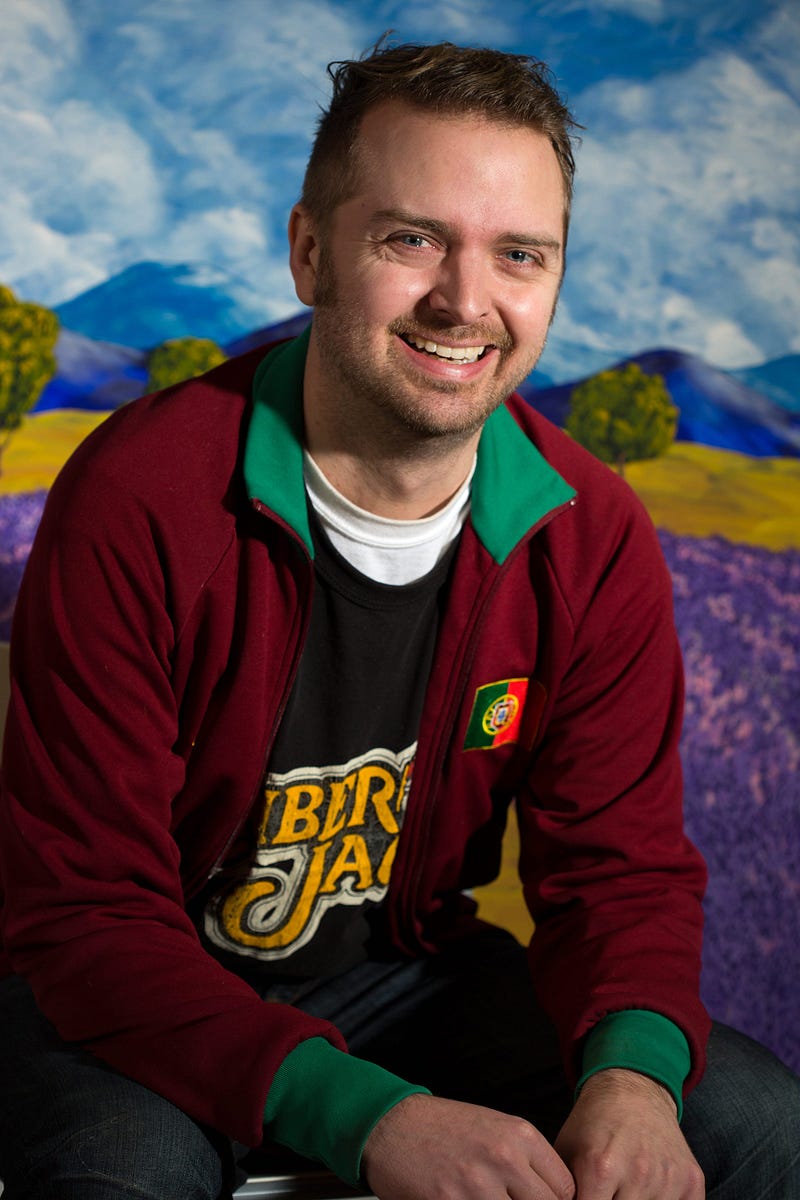
(Interview: Indirah Ambrose:) How do you see your art evolving in the future, and are there any specific themes or techniques you plan to explore?
(Artist: Mike Kraus:) I’m terrible at predicting. The only thing I can accurately predict is that my predictions will be wrong…
I expect to keep refining The Way To Beauty. And refining is a fancy way of saying “I’ll crash into a brick wall and need to find an effective way around it.” But, I find problems to be useful and inspiring. Who or what caused the issue to occur? Why is it troubling? Is there a solution?
All my work is a reflection of whatever time we’re in at the moment. When I paint, I try to use my empathy to understand who will be seeing this piece. What will they see when they are looking at it? Why would they spend their valuable time and energy on this artwork? And what about it makes them care? In that way, art reflects life. And, in return, life reflects art.
(Interview: Indirah Ambrose:) What advice would you give to aspiring artists who may be facing similar challenges and discouragement that you experienced in your early education?
(Artist: Mike Kraus:) It seems to go against my whole “kindness” thing, but I have said “you need to learn when to tell other people when to f#@& off.” And I really should find a better way to say that. But, our culture is very controlling. We encourage dominating and bullying others in so many ways. And, I felt isolated and powerless when teachers and administrators initiated abuse and allowed other students to participate. But, one day that all changed. Maybe it was hormones. Or I saw something on TV. There was a moment when I decided that all those people can “f#@& off.” And there was a lot of power in that because I discovered how many other students were experiencing the same exact thing. When a teacher said some hateful thing I called it out. When another student was vicious, I no longer accepted it. I no longer accepted that toxic environment and threatened to drop out of school if I didn’t transfer. It wasn’t easy. It felt like I was fighting everyone for a very, very long time. But, in the end, it was one of the best decisions I’ve ever made.
(Interview: Indirah Ambrose:) Your artwork is known for its emphasis on honesty, kindness, and fairness. How do you infuse these values into your artistic expression?
(Artist: Mike Kraus:) I hope it’s in every brush stroke. Who we are goes into everything we make. I’m not talking just about artists. This is true of every single occupation. Who you are as a person comes out in the car you’ve assembled, the company you invested in, or the food you’ve prepared. That is the outcome of “the process.”
So, I think about the truth I’m sharing in the pieces I make. What am I saying when I paint these landscapes of the Finger Lakes? I’ve painted so many of them and they are saying something individually and as a collection. These are not photographic documentations of their locations. Is that dishonest or am I trying to expose a deeper truth? It’s a process of constant experimenting and exploration.
Kindness comes in many different ways. It could be the subject of the piece. Maybe it’s how I decide to share the work? Or I created it for a cause or charity? Some pieces are made as gifts or a way to remember loved ones. Whatever way the kindness is baked into the piece, it comes back in countless ways.
All creatures, especially humans, have a sense of fairness. So, I’m wary when I start to feel like I’m making a decision based on my ego or greed. They tend to backfire and require a lot of apologies with costly ways to make amends. So, I do consider the opposite of my work and if I’m impartial or allowing good treatment. And I try to apply this to the artwork, the business, the sales, my partnerships, and anything and anyone else. There have been and will be more failures. But, the intention is to acknowledge and correct them when they do occur.
Interview: Indirah Ambrose:) Is there any upcoming project or exhibition that you’d like to share with our readers, and where can they find more of your artwork?
(Artist: Mike Kraus:) We’re heading into the busy holiday season. So, I’ll be involved in lots of things. There’s the ARTIST TRADING CARD (& small art) FESTIVAL starting August 7th at:
(Interview: Indirah Ambrose:) Is there anything else you would like to share with our readers?
(Artist: Mike Kraus:) I want to sincerely thank you for the time and interest you’ve shared with me. Every moment you spend looking at artwork or reading about it is important and valuable. Every artist out there works so hard to create meaningful and transformative experiences for their audiences. And I hope we can all remember how much value it brings into our lives. And it is a great joy that I can be part of that experience. Thank you.
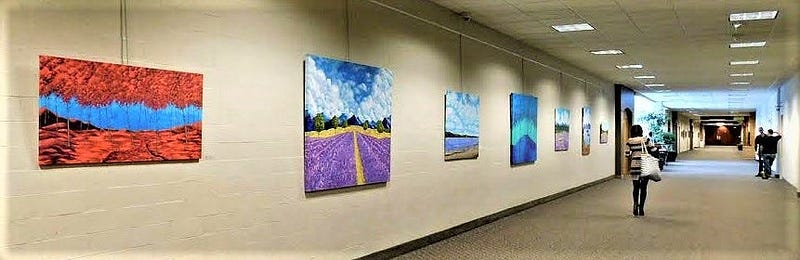
Interview: Indirah Ambrose:) Is there any upcoming project or exhibition that you’d like to share with our readers, and where can they find more of your artwork?
(Artist: Mike Kraus:) We’re heading into the busy holiday season. So, I’ll be involved in lots of things. There’s the ARTIST TRADING CARD (& small art) FESTIVAL starting August 7th at:
Artists and collectors from all over the world buy, sell, trade, or show off the pieces. There’s several other autumn, winter, and holiday events as well. The best way to find information is to follow me at:
Store: MikeKrausArt.etsy.com
Facebook: http://www.facebook.com/MikeKrausArt
Pinterest: http://www.pinterest.com/MikeKraus/
Instagram: https://instagram.com/mikekrausart
LinkedIn: www.linkedin.com/in/mkraus
We are dedicated to Locally Expanding the Global Arts Community

If you are not already a member of Medium you can become a Medium member through this referral link it supports our publication and it also gets you full access to every story on Medium.

FOLLOW SUBSCRIBE WRITE FOR VISIT AIR
Thank you for reading and supporting Arts o’ Magazine. We publish Monday — Friday at (9:00am EST).