
Migrating towards Home
“Let your home be your mast and not your anchor.” — Kahlil Gibran, Lebanese poet
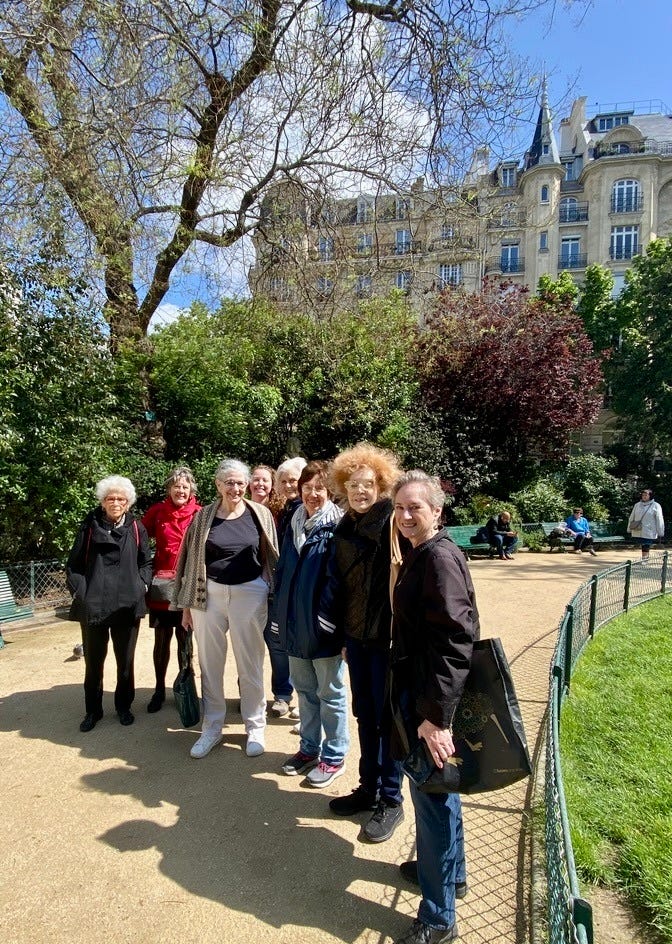
How I love this September prompt, as I prepare to return to my beloved Paris for three months! As the prompt description continues, questioning whether leaving conjures a sense of excitement and adventure, or maybe some sadness and even guilt, I respond, “Yes, both.”
I’m a university professor, and I had a fellowship-sabbatical in Paris for the 2021–22 academic year. I have loved every chance I have had to live outside of the United States, and those migrations have brought me to live in Dublin, Ireland; Wellington, New Zealand; Tokyo, Japan; and Paris, France. What those ventures have had in common have been excellent mass transit so I didn’t need to drive a car, a less stressful work-life balance, less angry politics, and relatively gun-free environments.
This time, though, I returned to the dystopian state of Florida and a city in Florida that is becoming more and more known as the state’s center for the alt-right movement (it used to be known as the “arts-capital” of Florida). I did not feel at home. I went from walking out of my lovely small apartment in Paris to streets always filled with people walking to buy their groceries, bread, and flowers; people enjoying a coffee at a local café; to empty streets in a gated community, a house that takes hours to clean properly, and politics that pain my heart.
And I said to my husband, “I don’t want to live here anymore.”
C’est Compliqué
Of course, it isn’t that simple. I have an 88-year old Mum who lives in Florida, and a son who lives with my husband and me (apartments in Sarasota are cost-prohibitive). My husband is involved in the good work of fighting alt-right politics in the schools, local hospital, and elections.
In an unusually enlightened relationship, my husband and I have worked out a compromise. I spend three months in Paris in the fall and the spring. I have taught my university courses online for 10 years, and I have begun research in Paris. As long as my university continues to allow me to teach abroad (and, as I teach courses in global migration and international human rights, I find things in Europe to benefit my students), this arrangement works.
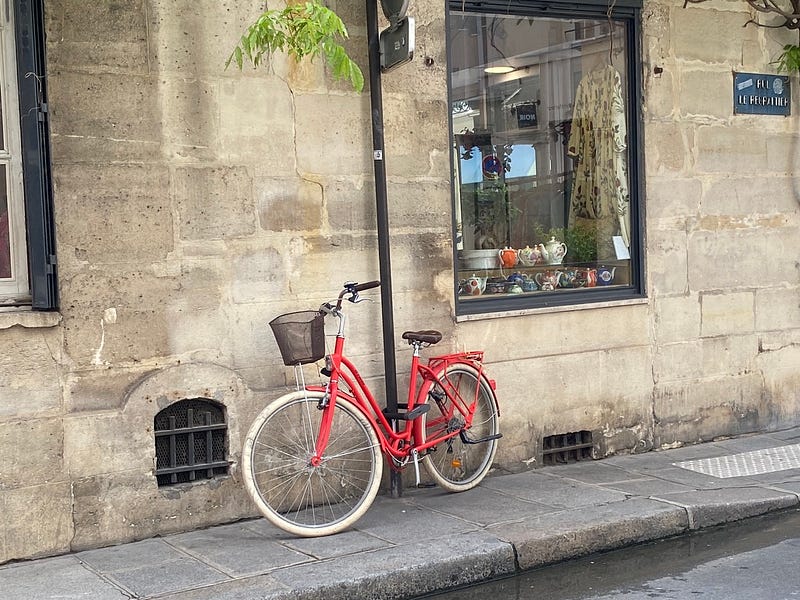
So, in two weeks, I will board the plane and return to my cozy small apartment on Île Saint-Louis in Paris where I have a wonderful arrangement with an Italian woman who owns the small flat. This small one-bedroom costs less than my son would pay in Sarasota, FL. I will say Bonjour at the boulangerie three floors below my apartment (ah! The smell of their baguettes when I walk out of my apartment is heavenly!), and I will reunite with so many friends I have made in the City of Light.
“You can have more than one home. You can carry your roots with you, and decide where they grow.” — Henning Mankell, Swedish writer
Where is Home?
My home in Florida is my family and a few friends. My home in Paris is a love of place and many friends who feel similarly. I have already bought tickets to Lohengrin at the Opéra Bastille, Jerome Robbins ballet at the Palais Garnier, special exhibition “félins” at the Grande Galerie de l’Évolution, and an exhibition of Iris van Herpen at the Musée des Arts Décoratifs. I’ve got plans with friends to enjoy jazz at Bal Blomée and l’Hotel.
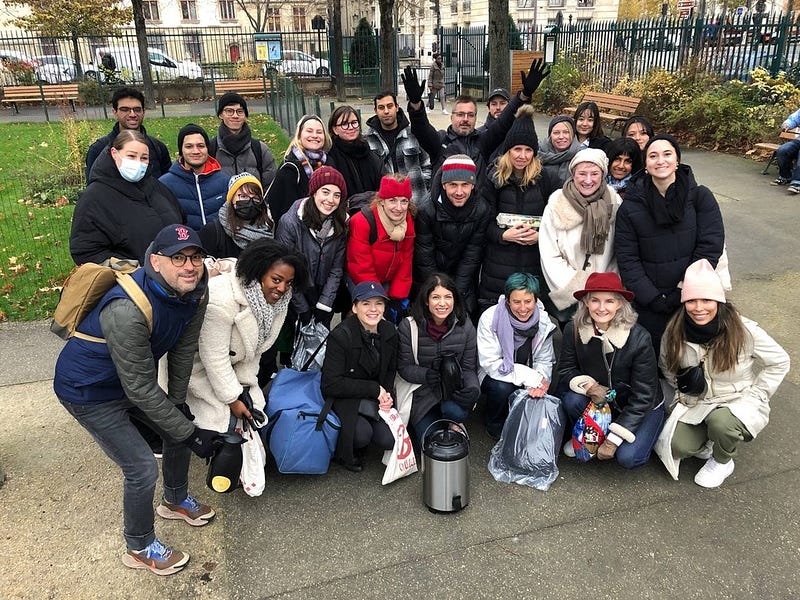
I will have my weekly Tuesday morning “Walk and Talk” with Democrats Abroad and immersive French language lessons on Thursday mornings with a women’s group. Two evenings after I return, I will meet with a dear friend for dinner. I will get back into my work with Serve the City, a non-profit that has volunteers walk the Paris streets to give food to the homeless, including refugees.
These three-month excursions to Paris, which I have come to feel is home, are not without guilt. Of course, the traditional marriage involves being together pretty much all of the time. Adding to that is my son (my husband’s step-son) living with us. Thankfully, they get along well.
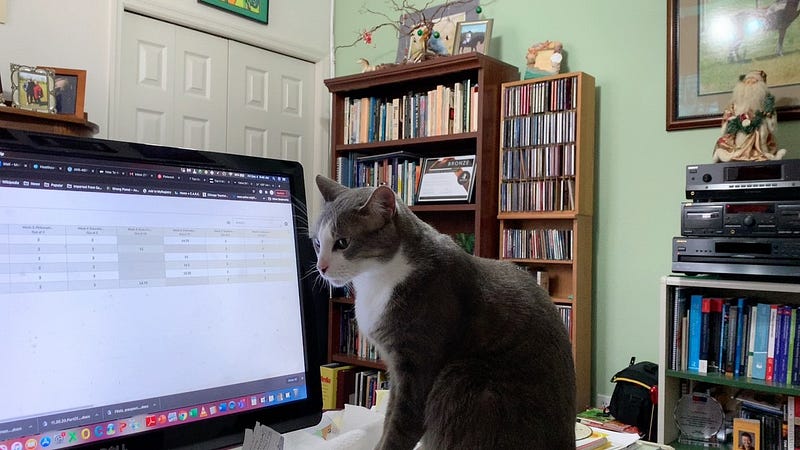
Then there’s my cat. I would love to bring him with me, but that’s a major trip for a cat to make every three months. Once again, fortunately, he also gets along great with my husband and son.
I know for sure that my migrations are judged by acquaintances. For the most part, I have been able to let that roll off. I have responded, “What if it was the husband who decided he wanted to move to Europe? Then whose choice would hold more weight?” Issues like these show me how far we still have to go in terms of gender equity.
Lucky for me, Mum gets it. She and my Dad lived in Ireland for most months of the year for about 15 years. At the time, I was the one who didn’t get it. I was young and struggling with a bad marriage and with young children. Now, of course, I understand that concept of home being complex. My Da was a lifelong member of one of the best golf courses in the world, Ballybunion, and I know that my parents had the kind of friends in Ireland that I have in Paris.

“Every day is a journey, and the journey itself is home.” — Matsuo Bashō, Japanese poet
How Does One Become a Voluntary Migrant?
I guess it was my Da who put the journey bug into me. Sometimes when I tell people how many places I lived as a child they ask if I was a “military brat.” The answer is no. I think my Dad was restless. The overseas travels began when I was 16 years old and Dad’s company sent him to London to work for six months. When I graduated, Mom, my brother, and I went to visit for two weeks. I was enamored.
Several months later, I went to the then Soviet Union — Moscow and St. Petersburg — on a school trip. Right after receiving my BS, I took a Freddy Laker flight to England and had a 6-week BritRail Pass that I used for solo travel around England, Scotland, and Wales. After graduating with my MA, I received a Rotary Fellowship to live in Dublin, and it was certainly home. I had friends who took me all over Ireland, and I had my weekly trips to Bray to partake in galloping horses over fences through the countryside. I am still in touch with my best friend from that time, a Japanese women who has become a best-selling child’s author in her country. We took classes in Trinity College Dublin together.
Since then, I have traveled to 50 countries, some many times over for weeks at a time — for work often, and not as a tourist. Perhaps the most memorable were the many months I spent over five years in northern Uganda shortly after the end of the Lord’s Resistance Army (LRA) war, working with child soldiers and women survivors. The days were long and exhausting. Americans could hardly imagine the conditions. But how I loved the women and children there! And what a beautiful sense of home they had. I gained a great sense of community and friendship in Lira, Uganda.

“Perhaps travel cannot prevent bigotry, but by demonstrating that all peoples cry, laugh, eat, worry, and die, it can introduce the idea that if we try and understand each other, we may even become friends.” — Maya Angelou
For me, migration has defined the whole of my adult life and made me who I am. It has allowed me to recognize the beauty of diverse cultures such as that of the New Zealand Māori and Japanese sumo wrestlers. It introduced me to places where people put on sweaters and close off rooms not being used rather turning up their thermostats. It showed me the joy of living in close-knit neighborhoods within cities rather than gated communities in suburbs.
I used to teach in the College of Education, and I would have students write that the US was the greatest country in the world and they didn’t care if they ever ventured outside of it (great reason for me to transfer out of the College of Education!). Indeed, the US has stunning geography and diverse people. I have been to 40 states and loved meeting friendly people throughout the country.
The US also has its extremes, from the disgustingly rich to the painfully poor and hungry, similar to third-world countries I have spent time in. And there are so many disadvantages to living in the US, including the high cost of medical care, of housing, of travel, and increasing political and physical violence. These are the primary reasons that US immigrants in Europe have told me that they left the US.
I often read articles in Medium by authors who say that they either have moved or plan to move to another country because of a greatly lower cost of living. If that is the primary reason for leaving, I find it quite sad. The US is one of the wealthiest countries in the world, so it should certainly be able to provide its citizens with reasonable opportunities for housing and living. When writers here and organizations such as International Living describe a far lower cost of living in Europe and other places outside the US, it should give US citizens pause. Why can’t the US offer the same great low-cost housing and food that can be found in places like Spain, Portugal, Costa Rica, Panama, Thailand, and many other countries?
As I mentioned, I teach a course in global migration. We talk about the numerous reasons that people migrate — for work, in hopes of moving out of poverty, to rejoin family members who have migrated, out of fear of torture, political internment, war, death. These are certainly different from someone like me, who migrates because I enjoy living in another country.
I don’t experience discrimination as a result of my migration. But most of the people I teach about in my course do. This troubles me, as I know through my research that migrants who are welcomed, especially those who move because they must, are highly grateful to their host countries when they are welcomed and helped. It is when they are treated with unkindness that they are more likely to become a problem and a burden.
I have found my own opportunity to be an immigrant one that has added remarkable value and beauty to my life. I recognize the incredible privilege with which I say this. I have not migrated because I have to — due to fear of torture or death or poverty or hunger — but because of work that I have wanted to do. Because my work is with migrants who move for those reasons that I do not, migrants who move out of necessity, I am aware of the difference.
For me, migration this fall is a great joy. I am so excited to return to Paris and my many friends and activities there!
And I am very aware that for far more people, migration is not a choice of privilege, but one of necessity. Women migrants in this category face additional burdens that include barriers to economic mobility, the risk of sexual abuse, and cultural challenges as they work to raise their children.
As many of us celebrate our opportunities for migration in this month’s prompt, I ask that we also provide kindness and welcoming to migrants among us who left their homelands not out of privilege, but out of need.
If you have enjoyed reading my article, I hope you will clap, response, highlight any passage that was meaningful to you, or follow me!