
Migrant Children: An American Commodity
As we continue to learn about migrant children separated from their families being adopted by Americans, questions are being asked about how it’s allowed to happen.
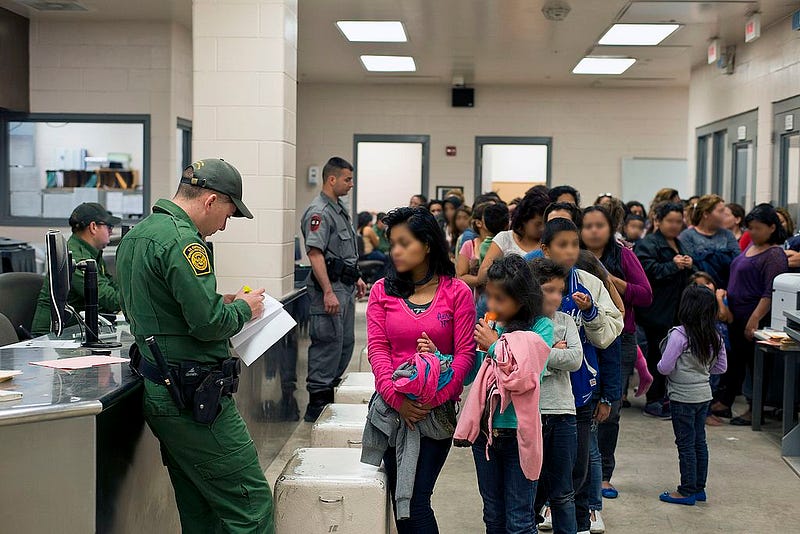
U.S. District Judge Dana Sabraw allowed the Trump administration six-months to account for family separations dating back to July 2017. Now, the American Civil Liberties Union (ACLU) says it has received the last batch of names one day before the court-ordered deadline. The batch listed 1,556 additional family separations than previously reported bringing the total number of family separations to over 5,400.
The newly-disclosed cases exposed the separation of families prior to the implementation of the Trump administration’s Zero-Tolerance Policy. After many of the parents or caregivers were deported, their children were subsequently released to sponsors who agreed to be responsible for their care. Sabraw ordered an injunction on June 26, 2018, in an attempt to end unjustified family separations.
“I don’t regret enforcing the law.” — Kirstjen Nielsen, former DHS Secretary
Former Department of Homeland Security (DHS) Secretary Kirstjen Nielsen, who is responsible for many of the separations was asked if she regretted her involvement. “I don’t regret enforcing the law,” she declared. “What I regret is that the information flow and coordination to quickly reunite the families was clearly not in place and that’s why the practice was stopped through an executive order.”
An additional 1,090 families have been separated at the Southern Border since the Trump administration declared an end to family separations in June 2018.
Family Separations
Immigration attorneys have publicly spoken out about family separations under the Trump administration citing that in most cases a child is taken away because of a minor offense by the parents, such as a traffic violation. DHS maintains that it is allowed to separate parents from their children if the parent is referred for criminal prosecution.
“If an adult is referred for criminal prosecution, the adult will be transferred to U.S. Marshals Service custody and any children will be classified as an unaccompanied alien child and transferred to the Department of Health and Human Services custody.” — Zero-Tolerance Policy explainer from DHS
While maintaining the claim that DHS can (and will) continue to separate migrant families, the broad use of the term “safety risk” is considered in the separation of families. DHS defines a safety risk as, “If there is reason to suspect the purported parent or legal guardian poses a safety risk to the child (e.g. suspected child abuse), it is not appropriate to maintain the adult and child together.”
Every one of DHS’s bullet points justifying family separations begin with the phrase: “If there is a reason to suspect…” leaving the door open to abuses of power by rank and file members of Immigration and Customs Enforcement (ICE) and Customs and Border Protection (CBP). Americans are questioning the “reason to suspect” language and what, if any, accountability is in place to prevent malicious and unnecessary family separations.
While migrant families continue to be separated with very little scrutiny, sheltering migrant children has become a cash cow for adoption agencies. Many of the children in government custody were not unaccompanied minors, however, the number of children being warehoused continues to rise to record levels.
The policy of separating migrant children from their families and declaring them unaccompanied minors brings a large influx of cash not just to the private prison industry, but to the foster care and adoption industry as well. There are many adoption groups benefiting financially from the Trump administration’s failure to reunite missing migrant children with their families.
In many cases, migrants’ parental rights can be terminated, making those family separations permanent. A permanence that begins the process of placing migrant children in foster care and ultimately adopted. There are documented cases of a migrant child’s parents attempting to challenge their child’s adoption, only to have their parental rights terminated in favor of placing the child with white families.
In 2018, an Associated Press investigation identified “holes in the system that allow state court judges to grant custody of migrant children to American families — without notifying their parents.” The investigation exposes a problem with a risk factor that has grown exponentially as parents are deported without their children.
In 2006, David M. Smolin published an article titled: Child Laundering: How the Intercountry Adoption System Legitimizes and Incentivizes the Practices of Buying, Trafficking, Kidnapping, and Stealing Children. In the study, he documented and analyzed substantial incidences of “child laundering” within the intercountry adoption system. He explains how child laundering occurs when children are taken illegally from birth families through child buying or kidnapping, and then “laundered” through the adoption system as “orphans” and then “adoptees.”
In 2011, Race Forward: The Center for Racial Justice Innovation (formerly Applied Research Center) also examined the intersections of immigration and the child welfare system in a national investigation. The report found structural and systemic barriers that prevent family reunification with detained or deported parents.
“Immigration enforcement greatly increases the chances that families will never see each other again. Detaining and deporting parents shatter families and endanger children left behind. It’s unacceptable, un-American, and a clear sign that we need to revisit our immigration policies.” — Rinku Sen, Race Forward
Both studies covering intercountry adoptions a decade ago point to many similarities that continue today. From the flurry of adoptions after a devastating earthquake struck Haiti in 2010 to what’s happening right now. The practice of taking migrant children from their birth families and “laundering” them through the foster care system as unaccompanied minors (orphans), is the result of adoption agencies exploiting antiquated U.S. immigration policy.
Adoption
In June 2018, Dona Abbott, of Bethany Christian Services (BCS) reported at least 81 children that were separated from their families at the border have been placed in foster homes and group placements. When Abbott was asked about BCS accepting migrant children separated from their families, Abbott said, “It’s because we believe that these children will be separated. That’s a decision that has been made. It’s been announced the zero-tolerance policy, and we believe children should be in family. If the government’s going to choose to do that, then children need to be protected and cared for.”
It’s worth noting that BCS has been heavily criticized for its treatment of birth mothers. Also worth considering when discussing these types of religious organizations, Christopher Stroop points out: “Religious organizations play an outsized role in foster care and adoption in the United States, often discriminating against members of the LGBTQ community while receiving tax money and, despite being registered as non-profits, running themselves essentially like businesses.” While adoption services criticize the Trump administration’s policy, they’re also using it for fundraising.
We now know that concern for the psychological well-being of migrant children by CBP and ICE is non-existent. Considering the trauma inflicted by the Trump administration, compounded by any pre-existing trauma, we are adding yet another nefarious component by sending them to Christian adoption agencies with ties to the Trump administration. The trafficking of children via Christian adoption agencies like the DeVos connected BCS is a vast and thriving industry.
Bethany Christian Services is also the beneficiary of over $80 million in government contracts.