
Middle Aged and Autistic
How an autism diagnosis at 43 taught me who I was.
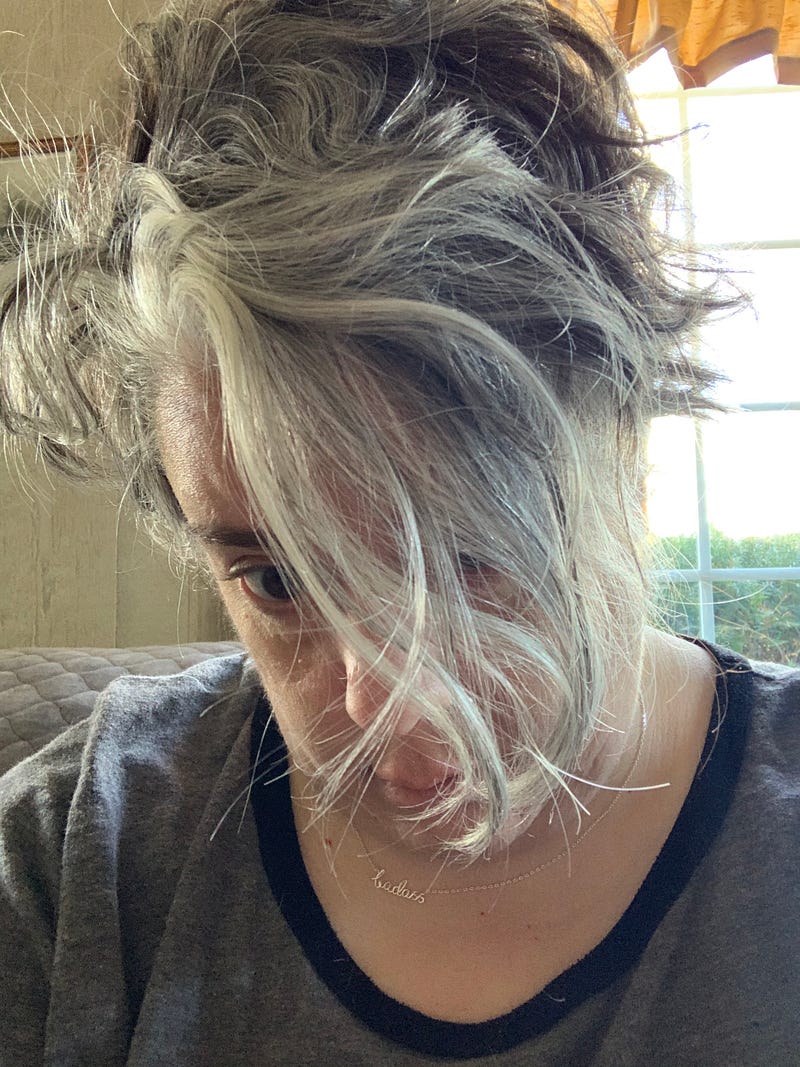
When I was nine years old, I came home from school crying because one of my classmates called me a weirdo. It wasn’t the first time this had happened, and it definitely wouldn’t be the last. I can’t remember what I had done. It was “something strange” in a long line of “strange things” that Natalie just always did.
This became a pattern throughout middle, junior high and high school. Words like freak and weirdo were very common when other kids would respond to something I had said or done. It hurt each time they said what they said, but I knew I was different.
I wasn’t interested in the same things that other kids my age were interested in. I obsessed over things that didn’t seem to bother my classmates, like my house catching fire, burning up if I was in the sun too long, organizing everything by color or everyone I loved dying. I had very few friends. I spent all of my free time with my dogs and reading many, many books.
I was a good student — when it was a subject I liked. I was artistic and creative and flourished in English, creative writing, painting and drawing. I got into a good college, where I pursued an art major. My art classes should have been easy for me. Everyone told me that I had talent, but I was unable to follow easy instructions. What my professors wanted me to do wasn’t what I was used to doing and any deviation led to a complete meltdown. I felt like I had no one to talk to…because I didn’t. After two months, I dropped out.
After several low-paying retail jobs, where I was constantly anxious and very unhappy, I decided to seek help. I went to see a psychologist and began to be treated for depression, anxiety and obsessive-compulsive disorder. After making marginal progress, I decided to return to college, this time pursuing English and education as a major. I met my best and only friend in a Shakespeare class. (She is still my best friend over 20 years later.) I was moving forward, but I still felt out of step, different, not completely accepted or understood. Not even by myself.
After earning a degree in English Literature, I earned an education masters, then a master’s in library science. I was now also seeing two therapists: a psychologist and a psychiatric nurse to prescribe my medications. Shortly after beginning my medication regimen and after losing a library job I loved, I found myself on permanent disability.
Several years later, one of my therapists said something that shocked me. She told me she thought I had autism spectrum disorder. Huh? What was she saying? I was Autistic? How could that be? Wouldn’t someone have known before now?
I told my mother what my therapist said as soon as I got home. She paused for a moment and then said, “I saw a documentary about Autism about ten years ago and I said to your father, that’s our daughter.” I was shocked. And angry. Why hadn’t someone said something sooner? Why hadn’t my doctors and teachers known? Why hadn’t my own mother and father said something?
I didn’t want to be autistic. I had adjusted, for the most part, to being mentally ill. Why did everything have to change again?
I was angry and in denial for about a year. I told very few people about my diagnosis. I preferred to continue living like I didn’t know I was autistic.
When I started to actually read about autism, I learned that more males than females were diagnosed. I learned that females on the spectrum were very often not diagnosed because they could “mask” or “pass” as normal. I learned that many females weren’t diagnosed until they were adults, very often when their own children were being diagnosed. I learned there was a word for people like me: neurodiverse. And just like that, I finally started to understand: the awkwardness, the anxiety, the inability to relate to most of my peers, my obsessions and my meltdowns. I wasn’t a freak or a weirdo. My brain was wired differently. I was a middle-aged woman who had just found out she was autistic.
At 43, I wondered if knowing any of this would ever make a difference. Children in public school with an autism diagnosis have education plans tailored to their learning. They also have a lot longer to process their disorder. When I went to school in the ’80s, an autism diagnosis would have placed me in a class for students with severe disabilities. I wouldn’t have gotten the education that I needed because autism was still such an unknown back then, considered a negative disability.
My youth and adolescence had been difficult because no one could explain what was going on with me. As a young adult I struggled with social norms, expectations from employers who had no idea how to manage me and a persistent feeling that I had missed out on all the normal things normal people experienced. At 43, I finally had an idea why my mind functioned the way it did, and I had some answers to the questions that I struggled with for so long.
After receiving an official diagnosis, I still don’t know if it matters all that much. But now I have an online community of other females who understand what it’s like to be like me. I may have been getting close to middle-aged when I found out about my autism but just knowing makes my life a little easier.
I love to write for Medium and I love to read everything that all the other authors on the site write. For $5 a month, you can read all of the articles and stories my fellow writers and I have written. A small percentage of that will support our writing so we can continue to write what we love and want to share with you. Click on my link below to start your unlimited reading.