
Microsoft Underwater Datacenter is a Success
Under the sea deployment of datacenters is the future
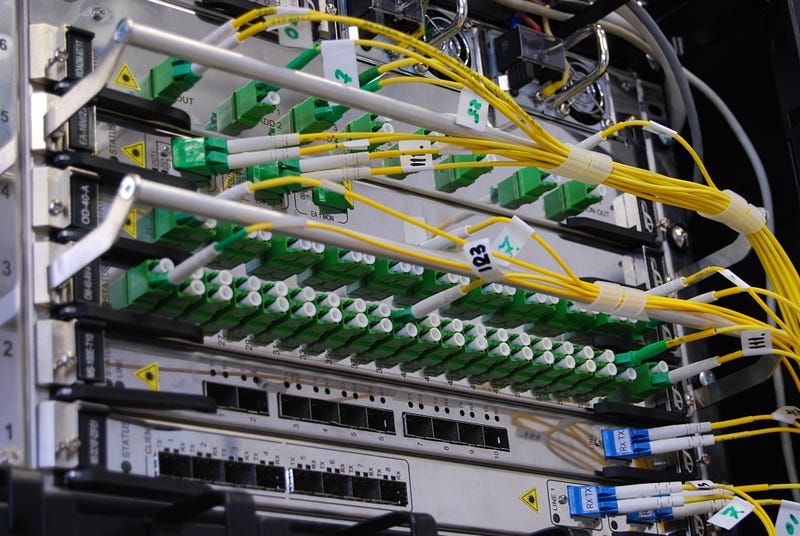
In the spring of 2018, Microsoft deployed a datacenter with 864 servers 35 meters deep in the sea off the Orkney Islands. They wanted to find out if it was possible to run a datacenter under the ocean and study the benefits of this solution.
They also aim to make the datacenters more environmentally friendly.
This summer, the datacenter finished its mission and was recovered for the analysis. The first impression of the scientists was very good.
Project Natick
Almost half of the world population lives near the coast. Microsoft thinks that our data should also live on the coasts. That’s why in the past years the company has been researching a solution to make that happen.
Project Natick is exactly that. Microsoft believes that in the future the need for data resources located near the users will be improving a lot. They think that deploying the datacenters under the sea near the coasts can solve this problem.
On top of that, researchers at Microsoft think that the underwater datacenters would also be more reliable and environmentally friendly.
In 2015 the first phase of the project was completed. This first stage was to find out whether or not it was possible to build a container that could house computers underwater without leaking and how long these components could live.
The tests on this prototype were successful and the project immediately started phase 2. In this phase, the goal of the research team was to show that they could build an underwater datacenter with common manufacturing processes. Also, they wanted to know if it was possible to manufacture and deploy it in 90 days from the date of the decision to power the servers.
The researches did it and the second step of phase 2 was to study and monitor the performance of the server while it was running under the ocean. To make the comparisons they built a second datacenter with the same components, but it lived on the land.
Why an underwater datacenter?
There are multiple reasons Microsft decided to build a datacenter under the ocean.
The first one I already explained. Most people live nearby the sea, so it makes sense that the datacenters are placed near the coasts.
Another very important factor to consider is the reliability of the system. On the land, there are a lot of factors that can harm the servers.
Computers suffer oxygen and humidity because they cause corrosion which can then make the computers fail. There are a lot of temperature changes due to the alternate of day and night and the change of the seasons. These temperature variations are very dangerous for computers.
Another reason the servers on land might fail is due to the bump caused by the maintenance personnel.
Microsoft taught that these problems could be fixed or largely reduced by building the underwater datacenters while also reducing their impact on the environment.
The results of this first experiment seem to confirm that hypothesis.
The results
We see one-eight the failure rate in the ocean datacenter than we do on land — Spencer Fowers (Project Natick researcher)
The result that stands out the most is that the underwater datacenter is eight times more reliable than the one on land, which uses the same components.
The researchers are running a lot of analysis to know why this happens but they already have some ideas.
The underwater container which houses the server racks has an atmosphere of nitrogen which is much less corrosive than oxygen. Microsoft believes that this and the fact that there aren’t any people that can bump in the components are the two main reasons for the success of the ocean datacenter.
If the analysis can confirm that, these solutions can be used to improve also the land datacenter.
Good for the environment
Microsoft is worried about the impact that the datacenters on land have on the environment In the context of this project they wanted to find a way to minimize or even eliminate it.
Natick datacenters are made of recycled materials that can be recycled again when the datacenter reaches the end of its life.
The datacenters can be located on a site that offers renewable energy sources to reach a zero-emissions goal. That is why Microsoft deployed its first prototype in Orkney.
This region produces renewable energy for 100% of the grid power and more. This means that the datacenter was powered entirely by green energy sources and this can be the case of a lot of places in the world. Tidal and wave energy can be used to produce the energy needed to power the datacenters so that they can achieve zero emissions.
Another benefit for the environment is that there is no need to use any water to cool the servers. Since the datacenter used seawater to maintain its temperature, there was no waste of freshwater.
Natick datacenters will have a life span of 20 years, after which they will be completely recycled. During its operation time, Microsoft plans on retrieving the datacenter every 5 years to change the computers, which are also recycled.
This new approach to building datacenter might be the way to go for a more reliable and environmentally friendly world.
We’re going to continue to build large datacenters and use more electricity. How can we do it that’s better for the environment and for us as people? — Spencer Fowers (Project Natick researcher)